Movies
Quarantine (REC Remake)
“This year’s THE RING or THE GRUDGE… As a visceral screamfest, QUARANTINE seems unequaled in 2008 for it’s sheer audacity in propelling the audience directly into the story. It’s the closest a film has come to the total immersion of role-playing video games.“

In a lot of ways, it seems quizzical to label QUARANTINE a remake of the Spanish horror film [REC]. After all, U.S. filmmakers John and Drew Dowdle (THE POUGHKEEPSIE TAPES) were hired to direct this film while Paco Plaza and Jaume Belaguero’s now legendary overseas hit was still in production. Of course QUARANTINE is a remake—a Hollywood production looking to capitalize on the cult success of another film. This year’s THE RING or THE GRUDGE. What makes QUARANTINE a little more interesting in concept is that it was essentially greenlit before the prior film’s success has even occurred. It’s a momentary glimpse of insight into how desperate the American studio system has become searching for the next big thing in horror.
QUARANTINE takes place late one night in the city as puff-piece journalist Angela Vidal (Jennifer Carpenter, DEXTER) and her camera man Scott (Steve Harris, THE SKULLS) follow a pair of Firefighter’s (Jonathan Schaech & Jay Rodriguez) on what appears to be a standard medical emergency call. When the group arrives at the old brownstone they discover the residents are suffering from a terrible virus that is turning them into violent maniacs. As they try to escape, they find themselves trapped inside, quarantined against their will, held prisoner within the walls of the building with no access to the outside world and very few prospects for survival.
Let’s get one thing out of the way right off the bat. This review is not going to be a shot-for-shot comparison of the pros and cons of the American version versus the Spanish version. The simple reason for this is that, despite my best efforts over the past few months, I still have not managed to actually see [REC]—although I’ve heard and read volumes of conjecture on the subject. So, with a fresh pair of eyes—something I almost never have—I sat down to watch QUARANTINE.
Despite having seen the trailer (much more on that in a minute) and knowing full well the storyline that was about to unfold I was amazed at how well the film absolutely sucked you into the story. Frankly, the story of people trapped in a building with unforeseen forces is hardly a new concept to the horror community. Additionally the idea of infection turning old folks and children into bloodthirsty monsters is old hat at this point too. Likewise the Cinema Vérité handheld guerilla style that most people wrongly attribute as a creation of THE BLAIR WITCH PROJECT was already given a new millennium makeover earlier this year courtesy of CLOVERFIELD. So, with the cards stack neatly in favor of QUARANTINE being nothing more than an amalgamation of better films, I was ready to be underwhelmed. But, despite all those preconceived biases, QUARANTINE managed to not only seem fresh at times, it was often scary as hell.
Is it surprising that I found QUARANTINE to be a success? You could say that. But, the more I think about it, the more I think the cast of this film elevated the material, made you believe the terror was real. It reminded me of another film that I wrote off early on—THE EXORCISM OF EMILY ROSE. Branded a Law & Order episode for the horror set, the film offers one shinning light—Jennifer Carpenter. Her performance as Emily Rose was astonishing, if for no other reason than her ability to contort her slender frame into the most excruciating of angles. She was the emotional resonance that lifted the writing beyond network television melodrama and dragged the script kicking and screaming onto the silver screen. Here again Jennifer Carpenter takes a role very different from the quiet Emily Rose or the brash and cocky Detective Debra Morgan she plays on the hit cable drama DEXTER, and she imbues that role with charm and whimsy before unleashing an emotional torrent that would have drowned lesser actresses in a sea of tears and terror. Like Emily Rose, if QUARANTINE is remembered for anything it will be remembered for another gut-wrenching, physically draining performance from Jennifer Carpenter.
But, QUARANTINE is not without its flaws. The script feels too compelled to explain everything about the mystery of the illness away. It populates a building cast of characters that seem to exist solely for the purpose of explaining key plot points away.
Again, having never viewed the source material, I expect that most of the cast and story has been retained (I know many people have told me that the film is virtually identical in mood and scope—so much so that it is often difficult at times to differentiate between the two productions). But, that very Westernized idea that every question needs an answer and perhaps a post 9/11 terrorist conspiracy to push the plot along is one of the major downfalls of the film. It would also be noted that for all it’s terrifying “first person shooter” zombie attack sequences (that should leave all but the most jaded viewer a bit on edge) the film features an inappropriately laugh-inducing moment like one in which a child spazzes out and—after attaching her mother—goes jetting out of the room at a cartoonish speed.
As a visceral screamfest, QUARANTINE seems unequaled in 2008 for it’s sheer audacity in propelling the audience directly into the story. It’s the closest a film has come to the total immersion of role-playing video games. A study in claustrophobia, expertly cast, edited and staged with expert meticulousness and precision, the film’s only major flaw is the need to explain that which never needed explaining. So once again, an audience looking to have the mystery unveiled with leave satisfied and those of us desperate for a little speculation to remain will be sorely saddened. And that brings me to my final point—marketing.
I make it a point to try and view as little pre-production material on a film as possible before I sit down to cover it. It’s not that I don’t want to know. It’s just that we live in a land of spoilers. Ones that come from websites and decades old genre publications but generally not directly from the studio marketing their own films. I can remember seeing a trailer for FRIDAY THE 13TH and in that trailer the film basically tells you every person that is going to die and give you a glimpse of their actual death scene. Now, that is an egregious abuse of exploiting your film, but even as bad is that was, can you imagine for a moment if Paramount executives in 1980 had decided to cut a trailer for FRIDAY THE 13TH and included the film “Jason pops out” sequence in the ad campaign—that my friends is QUARANTINE. Several of the key “scare” sequences or shocking film moments in QUARANTINE are sold out right in the Trailer and TV Spots. In fact one of them has become so emblematic of the film that we are even spoofing it on this very site. I won’t reiterate them here for those of you blissfully unaware of these moments but be forwarded, QUARANTINE is not likely to show you anything new if you’ve been following the marketing material for weeks on end. If that is Sony’s goal—market saturation then congratulations you’ve succeeded. But, if Screen Gems and Sony think they need to show an audience everything about a film in order to get them into theaters then that speaks volumes about their faith in the film itself…now that’s scary.


Movies
‘Tha Rae: The Exorcist’ Review: Gory Thai Possession Horror Faithfully Adheres to the Tropes [NYAFF 2026]

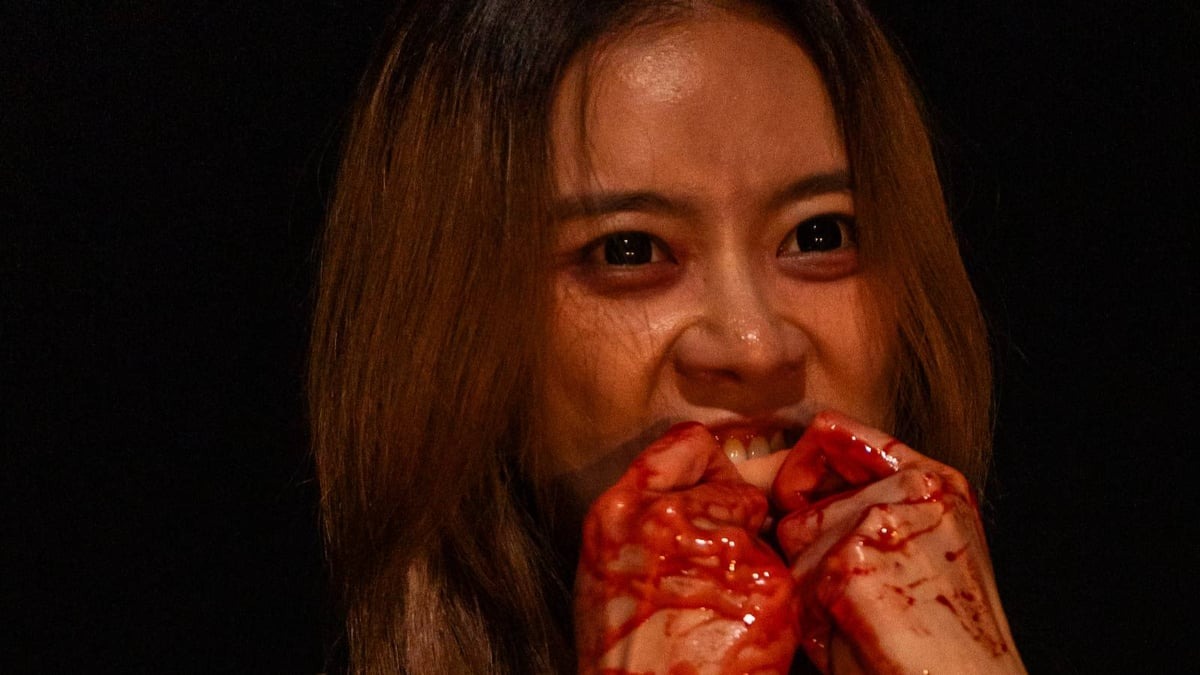
Possession films are an exceedingly common subgenre in horror to the point that far too many of them feel far too familiar. This is a generalization, obviously, but it too often seems that someone is possessed, a representative from the area’s dominant religion is called in, and a fierce spiritual battle comes to a dramatic conclusion. The idea that the demon in question always happens to be of the exorcist’s faith and denomination is simply chalked up to plot necessity.
Tha Rae: The Exorcist adds an intriguing wrinkle into that trope by introducing a demonic entity that rebuffs both a Catholic priest and a local Yao shaman. It’s only when the two join forces that they’re able to put up a fight against the evil being.
The film opens with a Catholic exorcist out of options. A possessed child writhes before him, pustules and other signs of devilish control wracking the little girl’s body with snarls and contortions. Unable to beat the demon, and unwilling to let it grow stronger and move to another host, the priest convinces the child’s mother that death is the only choice left – so they plunge a knife into the girl’s heart.
Forty years later, it’s that same priest, Ming (Thaneth Warakulnukroh), who’s become possessed to the point of attacking and trying to eat other villagers. His daughter Malee (Nichaphat Chatchaipholra) arrives to check in on her father, but she too soon falls prey to a possessive entity with a taste for flesh. Two exorcists with wildly differing faiths and styles are called in – Sopha (Phiravich Attachitsataporn) is a self-described Yao witch doctor and TikTok exorcist who uses props, dance, theatricality, and ancestral spirits to combat the forces of evil, while Father Paolo (Jirayu Tangsrisuk) is entrenched in the traditions and rituals of the Catholic Church.

Photo: © 2025 SAHAMONGKOLFILM INTERNATIONAL COMPANY LIMITED ALL RIGHTS RESERVED. North American Premiere
There’s both tragedy and betrayal at play in the narrative of Tha Rae: The Exorcist, but director/co-writer Taweewat Wantha puts the thematic focus on the collaboration and understanding required to go toe to toe with a deviously malevolent force. It’s an interesting spin on the expected formula, and while the rest of the film stumbles in its supporting players and follows more traditional beats – albeit with some fun, gooey gore – that core element is enough to make it stand apart from the crowd.
Wantha broke onto the film scene with 2004’s memorably titled Sars Wars: Bangkok Zombie Crisis and continued that trend with oddball genre comedies like The Sperm and Kindergarten War, but he found major success with the one-two horror punch of Death Whisperer and Death Whisperer 2. His latest is more in line with those hits as jump scares and local mythologies play into his creepy tale of possession and generational punishment.
Tha Rae: The Exorcist arguably has more personality and humor, and both are due in large part to the character of Sopha and the playful but sincere performance that brings it to life. Where Tangsrisuk is saddled with the more straightlaced priest, Attachitsataporn’s witch doctor enjoys his local celebrity and has fun while aiding his community. Sopha’s social media followers expect a show, and he delivers, but there’s an engaging dynamic at play within him.

Photo: © 2025 SAHAMONGKOLFILM INTERNATIONAL COMPANY LIMITED ALL RIGHTS RESERVED. North American Premiere
Sopha’s grandmother was the original witch doctor, and he was just her apprentice. When she passed – and subsequently became the primary ancestral spirit that he calls upon during his rituals – Sopha took up the mantle. For one reason or another, continuing her legacy requires him to carry on with his more feminine foot forward. Makeup, costumes, and a feminine lilt to the way he walks and talks are all part of the show. He apologizes to Paulo for it, but there’s no shame in his words or tone as he embraces the gifts he holds and the power he wields.
There’s no disdain between the two even as they seem initially unimpressed by each other’s efforts. Eventually, though, after each has struck out in dramatic and painful fashion, they realize a combined approach to fighting this particular demon is the only way forward. It’s here where the film shines brightest with the idea that beliefs can intermingle and co-exist without the need for disdain or dismissal.
The two of them are the heart of Tha Rae: The Exorcist, but the meat and potatoes of the genre come in the form of creepy antics and a bit of the ol’ gut munching. Intestines are nibbled, a feral man bursts through floorboards to terrorize young girls, and the possessed have a generally unsettling look about them. Wantha too often neuters his atmosphere and mood, though, by jumping quickly to the gore. It cuts into the horror of it all, leaving the film to work in fits and bursts rather than as a cohesive, propulsive whole.
Shortcomings in both the script and direction prevent the film from coming close to denser, more memorable, and atmospheric possession horrors like It Comes or The Wailing, but its main theme and dual lead characters still offer up an intriguing combination.
Genre tropes exist for a reason, but Tha Rae: The Exorcist is a good reminder that they also exist to be twisted, teased, and, when necessary, torn to shreds.
Tha Rae: The Exorcist made its North American premiere at the 25th New York Asian Film Festival.

You must be logged in to post a comment.