News
13 Days of Horror, Day 11: The 7 Commandments of Horror

The horror genre is a frisky thing. Some games have done amazing things made up of little innovations that made them influential for years to come. Others have sucked so much ass we try to burn them out of our minds after playing them.

So what distinguishes a good game from a bad game? Since a game’s quality is relative to the player playing it, this is a hard thing to gauge. I loved BioShock but there are those who didn’t, and one of my favorite games, Resident Evil 4, had its fair share of detractors. In an effort to find out the basic elements that make up a good horror game I’ve come up with what I think to be the seven commandments of the horror genre.
The genre started out with a focus on engaging the player and making them think. Survival horror used to be a niche genre that was meant for more ‘hardcore’ gamers who look for more rewarding experiences, like say, solving incredibly difficult puzzles or surviving against waves of powerful creatures with little to no ammo. Unfortunately, many of the more frustrating elements remain even know. Random puzzles that have little base in the story and no way to save when we want (also coupled with few checkpoints) are things no horror game should have now.
So many horror games are incredibly linear affairs. There’s a single route to get to your destination, the more common of which being a labyrinthine grouping of tunnels or hallways lined with locked doors. I hate when a game has dozens of doors that are locked for no reason, and my issue with it only grows when my character is wielding an axe but doesn’t have the option to cut down the door to see what it’s hiding. This ruins exploration, and while it’s less noticeable now then it was in games like Silent Hill 3 (that game had hundreds of locked doors), it’s still an issue.

This bothers me to no end, particularly since this genre more than most seems to struggle with the issue of good camera placement. Static cameras don’t work well and unless there’s a reason to not grant us control of what we see throw the camera behind our character at all times and be done with it. Too many times I’ve been playing a game like only to have the camera’s position switch on me forcing me to quickly adjust where I’m headed. Resident Evil fixed this and it worked superbly, and while static cameras work great in establishing a creepy atmosphere (like in Silent Hill), as long as I can see the character I’m controlling at all times there won’t be any issues.
I understand the need to make the character we control fight like a drunken retiree but sometimes that handicapping goes too far. This genre more than any other has always had an issue with tank-like controls and awkward fighting. It’s made all the more noticeable when we have to defend ourselves against numerous hellish beasts armed with acid tossing body cavities or massive claw-like appendages and all we have is a bar of soap and a button that lets us turn around real fast. I don’t want to play as a superhero but it’d be nice if our character actually had the basic defensive capabilities most people have.
Expanding a bit on the previous idea, horror games are usually only scary because we care about the player we control. If we’re not invested in the character then why should we care what happens to them? Games like Alan Wake and the original Silent Hills have interesting people populating them so when something happens we’re empathetic with their situation. Dead Space was a damn scary game but it’s thrills fell apart rather quickly because after you see a light flicker or run into a few baddies waiting behind a door you begin to predict when the scares are going to happen. Then there’s also the issue that Isaac Clarke has no personality in the first game, though that looks to be something they’re focusing on in the upcoming sequel.

I hate going through levels I’ve previously explored with a burning passion. Not only is that lazy game design put into the game to pad it’s overall length (I’m looking at you Alone in the Dark), but there’s essentially nothing new to experience after you’ve already completed a certain level. There are ways to mix things up a bit, Dead Space had you going through levels twice but it wasn’t as annoying because you were exploring different, previously closed off areas the second time around. An example of a game that ruined my day with backtracking would be the aforementioned Alone in the Dark, who’s last section of the game (roughly two hours long) had you running around Central Park lighting Devil Trees on fire. Needless to say I turned off the game and set the disc on fire, then sold it at my local GameStop for a buck fifty.
Renegade viruses have been done. Xenophobic villages have also been done. Malicious unicorns with bubblegum fetishes and a hunger for human flesh has not been done. Why do so many games share the same basic premise when there are a myriad untapped stories, situations, and locations out there just waiting to be made into a game.
In case you missed the rest of the series, here’s a quick recap:
Day 1, A Resident Evil Retrospective
Day 2, A Silent Hill Retrospective
Day 3, What Do You Fear?
Day 4, The Four Scariest Kids in Gaming
Day 5, A Look Through the Lense
Day 6, 6 New Games You Need to Play this Halloween
Day 7, Alone in the Tower
Day 8, The 7 Biggest Horror Games of 2011
Day 9, The Real Silent Hill
Day 10, The 10 Most Terrifying Console Mods




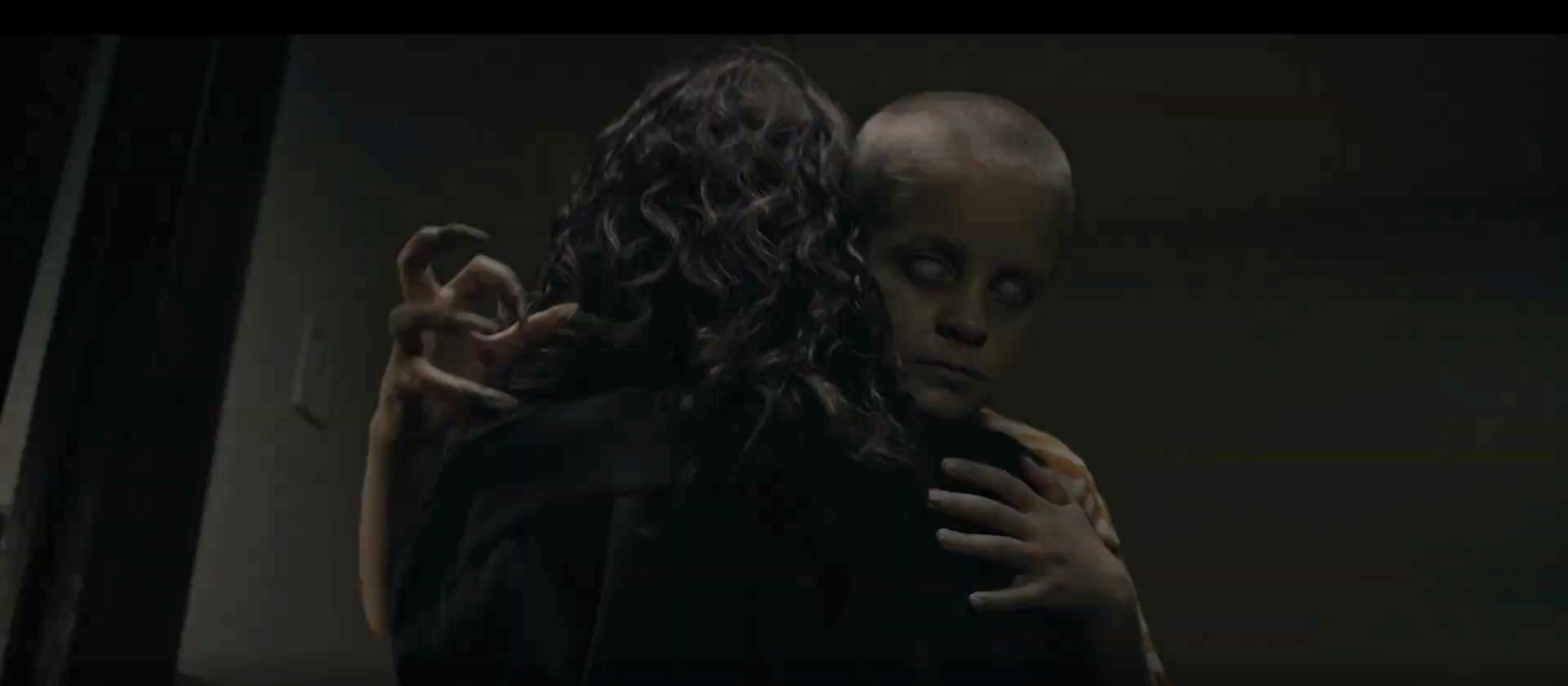
Let’s start with the good news. Lockbox looks far better than its misleading marketing materials suggest, a supernatural horror movie so darkly lit and color graded that you’ll have to squint your way through jump scares. It’s also anchored by reliable genre performers. That’s also about where the good news ends with this rote adaptation of Knifepoint Horror Podcast story “Winthrop.”
The empathetic Carla Gugino gives her all as Ellen, a saint of a woman with boundless patience who takes on life’s hard luck with a kind smile. After giving up her career as a fashion designer to become caretaker for a dying mother, she’s then forced to reinvent herself once more when her caretaker role ends. That catches us up to the events of Lockbox, where Ellen is asked to take in a cousin she hasn’t seen in quite some time who’s dealing with severe PTSD.
Just as Ellen finally establishes a real connection with Winthrop (Lou Taylor Pucci), it’s interrupted by the arrival of peculiar neighbor Vahna (Katharine Isabelle), who spells clear trouble. When Vahna shows up dead, it sets in motion a supernatural battle of possession.

Image Credit: Aura entertainment
Director Daniel Stamm (The Last Exorcism, Prey for the Devil) and screenwriter Justin Yoffe approach Lockbox in the broadest of brushstrokes, dooming it from the start with clunky storytelling and woefully underdeveloped themes of heady topics like PTSD. Winthrop is a character that comes loaded with emotional baggage and trauma that’s piled on throughout his tragic life, but much like its title, his interiority and history are treated like a tightly guarded secret meant to prolong the supernatural mystery.
The problem here, though, is that Lockbox is too sparse to sustain mystery at all, and it instead robs Winthrop of characterization. It winds up trapping the talented Pucci without anywhere to go, toggling between wounded animal and mentally disoriented.
From there, Lockbox bounds through plot developments without any sense of stakes or purpose, peppered by a smattering of haphazard paint-by-numbers jump scares. The only unwavering constant is Ellen’s resolute faith, and Stamm seems to leave it entirely to Gugino to guide confused audiences through this inconsequential story right up until its supernatural climax.

Image Credit: Aura entertainment
To give more credit, Lockbox at least injects an unconventional exorcism here; just don’t expect much in the way of explanation. When the film finally reveals the meaning behind its title, it dangles a fascinating carrot it has zero interest in delivering. More than a severe lack of fleshing out its characters beyond plot drivers or devices, this faith-based flick also seems terrified to offer any worldbuilding whatsoever.
Yoffe’s script stretches the short story beyond its means instead of fleshing it out, and Stamm fills out the gaps with cheap CGI scares and overwrought performances; Isabelle’s Vahna is beyond cartoonish in her villainy. It’s also pretty nonsensical, treating only Ellen’s faith with the utmost sincerity and largely squandering its typically reliable talent. So much so that the final imagery, pure sunkissed saccharine sentimentality, leaves you with the feeling that this horror movie might be better suited as an entry in Chicken Soup for the Soul.
Lockbox releases in select theaters on July 3, 2026.

You must be logged in to post a comment.