Editorials
The Top 20 Horror Science-Fiction Films of All Time!

What happens when you combine horror and science-fiction–those two vaunted pillars of genre entertainment? You wind up with some of the most fascinating, challenging, and downright kick-ass pieces of cinematic gold ever created. The key to great horror/sci-fi is maintaining that balance between the horrific and the…well, science-fictiony elements, and we think that the 20 flicks included in this list represent the very best examples of just that. We hope you enjoy, and let’s keep the rowdiness to a minimum–people are trying to sleep around here!


Dont forget to also check out:
The Top 16 Creepiest Kids in Horror Movie History
The Top 10 Feel-Good Horror Movies
Home Invasion Flicks: Murder Delivered Right to Your Door
The Top 13 Slashers in Horror Movie History
A Look at Some of the Most Memorable Demon Seedlings!
The Top 13 Kills in Horror Movie History!
The Top 10 Obscure Horror Gems For Halloween
The Top 10 Made-for-TV Horror Movies of All-Time
The Top 10 Horror Comic Adaptation
The Top 10 Worst Horror Director Collapses!
The Top 10 ‘True-Story’ Horror Movies of All-time!
The Top 10 Hottest Vampire Babes of All-Time
The Top 10 Most Unusual Zombie Occupations
The 10 Lamest Days of Horror the World Has Ever Known
The 10 Stupidest Motives In Slasher Movie History!
The Top 10 Most Batsh*t Crazy Horror Movie Doctors
The Top 10 Worst Things That Could’ve Been in Brundle’s Machine… Besides a Fly
The Top 10 Best Horror Remakes of All-Time
Top 10 “Doh” Moments in Horror History
15 Reasons FOR Remaking A NIGHTMARE ON ELM STREET
The Top 10 Reasons Why Bela Lugosi Still Rules
Top 10 Non-Zombies in a Zombie Film

Although bashed by some, we find this gory space epic to be an excellent modern-day haunted house story. Combining hard sci-fi and intense horror, it’s an underrated thrill ride in the tradition of Alien. Directed, oddly enough, by the man who would later take a massive squat on that franchise with 2004’s Alien vs. Predator.
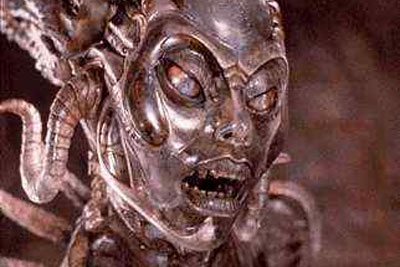
With an impressive A-list cast and a Giger-designed monster, this one tells the tale of a sensual killing machine created by splicing human and alien DNA. Natasha Henstridge plays the unforgettable Sil, an alien life form that must mate and kill. Thankfully, in that order.

“Rowdy” Roddy Piper kicks ass, chews bubblegum, and engages in the longest, most pointless, and most awesome brawl in movie history. All in the name of driving an insidious alien menace from our fair planet. Thank you, Hot Rod!

Fifteen years before he became a respected auteur with his acclaimed LOTR trilogy, Peter Jackson gave us this inspired, madcap, horror sci-fi comedy about a race of hideous aliens intent on turning humans into fast food.
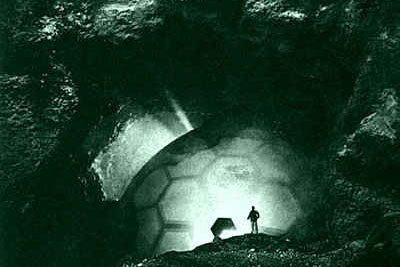
A strange spaceship crash-lands near a mine, and while most of the foolish cast takes it for nothing but a meteor, people start disappearing mysteriously. One of the earliest examples of the alien invasion film, thanks mainly to the rise of Cold War paranoia.

Perhaps the definitive McCarthy-era Red Scare inspired alien invasion flick, with Martians literally taking over the minds of Earthlings, with only one young boy knowing the horrible truth. Watch out for the very unusual climax as the army faces off with the invaders in classic fashion.

A space mission to Halley’s Comet (remember when that was a really big deal?), inadvertently brings back some pesky interstellar vampires that convert the majority of London into the walking dead. Bloody hell!

A gelatinous mass engineered by the good ol’ U.S. government (as opposed to the space invader of the nearly-as-good 1958 original) wreaks holy havoc in a small town, eating away at everything in its path. Kind of like Kirstie Alley on a commercial set.

Jack Griffin unlocks the key to invisibility. Unfortunately, it also transforms him into a raving, homicidal lunatic. Claude Rains is unforgettable as the titular Universal baddie. One of the classic “scientist tampers with nature and pays the price” stories, based on the seminal H.G. Wells novel.

The 1950s was rife with cautionary tales of giant irradiated fauna, but none packed as much of a terrifying punch as this one. Massive mutated ants run roughshod over New Mexico in this classic, filled with genuine dread and fine performances from the likes of the late Richard Whitmore.

This Robert Louis Stephenson literary favorite has been retold so many times, we tend to forget it is in fact a seminal work of both horror and early science fiction. And of all the versions, nothing tops Fredric March’s Oscar-winning turn as the scientist who tampers unwisely with the dark side of the human psyche, 75 years before Dr. Bruce Banner.

David Cronenberg was simply a master of combining horror and sci-fi, and did so brilliantly in this film about powerful psychics and the forces out to stop them. Plus, it has the most famous exploding head scene in the history of cinema, so what more do you really need?

Speaking of Cronenberg, this bizarre mix of sci-fi and surreal was way ahead of its time, exploring how the media can literally warp and control the minds of its viewers. The imagery is strange and disturbing in the extreme, even for Cronenberg. Unless you enjoy seeing men sprouting vagina dentata out of their mid-sections.

If the thought of Godzilla conjures up “Save the Earth”, little boys in short shorts and guys doing wrestling moves in rubber suits, then you need to see the original Japanese Godzilla flick. A powerful and extremely well-made film, it makes a strong case against the dangers of nuclear weapons, and gives us a city-destroying monster that is a far cry from the goofy character he later became.
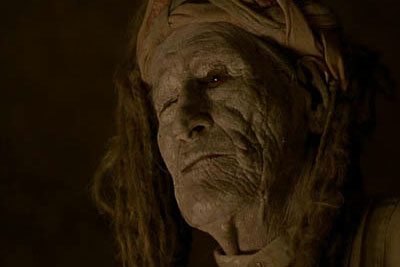
This adaptation of Paddy Chayefsky’s novel casts a young William Hurt as a scientist who conducts hallucinatory experiments on himself that eventually cause him to genetically regress. Sounds kind of like college.

If someone uses the words invasion, body and snatch all in the same sentence, we normally don’t instantly assume OOH! HORROR SCI-FI… But you can’t always judge based on first impressions. Creeping us out with alien invaders that don’t want us to take them to our leader, but rather to make our bodies host to them, this classic is one that mustn’t be missed.

There’s absolutely nothing more terrifying than a half-fly half-Russian Jew with a staccato delivery that Shatner WISHES he could pull off. Well, maybe there is, but the Fly would still be pretty damn close. We also get Jeff Goldblum’s greatest performance this side of Jurassic Park, and a reason to actually appreciate Geena Davis. It takes a real woman to birth a worm.

In many ways, Mary Shelley’s 19th century novel was the very first science fiction novel, so it’s only fitting that the classic Universal adaptation, though vastly different, would be one of the finest sci-fi horror flicks ever made. In fact, the movie stresses the science-fictional elements ever more than the original book.

Once again, if someone asks if we want to see “the Thing”, sci-fi doesn’t immediately spring to mind. This shape-shifting alien is a far cry from the Wonder Twins. And who could forget the infamous blood screening scene? Gives a whole new meaning to the phrase “you might want to get yourself tested”!
And finally, the number-one horror/sci-fi film of all time…

In space, no one can hear you scream. But that doesn’t stop the crew of the Nostromo from doing quite a bit of it in this, the mother of all horror sci-fi flicks. Following in the wake of the fairy tale Star Wars, Ridley Scott’s masterpiece took space drama deeper into the realm of the macabre than it had ever before ventured. It’s a perfect blend of both genres, and the H.R. Giger-designed creature remains the stuff of otherwordly nightmares.
For more news and opinions on the world of horror, including an exclusive review of the new Mischa Barton thriller Homecoming, a remembrance of David Carradine, and the Top 10 Horror TV Series of All Time, check out Brian’s daily blog, The Vault of Horror, at thevaultofhorror.net.
And for a unique look at the feminine side of fear, including an impassioned plea against the Scream remake, and the ultimate A-Z of horror movie actresses, check out The Vault’s sister blog, Day of the Woman, at dayofwoman.blogspot.com.


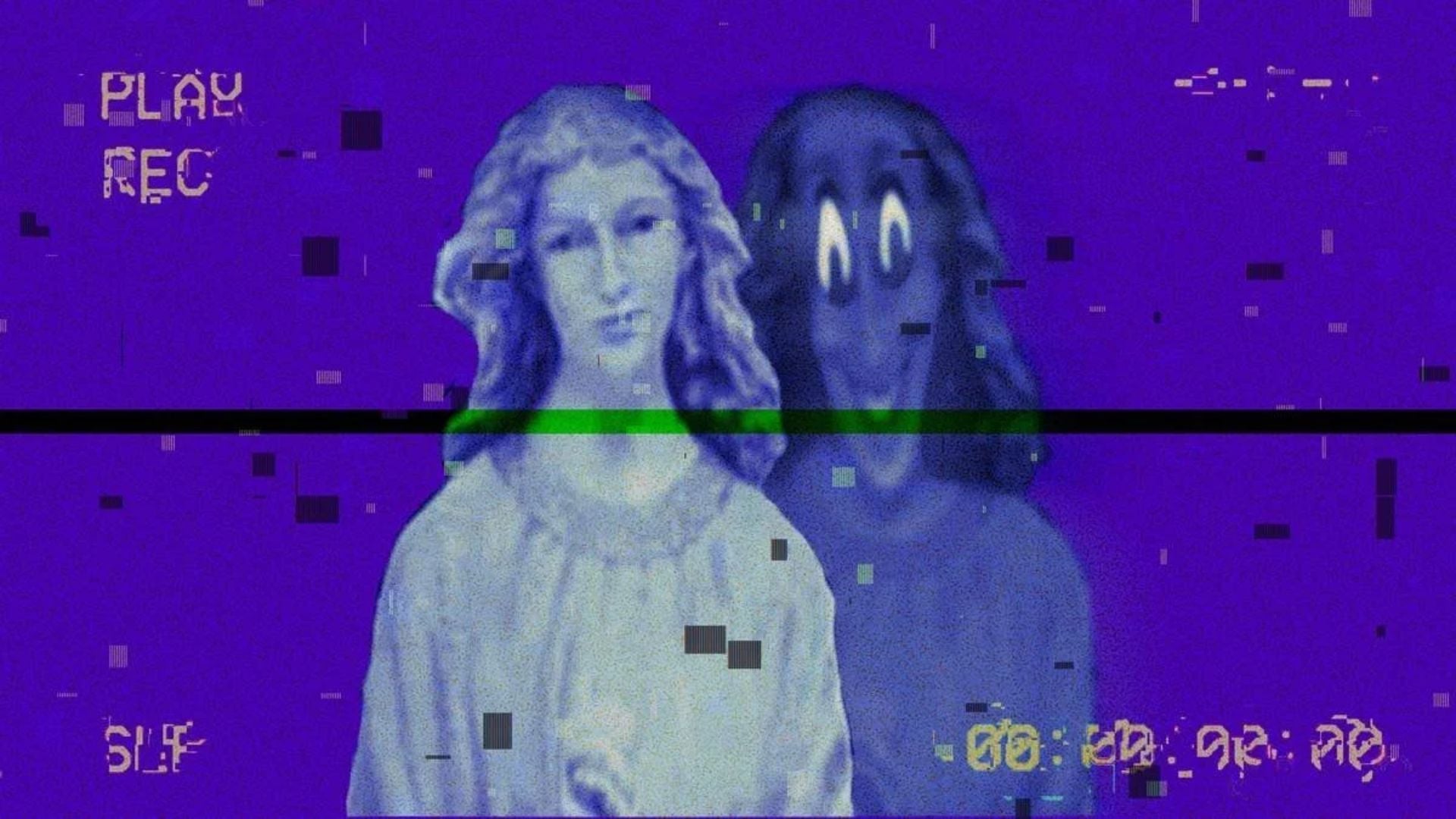
I first heard about The Mandela Catalogue through a couple of nephews who were obsessed with the ARG’s sinister mythology. It was only after watching Wendigoon’s in-depth analysis of the series that I realized just how deep this rabbit hole goes.
In fact, I’d already been exposed to the nightmarish visuals of Alex Kister’s YouTube creation for years at that point without even realizing that it was the origin of several viral “cursed images” and spooky memes that had leaked into the wider internet – with this viral element actually being a part of the Catalogue’s overarching narrative.
Flash-forward to 2026 and the unprecedented success of Kane Parsons’ Backrooms has led to Hollywood betting on horrific internet properties with existing fanbases, which means that Kister’s unique hybrid of both religious and analog horror is finally headed to the big screen with a script written by Kister himself alongside Tyler Clifton.
While this news shouldn’t be too surprising if you’ve been keeping up with the ongoing success of The Mandela Catalogue (both myself and Wendigoon having previously predicted that the series would inevitably make the jump to theaters one day), plenty of horror fans are likely confused as to why so many folks are excited for what appears to be a Hollywood adaptation of a series of creepy .jpeg images under a VHS filter.
With that in mind, today I’d like to invite fellow readers to accompany me as I explore the origins of Alex Kister’s viral hit and attempt to explain exactly why we should all be excited about the Mandela Catalogue adaptation!
From High School Writing Project to Internet Horror Phenomenon

The first seeds of The Mandela Catalogue were sown when Kister was still in high school and developed a writing project subverting religious tropes in a world where biblical history had been altered by demonic forces. A little while later, Kister came across an analog horror contest on Reddit and decided to adapt his ideas into a standalone video where he would edit a religious kids’ cartoon –The Beginner’s Bible: The Nativity, to be specific- into something far creepier. This is how the iconic Overthrone video was born, with this viral short film taking on a life of its own as fans demanded more eerie content from Kister.
Though the video was originally meant to be a one-and-done sort of affair, with Kister actually regretting some of its primitive visuals and considering the editing amateurish and “YouTube-Poop-like” when compared to his current standards, fan reaction and free time during the COVID-19 pandemic encouraged the (then) seventeen-year-old filmmaker to continue producing content set in this same world. The Mandela Catalogue name was inspired by the Mandela Effect conspiracy theory, as the series would slowly begin to explore the subtle horror of alternate histories.
Inspired by existential dread brought on by extended periods of quarantine as well as a personal crisis of faith, Kister continued to expand his alternate timeline where the rise of Christianity had been prevented by what was presumably the Devil disguised as the Archangel Gabriel. This alternate course of fictional events led to the existence of certain paranormal anomalies that had come to be accepted as “normal” by the 1990s, which is why most of the series’ supernatural horror is presented in such a matter-of-fact manner.
Most of this background information and religious lore is delivered by increasingly cryptic broadcasts and in-universe PSAs, as well as the occasional found footage video, that often have to be decoded by clever viewers. Of course, it’s the consistently disturbing imagery that made the series so popular – much of which was originally created by Kister on a smartphone!
The Alternates: Horror’s Most Unsettling Modern Monsters

The show’s early episodes mostly take place within the fictional Mandela County in Wisconsin and depict life in a world where demonic entities are capable of using media to enter our reality. This process usually involves scaring victims into killing themselves and then repurposing their bodies as horrific doppelgangers referred to as “Alternates”. This terrifying phenomenon has become so common that local police already have specialized procedures in place to deal with the issue, though this usually consists of simply ignoring calls for help so as to avoid spreading so-called “Metaphysical Awareness Disorder” any further.
Over time, Kister would expand this mythology and incorporate different kinds of Alternates into the mix, though the story never stopped deconstructing religious concepts. The series’ second volume exponentially increased both video quality and the overall narrative scope as we began to follow the lives of characters who had already grown up in this dystopian hellscape where the government is forced to prohibit religion, television, and even mirrors in the hopes of mitigating the damage done by the ongoing invasion of otherworldly entities.
The really interesting part comes into play when you realize exactly how the Alternates make use of scary media in order to spread their demonic influence, with the analog horror of it all being a diegetic part of the story and something of a memetic trap orchestrated by the false Gabriel.
I particularly appreciate how some characters begin to suspect that there’s something wrong with their version of reality and that things weren’t meant to play out this way, especially when Mark utters the haunting line “who have I been praying to all this time?” That’s why I think The Mandela Catalogue is an effective piece of religious horror even if you don’t subscribe to the Christian worldview, as the mere idea of a world where evil has already won is a universally terrifying concept in and of itself. Not only that, but the series’ uncanny analog imagery alone is already worth the price of admission, as you’ve likely already noticed by looking at the pictures accompanying this article.
Why The Feature Adaptation Could Be Horror’s Next Big Success

It’s actually been a whole year since Kister first announced that he had been working on a feature-length screenplay for a Mandela Catalogue movie since 2022, with his proposed story following an ensemble of high-school graduates who uncover a supernatural conspiracy after the mysterious disappearance of a fellow student. This premise sounds similar to narrative elements present in the series’ second volume, but I’m pretty sure that Kister is going to go the Kane Parsons route and make the movie more of a spin-off than a re-imagining of its source material.
While notable Hollywood producers like Aaron B. Koontz, Scott Stuber, and Steven Spielberg himself are backing the upcoming project, I feel like there’s no one better to adapt this deeply personal exploration of faith and the dark side of communication than the person who first came up with it. That’s why I can’t wait to see Kister’s work on the big screen, as I have a feeling that this young filmmaker is the next one on the list about to make cinematic history – especially since this is clearly a passion project that has been in the works for years at this point!
That being said, there’s always a chance that the film could end up unleashing a fresh wave of Alternate incursions, but I guess that’s just a risk we’ll have to take.
You must be logged in to post a comment.