Editorials
00’s Retrospect: Dead on Arrival — Ten Horror Duds of the Last Decade

I’ve said it before, and I’ll say it again: this has been a great decade for horror films. Anyone who doesn’t think so simply hasn’t been paying attention. Of course, those successes likely wouldn’t have felt as sweet had there not been about four or five times as many bad ones, and following from that observation I’ve sifted through the cinematic garbage bin to put together this list of the worst. We’re not talking direct-to-DVD bargain-bin burners here; we normally expect those to be bad. We’re talking studio-released, mostly moderate-to-big-budget disasters with a lot of marketing and moolah behind them. These aren’t the hand grenades; these are the atom bombs whose explosions of craptastic-ness were too big to ignore. They’re listed in order of release rather than badness, since there’s just no way to rank these suckers in any meaningful order. They’re all terrible in their own unique and special way.


Poor Aaliyah. Not only did the R&B superstar have to die in a tragic plane crash, but her legacy suffered the final insult of being tarnished by this painful dud that came out the following year (worse yet, they actually dedicated the film to her memory). Hadn’t her family already been through enough? It’s not nice. Anyway, to be fair Queen of the Damned had a tough act to follow. It’s forebear, the beautifully conceived, well-acted, artful Interview with the Vampire, helmed by Crying Game director Neil Jordan, was one of the best horror films of the `90s. So we couldn’t have reasonably expected Damned to be better. Fine. But let’s just tell it like it is: this was a movie so bad that it helped kill both director Michael Rymer and lead actor Stuart Townsend’s film careers. Anne Rice famously reverted back to Christianity in 2004, and I can’t really blame her – if something I’d written was adapted into big-studio diarrhea like this, I’d probably turn to Jesus too.

You forgot about this lil’ gem from early in the decade, did you? Well, allow me to give you a refresher. Stephen Dorff plays a detective investigating the deaths of several people who all died 48 hours after logging onto a website called…wait for it…FeardotCom!!! Ok, so the actual domain name is FeardotCom.com. I know, it sounds absolutely terrifying right? I’m shaking uncontrollably just thinking about it. What follows this mind-blowing revelation is a treasure trove of bad acting, editing likely to cause seizure, lame scenes of torture, and pathetic attempts at making a website called FeardotCom scary. I say double-bill this bad boy with the heinous American remake of Pulse and call it a night.

Paul W.S. Anderson’s Alien vs. Predator has everything you’d expect in an action/horror film based on those two beloved franchises: Aliens, Predators, slo-mo shots of Sanaa Lathan running from explosions, actors, sets, costumes, props. The list goes on and on, really. Just don’t expect any frills. You know, things like a believable plot, cool action scenes, well-drawn characters, a talented director, narrative coherence, fun. Wait, you actually were expecting all that stuff? Wow, look at Mr. High Maintenance over here. I don’t know what to tell you, diva. Go watch a James Cameron movie or something.

Like most everybody else, I really loved The Ring. I thought it was scary, and fresh, and stylishly crafted by director Gore Verbinski. So when The Ring Two was released, I paid $14 opening night to watch it at the Cinerama Dome in Los Angeles. That’s right, $14. Two miserable, sleep-inducing hours and 14 bones down the drain later, I limped from the Dome and suddenly felt a strange, sharp pain in my ass. And that’s when I realized: I’d just been gang-raped by Hideo Nakata and those sick bastards over at Dreamworks.

Anyone who has seen the Nicolas Cage Wicker Man montage on YouTube (you can also just scroll down) – or worse yet, the film itself – knows that this remake of the `70s horror film is an unmitigated disaster featuring a painfully over-the-top performance by its star. Neil LaBute has made some good films, including the awesome In the Company of Men, but it seems the bigger his budgets have grown the worse the results have been. Of course, perhaps we should be thanking Cage and LaBute for The Wicker Man, as it’s one of the most unintentionally hilarious horror films ever released by a major studio. Nicolas Cage in a bear suit. Nicolas Cage punching and kicking women in said bear suit. Nicolas Cage punching and kicking women in general. Nicolas Cage screaming the following line at the top of his lungs: “Oh no, not the bees!! Not the bees!! AAAHHH!!” If it had all been on purpose, this would have gone down in history as one of the greatest comedies of all time.

Jim Carrey was awesome in Eternal Sunshine of the Spotless Mind. That film, directed by Michel Gondry from a script by Charlie Kaufman, was a sublime meditation on the nature of love and memory. Carrey, in rare form, was subtle and moving in his portrayal of a man broken by the loss of his girlfriend, played excellently by Kate Winslet. In a word, the movie was incredible. If for whatever reason you haven’t seen it, watch it. Oh yeah, Carrey was in another movie a couple years later called The Number 23, directed by professional hack Joel Schumacher. It tried to make numerology scary. It failed, big time. To be fair, the movie was up against a doozy of an obstacle from the start: IT TRIED TO MAKE NUMEROLOGY SCARY. Sorry, but the scariest thing here is Virginia Madsen’s visible addiction to Botox.

Boy, director Stephen Hopkins sure has had a lot of second chances. His first mainstream feature was the lackluster fifth movie in the Elm Street franchise, The Dream Child. Strike one. Next up: Predator 2. Ouch. Strike two. Ok, well at least his next film was the fondly-remembered classic Judgment Night starring Emilio Estevez. No? Strike three. He’s out, right? Back to the dugout? Um, not exactly. He was subsequently hired to direct Blown Away (flop), The Ghost and the Darkness (flop), and Lost in Space (flop). Ok, I don’t mean to be crass, but who the hell is this guy banging that allowed him to direct another big-budget, major studio movie, this time the Hilary Swank CGI suckfest also known as The Reaping? The movie is so bad, that bitch should be required to give up at least one of her Oscars. Preferably the one for Million Dollar Baby.

I know this movie has its fans, to which all I can say is: are you fucking kidding me? I loved The Devil’s Rejects just as much as the next horror freak, but this updating of the 1978 John Carpenter classic is balls. Sure, I was excited, really excited to see what Rob Zombie would do with the franchise, and I certainly give him points for ambition. But by giving Michael Myers a clichéd redneck-upbringing back-story he succeeded in milking all the suspense and mystery out of the thing. Aw see, he just had a bad family life! It’s not his fault! Give me a fucking break. It doesn’t help that the script is crap, the actors are lackluster (Scout Taylor-Compton is no Jamie Lee) and that the kills lack any buildup whatsoever. What a shame.

In the odious PG-13 “horror” movie Prom Night, Lauren Conrad – oh I’m sorry, Brittany Snow – plays Donna, a blonde, vaguely human organism being stalked at her senior prom by some dude wearing a baseball cap who looks like he just stepped off an episode of To Catch a Predator. For some reason he’s obsessed with Donna even though she doesn’t seem to possess a modicum of either sex appeal or personality, and to take out his frustrations he starts killing a bunch of folks. Of course, if I were one of the cops on the scene I’d be less worried about the stalker than the fact that the victims don’t appear to have an ounce of blood in their bodies. This isn’t a horror film; it’s a 1


I first heard about The Mandela Catalogue through a couple of nephews who were obsessed with the ARG’s sinister mythology. It was only after watching Wendigoon’s in-depth analysis of the series that I realized just how deep this rabbit hole goes.
In fact, I’d already been exposed to the nightmarish visuals of Alex Kister’s YouTube creation for years at that point without even realizing that it was the origin of several viral “cursed images” and spooky memes that had leaked into the wider internet – with this viral element actually being a part of the Catalogue’s overarching narrative.
Flash-forward to 2026 and the unprecedented success of Kane Parsons’ Backrooms has led to Hollywood betting on horrific internet properties with existing fanbases, which means that Kister’s unique hybrid of both religious and analog horror is finally headed to the big screen with a script written by Kister himself alongside Tyler Clifton.
While this news shouldn’t be too surprising if you’ve been keeping up with the ongoing success of The Mandela Catalogue (both myself and Wendigoon having previously predicted that the series would inevitably make the jump to theaters one day), plenty of horror fans are likely confused as to why so many folks are excited for what appears to be a Hollywood adaptation of a series of creepy .jpeg images under a VHS filter.
With that in mind, today I’d like to invite fellow readers to accompany me as I explore the origins of Alex Kister’s viral hit and attempt to explain exactly why we should all be excited about the Mandela Catalogue adaptation!
From High School Writing Project to Internet Horror Phenomenon

The first seeds of The Mandela Catalogue were sown when Kister was still in high school and developed a writing project subverting religious tropes in a world where biblical history had been altered by demonic forces. A little while later, Kister came across an analog horror contest on Reddit and decided to adapt his ideas into a standalone video where he would edit a religious kids’ cartoon –The Beginner’s Bible: The Nativity, to be specific- into something far creepier. This is how the iconic Overthrone video was born, with this viral short film taking on a life of its own as fans demanded more eerie content from Kister.
Though the video was originally meant to be a one-and-done sort of affair, with Kister actually regretting some of its primitive visuals and considering the editing amateurish and “YouTube-Poop-like” when compared to his current standards, fan reaction and free time during the COVID-19 pandemic encouraged the (then) seventeen-year-old filmmaker to continue producing content set in this same world. The Mandela Catalogue name was inspired by the Mandela Effect conspiracy theory, as the series would slowly begin to explore the subtle horror of alternate histories.
Inspired by existential dread brought on by extended periods of quarantine as well as a personal crisis of faith, Kister continued to expand his alternate timeline where the rise of Christianity had been prevented by what was presumably the Devil disguised as the Archangel Gabriel. This alternate course of fictional events led to the existence of certain paranormal anomalies that had come to be accepted as “normal” by the 1990s, which is why most of the series’ supernatural horror is presented in such a matter-of-fact manner.
Most of this background information and religious lore is delivered by increasingly cryptic broadcasts and in-universe PSAs, as well as the occasional found footage video, that often have to be decoded by clever viewers. Of course, it’s the consistently disturbing imagery that made the series so popular – much of which was originally created by Kister on a smartphone!
The Alternates: Horror’s Most Unsettling Modern Monsters

The show’s early episodes mostly take place within the fictional Mandela County in Wisconsin and depict life in a world where demonic entities are capable of using media to enter our reality. This process usually involves scaring victims into killing themselves and then repurposing their bodies as horrific doppelgangers referred to as “Alternates”. This terrifying phenomenon has become so common that local police already have specialized procedures in place to deal with the issue, though this usually consists of simply ignoring calls for help so as to avoid spreading so-called “Metaphysical Awareness Disorder” any further.
Over time, Kister would expand this mythology and incorporate different kinds of Alternates into the mix, though the story never stopped deconstructing religious concepts. The series’ second volume exponentially increased both video quality and the overall narrative scope as we began to follow the lives of characters who had already grown up in this dystopian hellscape where the government is forced to prohibit religion, television, and even mirrors in the hopes of mitigating the damage done by the ongoing invasion of otherworldly entities.
The really interesting part comes into play when you realize exactly how the Alternates make use of scary media in order to spread their demonic influence, with the analog horror of it all being a diegetic part of the story and something of a memetic trap orchestrated by the false Gabriel.
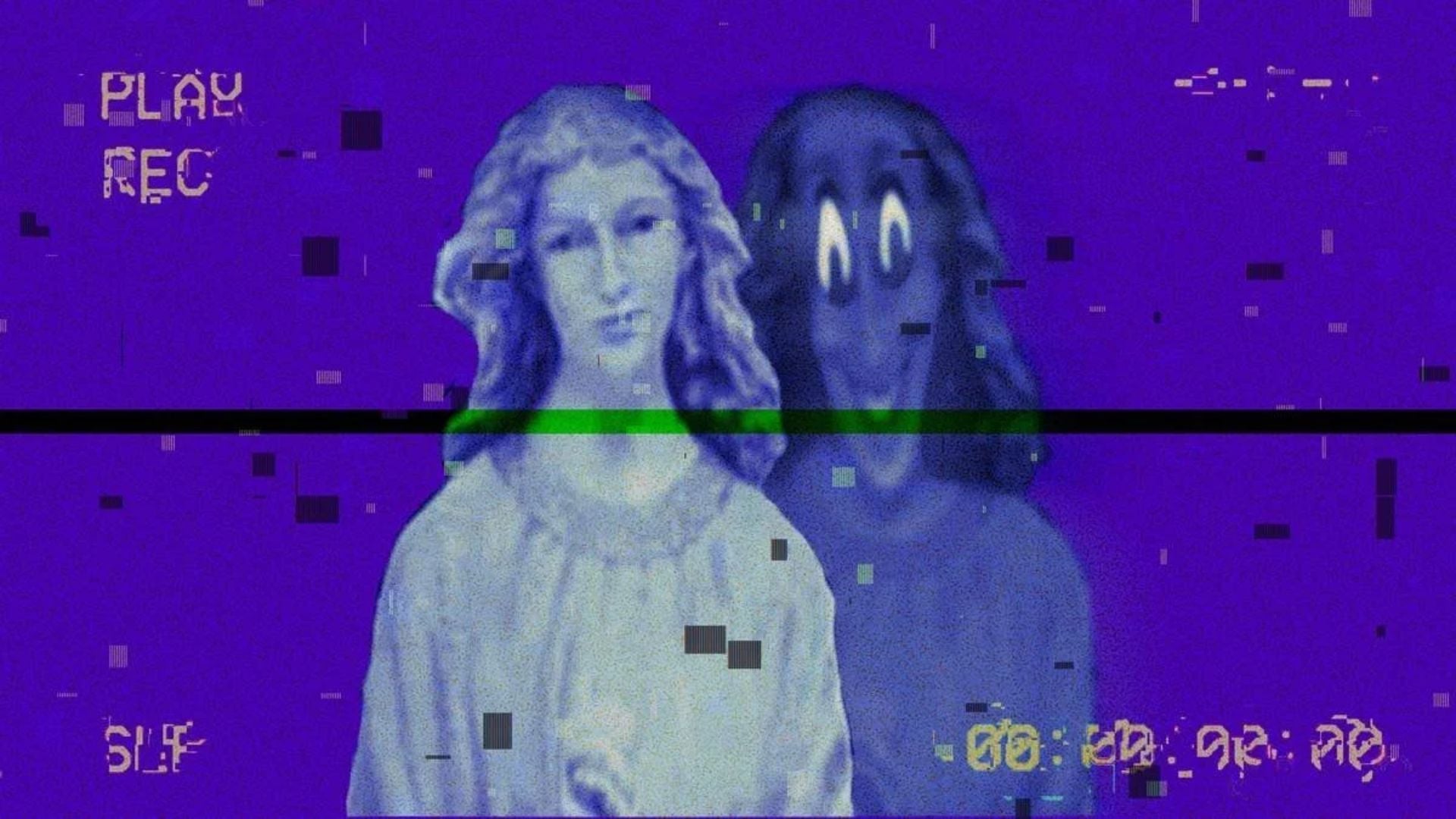
I particularly appreciate how some characters begin to suspect that there’s something wrong with their version of reality and that things weren’t meant to play out this way, especially when Mark utters the haunting line “who have I been praying to all this time?” That’s why I think The Mandela Catalogue is an effective piece of religious horror even if you don’t subscribe to the Christian worldview, as the mere idea of a world where evil has already won is a universally terrifying concept in and of itself. Not only that, but the series’ uncanny analog imagery alone is already worth the price of admission, as you’ve likely already noticed by looking at the pictures accompanying this article.
Why The Feature Adaptation Could Be Horror’s Next Big Success

It’s actually been a whole year since Kister first announced that he had been working on a feature-length screenplay for a Mandela Catalogue movie since 2022, with his proposed story following an ensemble of high-school graduates who uncover a supernatural conspiracy after the mysterious disappearance of a fellow student. This premise sounds similar to narrative elements present in the series’ second volume, but I’m pretty sure that Kister is going to go the Kane Parsons route and make the movie more of a spin-off than a re-imagining of its source material.
While notable Hollywood producers like Aaron B. Koontz, Scott Stuber, and Steven Spielberg himself are backing the upcoming project, I feel like there’s no one better to adapt this deeply personal exploration of faith and the dark side of communication than the person who first came up with it. That’s why I can’t wait to see Kister’s work on the big screen, as I have a feeling that this young filmmaker is the next one on the list about to make cinematic history – especially since this is clearly a passion project that has been in the works for years at this point!
That being said, there’s always a chance that the film could end up unleashing a fresh wave of Alternate incursions, but I guess that’s just a risk we’ll have to take.
You must be logged in to post a comment.