Editorials
00’s Retrospect: Bloody Disgusting’s Top 20 Films of the Decade…Part 3

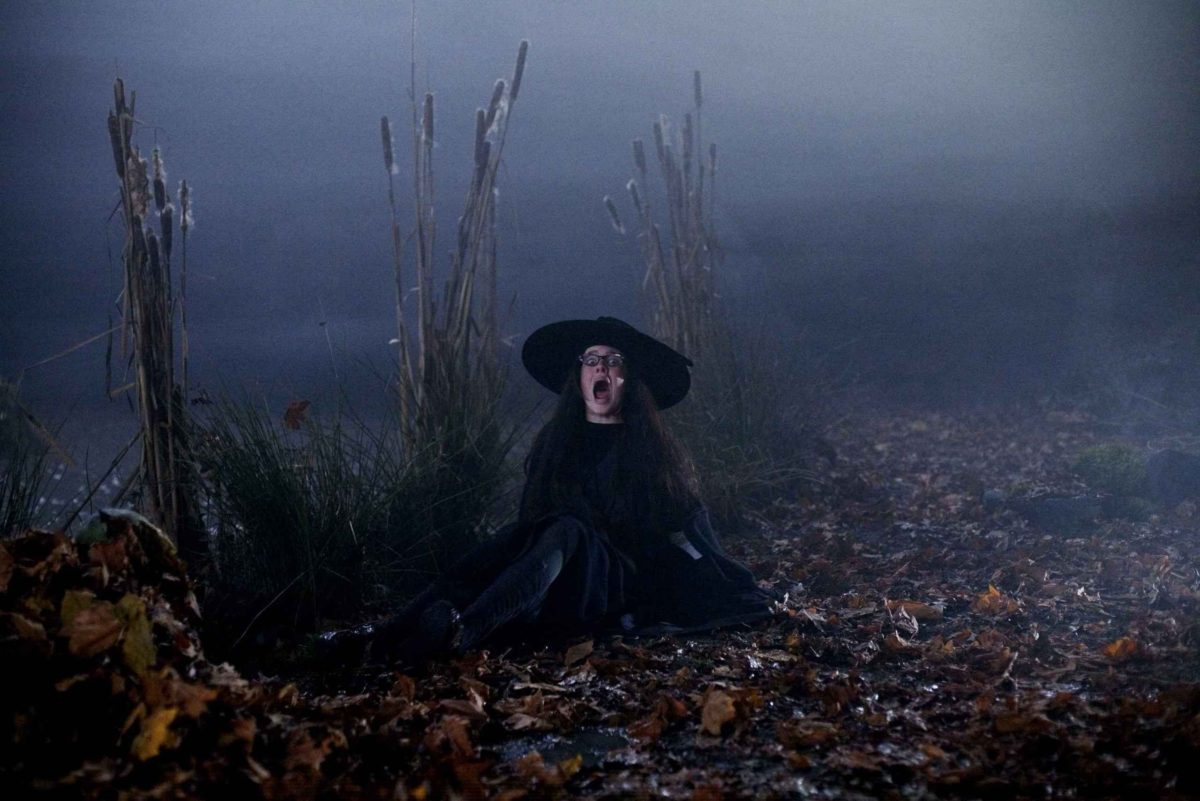
I tried to find a common theme among entries 10-6 in Bloody-Disgusting’s list of the Top 20 Horror Films of the 2000s, but after a head-scratching 30 minutes or so I realized there just isn’t one, at least not one that’s justifiable (people die in all five of them? They all have scary stuff?). But in a way, that’s one of the great things about horror cinema in the last decade – not only have there been a ton of amazing films, the diversity among them is astounding. In fact, there’s not one trend that can really sum up the decade, unlike the `80s (slashers) or the `90s (self-aware horror). Just goes to show how truly dynamic the genre has the capacity to be.
Also read: 00’s Retrospect: Dead on Arrival — Ten Horror Duds of the Last Decade
The last ten years have been a wild ride for horror fans. Thanks to countless innovators and a host of amazing films, it can safely be said that the 2000’s trump the 1990’s by a wide margin. Sure, that decade had groundbreakers like Scream and The Blair Witch Project, but that’s nothing compared to the number of great horror films (and, for that matter, the number of total horror films) that this decade has had to offer. To celebrate, the staff of Bloody-Disgusting decided to take a vote on the Top 20 horror films* of the 2000’s (along with one honorable mention), and the below list is the result. Looking over it, it’s actually pretty telling that nearly half the movies (9 out of 21) were produced on foreign soil, which just goes to show that this decade in horror was as much about the range of impressive imports as it was about the American product. Your favorites aren’t on there? Cry us a river. Or better yet, let us know what we missed. And make sure, at some point before the New Year, to get on your knees, clasp your hands together and pray to the horror gods to make the next decade as good as the last. – Chris Eggertsen
10. Saw (Lionsgate; October 29, 2004)

Perhaps the most influential horror film of the decade, Saw kick-started a franchise that became the highest-grossing in horror history (not adjusting for inflation, of course). The film has its detractors (although perhaps their disdain is directed more at the endless succession of sequels that followed), but in light of its measly $1.2 million price tag the film’s quality relative to bigger-budget horror films is striking. It also takes itself seriously, which came as a breath of fresh air following the trend of wimpy tongue-in-cheek horror that had dominated the multiplexes post-Scream. More than anything, this twisted morality tale is a film made by horror fans, for horror fans; it’s gory, it’s depraved, and best of all it introduced a new horror icon in Jigsaw. For that, and for the films it paved the way for, we should be thankful.
9. Trick `r Treat (Warner Premiere; October 6, 2009)

Michael Dougherty’s horror anthology is so good that its lack of a theatrical release (thanks a lot, Warner Brothers) borders on the criminal. Maybe the studio was scared off by the film’s candid black-heartedness; Hollywood often shies away from portraying the deaths of children onscreen, but when it’s done without apology, and even with a dose of humor (as it is here), the filmmakers may as well start digging their movie an early grave. Luckily, the horror community has rallied behind the film, a new Halloween classic that showcases four stories of madness and mayhem set during All Hallow’s Eve. When all is said and done, perhaps Trick `r Treat‘s greatest contribution to the world of horror cinema is proving that straight-to-DVD films can be just as good, if not better, then their theatrical counterparts.
8. Dawn of the Dead (Universal Pictures; March 10, 2004)

In a time when most remakes pale in comparison to the originals, Dawn of the Dead is something of a minor miracle. Sure, it’s not as good as Romero’s version. It’s not even as smart. But Zack Snyder brought an energy and a style to it that succeeded in making us forget about all that. Truly, you can analogize the two films based on their zombies alone – where Romero’s lumbered and took their time (in a good way), Snyder’s came at us, fast, with teeth bared like rabid dogs. He truly made his own version of Dawn of the Dead, his own way, with a distinctly 21st century sensibility. And why shouldn’t he have? There’s no way to really top the 1978 incarnation, so it makes perfect sense to just go for broke. And therein lies the beauty of Snyder’s film – he wasn’t out to best Romero; he just wanted to outrun him. And it worked.
7. 28 Days Later (Fox Searchlight; November 1, 2002)

Zombie movie? Political allegory? Humanist drama? 28 Days Later is all of those things and more – a genuine work of art by a director at the top of his game. What’s so amazing about the film is the way it so expertly balances scenes of white-knuckled, hell-for-leather horror with moments of intimate beauty. The “zombies” themselves – human beings infected with a blood-borne virus that causes them to fly into a murderous rage – are terrifying in part because of how quickly they transform. It’s not a slow, gradual conversion as in Romero’s Living Dead films but a near-instantaneous one that forces those around the victim to make a split second decision – kill or be killed? Of course, none of this would have mattered had Danny Boyle not been the one at the helm; it’s undeniably his movie, and it’s a transcendent movie-going experience.
6. The Ring (DreamWorks; October 18, 2002)

The Ring was not only the first American “J-Horror” remake out of the gate; it also still stands as the best. Some prefer Ringu, Hideo Nakata’s Japanese original, but Verbinski’s version is simply a better film. Witness the expertly paced opening scene, which stands as one of the scariest prologues in horror movie history and trumps the original by a mile. Witness the haunting and abstract imagery on the videotape itself, much more disturbing than in the Japanese film. Witness lead actress Naomi Watts, turning in a full-blooded performance as the reporter investigating the mysterious killer video tape. Koji SuzAdd Newuki, the writer of the book the Japanese film was based on, gets credit for that ingeniously simple premise. Verbinski gets credit for (re)interpreting it with such craftsmanship, and doing Nakata one better.
Editorial written by Chris Eggertsen
*Editor’s Note: For those of you interested in knowing how the list came to be, here’s an explanation. Bloody Disgusting writers collaborated on a list of some of the best films this decade. The entire list was given to the Bloody Disgusting staff who then built their own Top 20 lists. Each film was given a point value. 20 received 1 point, 19 received 2 points, and so on all the way to number 1, which received 20 points. The numbers were tallied and the result are the top films listed. The bonus film had tied with #20 and the tie was broken by the number of actual votes.
The following participated in the project: Mr. Disgusting, Tex Massacre, BC, David Harley, Ryan Daley, Chris Eggertsen, Jeff Otto, John Marrone, Horror_Guy, Mr_Bungle, Klown, Caustic Coffee and Tool Shed


Some movies are just so beloved that you can experience them through cultural osmosis without ever sitting down to actually watch them. From loving parodies to meticulous recreations of iconic scenes, memorable filmmaking lives on even after the curtains close on the silver screen. And when it comes to horror, few films can compete with the massive impact that Stanley Kubrick’s The Shining had on popular culture as a whole.
Whether or not you think the flick is a good adaptation of Stephen King’s seminal novel, 1980’s The Shining slowly but surely grew into one of the most influential genre movies ever made, inspiring everything from surprisingly heartfelt sequels to classic episodes of The Simpsons. However, not all The Shining references are created equal, and today I’d like to shine a light on six unexpected homages to Kubrick’s iconic film.
In this list, we’ll be focusing on references and Easter eggs that either came out of the blue or came from creators that you wouldn’t expect to be fans of this classic ghost story. That being said, don’t forget to comment below with your own favorite references to the Torrance family and the Overlook Hotel if you think we missed a particularly memorable one.
With that out of the way, onto the list!
5. A Nightmare on FaceTime – South Park (2012)

Regardless of the brand’s iffy reputation among former employees, the death of Blockbuster Video was a serious blow to fans of physical media. Of course, some folks were more affected by this than others, and South Park’s Randy Marsh definitely took things a little too far in the twelfth episode of the show’s sixteenth season.
Titled A Nightmare on FaceTime, the main plot of this 2012 story is a surprisingly faithful recreation of The Shining where Randy purchases an empty Blockbuster store and begins to go mad once he realizes that his investment may not have been a very good idea due to the rise of streaming and the now-defunct RedBox storefronts.
4. The Overlook Hotel Level – Ready Player One (2018)

I was never really a fan of Ernest Cline’s Ready Player One, so I viewed Stephen Spielberg’s divisive adaptation of the novel as an improvement over the source material despite having its own narrative issues. In fact, I actually prefer how Spielberg changed the story by removing several references to his own work and replacing a lengthy Blade Runner detour with an over-the-top homage to The Shining.
A CGI-heavy recreation of the film’s most iconic moments that feels like a big-budget ghost train ride set within the Overlook Hotel, this intense sequence is more of a recreation of the freaky aesthetics of The Shining rather than its mind-bending narrative. However, it’s still fun to see Spielberg make a heartfelt tribute to a filmmaker that was once his close personal friend.
3. IKEA Singapore Halloween Ad (2014)

It makes sense that commercials don’t typically borrow from the horror genre, as it might be a bad idea to scare away potential customers, but some references are just too much fun to pass up.
That’s probably why the publicists behind this Ikea ad from Singapore were allowed to turn their commercial into a genuinely unsettling recreation of Danny’s tricycle scene from The Shining. After all, nobody cares if your store is haunted so long as it offers late-night shopping hours and a large selection of merchandise that you can become lost in forever and ever…
2. The End of ‘Bondage and Beta Male Sexuality’ – Community (2014)

Community is no stranger to recreating iconic movie moments within the show, and the series had previously tackled horror tropes in episodes like the fan-favorite Epidemiology. However, the most laugh-out-loud moment on this particular list comes from a brief gag towards the end of the season five episode ‘Bondage and Beta Male Sexuality’.
The majority of this episode has nothing to do with scary movies, but there’s a brief subplot involving supporting character Chang and a possible encounter with ghosts that leads him to question his own existence. This subplot culminates in the episode’s hilarious ending where the camera zooms in on a black-and-white photograph of Chang in period clothing at some kind of celebration, just like Jack Nicholson at the end of The Shining.
However, the picture’s subtitle eventually reveals that it’s merely a conveniently placed keepsake from the ‘Old Timey Photo Club’.
1. The Overlook Hedge Maze Sequence – Zootopia 2 (2025)

Disney movies are pretty far removed from both the gruesome horror of Stephen King and the heady filmmaking of Stanley Kubrick, so I don’t think anyone was expecting the climax of last year’s Zootopia sequel to take place in an animated version of the snowy hedge maze from The Shining.
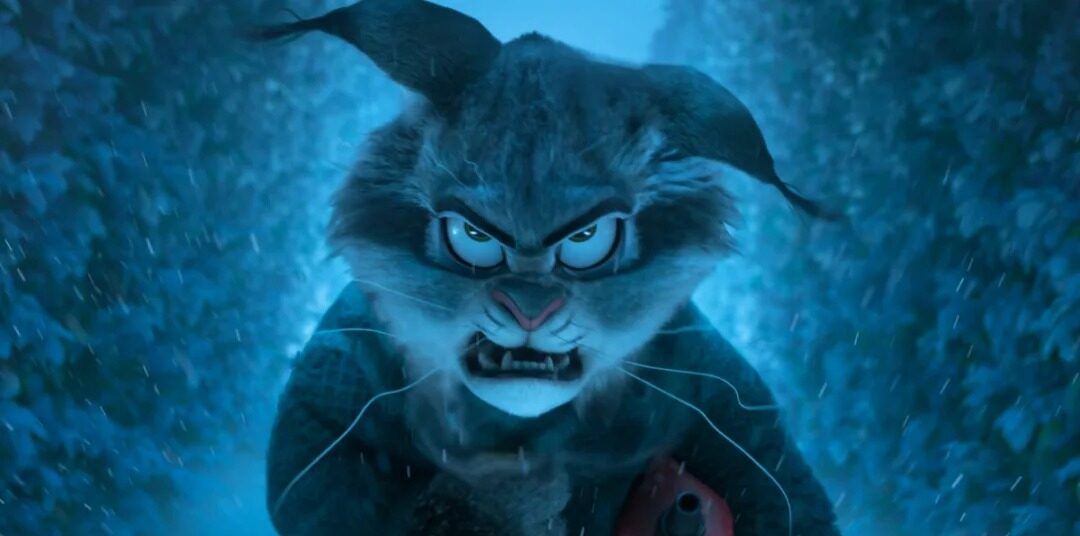
In this unexpectedly intense sequence, friend-turned-villain Pawbert Lynxley (an unhinged lynx cat played by Andy Samberg) chases our protagonists through a creepy labyrinth in a loving recreation of Jack Nicholson’s icy demise outside the Overlook Hotel. The actual ending here might be a little more child-friendly than what’s being referenced, but it’s amazing that the filmmakers were able to push the horror elements as far as they did – especially since the scene doesn’t really have anything to do with the rest of the movie.
You must be logged in to post a comment.