Movies
Good Neighbours (limited)
“These minor weaknesses aside – and to that last point – one of the central strengths of the film lies in how deftly it manages to defy audience expectations. Just when I thought I knew how things were going to play out, Tierney would toss in another left-field development to throw me off-balance. That is what a good thriller does, after all, and ‘Good Neighbors’ does it better than most.”

Quietly premiering last September at the Toronto International Film Festival, director Jacob Tierney’s surprisingly nasty little thriller Good Neighbors – based on the 1982 novel by Quebec writer Chrystine Brouillet – was subsequently picked up for distribution by Magnolia Pictures, who chose not to release it, as some expected, under their Magnet Releasing label. But the decision makes sense; Magnet specializes in releasing films with a more obvious “genre” bent (recent titles include “Trollhunter”, “Hobo with a Shotgun”, and “I Saw the Devil”), and “Good Neighbors” can best be described as a low-key, character-based suspense/thriller with one genuinely shocking and grisly jolt at about the halfway mark.
The movie opens with Victor (Jay Baruchel) – an unassuming, gawky elementary school teacher who seems stuck in some sort of perennial adolescent awkwardness – moving into a modest Montreal apartment building in the middle of winter. Soon enough, he forms a tenuous friendship with two of his peculiar neighbors: Spencer (Scott Speedman), a wheelchair-bound, vaguely passive-aggressive thirty-something who lost the use of his legs in a car accident that killed his wife; and Louise (Parker Posey lookalike Emily Hampshire), an emotionally-arctic waitress at a local Chinese restaurant who makes up for a seeming lack of human connection by fixating on her two cats.
If it all sounds like the setup to a kooky romantic comedy – complete with requisite quirky side characters including a flamboyantly alcoholic, cat-hating middle-aged female neighbor and two gossipy older women who eye the main players with a bemused air – it certainly doesn’t play that way. Rather than accentuating the off-kilter personalities of these individuals with light musical cues and a series of flattering close-ups, the camera lingers over their uncomfortable interactions from a cold, dispassionate distance. Even Spencer and Louise – who begin the film as friends, more or less – possess an uneasy chemistry; as they sit together late at night trading theories on a serial killer that’s recently been stalking the neighborhood, they regard each other with a peculiar air of suspicion. The murders, in fact, seem like the only thing they’re interested in; when Victor asks if they’d like to get together one night to watch the results of the Quebec referendum (the film takes place around the time of the 1995 secessionist vote), they seem positively flummoxed.
The first 15 minutes or so are an exercise in establishing a very specific tone, which is easy to mistake for clumsiness until you realize that the odd sense of dislocation we feel is a deliberate artistic choice. These are three individuals who were probably never meant to be friends, and Tierney perfectly captures – particularly in a discomfiting pre-dinner scene between Victor and Spencer – the piercing awkwardness of being stuck in a room with someone you can’t quite find a connection point with.
And yet, Victor seems intent on befriending these people – or more than befriending, in Louise’s case – to the point where he seems blind to their obvious contempt for him. Though Spencer has a slick surface charm – golden good looks, the grin of a lothario – there’s something cruel about the way he looks at people, as if he’s constantly probing for weakness. And while Louise at least gets out of her apartment to go to work most days (Spencer is essentially housebound due to the building’s lack of elevators), she doesn’t seem to have much of a want or need for non-feline companions.
Not that Victor is a complete innocent. There’s something disturbing about the way he lies and tells people that he and Louise, who he’s become smitten with, are engaged to be married, even when she’s sitting within earshot. That’s a standard romantic comedy trope, too – character fibs about having a relationship with another to bolster their image or social standing – except that in a film like While You Were Sleeping, for example (which has Sandra Bullock’s character telling the family of a man in a coma that she’s his fiancé, for god’s sake), it’s usually played for laughs and cheap sentiment. Here, Tierney lays bare the troublesome implications of such a proclamation by depositing it within a film that simmers with an underlying sense of malice.
All of this being set against the looming threat of a vicious serial killer, the question then becomes just how much of this odd trio’s behavior can be chalked up to garden-variety human dysfunction, and how much is symptomatic of something more sinister. While I will say that the answer to that question seems to present itself fairly early on, around the midway point Tierney shocks us with a horrifically-staged, unexpectedly protracted murder scene – which is, without a doubt, one of the most disturbing (and blackly, blackly, blackly humorous) on-screen kills of the past several years – that presents us with a whole new layer of morbid dysfunction.
The film wouldn’t be as successful as it is, of course, were it not for three terrific lead performances. As Spencer, Speedman is the best I’ve ever seen him, skillfully pinning his character’s calculating outer charm to an uncomfortable suggestion of inner malevolence. Hampshire is equally good, inhabiting the damaged soul of the hard-bitten Louise while also managing to wring laughs out of her misanthropic temperament in unexpected places. Baruchel takes a little longer than these two to settle into his character – in the beginning his collection of nervous tics can feel distracting – but as the film goes on he succeeds in hinting at the deeper emotional insecurities that lie beneath Victor’s floundering attempts at social connection.
If the film has a central flaw, it lies in the fact that Spencer, Louise, and Victor remain something of an enigma to us throughout. While Tierney’s standoffish tone (he also wrote the script) works in conveying the essential cynicism that lies at the heart of the story – as much as we think we know people, once that door closes behind them we don’t really know them at all – it also precludes total investment in the ultimate fate of the three main characters. And while there does seem to be some political subtext at work here, it feels rather half-formed and superfluous (although in fairness, I’m not exactly a scholar of Quebecois politics). There are also a couple of nagging logic concerns I have regarding the police investigation following the second-act murder, though I won’t go into them here for fear of giving away too much of the twisty-turny plot (something the Magnolia marketing team obviously neglected to consider when they cobbled the trailer together).
These minor weaknesses aside – and to that last point – one of the central strengths of the film lies in how deftly it manages to defy audience expectations. Just when I thought I knew how things were going to play out, Tierney would toss in another left-field development to throw me off-balance. That is what a good thriller does, after all, and Good Neighbors does it better than most.


I first heard about The Mandela Catalogue through a couple of nephews who were obsessed with the ARG’s sinister mythology. It was only after watching Wendigoon’s in-depth analysis of the series that I realized just how deep this rabbit hole goes.
In fact, I’d already been exposed to the nightmarish visuals of Alex Kister’s YouTube creation for years at that point without even realizing that it was the origin of several viral “cursed images” and spooky memes that had leaked into the wider internet – with this viral element actually being a part of the Catalogue’s overarching narrative.
Flash-forward to 2026 and the unprecedented success of Kane Parsons’ Backrooms has led to Hollywood betting on horrific internet properties with existing fanbases, which means that Kister’s unique hybrid of both religious and analog horror is finally headed to the big screen with a script written by Kister himself alongside Tyler Clifton.
While this news shouldn’t be too surprising if you’ve been keeping up with the ongoing success of The Mandela Catalogue (both myself and Wendigoon having previously predicted that the series would inevitably make the jump to theaters one day), plenty of horror fans are likely confused as to why so many folks are excited for what appears to be a Hollywood adaptation of a series of creepy .jpeg images under a VHS filter.
With that in mind, today I’d like to invite fellow readers to accompany me as I explore the origins of Alex Kister’s viral hit and attempt to explain exactly why we should all be excited about the Mandela Catalogue adaptation!
From High School Writing Project to Internet Horror Phenomenon

The first seeds of The Mandela Catalogue were sown when Kister was still in high school and developed a writing project subverting religious tropes in a world where biblical history had been altered by demonic forces. A little while later, Kister came across an analog horror contest on Reddit and decided to adapt his ideas into a standalone video where he would edit a religious kids’ cartoon –The Beginner’s Bible: The Nativity, to be specific- into something far creepier. This is how the iconic Overthrone video was born, with this viral short film taking on a life of its own as fans demanded more eerie content from Kister.
Though the video was originally meant to be a one-and-done sort of affair, with Kister actually regretting some of its primitive visuals and considering the editing amateurish and “YouTube-Poop-like” when compared to his current standards, fan reaction and free time during the COVID-19 pandemic encouraged the (then) seventeen-year-old filmmaker to continue producing content set in this same world. The Mandela Catalogue name was inspired by the Mandela Effect conspiracy theory, as the series would slowly begin to explore the subtle horror of alternate histories.
Inspired by existential dread brought on by extended periods of quarantine as well as a personal crisis of faith, Kister continued to expand his alternate timeline where the rise of Christianity had been prevented by what was presumably the Devil disguised as the Archangel Gabriel. This alternate course of fictional events led to the existence of certain paranormal anomalies that had come to be accepted as “normal” by the 1990s, which is why most of the series’ supernatural horror is presented in such a matter-of-fact manner.
Most of this background information and religious lore is delivered by increasingly cryptic broadcasts and in-universe PSAs, as well as the occasional found footage video, that often have to be decoded by clever viewers. Of course, it’s the consistently disturbing imagery that made the series so popular – much of which was originally created by Kister on a smartphone!
The Alternates: Horror’s Most Unsettling Modern Monsters

The show’s early episodes mostly take place within the fictional Mandela County in Wisconsin and depict life in a world where demonic entities are capable of using media to enter our reality. This process usually involves scaring victims into killing themselves and then repurposing their bodies as horrific doppelgangers referred to as “Alternates”. This terrifying phenomenon has become so common that local police already have specialized procedures in place to deal with the issue, though this usually consists of simply ignoring calls for help so as to avoid spreading so-called “Metaphysical Awareness Disorder” any further.
Over time, Kister would expand this mythology and incorporate different kinds of Alternates into the mix, though the story never stopped deconstructing religious concepts. The series’ second volume exponentially increased both video quality and the overall narrative scope as we began to follow the lives of characters who had already grown up in this dystopian hellscape where the government is forced to prohibit religion, television, and even mirrors in the hopes of mitigating the damage done by the ongoing invasion of otherworldly entities.
The really interesting part comes into play when you realize exactly how the Alternates make use of scary media in order to spread their demonic influence, with the analog horror of it all being a diegetic part of the story and something of a memetic trap orchestrated by the false Gabriel.
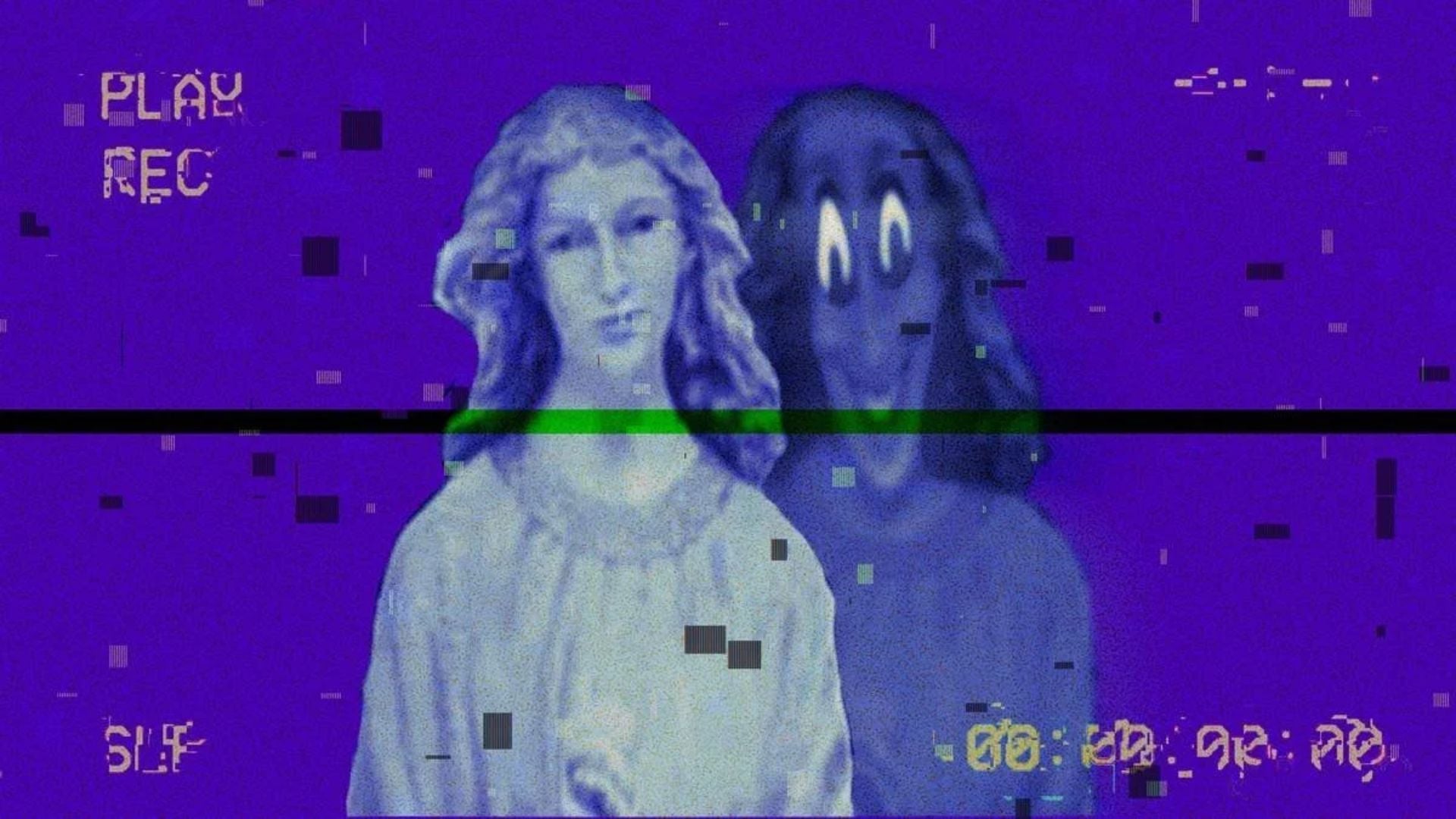
I particularly appreciate how some characters begin to suspect that there’s something wrong with their version of reality and that things weren’t meant to play out this way, especially when Mark utters the haunting line “who have I been praying to all this time?” That’s why I think The Mandela Catalogue is an effective piece of religious horror even if you don’t subscribe to the Christian worldview, as the mere idea of a world where evil has already won is a universally terrifying concept in and of itself. Not only that, but the series’ uncanny analog imagery alone is already worth the price of admission, as you’ve likely already noticed by looking at the pictures accompanying this article.
Why The Feature Adaptation Could Be Horror’s Next Big Success

It’s actually been a whole year since Kister first announced that he had been working on a feature-length screenplay for a Mandela Catalogue movie since 2022, with his proposed story following an ensemble of high-school graduates who uncover a supernatural conspiracy after the mysterious disappearance of a fellow student. This premise sounds similar to narrative elements present in the series’ second volume, but I’m pretty sure that Kister is going to go the Kane Parsons route and make the movie more of a spin-off than a re-imagining of its source material.
While notable Hollywood producers like Aaron B. Koontz, Scott Stuber, and Steven Spielberg himself are backing the upcoming project, I feel like there’s no one better to adapt this deeply personal exploration of faith and the dark side of communication than the person who first came up with it. That’s why I can’t wait to see Kister’s work on the big screen, as I have a feeling that this young filmmaker is the next one on the list about to make cinematic history – especially since this is clearly a passion project that has been in the works for years at this point!
That being said, there’s always a chance that the film could end up unleashing a fresh wave of Alternate incursions, but I guess that’s just a risk we’ll have to take.
You must be logged in to post a comment.