
Editorials
Bring on the Gore: Top Ten Practical Effects in Horror!

In 1984, a horror icon was born by the name of Freddy Krueger, in Wes Craven’s landmark horror classic A Nightmare on Elm Street. Key to the film’s success was the special makeup effects work by David B. Miller, who created the celebrated dream-stalker’s gruesome visage. It is this sort of practical effects work that has largely (and regrettably) been discarded in modern filmmaking, but any true horror fan knows there’s nothing more satisfying than some good, in-camera gruesomeness.
With the invention of CG and its quick takeover of most modern effects work, practical effects have become something of a forgotten art in 21st century cinema. Sadly, something is lost with these programmed creations; there is a resourcefulness, an ingenuity involved in practical effects work that simply doesn’t translate to pounding keys in front of a computer. Nothing can ever replace the joy of watching a hand-made effect, lovingly created, projected on the movie screen in front of you. It is this sort of invention we are celebrating here – the practical effects work in horror films that wowed us without being enhanced through digital wizardry. Following are MY PICKS for the ten best (in alphabetical order by movie title). Note: While each effect has only one or two key special effects artists listed, I am in no way denigrating the contributions of any others involved in their construction and/or implementation.
Alien (1979): Chestburster Scene
Artists: Brian Johnson & Nick Allder
Winning the Oscar for Best Visual Effects that year, Alien‘s most memorable effects shot remains the justifiably famous “chestburster” scene, during with John Hurt’s character “gives birth” to a xenomorph through his chest cavity. Shot in one take using four cameras, the “chest-bursting” effect was created using an artificial torso filled with real cow’s blood and intestines, through which the alien puppet was shoved by a guy below the table (a total of three separate puppets were used in different portions of the scene). The effect was so incredibly realistic that star Veronica Cartwright had a well-documented freakout/slip-and-fall when an unexpected amount of blood sprayed directly into her face during filming.
Aliens (1986): Alien Queen
Artist: Stan Winston
Winston won an Academy Award for his work on the film, for his life-size creation of the Alien Queen, standing at fourteen feet tall and requiring 14 to 16 simultaneous operators to bring it to life. Using a combination that included hydraulics, puppeteers, and control rods, the Queen was filmed completely in-camera, and it’s this tangible quality that makes her feel so terrifyingly realistic on screen. The amount of blood, sweat and tears that went into her construction shows in every frame, and puts every modern CG monster to shame.
An American Werewolf in London (1981): Werewolf Transformation
Artist: Rick Baker
Lest you underestimate the impact of Rick Baker’s work on An American Werewolf in London, the “Outstanding Achievement in Makeup” category at the Academy Awards was created specifically as a result of the amazing transformation sequence undergone by David Naughton’s character. The stunningly realistic effects work – created through a combination of prosthetics and fake animatronic body parts – comes across so flawlessly on screen that watching it causes you to viscerally experience the character’s agony. Nearly 30 years later, this remains the greatest werewolf transformation in cinema history.
Braindead (1992): Face-splitting baby
Artists: Richard Taylor & Bob McCarron
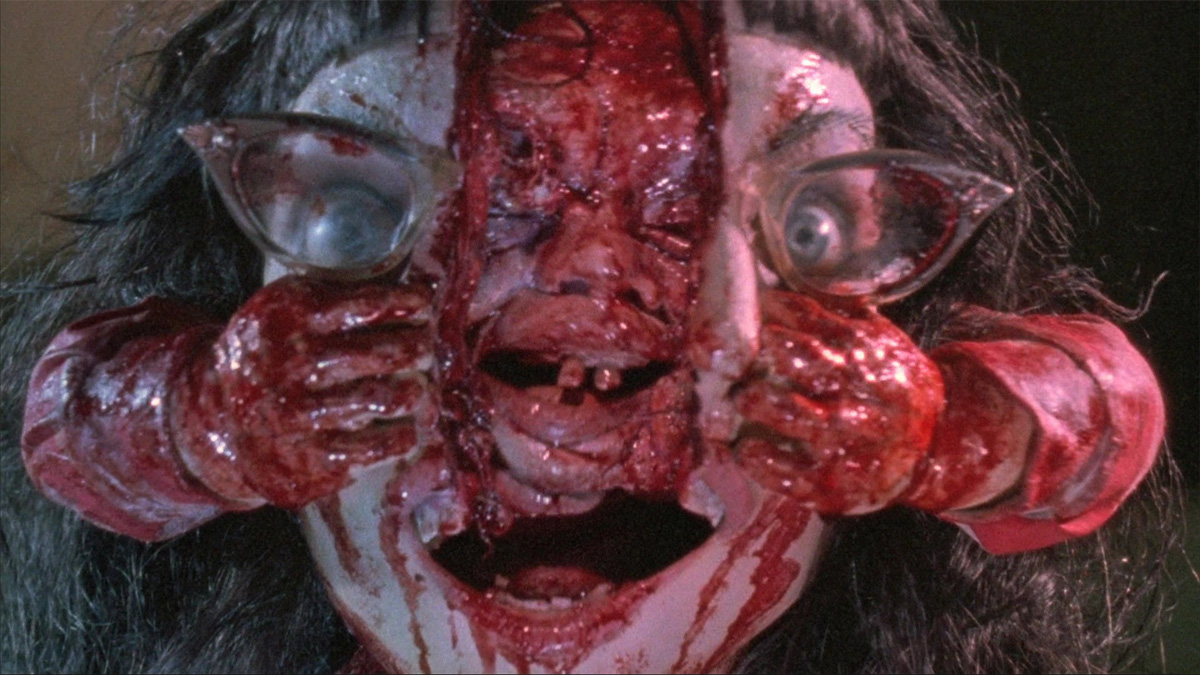
It’s tough to peg just a single gore effects shot in a film overloaded with them, but on the other hand it would be wrong not to include Peter Jackson’s “splatterstick” Braindead somewhere on this list. After culling through the gore sequences in the film once again, my vote goes to the shot where Rita (the chick with the groovy `50s-style glasses) has her face split in two by baby zombie Selwyn as he emerges from inside her head cavity. In a movie overloaded with ingenious special effects, this one is quite possibly the most memorable (followed closely by the scene where a man has his ribcage pulled from his chest as he watches).
The Fly (1986): Brundle’s final transformation (“Brundlefly”)
Artist: Chris Walas
In a movie filled with amazing special effects, it was Jeff Goldblum’s final transformation into the “Brundlefly” that stands as the most amazing (and sickest) effects sequence in the entire film. From the shot of Geena Davis ripping off Brundle’s jaw (after which it becomes a pulsating lump of living flesh on the floor) to the shedding of the outer skin on his legs like rotten meat, to the climactic “head splitting” moment that’s enough to make those with weaker constitutions lose their lunch, it’s truly a seamless, breathtaking transformation that’s undoubtedly Chris Walas’ crowning achievement (he won an Academy Award for the film).
Frankenstein (1931): Frankenstein’s Monster
Artist: Jack Pierce
No list of special effects makeup in horror would be complete without the inclusion of Jack Pierce’s now-iconic work creating the Monster in James Whale’s 1931 classic Frankenstein. Taking four hours, the makeup job consisted of “building” the Monster’s square head using gum, cotton and collodion, with green paint to give Karloff a pale appearance on the black-and-white film stock. Impressive too was the fact that Pierce did an enormous amount of research on surgical methods, anatomy, and ancient burial customs to create an “authentic” look. What resulted was not only the most famous makeup job in film history, but one of the most seamless as well – it holds up even by today’s standards.
Friday the 13th (1980): Kevin Bacon Death Scene
Artist: Tom Savini
Savini himself has referred to this “arrow through the neck” effect as being more of a “magic trick” than anything, and like the best magic it’s 100% convincing. I’ve seen every single Friday the 13th movie and they’ve definitely had their share of inventive kills, but none as singularly effective and realistic as this one. You could gripe that this one’s too simplistic to make the list, but I would argue that it’s not as much about the complexity of the effect but the realism of it. Judged that way, this sets the gold standard for gore effects in the modern slasher film.
The Phantom of the Opera (1925): Unmasking
Artist: Lon Chaney, Sr.
Some audience members were said to have fainted during the unmasking scene in The Phantom of the Opera‘s initial run, and while in our desensitized modern culture it doesn’t inspire the same intense response, the makeup job is still strikingly effective. Chaney, a master at applying his own makeup (first in The Hunchback of Notre Dame two years earlier) was a pioneer in the field; while not as elaborate as the others listed here, Chaney’s skull-like appearance as the Phantom is just as impressive, amazing considering the film is now 85 years old. By applying black paint around his eyes, putting a set of ghastly false teeth in his mouth, placing celluloid discs in his cheeks to change the shape of his face, and – ow – inserting wire pins in his nose to enlarge his nostrils (among other things), Chaney managed to create one of the most (painfully) convincing makeup jobs in film history.
Scanners (1981): Exploding Head
Artist: Dick Smith
While it didn’t require the time or lengthy shooting schedule of some of the other effects on this list, Dick Smith’s “exploding head” gag in Scanners is nevertheless one of the greatest, most memorable practical effects shots in horror history. To create the effect, Smith filled a prosthetic head with dog food and rabbit livers, then blew it apart with a shotgun fired from behind. If you freeze-frame it just before the blood-drenched explosion, you can even see that the prosthetic head – created utilizing the Smith-pioneered approach of applying small pieces of foam latex rather than one solid mask – is itself strikingly realistic.
The Thing (1982): Defibrillator Scene
Artist: Rob Bottin
This unforgettable sequence, with masterful effects by Rick Baker protégé Rob Bottin, showcases a skin-crawling chain of events beginning with two severed arms (clear!) and ending with one severed alien head (which, incidentally, goes on to sprout “spider-legs” and crawl across the floor) being blasted with Kurt Russell’s flamethrower. Sadly, the film was a box-office flop on its release, and Bottin wasn’t even nominated for an Academy Award for his work on the film. Which movie won? Uh…Quest for Fire. It’s about cavemen or something. Yeah, I’d never heard of it either.
Editors note: this content has been republished from our vault


The problem with filming sequels back-to-back is that, unless you can afford expensive reshoots, there’s no easy way to adjust course in between movies if fans react badly to where the story is headed. That’s why it’s important to have a complete narrative thought out well in advance lest you accidentally kill a budding franchise.
However, this isn’t always the case. Every once in a while, it seems like the cinema gods smile upon certain chaotic productions and gift moviegoers with complete franchises that feel like more than the sum of their hastily produced parts. Ted Nicolaou’s Bloodlust: Subspecies III is precisely one of these miraculous pictures, with the raw talents of the artists involved (as well as the continued support from Romania) turning the feature into an effective conclusion for a series that kind of made things up as the filmmakers went along.
That’s why I’d like to invite my fellow readers to join me on this third part of our journey through the Subspecies franchise as we look into Bloodlust and talk about how it remains a surprisingly satisfying finale to the original trilogy.
A Trilogy Planned on the Fly

Released only a year after Bloodstone found plenty of success in rental stores and mail-in VHS catalogues worldwide, 1994’s Bloodlust was produced at the same time as its predecessor in (mostly) the same locations and with the same team. This means that the movie benefited from all the same upgrades as Bloodstone, with the crew now being more experienced with the ins and outs of surviving a low-budget Romanian production and the cast really settling into their characters.
At this point, everything from location scouting to the makeup process had been streamlined, with Wayne Toth and Norman Cabrera, the main duo behind special effects, even switching out time-consuming prosthetics for latex gloves in order to speed up Anders Hove’s monstrous transformation. The titular “subspecies” demons were also once again relegated to a mere cameo appearance due to the laborious puppetry required to bring them to life.
The only real hiccup came from the fact that actress Denice Duff had replaced the first film’s Michelle (Laura Mae Tate) and was immediately expected to portray the character as both an innocent victim in part II and as a secondary villain in part III. According to behind-the-scenes interviews, the hectic production schedule that blended two different movies meant that Duff would often find herself having to alternate between two incredibly different versions of Michelle during the same shooting day – though it’s obvious that she’s having more fun with Bloodlust’s more traditionally vampiric version of her character.
In the finished film, we pick things up immediately where the previous entry left off as Rebecca (Melanie Shatner) is forced to leave her vampire sister Michelle (Duff) behind in the dungeons of Castle Vladislav due to the rising sun. This allows Mummy (Pamela Gordon) to use Michelle’s blood to revive the vicious Radu (Hove) so that he may continue his quest for the coveted Bloodstone – a magical artifact that perpetually drips the Blood of Saints.
Meanwhile, the dreamy US embassy agent Mel (Kevin Blair) agrees to help Rebecca plan a rescue mission, though they’re unaware that Radu has become infatuated with Michelle during his attempts to guide her growing bloodlust. This all culminates in a climactic confrontation meant to tie up all of the series’ loose ends in one of Full Moon Pictures’ most ambitious productions.
The Evolution of Radu

Like its predecessor, Bloodlust: Subspecies III was also warmly received by fans who argued that the series was an even bigger success than Full Moon’s other major horror franchise, Puppet Master. This praise wasn’t unanimous, however, as 1994 had seen the rise of a more modern breed of sexy vampire popularized by Anne Rice, with old-school Nosferatu like Radu being viewed as obsolete when compared to the likes of Lestat and Gary Oldman’s take on Dracula.
In a way, one might argue that Nicolaou’s film is something of a swan song for the classic vampire story, as Bloodlust combines all of the traditional elements we tend to associate with these tales into a single tragic yarn that ties a neat little bow on Radu’s story as well as the old-fashioned monster movies that he represents. The finale remains shocking despite the fact that this is the third time we see Radu get brutally killed onscreen, with the brief tease that he may one day return feeling more like a nod towards the nature of evil rather than sequel bait.
The film dabbles a bit in gothic romance and even explores the inherent power fantasy behind transforming into an immortal creature of the night, but the filmmakers never lose sight of Radu as a demonic force even when he’s willing to betray his beloved Mummy for Michelle’s sake. In fact, his twisted “love” for his fledgling makes him even creepier as we get the feeling that his passion comes from a dark and disturbing place.
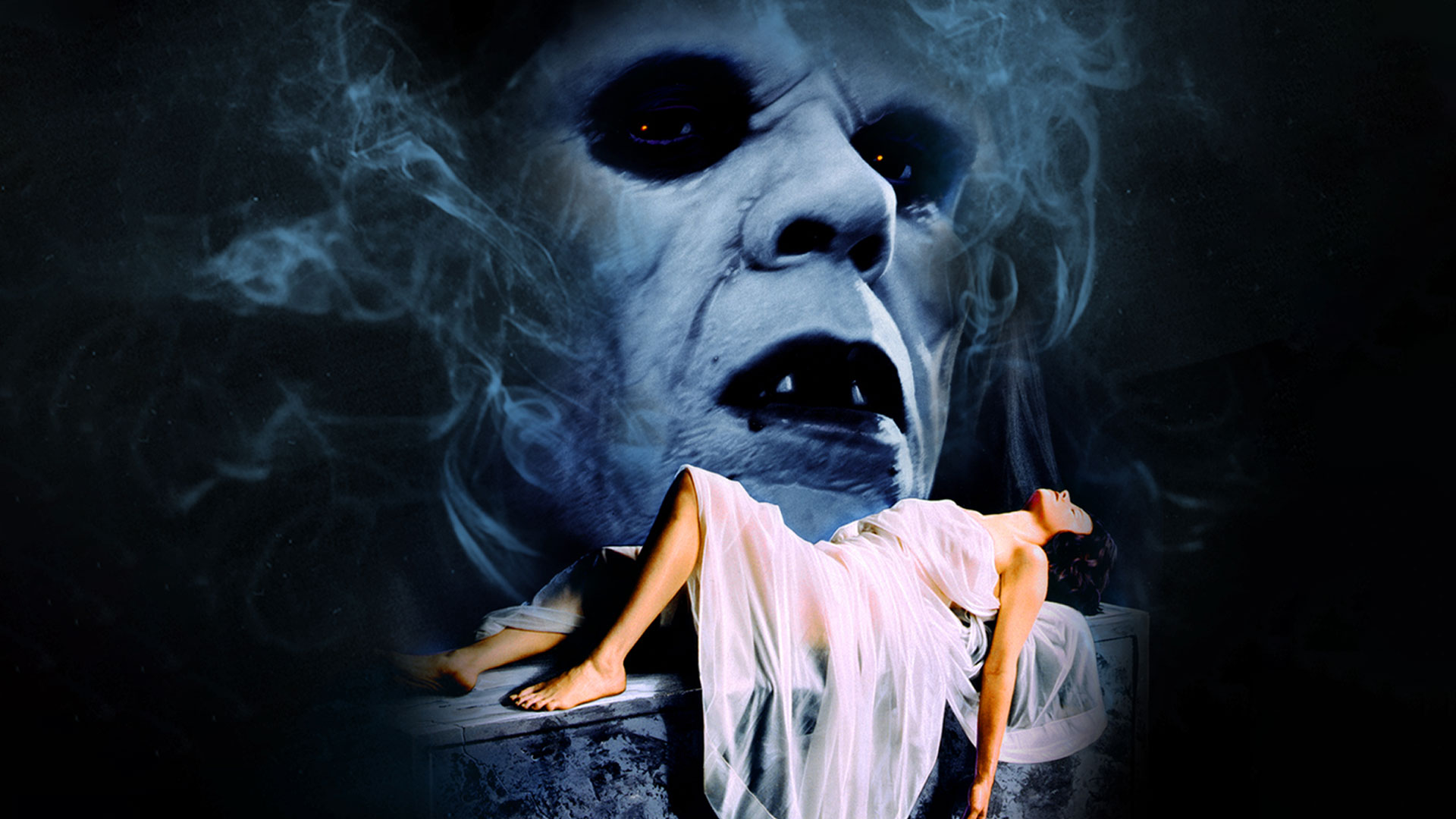
Anders Hove is at his absolute best in this film, with the effects department boosting his moments of what the younger generation would call “aura farming” whenever Radu emerges from shadows like a 90s version of Count Orlok. There are even a couple of surprisingly effective jump-scares here, which is why I’d argue that Bloodlust cements Radu as one of the most memorable cinematic vampires of all time despite his humble origins.
Subspecies Saves Its Best For Last

Nicolaou and Vlad Panescu also saved the best for “last” (more on that in a bit) regarding the film’s visuals, with the cinematography and overall atmosphere of Bloodlust absolutely surpassing what we saw in the previous films. Everything feels appropriately climactic this time around (including the wonderful soundtrack that was co-composed alongside an authentic Romanian orchestra), and I appreciate how this is the fastest-paced entry in the trilogy since the film doesn’t need to waste time setting anything up.
Bloodlust still suffers from some of the same low-budget blemishes as its predecessors, but there’s so much creative passion here that no amount of wonky effects work or stilted dialogue can get in the way of appreciating the flick’s gothic grandeur. That’s why it’s not surprising that the movie’s definitive(-ish) ending would later be retconned as fans begged for more Radu.
Of course, the next entry in this series would be a different kind of vampiric endeavor altogether, with the filmmakers attempting to engage with the same trends that ultimately killed Radu and his antiquated kin. That, however, is a story for another time. For now, I’ll merely insist that Bloodlust: Subspecies III remains a highlight of Full Moon’s expansive catalogue and is definitely worth seeking out today.
You must be logged in to post a comment.