Home Video
Blu-ray Review: Anchor Bay’s ‘After.Life’

Anchor Bay gave After.Life a traditionally crappy Anchor Bay theatrical release earlier this spring, but DVD/Blu-Ray is where it will find its audience, so I don’t know why they bothered. 75% of the movie takes place in a mortician’s lab, and nothing much happens – it’s hardly the type of movie you have to see on the big screen. It simply plays better at home, and also makes a 2nd viewing (or at least some rewinding) much easier on your wallet.
 Because, you see, After.Life is one of those movies that they never quite come right out and answer its central question; in this case, whether or not Christina Ricci’s character is alive and being held by a nut (Liam Neeson), or if she truly IS dead and Neeson is just trying to settle her soul (he claims he can communicate with the dead). Either scenario is plausible to a certain extent – there are some minor plot holes either way (if she’s dead why isn’t she decomposing after this many days; if she’s alive how come she never gets hungry or thirsty), but both work, and I don’t think believing one over the other really matters, ultimately, since the real question of the film is what it actually MEANS to be alive (or dead).
See, Ricci’s character is pretty unlikable – she gets angry with her boyfriend (Justin Long, more or less playing his Drag Me To Hell character, albeit less comic relief-y) for no reason, acts cold toward others, etc. As Neeson asks her later in the film, even when you were alive, were you REALLY alive? It seems she wasn’t getting anything out of life, so her technical death shouldn’t even matter to her. It’s an interesting backdrop, and gives writer/director Agnieszka Wojtowicz-Vosloo some creative license to use stock “hostage” clichés (trying to find the right key, trying to call for help, etc) under unique circumstances, making them feel less generic.
DVD will also help you with the most crippling flaw of the film – it’s too damn long. 102 minutes isn’t exactly Gone With The Wind, even for a horror movie, but when the plot is this thin, we really should be into 80-85 minute territory (with credits), tops. There are only so many times we can watch Neeson talk to Ricci after catching her in some escape attempt, or watch Paul try to convince someone that Neeson is up to no good, before you start to wonder if you are indeed dead yourself, your hell being caught in a moebius strip of scenes. And the fact that they never provide a clear answer to things makes the length even more frustrating – it delays a non-resolution.
However, Vosloo does give the answer in both her commentary track and the film’s lone extra feature, which is a brief interview that’s sort of a cliff’s notes version of the commentary. I was somewhat delighted to discover my initial interpretation was wrong (I’d rather be wrong than tell you exactly how a movie will play out just after watching the opening ten minutes), and then got to feel nice and dumb about missing some fairly obvious clues (though in my defense, I actually went to grab a drink at one point and missed the most telling one). Some are more subtle than others, obviously, and it will be fun for any viewer to see how many they caught (or missed). I would have liked something a bit different, but the recycled aspect of the two features is also kind of nice – if you really liked the movie you can watch the commentary; if you just want to know if you were right or wrong, you can watch the 8 minute interview.
I also noticed something odd about Anchor Bay’s blu-rays – they do a much better job with their catalog titles than their newer releases, at least for the video portion. The sound mix (available in both uncompressed PCM and Dolby Digital 5.1) is terrific, with Neeson’s unmistakable voice coming through loud and clear (it’s a very talky movie) and the quite good score by Paul Haslinger sounding like he was in the room with you. But the video was far short of demo quality – while stuff like Children of the Corn and Hellraiser look positively majestic on their high def releases, After.Life, like Grace, looks a bit softer than I would expect. The colors and contrast ratios are definitely there (especially in the scenes of Ricci wearing her bright red slip in the otherwise cold/green lab scenes), but details are much less impressive than on their other films. Hopefully Frozen (which was released before After.Life in theaters, yet is hitting DVD later) won’t have the same problem. I want to see droplets of water on those snowflakes, goddammit!
Film: 6/10
Extras: 6/10
AV: 7/10
Overall: 6/10



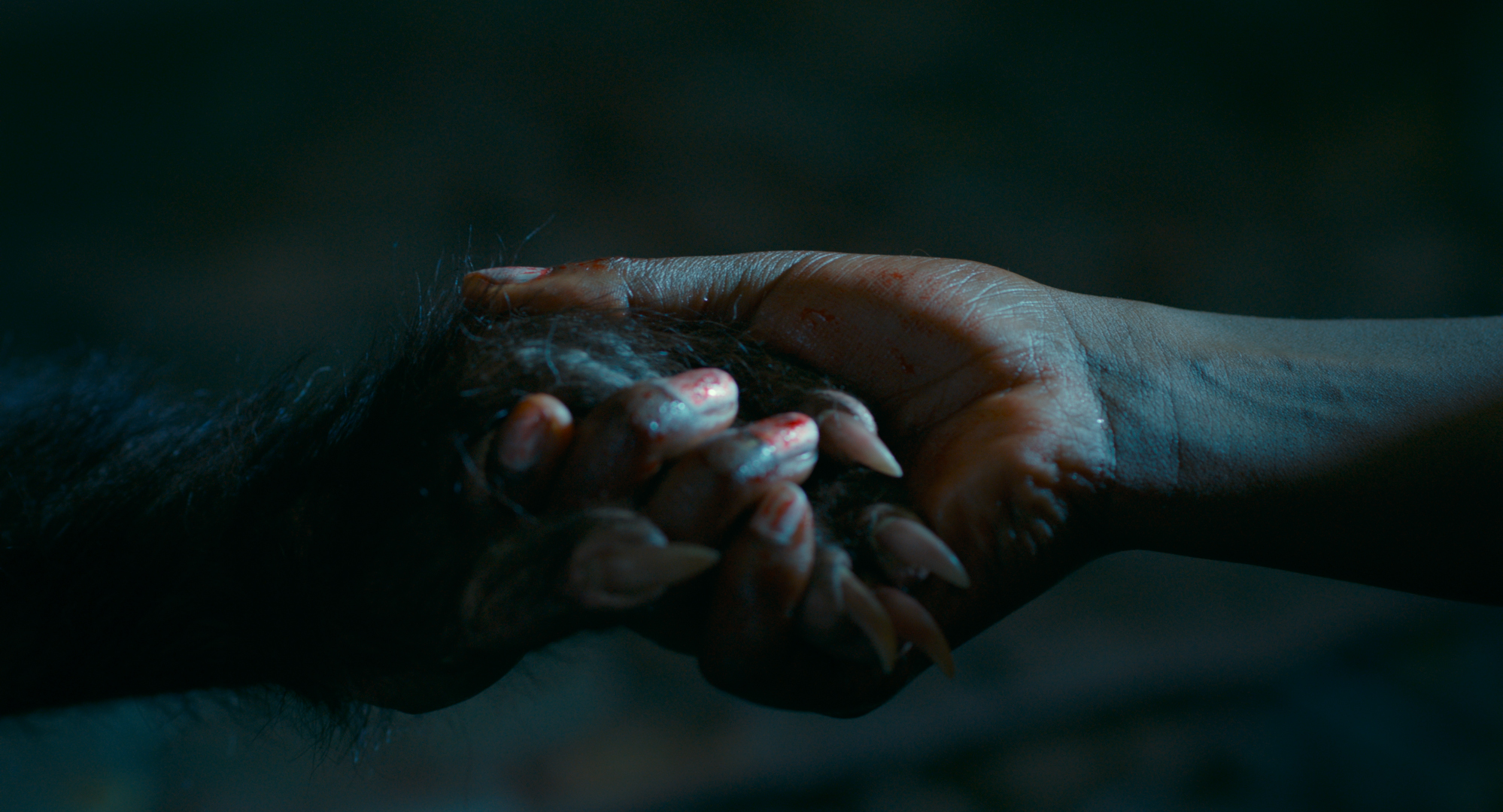
One of contemporary horror’s best werewolf movies is 2017’s Good Manners, and it’s finally set to receive a proper physical media release.
Icarus Films is partnering with OCN Distribution to unleash a new Blu-ray that’s now available to preorder via Vinegar Syndrome. and with a limited edition slipcover.
Set in São Paulo, the film follows Clara, a lonely nurse from the outskirts of the city who is hired by mysterious and wealthy Ana to be the nanny of her soon to be born child. Against all odds, the two women develop a strong bond. But a fateful night marked by a full moon changes their plans.
Good Manners is the second collaboration between filmmakers Juliana Rojas and Marco Dutra, who write and direct. Zama’s Rui Poças‘ cinematography captures this unique werewolf tale described as “Disney meets Jacques Tourneur.”
Our own Trace Thurman wrote in his review, “With Good Manners, Rojas and Dutro have made one of the best werewolf movies ever made. That they are able juggle commentaries on racism and classism while still managing to tell two deeply affecting love stories is remarkable.”
BONUS FEATURES:
- Commentary from film critics Shelagh Rowan-Legg and Carolyn Mauricette
- 12-page booklet with an essay by film critic Nicolas Pedrero-Setzer
- Making-of short film: The Making of a Werewolf (2 mins)
- Two additional short films from the filmmakers: A STEM (15 mins), directed by Juliana Rojas & Marco Dutras, and DOPPELGANGER (24 mins), directed by Juliana Rojas


You must be logged in to post a comment.