Editorials
Special Feature: Real Exorcism Case Studies

Opening January 28th and starring Colin O’Donoghue and Anthony Hopkins, The Rite – based on the book “The Making of a Modern Exorcist” by Matt Baglio – tells the story of a young American man studying to become a priest at the Vatican who finds his faith through his encounters with demons. In anticipation of the film’s release, this third article in B-D’s series on exorcism focuses on two real-life occurrences of alleged demonic possession and subsequent attempts to expel the “evil spirits” from the bodies of those afflicted. While the two cases – both of which occurred in the mid-1970s and one of which was the basis for two different cinematic interpretations – both resulted in tragic deaths, they are nevertheless fascinating examples of the exorcism phenomenon and its impact on the lives of ordinary people.
Anneliese Michel
Year: 1975/76
Place: Klingenberg, Germany
Born on September 21, 1952 in Leiblfing, Germany, Anneliese Michel was a pretty young girl from a devout Catholic family who began suffering from convulsions (and later full-blown epileptic attacks) around the age of 17. In 1969, a neurologist at the Psychiatric Clinic Wurzburg diagnosed her with Grand Mal epilepsy. But Anneliese was a deeply religious young woman, and soon she began hearing voices while praying telling her that she was damned.
The family was by all accounts as religious as they come. Anneliese’s father Josef had earlier considered becoming a priest. Three of her aunts were nuns. Anneliese’s older sister Martha was born “illegitimately”, forcing her mother Anna to wear a black veil on her wedding day in a sign of shame. As a child, Anneliese paid for her mother’s supposed sin through fervent devotion to the Church. When Martha died during an operation at the age of eight, this devotion only increased, apparently due to the belief that her sister had been taken away as punishment by God. Anneliese was so pious, in fact, that she lived with the belief that she must suffer for all those around her who were thought to be living a life of sin – drug addicts, prostitutes, delinquent priests, etc. As part of this conviction, she was known to sleep on a bare stone floor as a teenager.
When considering Anneliese’s supposed possession, then, it must be put in the context of her and her family’s extreme religious beliefs. What must also be considered is that Anneliese began suffering from terrible depression and suicidal feelings following her medical diagnosis, which may also have contributed to her deranged mental state and belief that she’d been taken over by demons. Indeed, her behavior was nothing if not flagrant and bizarre. Around 1974 she began physically and vocally lashing out at her family members. She ate spiders, flies, and coal off the floor. She drank her own urine. Fits of rage had her destroying religious objects around the house and engaging in acts of self-mutilation. Worst of all, she began refusing food and grew dangerously thin.

After several requests for an exorcism were denied previously, in 1975 Bishop Josef Stangl of Wurzburg finally approved the ritual and appointed Father Arnold Renz and Pastor Ernst Alt to carry it out. From September 1975 to July 1976, Anneliese was subjected to 67 exorcism sessions (one or two a week), during which time she claimed to be possessed by several demons including Lucifer, Hitler, Cain, and Judas Iscariot and at certain points had to be chained and/or held down by several people when she would lash out in violent fits. She continued to refuse food because she felt fasting would rid her from the Devil’s influence, and by the time of her death on July 1, 1976, she weighed a mere 69 pounds. Unable to stand on her own during the final exorcism – due to a combination of physical weakness and ruptured knees – her mother and father assisted Anneliese in performing the 600 genuflections (an act of piousness that has a person falling on one or both knees) required to complete the rite. After telling the priests performing the exorcism to beg for absolution, Anneliese, suffering from dehydration, malnutrition and pneumonia, uttered her final words: “Mother, I’m afraid”.
On the day of her death, Pastor Ernst Alt alerted the authorities and an investigation was opened immediately. Two years later a trial was held, during which psychiatrists testified that they believed the exorcists and others present during the rituals were ultimately responsible for convincing Anneliese of her possession. For their part, the priests attempted to prove Anneliese had been possessed by playing over 40 disturbing audio tapes made during the course of the 67 exorcisms. Ultimately, however, they and Anneliese’s parents were found guilty of manslaughter and sentenced to six months (suspended) in prison and three years probation. Despite the conviction, some believers are still convinced that Anneliese was suffering from genuine demonic possession, and to this day many still make pilgrimages to her grave. The films The Exorcism of Emily Rose (2005) and Requiem (2006) were both based on the young woman’s short and tragic life.
Real-life audio of the exorcism of Anneliese Michel:
Michael Taylor
Year: 1974
Place: Barnsley, South Yorkshire, England
Residing with his wife Christine in the town of Ossett, West Yorkshire, England, mild-mannered Michael Taylor, 31 years old, led a seemingly ordinary life but was plagued by interior demons. Having never been religious previously he finally made up his mind to attend meetings at a local Anglican church called the Christian Fellowship Group, led by preacher Marie Robinson. While there it is said that Taylor took to the church’s teachings quickly, speaking in tongues within a few meetings and growing close with Robinson – a closeness that prompted Michael’s wife Christine to express concern about the relationship during one service, suspecting that the two were perhaps engaging in an affair. It is then that things took a turn for the worse.
Taylor, who testified later that he’d felt an evil force taking him over, suddenly attacked Robinson both verbally and physically, shouting at her in tongues and only stopping after being restrained by several other members of the congregation. While the incident seemingly blew over, and though he received “absolution” at the next church meeting, Taylor continue to exhibit bizarre behavior, causing local ministers with a background in “deliverance” – i.e. expelling evil spirits from possessed persons – to be called in. Believing Taylor was under the control of Satanists, the ministers recommended that an exorcism be performed to clear the troubled man of the Devil’s influence.
From the evening of October 5th to the early morning hours of October 6th, 1974, the exorcism was performed at St. Thames Church in nearby Barnsely, during which the two ministers – Father Peter Vincent, an Anglican, and Rev. Raymond Smith, a Methodist – claimed to have expelled over 40 demons from Taylor, including those of incest, bestiality, lewdness, and blasphemy. Exhausted from the ritual, the two religious leaders finally allowed Taylor to return home, although they warned him that at least three more demonic spirits – including those of insanity, murder, and violence – were still left inside his body. The plan, apparently, was to continue the exorcism after they’d all had the opportunity for a good night’s rest. Unfortunately they never got the chance.
Several hours later Michael Taylor was found wandering the streets by a police officer, naked and covered in blood. After telling the officer it was the blood of Satan, more police were called to his home, where it was discovered that the blood had actually come from Taylor’s wife Christine, who he’d brutally murdered – tearing her eyes and tongue out with his bare hands and also strangling the family poodle – after returning home from the exorcism that morning. It was a shocking crime made all the more so by virtue of the fact that Taylor had never been known as a violent person. A trial followed soon thereafter, during which Taylor claimed that after the exorcism he’d come to believe that his wife was also possessed by demons. For his part, Father Peter Vincent expressed no remorse for performing the exorcism, saying “God will bring good out of this in His own way” and insisting that Taylor had truly been possessed by evil spirits.
Taylor was found not guilty of the crime of murder by reason of insanity and sent to the Broadmoor mental hospital for two years, followed by a two-year stint at a secure ward at Bradford Royal Infirmary before being released. After the case was made public there was an immediate backlash against deliverance ministries in Great Britain, as many came to believe that Taylor’s exorcism had driven an already mentally ill man over the edge. Indeed, his was the last recorded account of exorcism in the Anglican Church. While not much was heard about Taylor following his release, he entered the news again in 2005 after being found guilty of indecently touching a teenage girl. It was reported that a week into his prison sentence for that crime, Taylor – who in the years since Christine’s death had attempted suicide on four separate occasions – began exhibiting the sort of strange behavior that had preceded his wife’s murder in 1974. When brought back before the court, they once again ordered him into psychiatric treatment.
Make sure to check out Part 4 of our series on exorcism, where we focus on two more real-life cases of alleged demonic possession.



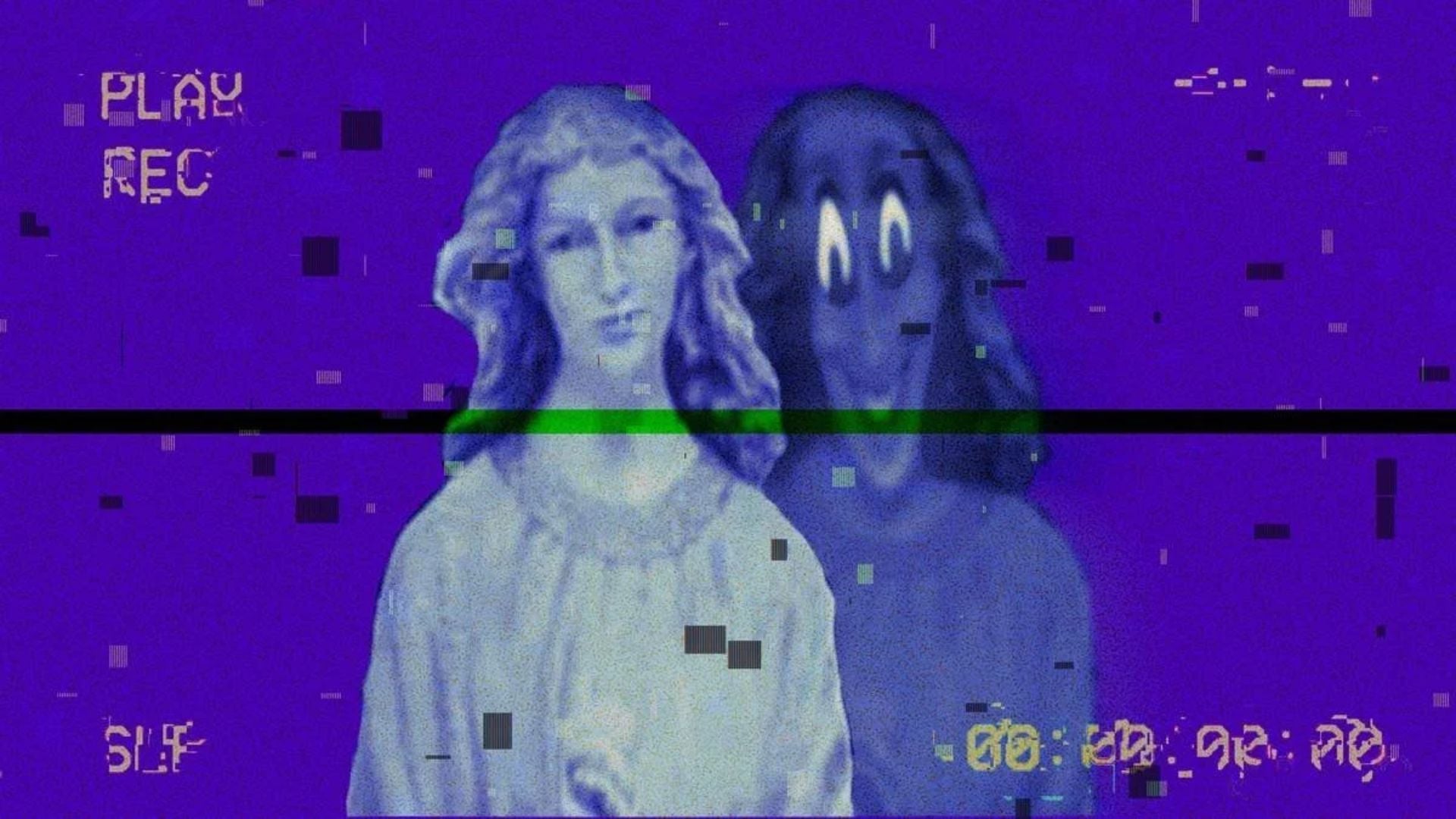
I first heard about The Mandela Catalogue through a couple of nephews who were obsessed with the ARG’s sinister mythology. It was only after watching Wendigoon’s in-depth analysis of the series that I realized just how deep this rabbit hole goes.
In fact, I’d already been exposed to the nightmarish visuals of Alex Kister’s YouTube creation for years at that point without even realizing that it was the origin of several viral “cursed images” and spooky memes that had leaked into the wider internet – with this viral element actually being a part of the Catalogue’s overarching narrative.
Flash-forward to 2026 and the unprecedented success of Kane Parsons’ Backrooms has led to Hollywood betting on horrific internet properties with existing fanbases, which means that Kister’s unique hybrid of both religious and analog horror is finally headed to the big screen with a script written by Kister himself alongside Tyler Clifton.
While this news shouldn’t be too surprising if you’ve been keeping up with the ongoing success of The Mandela Catalogue (both myself and Wendigoon having previously predicted that the series would inevitably make the jump to theaters one day), plenty of horror fans are likely confused as to why so many folks are excited for what appears to be a Hollywood adaptation of a series of creepy .jpeg images under a VHS filter.
With that in mind, today I’d like to invite fellow readers to accompany me as I explore the origins of Alex Kister’s viral hit and attempt to explain exactly why we should all be excited about the Mandela Catalogue adaptation!
From High School Writing Project to Internet Horror Phenomenon

The first seeds of The Mandela Catalogue were sown when Kister was still in high school and developed a writing project subverting religious tropes in a world where biblical history had been altered by demonic forces. A little while later, Kister came across an analog horror contest on Reddit and decided to adapt his ideas into a standalone video where he would edit a religious kids’ cartoon –The Beginner’s Bible: The Nativity, to be specific- into something far creepier. This is how the iconic Overthrone video was born, with this viral short film taking on a life of its own as fans demanded more eerie content from Kister.
Though the video was originally meant to be a one-and-done sort of affair, with Kister actually regretting some of its primitive visuals and considering the editing amateurish and “YouTube-Poop-like” when compared to his current standards, fan reaction and free time during the COVID-19 pandemic encouraged the (then) seventeen-year-old filmmaker to continue producing content set in this same world. The Mandela Catalogue name was inspired by the Mandela Effect conspiracy theory, as the series would slowly begin to explore the subtle horror of alternate histories.
Inspired by existential dread brought on by extended periods of quarantine as well as a personal crisis of faith, Kister continued to expand his alternate timeline where the rise of Christianity had been prevented by what was presumably the Devil disguised as the Archangel Gabriel. This alternate course of fictional events led to the existence of certain paranormal anomalies that had come to be accepted as “normal” by the 1990s, which is why most of the series’ supernatural horror is presented in such a matter-of-fact manner.
Most of this background information and religious lore is delivered by increasingly cryptic broadcasts and in-universe PSAs, as well as the occasional found footage video, that often have to be decoded by clever viewers. Of course, it’s the consistently disturbing imagery that made the series so popular – much of which was originally created by Kister on a smartphone!
The Alternates: Horror’s Most Unsettling Modern Monsters

The show’s early episodes mostly take place within the fictional Mandela County in Wisconsin and depict life in a world where demonic entities are capable of using media to enter our reality. This process usually involves scaring victims into killing themselves and then repurposing their bodies as horrific doppelgangers referred to as “Alternates”. This terrifying phenomenon has become so common that local police already have specialized procedures in place to deal with the issue, though this usually consists of simply ignoring calls for help so as to avoid spreading so-called “Metaphysical Awareness Disorder” any further.
Over time, Kister would expand this mythology and incorporate different kinds of Alternates into the mix, though the story never stopped deconstructing religious concepts. The series’ second volume exponentially increased both video quality and the overall narrative scope as we began to follow the lives of characters who had already grown up in this dystopian hellscape where the government is forced to prohibit religion, television, and even mirrors in the hopes of mitigating the damage done by the ongoing invasion of otherworldly entities.
The really interesting part comes into play when you realize exactly how the Alternates make use of scary media in order to spread their demonic influence, with the analog horror of it all being a diegetic part of the story and something of a memetic trap orchestrated by the false Gabriel.
I particularly appreciate how some characters begin to suspect that there’s something wrong with their version of reality and that things weren’t meant to play out this way, especially when Mark utters the haunting line “who have I been praying to all this time?” That’s why I think The Mandela Catalogue is an effective piece of religious horror even if you don’t subscribe to the Christian worldview, as the mere idea of a world where evil has already won is a universally terrifying concept in and of itself. Not only that, but the series’ uncanny analog imagery alone is already worth the price of admission, as you’ve likely already noticed by looking at the pictures accompanying this article.
Why The Feature Adaptation Could Be Horror’s Next Big Success

It’s actually been a whole year since Kister first announced that he had been working on a feature-length screenplay for a Mandela Catalogue movie since 2022, with his proposed story following an ensemble of high-school graduates who uncover a supernatural conspiracy after the mysterious disappearance of a fellow student. This premise sounds similar to narrative elements present in the series’ second volume, but I’m pretty sure that Kister is going to go the Kane Parsons route and make the movie more of a spin-off than a re-imagining of its source material.
While notable Hollywood producers like Aaron B. Koontz, Scott Stuber, and Steven Spielberg himself are backing the upcoming project, I feel like there’s no one better to adapt this deeply personal exploration of faith and the dark side of communication than the person who first came up with it. That’s why I can’t wait to see Kister’s work on the big screen, as I have a feeling that this young filmmaker is the next one on the list about to make cinematic history – especially since this is clearly a passion project that has been in the works for years at this point!
That being said, there’s always a chance that the film could end up unleashing a fresh wave of Alternate incursions, but I guess that’s just a risk we’ll have to take.
You must be logged in to post a comment.