Editorials
Interview: Andre Ovredal, Director of ‘TrollHunter’!!

The latest indie pickup from Magnolia’s genre arm Magnet Releasing is director Andre Ovredal’s TrollHunter (reviews), a found footage film from Norway about a group of three college students who set out to make a documentary about a supposed bear poacher named Hans, only to discover that he’s actually been sanctioned by the government to track down and kill the enormous trolls that roam the Norwegian countryside.
An engaging film that blends “shaky-cam” style with large-scale special effects, The Troll Hunter releases on VOD May 6th and in limited theaters on June 10th. Check out B-D reporter Chris Eggertsen’s exclusive interview with Ovredal inside to get his take on the film’s Jurassic Park influence, the buzz-worthy festival run that led to Magnet acquiring it for North American release, and what the future holds in store for him as a director.

Beginning a VOD run on May 6th and with limited theatrical dates to follow June 10th, director Andre Ovredal’s impressive second feature (after a student film he made in 2000 entitled Future Murder) The Troll Hunter is an action/horror movie that combines the “found footage” style of The Blair Witch Project with the large-scale spectacle of Jurassic Park. Though Cloverfield already did more or less the same thing, The Troll Hunter differs from that film pretty significantly in a tonal sense, imbuing its outrageous premise with a knowing sense of humor and a sly political subtext.
I recently had the opportunity of sitting down with the unassuming Ovredal, a Norwegian native who graduated with a film degree from California’s Brooks Institute, to talk about the film, whose buzz on the festival circuit subsequently led to a North American distribution deal with Magnet Releasing.
Bloody Disgusting: I was so impressed by the special effects, particularly given the budget you were working with. Talk about how came up with the design of how these trolls would look. I heard there’s a book that you took the inspiration from.
Andre Ovredal: Yeah, there is a book with all the folklore of Norway that’s called ‘The Fairy Tales of Asbjørnsen and Moe’. It has maybe 100 fairy tales, and a third of them include trolls. And there are some wonderful drawings in these books as well, that were made in the 18th century, that depict trolls as huge, big, wonderful monsters. But they do have clothes, and they do have this kind of human interaction, which I took away. I wanted to make them into animals, so they’d become really scary and…take away any inkling of cuddliness.
But they still have a funny look to them, because [they have] big noses…so that’s the basis of it. And then of course I chose some…I mean, there aren’t, in Norwegian folklore aren’t actually different trolls. They’re just kind of drawn differently. But I made them into species, or races, I guess…so that I could kind of create a mythology that only exists in this movie. And then I describe basically in the script trolls that I wanted to have on screen, from the one with three heads to one which is more like an ox, kind of muscular bull troll.
But they all are…they’re characters. There are different characteristics. One is almost…the three-headed creature, you know, obviously it’s kind of schizophrenic because if you have three brains, you’re gonna want to go all kinds of directions. And [then] to the big old troll at the very end that really kind of has this melancholy about it. And after I wrote the script, I gave the artist the drawings…you know, everybody in Norway knows these drawings, so I don’t really even need to show them.
But we worked on designs that were very close to that, but [they] still had to have their own individual feeling to them. So we mixed in references from other places, but we deliberately stayed away from all other depictions of monsters and trolls from other films and cultures.
BD: Where were the other inspirations that you pulled in?
AO: Mostly from animals and humans. Anything from really old people, like 70, 80 year old people who were kind of muscular, for example, like in bodybuilding contests. And you could really see how old bodies look. That’s more interesting than monsters in a way, as a reference. But this is something that…especially one of our main designers, Rune Spaans, he really went at it with this kind of research and came up with…really, you can feel it in the design of the trolls that he designed that he [took] from reality. I really appreciated that, because everything else is supposed to be real, including the trolls.
BD: Are you surprised at the response this has gotten in America, given how specific the film’s premise is to Norway? It’s played to really positive reception.
AO: Oh yeah, yeah, absolutely, I’m very surprised by that, because originally the film was geared to a regional audience. But it’s so great to see that it’s transcending and becoming something that other cultures who aren’t so used to the troll mythology are still able to respond to the film in such a great way. It’s wonderful, and absolutely surprising.
BD: Well I think a lot of it is that we’re so tired of vampires, and zombies, and werewolves, and this is a cool new monster that we can kind of incorporate more now.
AO: Yeah.
BD: I did notice a lot of a ‘Jurassic Park’ influence, particularly in the scene where they’re being chased in the car and you see the troll coming up behind them in the sideview mirror.
AO: That was an homage. I love that shot in ‘Jurassic Park’! But also, it was a practical thing because while we were shooting inside the car, we have to shoot inside the car because that’s where the camera is. And [when] we turned around we couldn’t see out the window…actually, I originally wanted to shoot out the back window, because that would’ve been really impressive as well, but it wasn’t possible. So then it became the homage solution.
BD: ‘Cloverfield’ is the closest film I can think of that uses the ‘found footage’ format with a giant being. Was there anything you took from that film?
AO: Actually, not so much from that film. I think ‘Jurassic Park’ was a much bigger reference in how to depict big creatures on screen. Because I love the clarity of the way Spielberg did it. You know, when the dinosaur comes out, that’s what we’re gonna see…you can wait and you can hide it for awhile, but when it comes, you’d better deliver. He did that, and I was trying to do the same thing.
And I think documentary films have actually been more of an inspiration than other documentary films…not specific documentaries, but just a way of making a documentary was what we researched more than anything.

BD: Yeah, I think I was reading that you tried to stray a bit from the ‘Blair Witch’ aesthetic, with the severe ‘shaky-cam’ type movements, and it does seem like you did try to be somewhat more precise than that.
AO: Yeah, I think there are like three levels to the documentary form in a film. You have when the camera crew is under control, [when] they’re filming, interviewing, and shooting whatever they want. And then the next one is they’re tagging along and they’re [saying], you know, ‘What is going on now? What is he doing now?’ And the next level is basically escaping and being in a fearful situation where they’re completely out of control and just surviving, but the camera’s obviously running.
BD: I heard that you didn’t originally intend for this to be a found footage film, but it seems fortuitous that you did end up going in that direction considering how big that sub-genre is in America right now.
AO: Actually, I’m not quite sure where you heard that, because it was always meant to be a mockumentary. [Interviewer’s note: The press kit clearly states that the mockumentary approach “wasn’t his original plan”] I mean, I thought of that five minutes after thinking of the idea. It’s like, I’m living in a small country with very small budgets and it’s like, ‘ok…how do we do Jurassic Park on this budget?’…Actually, not just that but it really helps the story because you get to be very much at the center of the things, with the camera. It’s always in your face in a way, the whole story. And also it’s adding to the absurdity of everything to insist so intensely that it’s real.
BD: I also heard earlier that Universal was planning an English-language remake, and I’m just wondering what your thoughts are on that. Financially it’s obviously good for you, but…
AO: Actually, we’re not really talking with Universal about that. It was kind of a discussion at the beginning of our relationship with them. But now there is another production company here that…I hope we’re signing the contract very soon. But that should be very exciting. They’re really a fantastic company, fantastic people.
BD: Can you say who the company is?
AO: Not yet.
BD: Is that something that you’d direct?
AO: I don’t think so, because I feel like I want to expand beyond the mockumentary genre right now. I mean, I might revisit it later, and if it takes awhile…if I get to do another film in the mean[time] maybe I’ll get back to ‘Troll Hunter’ the remake, or if they [don’t] find another director for it, I don’t know. It’s kind of a very open situation right now. But I’m definitely very…I don’t want to do another mockumentary as my next film. That’s a very important thing to me.
BD: What is next? I’ve heard a little bit about a monster comedy you’re doing with Chris Columbus.
AO: Not really, it’s there, and we’re working on it…but [we’re] keeping it a little bit silent for now.
BD: As far as ‘Troll Hunter’, there’s quite a bit of political subtext in the film, some of which is quite specific to Norway. Do you think that stuff will translate to American audiences?
AO: Oh yeah, I think it translates very well. I think everybody has this [suspicion of] the government keeping secrets. And I think actually that idea is even stronger here than in Norway, this kind of suspicion toward the government. I have myself seen theater audiences here in America reacting very well to the scenes when he starts explaining how it all works out, about him being a worker, and he complains about the working conditions and that kind of stuff. And the audience laughs very much, so I think they totally get it.
BD: I love the epilogue when you have the footage from a real-life press conference and the [Norwegian] Prime Minister [Jens Stoltenberg] says something about trolls, and obviously he’s not talking about your kind of trolls, but I love the stunned look on the guys’ face sitting next to him when he says it. Was that added in later or was it in the original cut of the movie?
AO: No, that was all added later actually. That was added during post-production. We had another ending, but we realized this is so great – ‘the Prime Minister is actually saying the word troll!’ And we just had to use it.
BD: Was that something that people in Norway picked up on when that press conference actually aired or is it just something you happened to stumble across?
AO: No, the reason actually [that] he’s talking about it…he’s actually talking about…a huge oil field outside of Norway that’s called the Troll Field. And he was talking about power supplies, and I can’t remember exactly the context. But he was saying something about the Troll Field, and we did some editing to the audio! [Laughs]
BD: So what are you hoping to do in the future? Is your plan now to focus your efforts solely on the American film industry or are you going to keep making films in Norway?
AO: I hope to do both, but right now I’m definitely hoping to do something here in Hollywood.
BD: As far as sequel potential for this, would you be open to doing a sequel at some point?
AO: Yeah, I think so. I mean, eventually a sequel…it’s high demand in Norway for a sequel, actually. People are sending me personal Facebook messages every week saying, ‘Where is the sequel? Come on, get it out!’
BD: I feel like there are a lot more places you could go with it. There could be a new species that they discover, for instance.
AO: Yeah, I think there are a lot of species we haven’t seen yet, so…


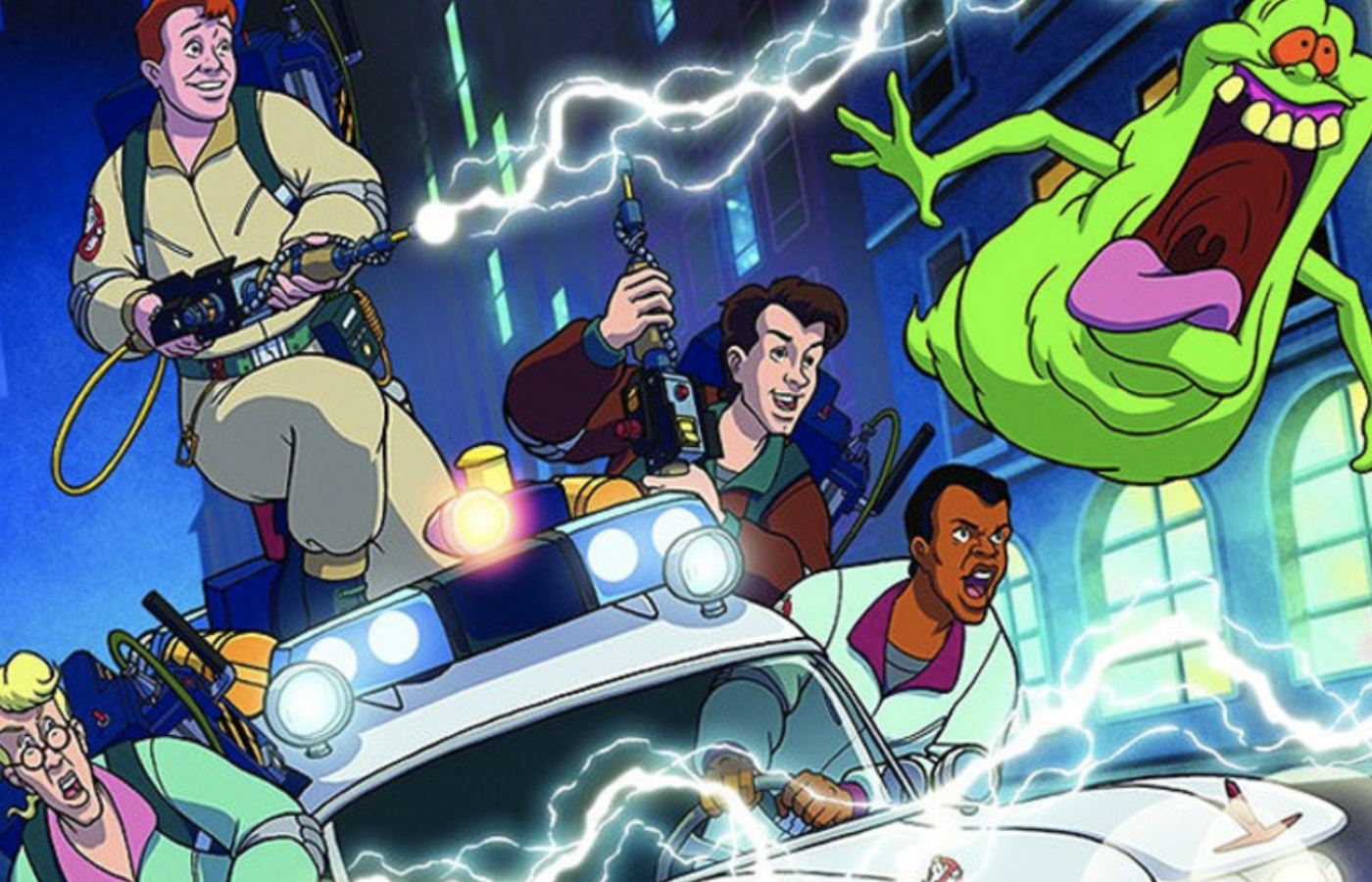
No conversation about cartoons based on live-action movies is ever complete without mentioning The Real Ghostbusters.
This animated continuation is, warts and all, a notable example of turning a hit movie into a hit series. And although the new target demographic skewed a little younger, even kids-at-heart could partake in the further adventures of Peter Venkman, Ray Stantz, Winston Zeddemore and Egon Spengler.
For a good part of its run, the show required fans to wait at least a week for more Ghostbustin’. That’s torture for a kiddo. Luckily, though, the entire series, or at least most of it, is now available for streaming.
So, as you revisit The Real Ghostbusters on Tubi—for now it’s just the first five seasons there—use this guide to help prioritize some must-see episodes.
The Boogieman Cometh

“The Boogieman Cometh” (Season 1)
Season One’s “The Boogieman Cometh” is a classic episode featuring one of the show’s more iconic villains. It’s hard to forget the unique character design used for the Boogieman (whose creepy voice was provided by Ray and Slimer’s actor, Frank Welker). In this story, Egon is reunited with that bump-in-the-night entity who haunted his own childhood, all while trying to keep him away from his latest targets: the brother and sister claiming to have the Boogieman in their closet. Although the Ghostbusters do save the day here, the Boogieman eventually returns (“The Bogeyman Is Back“). That same episode also features the love-’em-or-hate-’em Junior Ghostbusters.
Mr. Sandman, Dream Me a Dream

“Mr. Sandman, Dream Me a Dream” (Season 1)
You could say the namesake of “Mr. Sandman, Dream Me a Dream” had good intentions for putting mankind to sleep for the next few centuries—he wanted to end war and keep everyone dreaming. Sounds nice until you remember that whole free will business. But when it seems like the Ghostbusters have lost to their latest foe, the last one standing, Winston, gains a sudden ally. Janine’s dream of becoming a Ghostbuster is manifested, and she helps put this rogue spirit to bed.
When Halloween Was Forever

“When Halloween Was Forever” (Season 1)
Before the show’s execs capitalized on Slimer’s popularity by making him the focus of later episodes, early stories like “When Halloween Was Forever” better utilized that gooey ghost. Here, the spirit of Halloween itself, Samhain, hopes to make the holiday a permanent thing by stopping time. And who does the embodiment of All Hallows’ Eve use in his nefarious plot? Slimer, of course. Thankfully, the lil’ green bud knows where he really belongs, and Samhain is banished (at least until Season 3’s “Halloween II 1/2“).
Night Game

“Night Game” (Season 2)
Because Season Two was rather long, in comparison to other seasons, it accumulated quite a few solid episodes. One of the most beloved, though, is that ultimate good-versus-evil story, “Night Game“. Winston gets to shine here as he participates in a battle that was 500 years in the making. Except this time, the fighting is done on the baseball field. The other-dimensional settings in The Real Ghostbusters are always great, but the one here is particularly memorable.
Drool, the Dog-Faced Goblin

“Drool, the Dog-Faced Goblin” (Season 2)
Not all ghosts and whatnot were bad in The Real Ghostbusters. As “Drool, the Dog-Faced Goblin” showed, some were actually benevolent. Sadly, it took a lot of convincing, and one very heroic act, for Peter and the others to see past this goblin’s grotesque appearance. The heroes find more than one shapeshifter at a sideshow carnival in the Poconos; a sinister Class-4er called the Metamorph does a swell job of menacing the Ghostbusters before they finally realize Drool’s not their culprit. The good guys indeed win here, but that victory is a bittersweet one.
The Collect Call of Cathulhu

“The Collect Call of Cathulhu” (Season 2)
While “The Collect Call of Cathulhu” does misspell “Cthulhu” in the title (probably to avoid legal issues), it is clearly the Old One in this Lovecraft-inspired episode. The story kicks off with the Necronomicon being stolen by the deity’s modern-day cult, who then raise their ancient god at Coney Island. From there, the Ghostbusters’ typical methods don’t work on the big guy, so they seek advice from an old issue of Weird Tales (or “Wierd Tales”, as it’s spelled on screen). That build-up to the finale comes with a decent amount of dread before the Ghostbusters, as well as a scholar named Alice, face off with one of the show’s most powerful entities.
Knock, Knock

“Knock, Knock” (Season 2)
A number of Real Ghostbusters episodes could be reworked into big-screen features, but perhaps “Knock, Knock” is the most hopeful. It helps that this story feels in step with the first two movies. Here, some ignorant construction workers accidentally uncover and open an ancient door in the subway. What’s behind said door is none other than those unspeakable evils that only the Ghostbusters can quell. A good deal of the imagery here is prime for adaptation.
The Grundel

“The Grundel” (Season 3)
One of the darker episodes, which was written by the prominent J. Michael Straczynski, is “The Grundel“. Here, a boy is being influenced by the titular entity, a type of ghost who ultimately turns his targets into new Grundels. The episode does have something of an after-school special quality to it, but that doesn’t take away from the eerier moments. For more Grundel lore, be sure to check out the episode “Grundelesque” from the sequel series, Extreme Ghostbusters.
Standing Room Only

“Standing Room Only” (Season 4)
It’s no secret that The Real Ghostbusters experienced multiple changes after the second season. Out of all of them, though, retooling the show so that Slimer would get more of the spotlight is maybe the most egregious. Thankfully, Season Four (the first to be called Slimer! and the Real Ghostbusters) didn’t completely obey that new directive; episodes like “Standing Room Only” felt more like the old days. The focus here was on the well-being of the city and its people, rather than on the series’ green mascot (or the Junior Ghostbusters). In the episode, Peter’s new ghost attractor isn’t to blame for the ensuing chaos; the ghost-eating Mee-Krah is what’s really imperiling everyone. And the Ghostbusters must dish out everything they have to avoid a doomsday situation.
The Halloween Door

“The Halloween Door” (Season 5)
While many fans will skip the later seasons in their rewatches, episodes like “The Halloween Door” are still worth checking out. This colorful helping of Halloween pandemonium premiered on primetime, so the animation is better than usual. And save for a random musical moment, it’s an enjoyable event. Here, a group of anti-Halloweeners tries to cancel the holiday, but they only end up making things worse by unleashing a baddie named Boogaloo.
The first five seasons of The Real Ghostbusters are available on Tubi, starting on July 15.
You must be logged in to post a comment.