Editorials
Dear Filmmakers: Subvert A Genre All You Want, But You Have To Respect It First.


A little while ago I tossed up an article about the sale of Black Rock at Sundance. In fact, it should be the piece right below this one.
Right after doing so I saw that Devin Faraci, one of my favorite critics, had already filed his review of the film over at Badass Digest so I headed over there to check it out. You can do the same by clicking here.
Now I’m gonna state in bold letters that I have not seen Black Rock. For all I know it could become my favorite movie of 2012. I don’t always agree with Devin (maybe 70% of the time), but he’s one of a handful of about 5 or 6 critics whose reviews are my “go-tos” when I’m deciding what films to spend my time or money on as a consumer (I don’t always see everything for free, especially non-horror stuff). Whether or not I ultimately agree with his take on something, he’s got a knack for thoroughly explaining the reasoning behind his reactions that’s in a language I can relate to.
So I was surprised to come across a couple lines in his piece on Black Rock that echoed something that’s been on my mind for sometime in regard to genre and people who think they’re slumming in it.
Hit the jump to see what I’m talking about. From his review, “I rarely take such things into consideration, but at the Q&A after the movie Aselton said the script was written in 18 hours. I’m surprised it took them that long. There’s something so contemptuous about this movie – such a sense of ‘We can do one of those, no problem, no effort’ – that I find myself going from disliking ‘Black Rock’ to actually hating it. ‘Black Rock’ plays like a movie made by people who have never seen stalk and kill horror films; it’s easy to believe that Aselton and Duplass thought they were doing something unique with the genre by having the girls fight back, but this has been happening in the genre for decades now.”
Again – I have not seen the film. And until I do so, I can’t speak to whether or not I personally feel this sentiment applies to it.
But I do feel it’s applicable to more and more genre efforts these days. In the case of horror, it sometimes seems that studios and indie filmmakers alike think of it as a way to just get something made. A product. After all, horror’s often cheap(ish) to make. And there’s a built in audience – you. And a lot of people don’t think you’re as smart as you actually are.
At least half the horror movies I see are made with an utter disdain for the genre and its audience.
It’s often assumed that it requires almost no effort to craft a horror film that will satisfy its audience. I find it especially strange that people who are successful in other genres of filmmaking could somehow believe that making a good horror film is somehow less difficult. As filmmakers in the trenches they have to know by now that making a good film – of any kind – will always require, thought, consideration, sleepless nights and thousands upon thousands of hours of hard work.
Ironically, I think it’s these exact people who have the skill set required to make the very best horror films. While horror is one of my favorite genres, I don’t think it’s possible to make a truly great horror film without embracing a ton of other styles of film and filmmaking as well.
If Alexander Payne were to followup The Descendants with a slasher film I would hope that he’d put as much consideration into the characters he’s slaughtering as he did the King family in that film. If Diablo Cody ever returns to horror (Evil Dead polish aside) after hitting a new creative peak with Young Adult I’d want her to imbue her new protagonist with just as much inner turmoil as she did Mavis Gary. While the genre often dictates that just as much screen time is devoted to kills as it is to character – neither should be skimmed on in terms of effort and imagination.
And that’s not even speaking to the technical/editorial side of things, which I don’t have time to get into right now (and which it sounds like Black Rock bungles as well).
It all boils down to this – anybody working on any film should be always pushing themselves to the best of their abilities and beyond*. It doesn’t always mean the film will be great, but it’s kind of the nature of the game. And it’s part of the nature of paying respect to those paying to see your film.
*As an admitted fan of Friday The 13th: Part 2 I feel somewhat hypocritical saying this. As with anything, there are no absolutes, and I must admit that some films I do like don’t exactly qualify as “pushing the envelope” material.
Some of my favorite horror films (admittedly a muddled mix off the top of my head) where I can feel the filmmakers pushing themselves are: Halloween, The Thing, Friday The 13th: Part 6, An American Werewolf In London, The Shining, Scream, Kill List, Shaun Of The Dead, Seven, You’re Next, Let The Right One In, Psycho, and, of course, Jaws.*
How about you? What are your favorite horror movies that make you taste the filmmakers’ blood, sweat and tears?
*EDIT – perhaps I should clarify that list and clear up some confusion. I don’t mean that all of those films are of equally quality, or are all classics. It’s just that I love them all. I know JASON LIVES is not as good as JAWS.



Some movies are just so beloved that you can experience them through cultural osmosis without ever sitting down to actually watch them. From loving parodies to meticulous recreations of iconic scenes, memorable filmmaking lives on even after the curtains close on the silver screen. And when it comes to horror, few films can compete with the massive impact that Stanley Kubrick’s The Shining had on popular culture as a whole.
Whether or not you think the flick is a good adaptation of Stephen King’s seminal novel, 1980’s The Shining slowly but surely grew into one of the most influential genre movies ever made, inspiring everything from surprisingly heartfelt sequels to classic episodes of The Simpsons. However, not all The Shining references are created equal, and today I’d like to shine a light on six unexpected homages to Kubrick’s iconic film.
In this list, we’ll be focusing on references and Easter eggs that either came out of the blue or came from creators that you wouldn’t expect to be fans of this classic ghost story. That being said, don’t forget to comment below with your own favorite references to the Torrance family and the Overlook Hotel if you think we missed a particularly memorable one.
With that out of the way, onto the list!
5. A Nightmare on FaceTime – South Park (2012)

Regardless of the brand’s iffy reputation among former employees, the death of Blockbuster Video was a serious blow to fans of physical media. Of course, some folks were more affected by this than others, and South Park’s Randy Marsh definitely took things a little too far in the twelfth episode of the show’s sixteenth season.
Titled A Nightmare on FaceTime, the main plot of this 2012 story is a surprisingly faithful recreation of The Shining where Randy purchases an empty Blockbuster store and begins to go mad once he realizes that his investment may not have been a very good idea due to the rise of streaming and the now-defunct RedBox storefronts.
4. The Overlook Hotel Level – Ready Player One (2018)

I was never really a fan of Ernest Cline’s Ready Player One, so I viewed Stephen Spielberg’s divisive adaptation of the novel as an improvement over the source material despite having its own narrative issues. In fact, I actually prefer how Spielberg changed the story by removing several references to his own work and replacing a lengthy Blade Runner detour with an over-the-top homage to The Shining.
A CGI-heavy recreation of the film’s most iconic moments that feels like a big-budget ghost train ride set within the Overlook Hotel, this intense sequence is more of a recreation of the freaky aesthetics of The Shining rather than its mind-bending narrative. However, it’s still fun to see Spielberg make a heartfelt tribute to a filmmaker that was once his close personal friend.
3. IKEA Singapore Halloween Ad (2014)

It makes sense that commercials don’t typically borrow from the horror genre, as it might be a bad idea to scare away potential customers, but some references are just too much fun to pass up.
That’s probably why the publicists behind this Ikea ad from Singapore were allowed to turn their commercial into a genuinely unsettling recreation of Danny’s tricycle scene from The Shining. After all, nobody cares if your store is haunted so long as it offers late-night shopping hours and a large selection of merchandise that you can become lost in forever and ever…
2. The End of ‘Bondage and Beta Male Sexuality’ – Community (2014)

Community is no stranger to recreating iconic movie moments within the show, and the series had previously tackled horror tropes in episodes like the fan-favorite Epidemiology. However, the most laugh-out-loud moment on this particular list comes from a brief gag towards the end of the season five episode ‘Bondage and Beta Male Sexuality’.
The majority of this episode has nothing to do with scary movies, but there’s a brief subplot involving supporting character Chang and a possible encounter with ghosts that leads him to question his own existence. This subplot culminates in the episode’s hilarious ending where the camera zooms in on a black-and-white photograph of Chang in period clothing at some kind of celebration, just like Jack Nicholson at the end of The Shining.
However, the picture’s subtitle eventually reveals that it’s merely a conveniently placed keepsake from the ‘Old Timey Photo Club’.
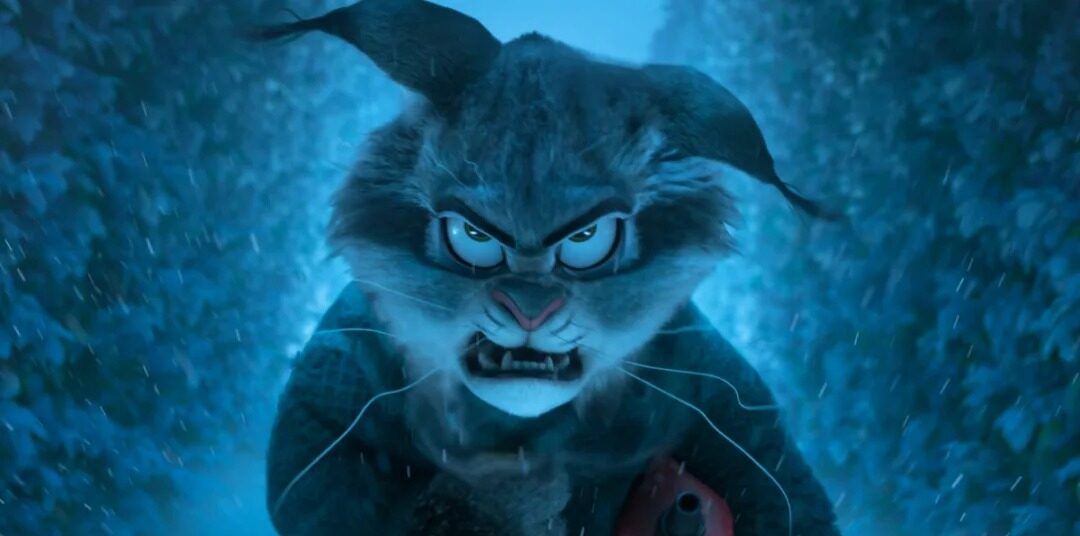
1. The Overlook Hedge Maze Sequence – Zootopia 2 (2025)

Disney movies are pretty far removed from both the gruesome horror of Stephen King and the heady filmmaking of Stanley Kubrick, so I don’t think anyone was expecting the climax of last year’s Zootopia sequel to take place in an animated version of the snowy hedge maze from The Shining.
In this unexpectedly intense sequence, friend-turned-villain Pawbert Lynxley (an unhinged lynx cat played by Andy Samberg) chases our protagonists through a creepy labyrinth in a loving recreation of Jack Nicholson’s icy demise outside the Overlook Hotel. The actual ending here might be a little more child-friendly than what’s being referenced, but it’s amazing that the filmmakers were able to push the horror elements as far as they did – especially since the scene doesn’t really have anything to do with the rest of the movie.
You must be logged in to post a comment.