Editorials
[‘Aliens’ Revisited] The Perfect Sequel, Just As Good As Its Predecessor In Completely Different Ways


With the June 8th release of Ridley Scott’s Prometheus fast approaching, we thought we’d take a look back at the original Alien franchise with which it “shares strands of DNA.” Whether or not there are xenomorphs as we know them in Prometheus, it’s abundantly clear that it takes place in the same universe.
In the weeks leading up to the release of that film I’m going to revisit the four films in the Alien franchise (sorry, not going to subject myself to AVP) in order to gather my thoughts in anticipation of the new outing. Last week I revisited Alien: Resurrection and absolutely hated it. The week before that I revisited Alien 3 and discovered a lot to like.
Now we come down to the two titans in the series, and this week I’m taking another look at Aliens. This is one of my favorite movies and I bet it’s one of yours as well. But what makes it tick? And is it better than Alien?
Let’s talk more inside.

The headline of this article is something of a fallacy. I don’t need to ‘revisit’ Aliens. I mean, sure I watched it again recently before writing this piece – but it’s such a regulation piece of viewing for me that I know it by the back of my hand. Both cuts. Saying I frequently ‘revisit’ Aliens would be like saying I frequently ‘revisit’ oxygen and food. That being said…
During the lead up to Prometheus it’s been impossible to avoid the discussion of which film is better, Aliens or Alien. What’s my answer? Both. I’ll get more into this next week during my revisit of the original Alien – but I truly feel that both are equal in incredibly different ways. I love the Anamorphic 2.35:1 Widescreen of the 1979 original, it’s without a doubt the best looking film in the entire franchise (and it’s over 30 years old). Contrasted with the grainy 1.85:1 of Aliens there’s absolutely no contest between the aesthetics of the two films (one is a great looking action movie and the other is a flat-out gorgeous film – no qualifiers needed). Alien is a perfect horror movie with sci-fi elements – it combines slashers, body-horror and existential dread all into one adding great characters and an ingenious creature design along the way. Meanwhile, Aliens is a perfect action film with horror/sci-fi elements. Both films land the objectives of their intent perfectly.
So what’s one thing Aliens has over Alien? Well, between the two – it’s the first one you reach for on your video shelf. Have a friend over that’s never seen one of these movies? Technically, some might say you should show them Alien to preserve the suspense of who makes it off the Nostromo blah… blah… blah… Except they already know Sigourney Weaver as the face of the franchise, so what’s the point? There was a seven year window when people could approach the first film without knowing the answer to that, and it ended in 1986. No, if you have a friend over who has never seen one of these movies you show them Aliens because it’s the most fun and the most immediately satisfying. And watching it out of order does no disservice to the original because after seeing the sequel, people will be dying to see the first and will be more likely to give themselves over to it completely.
One misconception about Aliens is that it’s not suspenseful. I don’t know where the propagators of this lie come from, but they’re absolutely insane. Have they not heard the line “they’re inside the room?” The use of the motion detector in both movies is incredibly suspenseful but I’d argue that Aliens ratchets up its efficacy a notch. Also suspenseful? The entire 3rd act of the film.

Act 3 of Aliens escalates beat by beat in a way that most modern action films could only hope to match. The reactor melting down the whole time, the xenomorphs staging a siege on the marines, Bishop trying to remote pilot the drop ship, Newt getting separated from Ripley and Hicks and being taken to the Queen’s hive – all perfect. But the film doesn’t stop there. If you want to know the difference between Aliens and most of today’s modern blockbusters – it can be found in the moment where Ripley hones in on the signal from Newt’s tracking bracelet, follows it and finally arrives to find that it’s been torn off. Most action films would have ceased their escalatory ascent before this point, content to devolve in a series of whirring gears and explosions. With Aliens, James Cameron was smart enough to know that the best action sequences are centered around achieving a recognizable objective and dangling that objective in and out of the protagonist’s reach. Ripley finding the abandoned bracelet is one of my favorite action beats in cinema because it’s not the first in its sequence nor is it the last (not by a long shot) – it’s just a perfect note in the film’s symphony.
Aliens is also interesting in that it shifts genre away from the original film. It’s still very much set in the same universe and feels like an organic continuation of Ripley’s story – but it is an action film. This might be where some people err in claiming that it’s not suspenseful. Whereas Alien was quietly suspenseful, Aliens is ear shatteringly loud in places. It’s also epilepsy inducing in moments, with all of the strobing gunfire. It’s not as concerned with slow burn reveals of biology as it is in dropping its characters into the most untenable situation possible.
And what great characters they are. While Michael Biehn’s Hicks is stoically flat by design, the rest of them pop off the screen. Bill Paxton’s Hudson is one of cinema’s all time great cowardly lions. Watching William Hope’s Gorman devolve/evolve from an above-it-all and by-the-book leader into one of the rest of them is simultaneously touching and a nice bit of schadenfreude. Lance Henriksen brings an almost wounded quality to Bishop while making him a convincing synthetic – you almost want to hug him and tell him how sorry you are he’s not human. Jeanette Goldstein’s Vasquez could be seen as a slight misstep in the James Cameron mold of occasionally writing women as men, but she seemed pretty revolutionary at the time.

Speaking of characters, while Hudson may be the most quotable, Paul Reiser’s Carter Burke is probably the best of the bunch. You know he’s a rat bastard right from the start, but you can understand why the other characters don’t realize how evil and sleazy he is until it’s too late. Burke is highly charismatic and totally evil and you want to see him die. But he’s also a great externalization of this franchise’s deep-seated mistrust of corporations. You knew that there were some nefarious elements to the Weyland-Yutani corporation in the first film. After all, everything and everyone aboard the Nostromo was expendable in favor of safe transport of the xenomorph back to Earth. Reiser’s character puts a face to that evil and reminds us of the banal, human component to almost every massively inhumane decision ever made. The component that shrugs its shoulders, says “it had to be done” and goes home to its wife and kids.
The film’s “motherhood” theme is oft-discussed. A lot of people find it too on the nose but I think it’s pitched pretty much perfectly. In a film this busy, loud and chaotic – sometimes the text needs to be a little more pronounced. For this reason, I actually (slightly) prefer the director’s cut. While I can do without the early scenes on LV-426 (the stuff with Newt’s family prior to the colony’s destruction weakens the cut somewhat – I like arriving at the colony and knowing it only as a ghost town), the information that Ripley has lost her daughter is fairly crucial and is not represented in the theatrical cut of the film. It’s the third leg of the thematic tripod, the other two being Newt herself and the Alien Queen’s dismay and anger (and vengeance) over seeing her eggs burned before her very eyes. It also goes the extra mile toward selling us on Ripley’s descent back into the bowels of hell to get Newt. It’s an action easily explained by standard movie heroism, but knowing what Ripley has lost before and being aware of her emotional need to do everything she can to achieve an approximation of correction for that loss adds the extra bit of pathos that makes it tick more completely.
We’ll talk more about Alien next week, but I really do think Aliens is its equal (again, based on a different set of merits). Violent, scary, human, funny, ambitious, captivating – action films aren’t made like Aliens anymore. I know this is probably the most cliche’d thing I could say at this point, but I seriously defy you to find me an example of something from the last 10 years that even comes close.




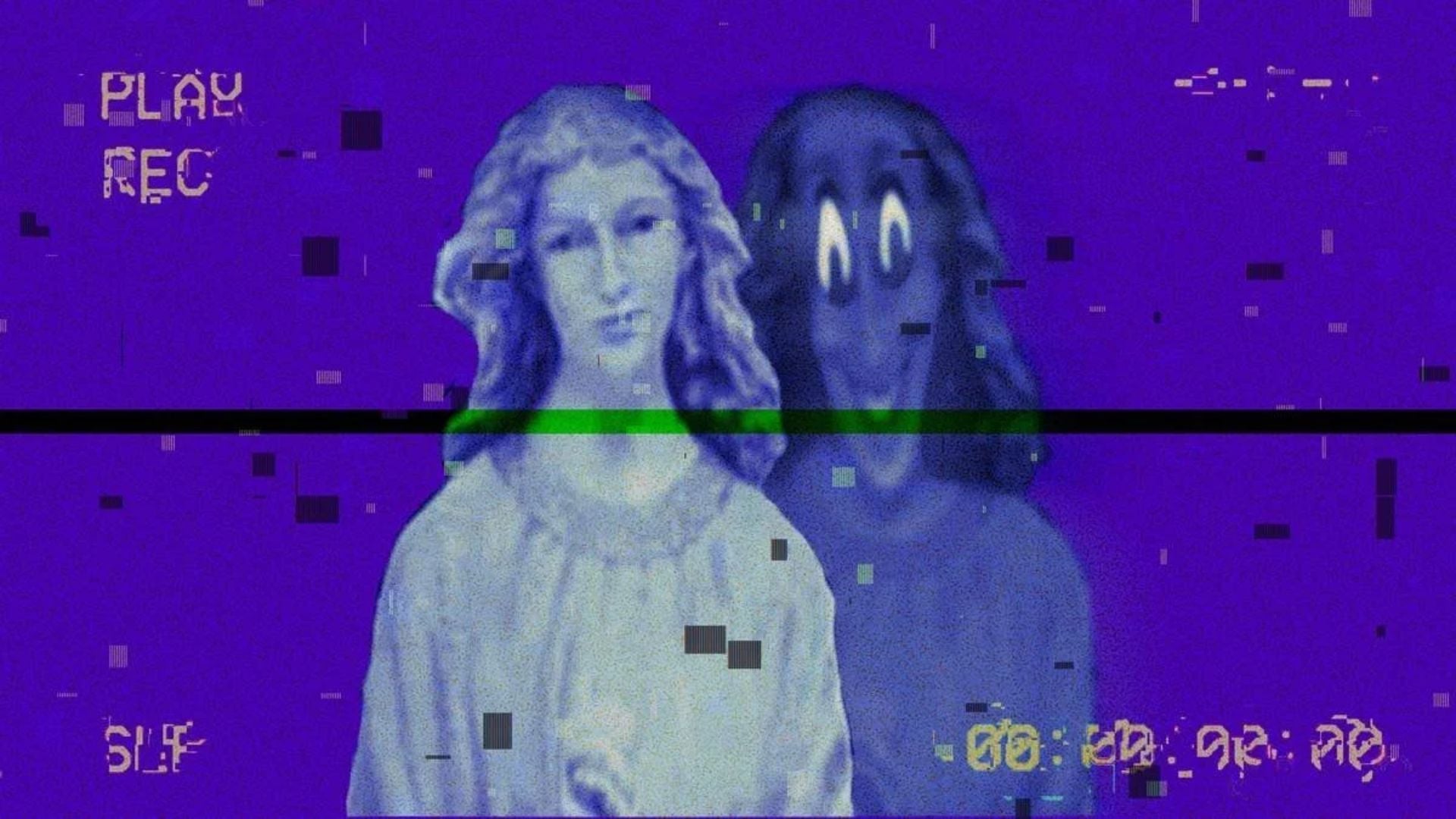
I first heard about The Mandela Catalogue through a couple of nephews who were obsessed with the ARG’s sinister mythology. It was only after watching Wendigoon’s in-depth analysis of the series that I realized just how deep this rabbit hole goes.
In fact, I’d already been exposed to the nightmarish visuals of Alex Kister’s YouTube creation for years at that point without even realizing that it was the origin of several viral “cursed images” and spooky memes that had leaked into the wider internet – with this viral element actually being a part of the Catalogue’s overarching narrative.
Flash-forward to 2026 and the unprecedented success of Kane Parsons’ Backrooms has led to Hollywood betting on horrific internet properties with existing fanbases, which means that Kister’s unique hybrid of both religious and analog horror is finally headed to the big screen with a script written by Kister himself alongside Tyler Clifton.
While this news shouldn’t be too surprising if you’ve been keeping up with the ongoing success of The Mandela Catalogue (both myself and Wendigoon having previously predicted that the series would inevitably make the jump to theaters one day), plenty of horror fans are likely confused as to why so many folks are excited for what appears to be a Hollywood adaptation of a series of creepy .jpeg images under a VHS filter.
With that in mind, today I’d like to invite fellow readers to accompany me as I explore the origins of Alex Kister’s viral hit and attempt to explain exactly why we should all be excited about the Mandela Catalogue adaptation!
From High School Writing Project to Internet Horror Phenomenon

The first seeds of The Mandela Catalogue were sown when Kister was still in high school and developed a writing project subverting religious tropes in a world where biblical history had been altered by demonic forces. A little while later, Kister came across an analog horror contest on Reddit and decided to adapt his ideas into a standalone video where he would edit a religious kids’ cartoon –The Beginner’s Bible: The Nativity, to be specific- into something far creepier. This is how the iconic Overthrone video was born, with this viral short film taking on a life of its own as fans demanded more eerie content from Kister.
Though the video was originally meant to be a one-and-done sort of affair, with Kister actually regretting some of its primitive visuals and considering the editing amateurish and “YouTube-Poop-like” when compared to his current standards, fan reaction and free time during the COVID-19 pandemic encouraged the (then) seventeen-year-old filmmaker to continue producing content set in this same world. The Mandela Catalogue name was inspired by the Mandela Effect conspiracy theory, as the series would slowly begin to explore the subtle horror of alternate histories.
Inspired by existential dread brought on by extended periods of quarantine as well as a personal crisis of faith, Kister continued to expand his alternate timeline where the rise of Christianity had been prevented by what was presumably the Devil disguised as the Archangel Gabriel. This alternate course of fictional events led to the existence of certain paranormal anomalies that had come to be accepted as “normal” by the 1990s, which is why most of the series’ supernatural horror is presented in such a matter-of-fact manner.
Most of this background information and religious lore is delivered by increasingly cryptic broadcasts and in-universe PSAs, as well as the occasional found footage video, that often have to be decoded by clever viewers. Of course, it’s the consistently disturbing imagery that made the series so popular – much of which was originally created by Kister on a smartphone!
The Alternates: Horror’s Most Unsettling Modern Monsters

The show’s early episodes mostly take place within the fictional Mandela County in Wisconsin and depict life in a world where demonic entities are capable of using media to enter our reality. This process usually involves scaring victims into killing themselves and then repurposing their bodies as horrific doppelgangers referred to as “Alternates”. This terrifying phenomenon has become so common that local police already have specialized procedures in place to deal with the issue, though this usually consists of simply ignoring calls for help so as to avoid spreading so-called “Metaphysical Awareness Disorder” any further.
Over time, Kister would expand this mythology and incorporate different kinds of Alternates into the mix, though the story never stopped deconstructing religious concepts. The series’ second volume exponentially increased both video quality and the overall narrative scope as we began to follow the lives of characters who had already grown up in this dystopian hellscape where the government is forced to prohibit religion, television, and even mirrors in the hopes of mitigating the damage done by the ongoing invasion of otherworldly entities.
The really interesting part comes into play when you realize exactly how the Alternates make use of scary media in order to spread their demonic influence, with the analog horror of it all being a diegetic part of the story and something of a memetic trap orchestrated by the false Gabriel.
I particularly appreciate how some characters begin to suspect that there’s something wrong with their version of reality and that things weren’t meant to play out this way, especially when Mark utters the haunting line “who have I been praying to all this time?” That’s why I think The Mandela Catalogue is an effective piece of religious horror even if you don’t subscribe to the Christian worldview, as the mere idea of a world where evil has already won is a universally terrifying concept in and of itself. Not only that, but the series’ uncanny analog imagery alone is already worth the price of admission, as you’ve likely already noticed by looking at the pictures accompanying this article.
Why The Feature Adaptation Could Be Horror’s Next Big Success

It’s actually been a whole year since Kister first announced that he had been working on a feature-length screenplay for a Mandela Catalogue movie since 2022, with his proposed story following an ensemble of high-school graduates who uncover a supernatural conspiracy after the mysterious disappearance of a fellow student. This premise sounds similar to narrative elements present in the series’ second volume, but I’m pretty sure that Kister is going to go the Kane Parsons route and make the movie more of a spin-off than a re-imagining of its source material.
While notable Hollywood producers like Aaron B. Koontz, Scott Stuber, and Steven Spielberg himself are backing the upcoming project, I feel like there’s no one better to adapt this deeply personal exploration of faith and the dark side of communication than the person who first came up with it. That’s why I can’t wait to see Kister’s work on the big screen, as I have a feeling that this young filmmaker is the next one on the list about to make cinematic history – especially since this is clearly a passion project that has been in the works for years at this point!
That being said, there’s always a chance that the film could end up unleashing a fresh wave of Alternate incursions, but I guess that’s just a risk we’ll have to take.
You must be logged in to post a comment.