Music
[Album Review] Gojira ‘L’Enfant Sauvage’


Hailing from Bayonne, France, Gojira have been carving a name in the progressive metal world for several years. Blending technical aspects with epic, yet understated melodies, the band has created a unique sound, one that is ferocious and brutal yet far more accessible than most of the genres fare. Now, with their latest offering, L’Enfant Sauvage, the band will offer their sound to a much larger audience, thanks in part to their signing to Roadrunner Records. But is this album a step forward for the band? Read on for the review.

Opening with “Exposia”, the album begins in chaos, brutal guitar riffs interspersed with guitar slide shrieks, frenzied yet deliberate drums when suddenly singer Joe Duplantier screams “Go!” and everything coalesces into a viciously tight, if oddly off-rhythm low-string chug session. Let’s just say that I almost sprained my neck headbanging. The song continued with this sonic assault until the 2:30 mark, where the song progressed at half the speed as before, adding in melody that is strangely hypnotic in how it’s played. The finale of the song has a strangely Western feel, reminiscent of Ennio Morricone’s The Good, The Bad, And The Ugly.
The next three tracks continue the dynamics of brutality, melody, and plodding intensity. The title track, already out for several weeks, still thrills me, causing my blood to boil. “Liquid Fire” grabbed my interest with use of mechanical, almost robotic effects used during the verses, creating a call-and-response situation with unaffected and effected vocals, one snarling, one cold and calculating. The fifth song, “The Wild Fire”, is a short track that offers a quick reprieve from all the heaviness. Almost lighthearted, the instrumental piece is a welcome respite, a chance to let one’s ears relax a bit before continuing the musical journey ahead.
My personal favorite song is “The Gift Of Guilt”, which begins with a slightly overdriven finger tapped melody on the guitar. Suddenly, all of the instruments come in, the finger tapped melody gaining more overdrive, becoming more complex. As the song progresses, the grandiose, epic feeling only grows. It’s like seeing a leviathan rise from the water, the vastness of the creature only growing as more and more emerges.
The album sounds like previous Gojira releases, somewhat dirty and unrefined yet with a tone that perfectly suits the sounds of the songs. Props also have to be given to drummer Mario Duplantier, who creates some incredible rhythmic passages.
The Final Word: L’Enfant Sauvage cements Gojira’s place as one of the most inventive, unique metal bands of today. Run, don’t walk, to buy this album.
Got any thoughts/questions/concerns for Jonny B.? Shoot him a message on Twitter!




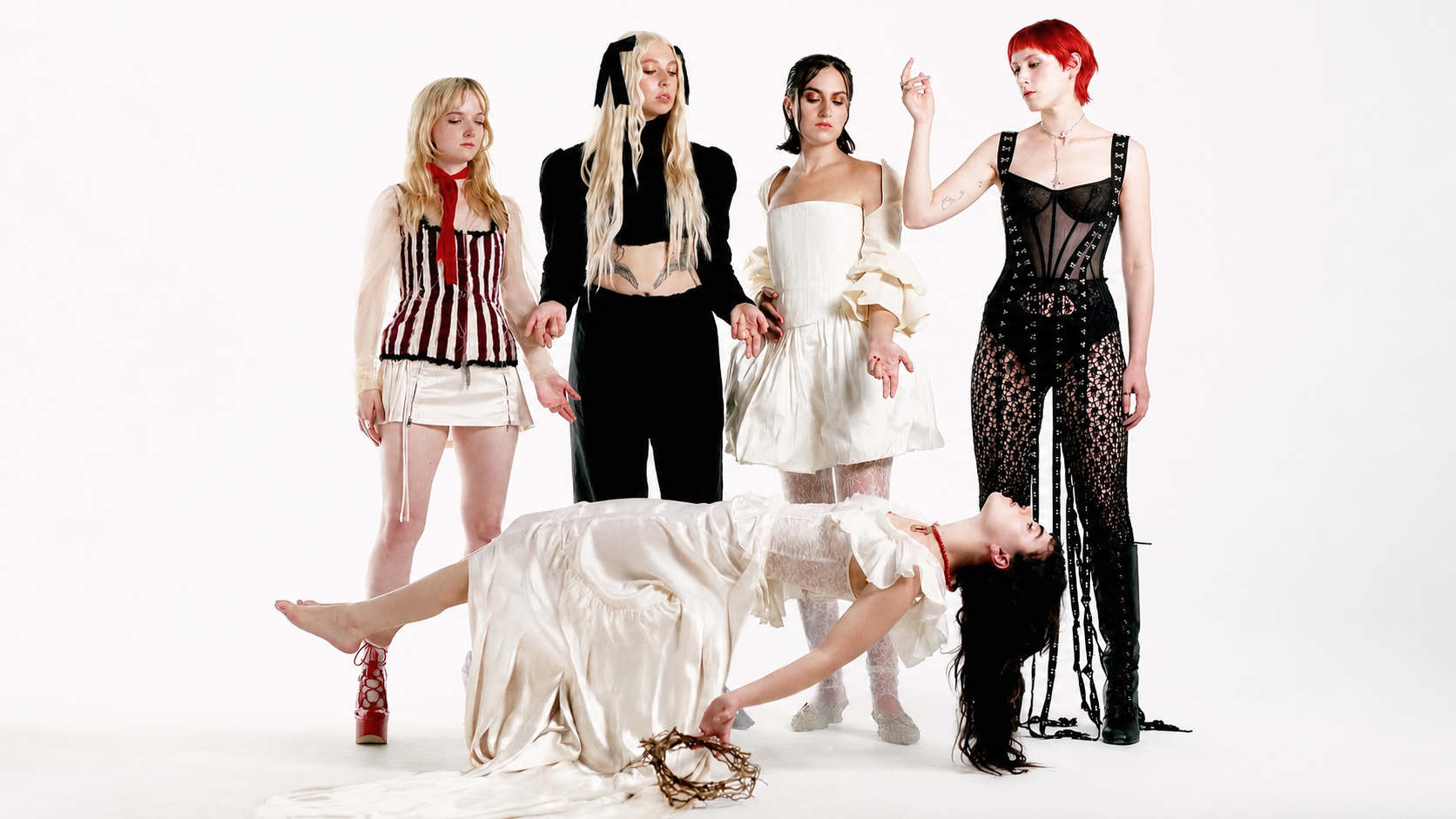
Multi-award-winning and unapologetically cinematic UK band The Last Dinner Party have always seemed drawn to the places where opposites collide. Beauty and violence. Grief and ecstasy. The sacred and the grotesque. It’s there in their music, performances, and in the worlds they’ve built around themselves since the band’s earliest days.
Their songs often feel less like traditional rock music and more like myths in motion, unfolding somewhere between a dream, a film, and a fevered memory. Perhaps that’s why horror feels so naturally at home within their creative universe.
For Abigail Morris, the group’s charismatic ringleader, some of horror’s most enduring filmmakers understand that terror becomes more powerful when it exists alongside beauty.
Discussing the work of Dario Argento, she points to films like Suspiria and Phenomena as perfect examples of that tension.
“I think it’s actually the proximity of those things rather than the distance,” Morris explains. “The things that are really beautiful and the things that are really terrifying. It’s like the idea of the sublime. The closer that beauty is to terror, the more beautiful it is and the more terrifying it is rather than the juxtaposition. I think that that’s where the sweet spot of fear and tension and intrigue and pure and real beauty is, where it’s almost the other. And I think that’s what Argento does really well with the sort of the beautiful casting and the sets and the lighting and then the buckets of red blood.”
She cites Argento’s ability to place stunning imagery directly beside the grotesque or unsettling. The vivid colors, dreamlike sets, and beautiful performers suddenly interrupted by buckets of blood, swarms of insects, or moments of genuine nightmare.
“I love how he plays with that,” she says.
That fascination with contradiction extends far beyond horror films. The Last Dinner Party’s work frequently occupies a similar emotional space, where longing can feel catastrophic, and heartbreak transforms into mythology. Morris brings up one of her favorites, Andrzej Żuławski’s Possession (1981), as another example of horror expressing emotional truths more accurately than realism ever could.
“A divorce is a very human thing that happens,” she says. “And then to turn that into this psychological body, spiritual, eldritch horror is how it must feel to go through a divorce. And it’s more accurate.”
Not surprisingly, news of the upcoming Possession remake sparked a passionate response. “I’m fucking furious,” Morris laughs. While generally skeptical of remakes, she makes an exception for Luca Guadagnino’s Suspiria, praising the filmmaker for creating something entirely his own rather than attempting to recreate Argento’s original.
“He wasn’t trying to capture the energy of Argento’s film. It felt like a story in its own right.” She goes on to explain, “…if they do that with Possession, then I’m interested.”
The conversation also reveals just how deeply cinema has been embedded into The Last Dinner Party from the very beginning. Long before sold-out shows and award nominations, the band envisioned themselves not simply as musicians but as architects of an entire world.
“When we started the band, the visuals were of equal importance to the music,” Morris says. “Before we played a show, before we shot a music video, we decided that what we wanted this band to be was something that was a complete world.”
That commitment led to elaborate mood boards, film references, styling concepts, and even a 72-page presentation that helped define the band’s visual identity before many people had ever heard a note of their music.
For composer, songwriter, and keyboardist Aurora Nishevci, many of those same cinematic instincts have begun finding new outlets. She speaks passionately about the horror scores that continue to inspire her, including the work of Mica Levi and Hildur Guðnadóttir. Rather than relying solely on traditional horror techniques, she is fascinated by artists willing to challenge expectations.
“You can decide to go the traditional route,” Nishevci says. “Or you can completely go another way and still be terrifying.”
That fascination has now become something more personal. Nishevci reveals that she is currently working on her first horror feature as a composer, bringing her own musical language into the genre that has influenced her for years.
The band’s connection to horror has also found an unexpected audience among fans of Yellowjackets. Online, edits pairing The Last Dinner Party’s music with scenes from the series have become increasingly common. At concerts, fans have even begun holding up photos of Jackie during performances of “Woman Is a Tree.”
At first, Morris couldn’t understand what she was seeing.
“I thought it was someone’s grandma,” she says. Only later did she realize the mysterious photographs were actually tributes to one of the show’s most beloved characters. “It’s fucking Jackie from Yellowjackets!”
The band enthusiastically express interest in seeing those worlds collide one day.
While The Last Dinner Party’s future remains unwritten, horror seems destined to remain part of it. Asked what creative paths still excite them, Morris immediately begins dreaming beyond albums and tours.
“We’ll do a horror movie as well.”
Nishevci quickly adds another possibility that has apparently been living on the band’s mood board for some time. “We keep talking about doing a folk horror EP.” “That’s been on the mood board,” Morris confirms.
For a band already obsessed with mythology, ritual, transformation, storytelling, beauty, and terror, both ideas feel less like surprises and more like inevitable next chapters. For much more with Abigail Morris and Aurora Nishevci, including further musings on Argento, Possession, Salò, Hausu, and the future of The Last Dinner Party, check out The Boo Crew Podcast Episode 473 available now on Apple, Spotify, and wherever you get your podcasts.
The band joins Olivia Rodrigo on the road next year for multiple sold-out residencies in New York and LA. Follow the Last Dinner Party on Instagram.
You must be logged in to post a comment.