Editorials
Horror Education of the Week – Double Feature: ‘1984’ and ‘Metropolis’


George Orwell’s novel 1984 is an attack on totalitarian government where the state controls all aspects of life and has impacted how many people see, understand, and talk about modern social movements. In Fritz Lang’s Metropolis, the city is a crowded one where people are either of the privileged elite, or of the repressed, impoverished masses.
In their works, Orwell and Lang both present the imminent dangers of the contemporary social and political world. These works evaluate the mechanisms of power in institutions that practice socio-political supremacy and tyranny.

– In 1984, Orwell presents a controlled society in which political terror, along with propaganda, program individuals to obey. The society is controlled in every way of life – work, thought, speech, sex, and every manner of life. The society has fear instilled in them by “BIG BROTHER” who is constantly watching them.
– Orwell represents this environment further by including all-pervading television screens that constantly show government propaganda. These two-way television screens are also used for surveillance.
– Metropolis takes place in the year 2000 in a cold, mechanical, industrial world. The society consists of a lower class that lives underground and runs the machines that keep the above ground Metropolis in working order. The workers run the machines, but the machines run the lives of the monotonous horde of workers.
– The thought is that highly advanced societies are either welfare or warfare states. Welfare states restrict freedom due to the limitations of leisure time, access to necessary goods and services, and citizen’s ability to realize true self-determination. The warfare state hinders a true analysis of society because it keeps people focused on fighting the “enemy” instead of focused on internal social problems. The point is that if societies can learn to use technologies in ways that benefit citizens, instead of restricting them then the problems of humans will be solved.
– In the Underground City beneath Metropolis, Freder Fredersen sees an old worker wrestling with the dials on a piece of clock-like machinery. The worker fails to keep up with the difficulty of the machine and the machine blows up. Freder sees the masses of workers being shoved into the mouth of the monstrous machine.
– Technology is ordered and formed by the interests that produce it. In a capitalist society, certain capitalist interests are rooted in technology, yet technology becomes relatively independent and can take on a life of its own. Metropolis must be fed human slaves to keep control.

– 1984 has open political domination that includes torture and murder, which is at the heart of the society’s social control. By the means of propaganda, manipulation, consumerism and forbidden indulgence that force individuals into advanced capitalism and to produce a one-dimensional society and individual. Capitalism and technology are forms of social control and domination.
– Freder’s father, Joh Fredersen, the Master of Metropolis rules and dominates the city. Freder asks his father,” Why do you treat the workers so badly?” Joh replies that it was, “their hands that built Metropolis!”
– Lang and Orwell both comment on individualism while Orwell clearly shows that it is possible to have both socialism and individualism as long as socialism protects, preserves, and develops individuality to its fullest. Orwell questioned if a centralized state would truly protect the individual because economic liberty is central to capitalism.
– Lang and Orwell both present some form of the lack of language and thought in their contemporary eras. Lang showed in Metropolis how a society would form thought and behavior through control of language through Maria. This theme is central to Orwell’s vision of 1984 as well.
– Maria speaks to the workers deep in the catacombs at an alter with crosses on it. The catacombs are where the ancient Christians used to hide out and worship when seeking refuge from prosecution for their beliefs. Freder collapses to his knees as if worshipping Maria as she tells the workers the story of the Tower of Babel. The parallel is made between the slaves who built Babel, and the workers who built and maintain Metropolis. In Maria’s speech, she talks about how the rulers of Babel did not care about the slaves. The rulers of Metropolis do not care about the workers. Both places need a mediator between those who rule, and those who are ruled.
– Orwell also calls attention to the deterioration of language and truth in contemporary political communication. 1984 shows the dominance of mass communications in politics and the way political speech has resulted in a decline of truth and honesty. This analysis provides powerful tools to develop a critique of language and politics in the contemporary era.
– After Maria speaks, Joh tells Rotwang, the inventor, to make a robot that looks like Maria. Joh believes that if he had a duplicate of Maria that he would have control over and could manipulate the workers. He would have a powerful tool.
– The new robot Maria is an evil, lusty character unlike the pure, angelic real Maria. The robot Maria gives a weak speech to the workers. She ill advises her followers to take up violence, not peace. Maria leads the masses to the machines in the Underground City and orders them to be destroyed. The workers do not know that destroying the machines will flood the area and drown their children. The machines are bound by the people, and the people are bound by the machines. By working together, they can replace the power of the rulers.

– The governments of the advanced industrial societies become part of and use the technological, scientific and mechanical productivity to secure themselves. The machine then becomes the most powerful political instrument, surpassing the political power of any individual or group.
– 1984 is a meticulously pessimistic and anti-utopian text. Orwell’s protagonist, Winston Smith, writes in his notebook and then states, “If there is hope, it lies with the proles.” Smith becomes so broken by his society that in the end he has betrayed everything he ever believed in and loved. Orwell denies that there is any profound capacity for humans to fight for what they believe in such a society.
– Orwell writes that these parties can remold human beings by destroying their ability and desire to fight back and brainwashing them. Winston Smith submits torture by the villain O’Brien; rejects his true love, Julia; and in the last sentence declares that he now loves BIG BROTHER. Orwell proves in fiction that it is possible for the state totally to control thought, behavior, and feeling. Orwell also makes the statement that humans are weak and selfish and they will ultimately submit to whatever sort of state attempts to control them.
– Orwell’s warning in 1984 about repressive and horrendous social trends might drive people to oppose the sorts of oppression he projects. 1984 has become a central part of the contemporary culture and political landscape. Orwell’s language and imagery are effective as critiques that can ultimately be used for the good.
– Orwell projects pessimism so extreme that hope for a better future seems to be ruled out in advance when seeking out forms of resistance and struggle. Freedoms give a wide range of choices, but they still do not permit the individual to determine what can be chosen and what is chosen. They cannot define the number of hours they are willing to work to fulfill their needs. Products serve to teach and control.
– In Metropolis, there is still hope for the better as the masses march into the church, and they realize that Freder is the mediator they where seeking. They found the midway point between Joh and the workers. The ruler and the ruled.





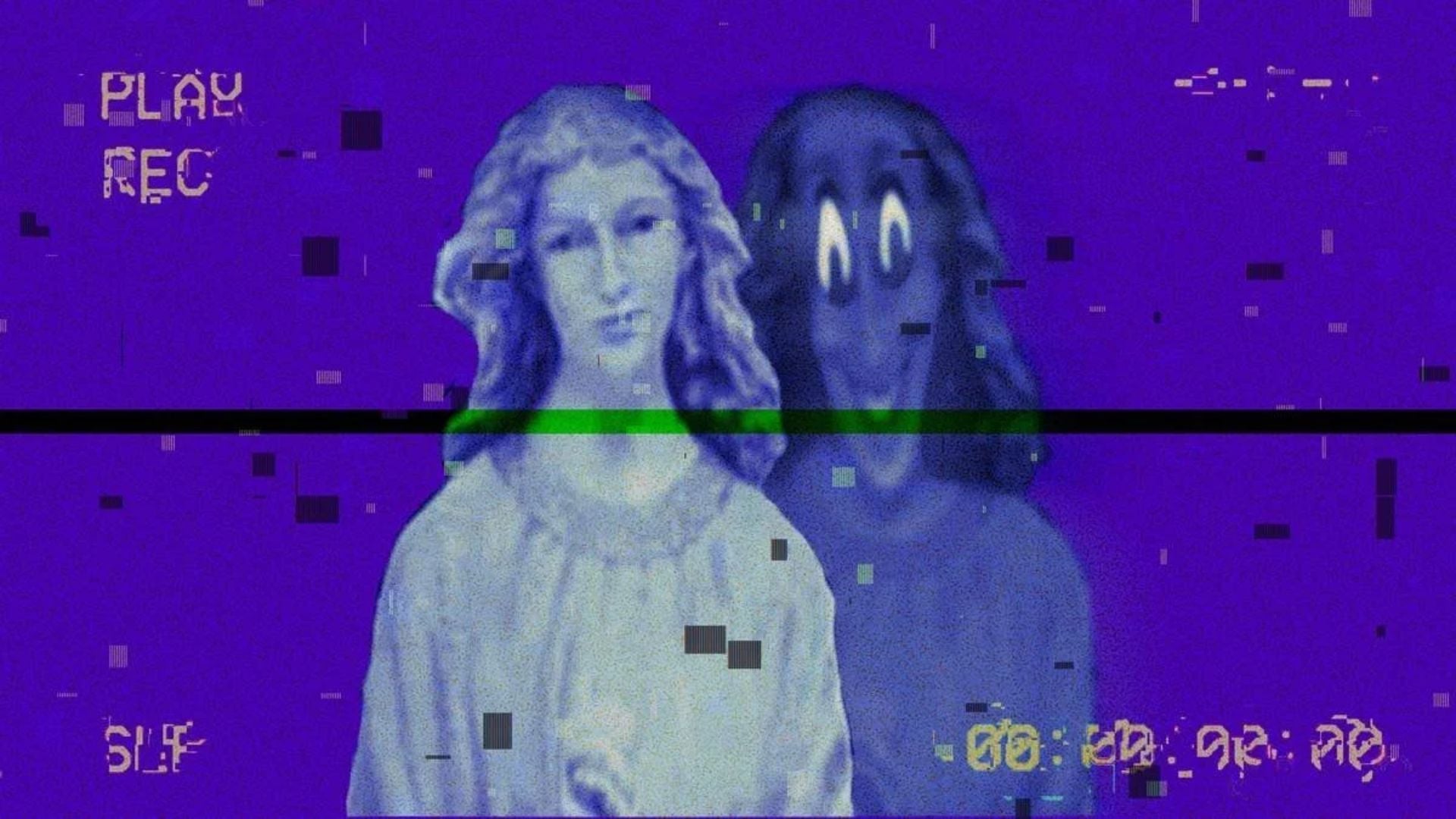
I first heard about The Mandela Catalogue through a couple of nephews who were obsessed with the ARG’s sinister mythology. It was only after watching Wendigoon’s in-depth analysis of the series that I realized just how deep this rabbit hole goes.
In fact, I’d already been exposed to the nightmarish visuals of Alex Kister’s YouTube creation for years at that point without even realizing that it was the origin of several viral “cursed images” and spooky memes that had leaked into the wider internet – with this viral element actually being a part of the Catalogue’s overarching narrative.
Flash-forward to 2026 and the unprecedented success of Kane Parsons’ Backrooms has led to Hollywood betting on horrific internet properties with existing fanbases, which means that Kister’s unique hybrid of both religious and analog horror is finally headed to the big screen with a script written by Kister himself alongside Tyler Clifton.
While this news shouldn’t be too surprising if you’ve been keeping up with the ongoing success of The Mandela Catalogue (both myself and Wendigoon having previously predicted that the series would inevitably make the jump to theaters one day), plenty of horror fans are likely confused as to why so many folks are excited for what appears to be a Hollywood adaptation of a series of creepy .jpeg images under a VHS filter.
With that in mind, today I’d like to invite fellow readers to accompany me as I explore the origins of Alex Kister’s viral hit and attempt to explain exactly why we should all be excited about the Mandela Catalogue adaptation!
From High School Writing Project to Internet Horror Phenomenon

The first seeds of The Mandela Catalogue were sown when Kister was still in high school and developed a writing project subverting religious tropes in a world where biblical history had been altered by demonic forces. A little while later, Kister came across an analog horror contest on Reddit and decided to adapt his ideas into a standalone video where he would edit a religious kids’ cartoon –The Beginner’s Bible: The Nativity, to be specific- into something far creepier. This is how the iconic Overthrone video was born, with this viral short film taking on a life of its own as fans demanded more eerie content from Kister.
Though the video was originally meant to be a one-and-done sort of affair, with Kister actually regretting some of its primitive visuals and considering the editing amateurish and “YouTube-Poop-like” when compared to his current standards, fan reaction and free time during the COVID-19 pandemic encouraged the (then) seventeen-year-old filmmaker to continue producing content set in this same world. The Mandela Catalogue name was inspired by the Mandela Effect conspiracy theory, as the series would slowly begin to explore the subtle horror of alternate histories.
Inspired by existential dread brought on by extended periods of quarantine as well as a personal crisis of faith, Kister continued to expand his alternate timeline where the rise of Christianity had been prevented by what was presumably the Devil disguised as the Archangel Gabriel. This alternate course of fictional events led to the existence of certain paranormal anomalies that had come to be accepted as “normal” by the 1990s, which is why most of the series’ supernatural horror is presented in such a matter-of-fact manner.
Most of this background information and religious lore is delivered by increasingly cryptic broadcasts and in-universe PSAs, as well as the occasional found footage video, that often have to be decoded by clever viewers. Of course, it’s the consistently disturbing imagery that made the series so popular – much of which was originally created by Kister on a smartphone!
The Alternates: Horror’s Most Unsettling Modern Monsters

The show’s early episodes mostly take place within the fictional Mandela County in Wisconsin and depict life in a world where demonic entities are capable of using media to enter our reality. This process usually involves scaring victims into killing themselves and then repurposing their bodies as horrific doppelgangers referred to as “Alternates”. This terrifying phenomenon has become so common that local police already have specialized procedures in place to deal with the issue, though this usually consists of simply ignoring calls for help so as to avoid spreading so-called “Metaphysical Awareness Disorder” any further.
Over time, Kister would expand this mythology and incorporate different kinds of Alternates into the mix, though the story never stopped deconstructing religious concepts. The series’ second volume exponentially increased both video quality and the overall narrative scope as we began to follow the lives of characters who had already grown up in this dystopian hellscape where the government is forced to prohibit religion, television, and even mirrors in the hopes of mitigating the damage done by the ongoing invasion of otherworldly entities.
The really interesting part comes into play when you realize exactly how the Alternates make use of scary media in order to spread their demonic influence, with the analog horror of it all being a diegetic part of the story and something of a memetic trap orchestrated by the false Gabriel.
I particularly appreciate how some characters begin to suspect that there’s something wrong with their version of reality and that things weren’t meant to play out this way, especially when Mark utters the haunting line “who have I been praying to all this time?” That’s why I think The Mandela Catalogue is an effective piece of religious horror even if you don’t subscribe to the Christian worldview, as the mere idea of a world where evil has already won is a universally terrifying concept in and of itself. Not only that, but the series’ uncanny analog imagery alone is already worth the price of admission, as you’ve likely already noticed by looking at the pictures accompanying this article.
Why The Feature Adaptation Could Be Horror’s Next Big Success

It’s actually been a whole year since Kister first announced that he had been working on a feature-length screenplay for a Mandela Catalogue movie since 2022, with his proposed story following an ensemble of high-school graduates who uncover a supernatural conspiracy after the mysterious disappearance of a fellow student. This premise sounds similar to narrative elements present in the series’ second volume, but I’m pretty sure that Kister is going to go the Kane Parsons route and make the movie more of a spin-off than a re-imagining of its source material.
While notable Hollywood producers like Aaron B. Koontz, Scott Stuber, and Steven Spielberg himself are backing the upcoming project, I feel like there’s no one better to adapt this deeply personal exploration of faith and the dark side of communication than the person who first came up with it. That’s why I can’t wait to see Kister’s work on the big screen, as I have a feeling that this young filmmaker is the next one on the list about to make cinematic history – especially since this is clearly a passion project that has been in the works for years at this point!
That being said, there’s always a chance that the film could end up unleashing a fresh wave of Alternate incursions, but I guess that’s just a risk we’ll have to take.
You must be logged in to post a comment.