Editorials
10 Long Lost Horror Products!!


As we travel farther and farther away from childhood, it’s often nice to bask in the nostalgic glow of old items, even if we were never lucky enough to actually own any. Reliving childhood insecurities could even be considered a form of time travel, really.
I’m going to stop now, before I kill myself.
Check out these long lost horror products. They don’t make them like this anymore. Mostly because parents have gotten so lame. Wait a minute… we’re the parents now aren’t we? That’s it. I’m killing myself.
Ecto Coolers

I don’t know if kids these days still drink tons of Hi-C out of rectangular boxes made of waxed cardboard. If not, they’re really missing out on a huge pain in the neck. Those things were two things: Very delicious and very small. If you worked up a thirst playing outside, it’d take at least three of these bad boys to quench it, and Mom usually only gave one.
For many years, probably the most popular Hi-C flavor was the Ecto Cooler, a kind of tangerine flavored sugar pile with Slimer from Ghostbusters on the cover. It made us think we were drinking Slimer’s ass. We liked it that way. Are kids these days drinking any of their favorite characters’ asses? Didn’t think so.
Slimer Gum
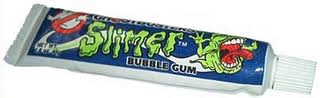
There were many Ghostbusters related food items back in the day, more than enough to adequately populate this entire list. So I’m just going to pick one more and move on.
Once upon a time there was such a thing as Slimer gum. You squeezed it from a toothpaste tube into your mouth. It was green. It may have tasted like gum, but it looked like poop. Poop from a very sick person. I have eaten my fair share of tubed bubble gum, but I don’t believe I ever had the pleasure of trying Slimer’s Poo-Poo gum. I wish I had just so I could tell you how awful it was.
Gremlins Cereal

Like Ghostbusters, Gremlins has lots fun stuff for kids because its overt horror elements were hidden within a relatively family friendly package. As a result, we had wonderful items like this Gremlins cereal, though it’s really more of a Mogwai cereal.
Supposedly Gremlins cereal tasted a lot like Captain Crunch. I never had it because I was always too busy eating the Batman cereal, which was awesome. No word on whether or not Gremlin cereal ravaged the top of your mouth like Captain Crunch, but given the nature of Gremlins, it seems like a missed opportunity if it didn’t. Each box also came with a Gremlins sticker, but I hear they tasted awful.
Crestwood House Books
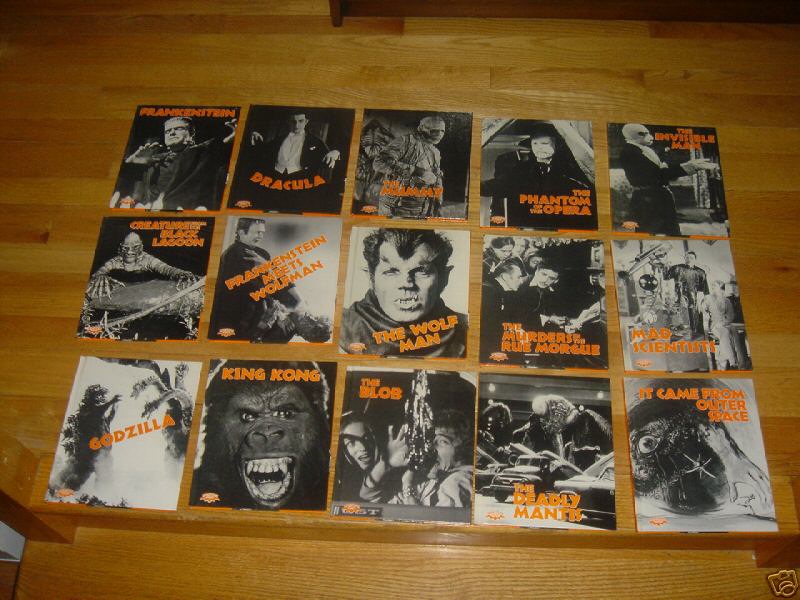
It might just be me, but these books were a huge part of my childhood and movie education. From what I hear, some libraries out there still have them, so I’d look into that if I were you, especially if you have kids.
Why? Because these books offer the best introduction possible to movie monsters of old. From Dracula to The Blob to King Kong (my favorite), each book gave you loads of info (from a kid’s perspective, anyhow) about the movie or history of character in question. This includes both filmography and real life history stuff, so kids could learn about Vlad the Impaler, to give just one example. Absolutely vital stuff.
Stephen King’s Creepshow Graphic Novel
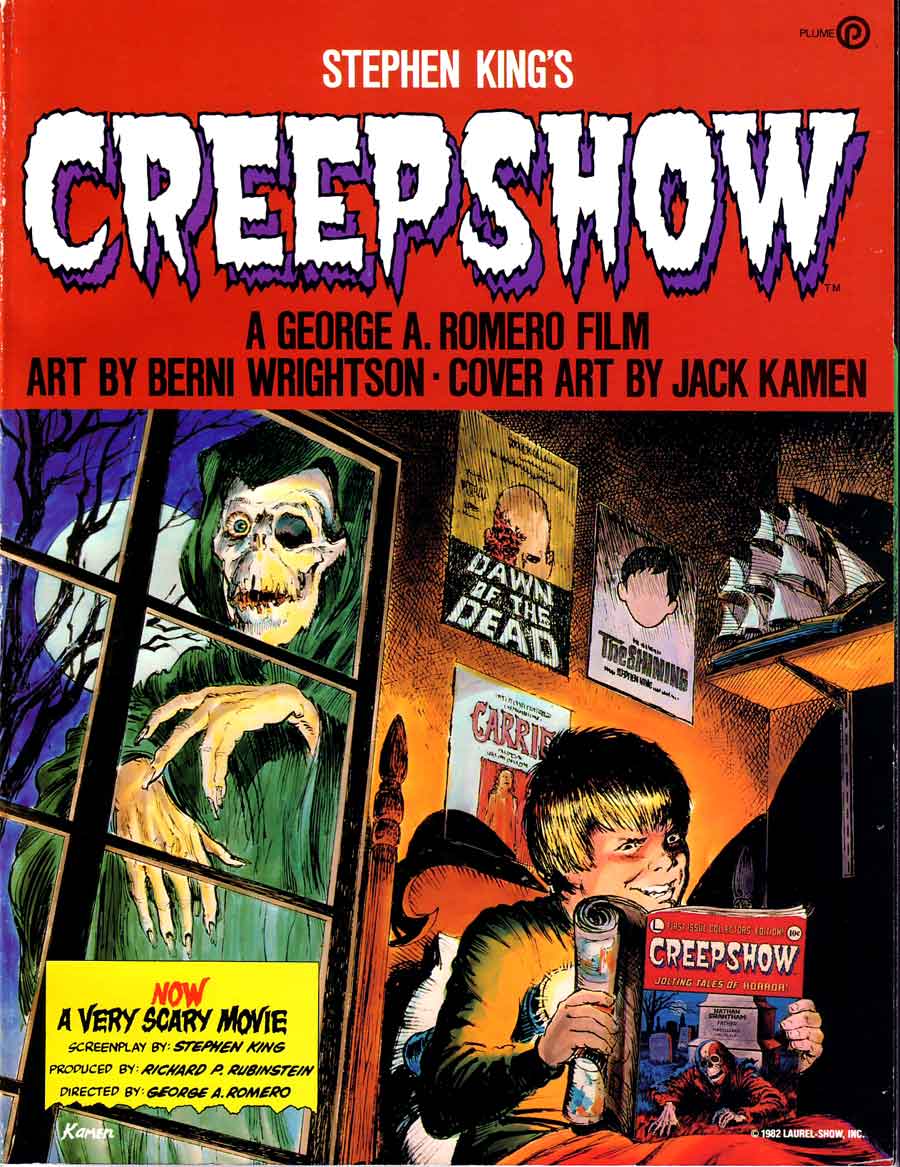
If you went to the library in the late 1980s or early 1990s, it’s likely you and your friends came upon this violent gem. Modeled after old E.C. comics, this graphic interpretation of Stephen King and George Romero’s first Creepshow film chilled bones and thrilled kids for the horror introduction waiting inside. This was before graphic novels were all over the place. To most adults, a book was a book. Many didn’t know what gory wonders this one held. And then, right next to it, was King’s illustrated Cycle of the Werewolf. That guy knew what he was doing.
This is out of print now, but you can easily find it so long and you don’t mind paying and arm and a leg. Of course, you’re old enough now to watch the film without upsetting your mother, but I always found the book much cooler.
Fright Flicks Trading Cards
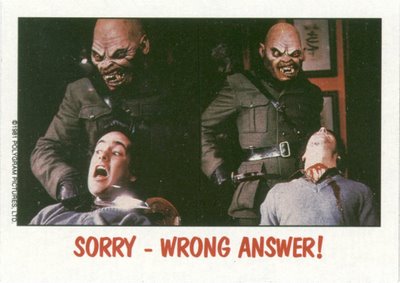
Fright Flick cards were these amazing trading cards which featured a typically gory screenshot from a 1980s horror film accompanied by a horrible Crypt Keeper-worthy pun at the bottom and a brief, real life horror story and/or urban legend on the reverse side. I had the whole set, and they were about as awesome as not sexual things can get.
If they still made Fright Flick cards today I imagine they’d be pretty Saw heavy, with allowances for torture porn and found footage stuff. Unfortunately, part of the fun of the originals was the inherent effectiveness and/or goofiness of the practical effects we had back then. The series included cool shots from both Alien and Predator, for instance, while screenshots from either monster these days would likely be computer generated. They also came with stickers and a series of collectible cards that created a larger horror collage when put together.
MAXx FX Toys

They don’t make MAXx FX toys anymore, not because of shifting trends, but because dumb mothers across the country got mad about their talking Freddy Krueger doll, and shut their line down. Stupid moms, ruining everything.
In fact, other than that talking Freddy, MAXx FX only got one of their main toys into stores. The gist was really cool. Maxx was a regular looking toy representing a Hollywood makeup guy. He came with add-on pieces that, when applied, turned him to a movie monster. They produced a cool Freddy Krueger one, and had prototypes for Frankenstein’s Monster, Alien, Jason Voorhees, and some additional generic monsters before they closed their doors on the product all together.
Nightmare on Elm Street Board Game
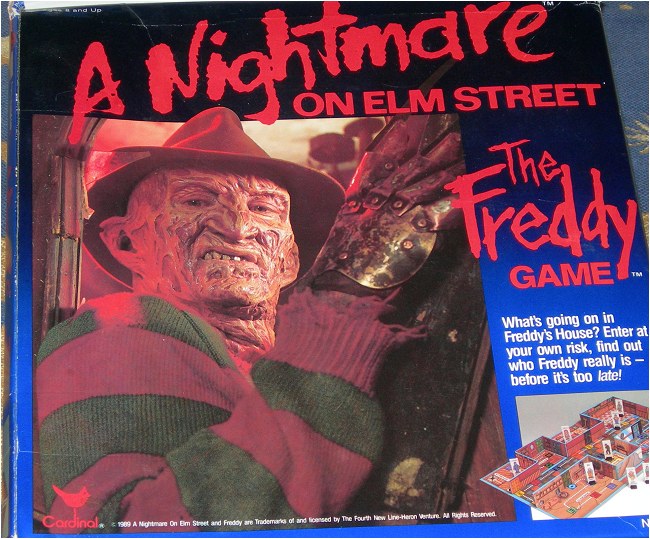
Speaking of Freddy Krueger, he also got his own board game. I never played it but it sounds pretty cool, if a bit overcomplicated by too many rules. Essentially, you and a group of friends each took a regular, every day looking human as your game avatar and traversed Freddy’s house via the 3D game board (it had vertical “walls” separating each room). Eventually, gameplay would force one player to reveal himself as Freddy, bastard son of a hundred maniacs.
So you get to kill your friends. That’s great! The big potential problem is you need at least three players for the game to be interesting. Four would be better. But it’s never easy to get that many people interested in a board game, especially one in which everyone has to learn a bunch of new rules.
Texas Chain Saw Massacre Atari Game
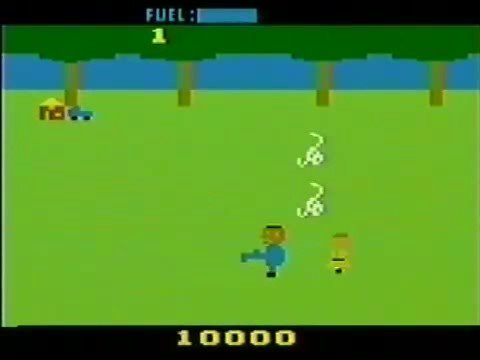
There have been a few video games based on horror characters. Atari had a Halloween game. The NES has both Friday the 13th and Nightmare on Elm Street games. But only the Texas Chain Saw Massacre game for Atari let you play as the killer.
As a Leatherface-ish blob, it is your job to kill as many teenager-ish blobs as you can before your chainsaw runs out of gas. Unfortunately, the random cow skulls and wheelchairs strewn about your lawn slow you down. That’s it. Maybe this one is long lost for a reason, though it could find a second life someday as a really crappy mobile game.
Alien Movie Viewer

If you had this when you were a child then consider yourself the luckiest boy on Earth and prepare yourself for the retroactive knowledge that everyone probably hated you.
This amazing toy was a user cranked film viewer in which you could watch (providing you had an adequate light source) roughly two minutes of Alien footage, that’s footage from a violent R-rated film, mind you. It featured three scenes: A bit of Facehugger action, Dallas’ death, and Ripley’s last bit with the Alien. This is just way too cool to have lasted.


Auteur Filmmaking is a term that gets thrown around a lot these days in reference to big name directors like Quentin Tarantino and even Wes Anderson, but the truth is that film is a collective medium, and no one person can be responsible for every single aspect of a particular production. However, the smaller a film’s budget, the bigger the individual impact of every creative decision behind it – and the easier it becomes to identify a genuine auteur.
This isn’t necessarily a judgement of value, as blockbuster filmmaking comes with its own challenges and a good movie remains a miracle regardless of how big the crew is, but I’ve always been more interested in soulful b-movies produced by handfuls of passionate artists than blockbusters backed by creative armies.
That’s why I love exploring low-budget franchises that never left the hands of their original creators, as you really get to know the artists involved with these flicks and can accompany their evolution over a period of time. With that in mind, I’d like to invite readers to join me in this multi-part series as we look into a vampire saga helmed by one of the most fascinating auteurs of the 1990s. Naturally, I’m referring to Ted Nicolaou’s criminally underrated Subspecies!
The Birth of an Unlikely Horror Franchise

A proud graduate of the University of Texas’ Film program, Nicolaou got his start in the industry as a sound technician working on Tobe Hooper’s original Texas Chain Saw Massacre. From there, the filmmaker would go on to work for notorious indie producer Charles Band, the founder of both Empire Pictures and Full Moon Productions. According to Nicolaou, Band would usually contact him with an offer to direct a feature after more prominent filmmakers, such as the late, great Stuart Gordon, had already refused, meaning that his projects tended to have lower budgets and more inexperienced crew members.
The plans for Subspecies began almost immediately after the fall of Romanian dictator Nicolae Ceaușescu, with screenwriter David Pabian turning in an initial draft of the film after a Romanian producer contacted Band and explained that Romanian tax incentives could cover the cost of film production there so long as Full Moon took care of the post-production process. Since Stuart Gordon was unwilling to travel to Romania, Ted Nicolaou ended up taking over the picture.
However, while the financial incentives meant that this Romanian-American co-production could look and feel much more expensive than it really was, with Nicolaou scouting for locations in advance and selecting real castle ruins to be featured in the movie, the director was soon faced with an incredibly difficult shooting process. In interviews, Nicolaou would later describe the experience as something of a nightmare, with language barriers and the generalized distrust of capitalist outsiders sabotaging many of the team’s plans for the film.
In fact, the script, which had already been altered by Band, ultimately had portions of it rewritten by both Jack Canson and Nicolaou himself in an attempt to adapt the story to their unique limitations.
Radu Is One of Horror’s Greatest Underrated Villains

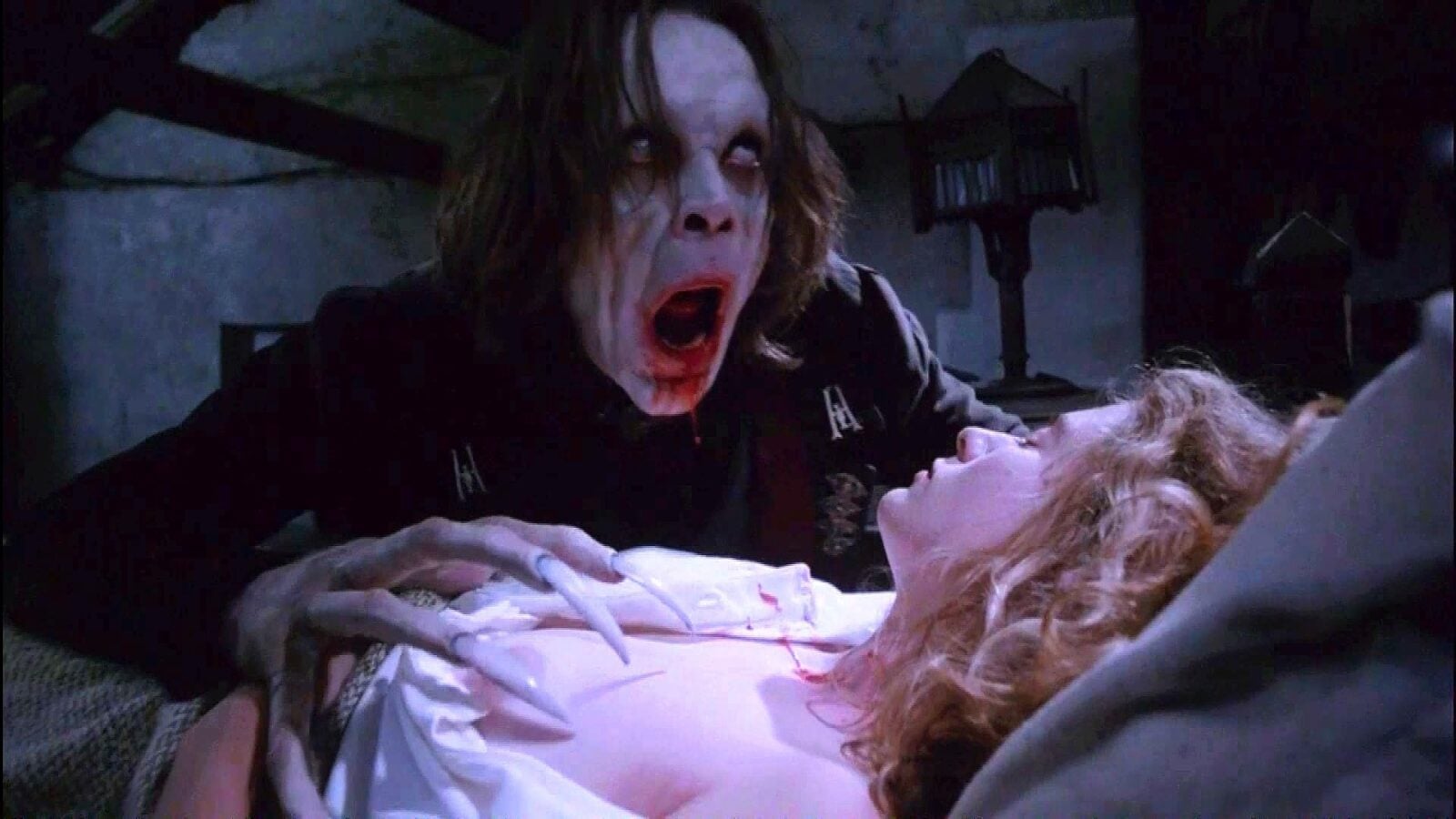
In the finished film, which was released directly to video in 1991, we follow a pair of American anthropology students, Michelle (Laura Mae Tate) and Lillian (Michelle McBride), as they reunite with their Romanian colleague Mara (Irina Movila) in her native land. The group intends to study the folklore surrounding the secluded town of Prejmer, but their research is cut short by the return of Radu Vladislas (Anders Hove) – the evil son of a vampire king (Angus Scrimm) who had previously established a truce with the region’s human residents. It’s now up to Radu’s human-loving half-brother Stefan (Michael Watson) to protect the girls from a fate worse than death as the power-hungry vampire seeks to control a magical artifact known as the Bloodstone.
Right off the bat, you may have noticed that the film’s premise sounds decidedly old-fashioned when compared to other vampire movies from around the same time. While the 1990s saw the rise of cool-looking bloodsuckers with badass elements borrowed from Westerns, as well as the sexy aristocrats of Anne Rice’s stories, Subspecies has a lot more in common with Nosferatu and the Hammer Horror series than any of its contemporaries.
This is both a blessing and a curse, as the film falls victim to overly familiar genre tropes while also standing out as a rare example of a ’90s vampire flick that isn’t afraid to flex its muscles as a Creature Feature. In fact, I’d argue that the presence of age-old clichés is a small price to pay when confronted with one of the most compelling vampire antagonists in all of cinema.
Named after Vlad the Impaler’s real-life brother, Anders Hove’s Radu is such a fascinating character and the main reason why Subspecies is still worth watching 35 years later. From his animalistic mannerisms to the joy he feels in simply existing as a chaotic creature of the night, and that’s not even mentioning the iconic makeup that almost certainly inspired the undead from Buffy the Vampire Slayer. Radu is a hypnotic presence harkening back to a time when audiences didn’t mind purely evil villains that couldn’t be redeemed through tragic backstories or sex appeal.
Gothic Atmosphere on an Indie Budget

Of course, the film’s Romanian setting and authentic art direction do a lot of the heavy lifting whenever Radu isn’t around. From the masked festivals of the village to the visually interesting selection of local extras, Subspecies’ multicultural elements help it to stand out when compared to similar flicks from the ’90s.
That being said, Nicolaou’s unique eye for special effects and exciting action sequences – as well as Vlad Paunescu’s excellent cinematography – make the movie a delight for fans of expressionist cinema and old-timey gothic horror. While the crew is obviously dealing with limited resources, many of the flick’s blemishes (such as the odd stop-motion demons that serve Radu) end up feeling more like charming idiosyncrasies than actual flaws.
I’d argue that the only real issue here is pacing, as there are long stretches of film where the protagonists are simply bumbling around without realizing what’s really going on around them. Thankfully, the gorgeous visuals and surprisingly effective soundtrack usually make up for this. Besides, how can you dislike a movie where shotgun shells are loaded with rosary beads and our lead vampires duke it out in a dramatic swordfight that would feel out of place during the golden age of Hollywood?
Your overall enjoyment of Subspecies will mostly depend on whether or not you find low-budget corner-cutting and janky practical effects charming rather than distracting, but I know I’ll keep coming back to this Full Moon feature again and again in the future.
That being said, while this first movie is worth revisiting by its own merits as the birth of an indie horror icon, I’d like to invite you to join us as we look into the cult sequel Bloodstone: Subspecies II soon.
You must be logged in to post a comment.