Editorials
Horror Education of the Week: John Carpenter’s ‘Halloween’


“I met him fifteen years ago. I was told there was nothing left. No reason, no conscience, no understanding. Even the most rudimentary sense of life or death, good or evil, right or wrong. I met this six-year-old child, with this blank, pale, emotionless face and, the blackest eyes…the devil’s eyes. I spent eight years trying to reach him, and then another seven trying to keep him locked up because I realized what was living behind that boy’s eyes was purely and simply…evil”
Halloween. The 1978 classic.
Oh, come on, you knew I was going to go there this week.
John Carpenter’s simply fantastic tale of Michael Myers – a young boy who brutally murders his sister on Halloween night in 1963 – remains a horror staple to this day. Locked up in an institution under the care of Dr. Samuel Loomis, Michael breaks out 15 years later only to return to his home of Haddonfield – to kill again.

The beauty of the original Halloween wholeheartedly lies within the idea of fate. Be it the actual fate of the characters within the movie, or the psychology behind and interpretation of the steps they take to achieve that fate, the movie is a masterpiece. Everything seems, in a way, to be on purpose. Here are some points to note:
– Immediately we are drawn into Haddonfield, Illinois. A quaint Midwestern town.
– Had Halloween been set in California, where it was filmed, the effect would not be as extreme. To have such a horrific story set in the safe haven of the Midwest, we feel the threat much more.
– Belief in fate is touched on in a school scene with Laurie, giving us an understanding that can be applied to the entire film: “Costaine wrote that fate was somehow related only to religion, where Samuels felt that fate was like a natural element, like earth, air, fire, and water.”
– The Boogeyman, in some cultures, can be seen as part of religion (ex. The Devil) or in regular society, it is almost like a natural element – an imaginary being used to get children to simply behave.
– Ultimately, in either realm, the Boogeyman is an evil used to threaten a specific fate.
– The idea that the Boogeyman is an age-old evil is perfect in that this is exactly how Dr. Loomis thinks of Michael.
– The moment Michael escapes the institution, Loomis cries out, “He’s gone. The evil’s gone.”

– Tommy speaks of the Myers house, “Lonnie Elam said never to go up there. Lonnie Elam said that’s a haunted house. He said real awful stuff happened there once.”
– The fear of the old house in the neighborhood is also something instilled through the ages and a psychological terror. Those who step near the house are simply ‘asking for it’.
– Laurie, Annie and Lynda each have their own personas. Annie and Lynda even appear different when they’re introduced, dressed more hip in their jeans as opposed to Laurie, who is covered head to toe in her homely turtleneck, skirt, and tights.
– Annie and Lynda each plan to have adventurous evenings with their respective boyfriends as they puff on their cigarettes. 
– As we all know, the idea that Laurie only babysits, and is ‘too smart’ for adventures with boys, is what will ultimately save her. Laurie is the martyr.
– Perhaps Laurie could have stayed safe in her homely clothing, but she tiptoes little by little to the line of destruction. To a terrible fate.
– First, she opens herself up to trouble by changing into clothes that look much like those of her friends.
– She then takes another step further by smoking pot with Annie in her car as they head to their babysitting jobs – while Don’t Fear the Reaper plays on the radio.
– Then Laurie admits she does indeed have a crush on a boy at school.

– Upon discovery of the dead dog, we learn more of what Loomis thinks of Michael:
“A man wouldn’t do that.”
“This is not a man.”
– Loomis’ speech about Michael being pure evil goes back to the idea of the Boogeyman being just another simple part of nature.
– There is no reasoning behind this Michael, unlike Rob Zombie’s remake which gives blatant explanation. There is no reasoning other than the idea that he is simply evil.
– Sex, smokes, beer: Lynda and Bob run at full speed to their fate.

– After Michael kills Bob, he looks upon him, slightly cocking his head to one side. It is almost like a curious cat or dog that is trying to comprehend why the bug they’ve smashed is no longer moving.
– This is then followed up by Michael bringing the phone to his ear after Lynda calls Laurie – her struggle being interpreted as a prank call. The way he handles the common household item, like the look at Bob, is very unnerving and not human.
– At the same time Laurie sheds her sweater – bringing her deeper into the realm of her friends who have been brutally murdered after becoming more or less unclothed – she ups her good girl status, taking on the care of Lindsey along with Tommy. This balances out her fate momentarily.
– However, the second Laurie abandons the children in the home to investigate the whereabouts of Annie, she is immediately stalked by Michael. He attacks her and she receives her first and only battle wound.

– Laurie mothers the children, saying she has killed Michael and that everything will be ok.
– Tommy responds, “You can’t kill the Boogeyman.” A very deep statement if taken with the history of the subject matter and its transition through time and cultures.
– Loomis is finally alerted to his fate of stopping Michael, as Tommy and Lindsey escape the house, leaving Laurie behind to fight.
– After all of her sacrifice and fighting the temptations indulged by those around her – Laurie is left standing thanks to Dr. Loomis and his belief in pure evil:
“It was the Boogeyman…”
“As a matter of fact, it was.”



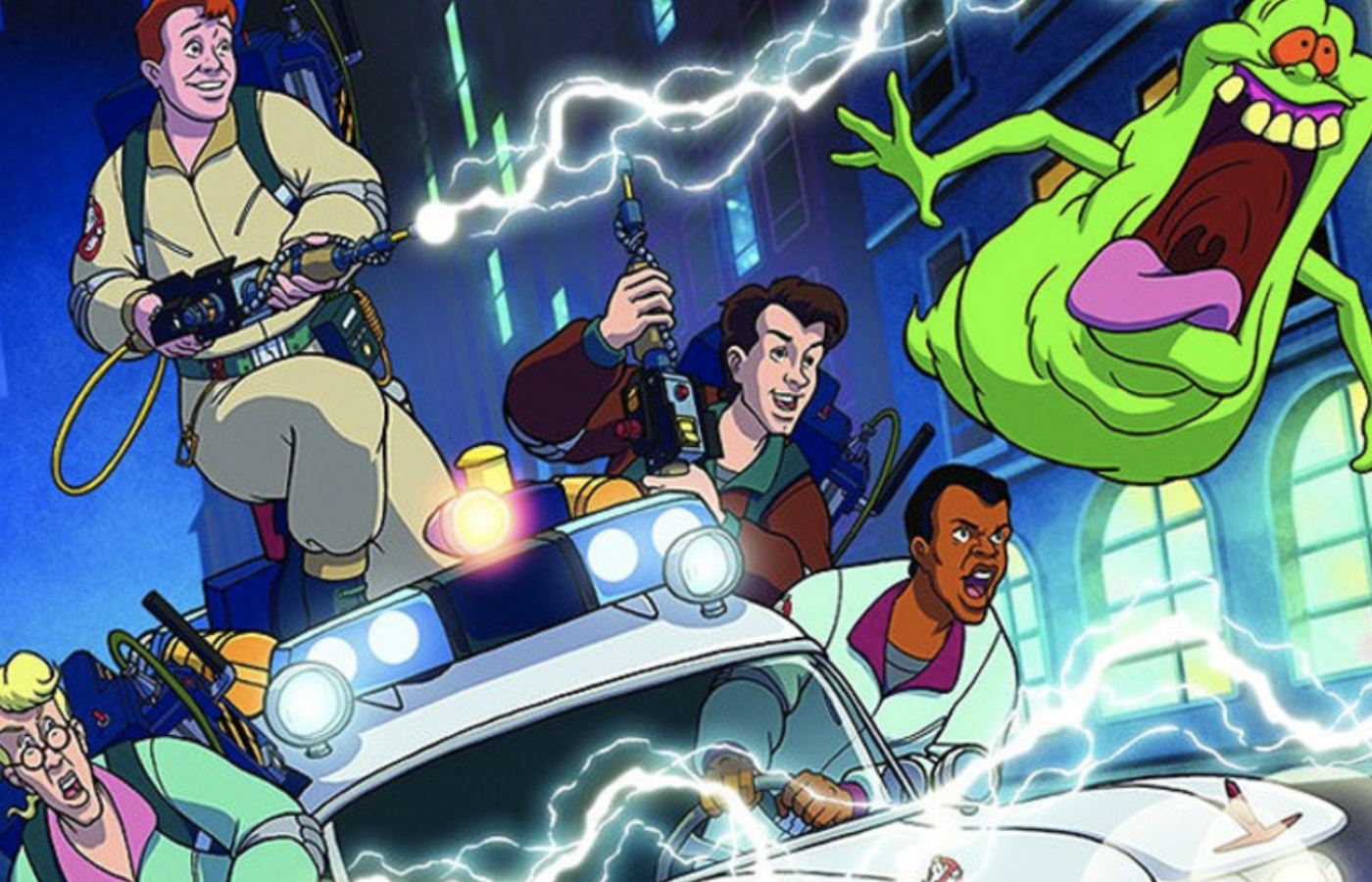
No conversation about cartoons based on live-action movies is ever complete without mentioning The Real Ghostbusters.
This animated continuation is, warts and all, a notable example of turning a hit movie into a hit series. And although the new target demographic skewed a little younger, even kids-at-heart could partake in the further adventures of Peter Venkman, Ray Stantz, Winston Zeddemore and Egon Spengler.
For a good part of its run, the show required fans to wait at least a week for more Ghostbustin’. That’s torture for a kiddo. Luckily, though, the entire series, or at least most of it, is now available for streaming.
So, as you revisit The Real Ghostbusters on Tubi—for now it’s just the first five seasons there—use this guide to help prioritize some must-see episodes.
The Boogieman Cometh

“The Boogieman Cometh” (Season 1)
Season One’s “The Boogieman Cometh” is a classic episode featuring one of the show’s more iconic villains. It’s hard to forget the unique character design used for the Boogieman (whose creepy voice was provided by Ray and Slimer’s actor, Frank Welker). In this story, Egon is reunited with that bump-in-the-night entity who haunted his own childhood, all while trying to keep him away from his latest targets: the brother and sister claiming to have the Boogieman in their closet. Although the Ghostbusters do save the day here, the Boogieman eventually returns (“The Bogeyman Is Back“). That same episode also features the love-’em-or-hate-’em Junior Ghostbusters.
Mr. Sandman, Dream Me a Dream

“Mr. Sandman, Dream Me a Dream” (Season 1)
You could say the namesake of “Mr. Sandman, Dream Me a Dream” had good intentions for putting mankind to sleep for the next few centuries—he wanted to end war and keep everyone dreaming. Sounds nice until you remember that whole free will business. But when it seems like the Ghostbusters have lost to their latest foe, the last one standing, Winston, gains a sudden ally. Janine’s dream of becoming a Ghostbuster is manifested, and she helps put this rogue spirit to bed.
When Halloween Was Forever

“When Halloween Was Forever” (Season 1)
Before the show’s execs capitalized on Slimer’s popularity by making him the focus of later episodes, early stories like “When Halloween Was Forever” better utilized that gooey ghost. Here, the spirit of Halloween itself, Samhain, hopes to make the holiday a permanent thing by stopping time. And who does the embodiment of All Hallows’ Eve use in his nefarious plot? Slimer, of course. Thankfully, the lil’ green bud knows where he really belongs, and Samhain is banished (at least until Season 3’s “Halloween II 1/2“).
Night Game

“Night Game” (Season 2)
Because Season Two was rather long, in comparison to other seasons, it accumulated quite a few solid episodes. One of the most beloved, though, is that ultimate good-versus-evil story, “Night Game“. Winston gets to shine here as he participates in a battle that was 500 years in the making. Except this time, the fighting is done on the baseball field. The other-dimensional settings in The Real Ghostbusters are always great, but the one here is particularly memorable.
Drool, the Dog-Faced Goblin

“Drool, the Dog-Faced Goblin” (Season 2)
Not all ghosts and whatnot were bad in The Real Ghostbusters. As “Drool, the Dog-Faced Goblin” showed, some were actually benevolent. Sadly, it took a lot of convincing, and one very heroic act, for Peter and the others to see past this goblin’s grotesque appearance. The heroes find more than one shapeshifter at a sideshow carnival in the Poconos; a sinister Class-4er called the Metamorph does a swell job of menacing the Ghostbusters before they finally realize Drool’s not their culprit. The good guys indeed win here, but that victory is a bittersweet one.
The Collect Call of Cathulhu

“The Collect Call of Cathulhu” (Season 2)
While “The Collect Call of Cathulhu” does misspell “Cthulhu” in the title (probably to avoid legal issues), it is clearly the Old One in this Lovecraft-inspired episode. The story kicks off with the Necronomicon being stolen by the deity’s modern-day cult, who then raise their ancient god at Coney Island. From there, the Ghostbusters’ typical methods don’t work on the big guy, so they seek advice from an old issue of Weird Tales (or “Wierd Tales”, as it’s spelled on screen). That build-up to the finale comes with a decent amount of dread before the Ghostbusters, as well as a scholar named Alice, face off with one of the show’s most powerful entities.
Knock, Knock

“Knock, Knock” (Season 2)
A number of Real Ghostbusters episodes could be reworked into big-screen features, but perhaps “Knock, Knock” is the most hopeful. It helps that this story feels in step with the first two movies. Here, some ignorant construction workers accidentally uncover and open an ancient door in the subway. What’s behind said door is none other than those unspeakable evils that only the Ghostbusters can quell. A good deal of the imagery here is prime for adaptation.
The Grundel

“The Grundel” (Season 3)
One of the darker episodes, which was written by the prominent J. Michael Straczynski, is “The Grundel“. Here, a boy is being influenced by the titular entity, a type of ghost who ultimately turns his targets into new Grundels. The episode does have something of an after-school special quality to it, but that doesn’t take away from the eerier moments. For more Grundel lore, be sure to check out the episode “Grundelesque” from the sequel series, Extreme Ghostbusters.
Standing Room Only

“Standing Room Only” (Season 4)
It’s no secret that The Real Ghostbusters experienced multiple changes after the second season. Out of all of them, though, retooling the show so that Slimer would get more of the spotlight is maybe the most egregious. Thankfully, Season Four (the first to be called Slimer! and the Real Ghostbusters) didn’t completely obey that new directive; episodes like “Standing Room Only” felt more like the old days. The focus here was on the well-being of the city and its people, rather than on the series’ green mascot (or the Junior Ghostbusters). In the episode, Peter’s new ghost attractor isn’t to blame for the ensuing chaos; the ghost-eating Mee-Krah is what’s really imperiling everyone. And the Ghostbusters must dish out everything they have to avoid a doomsday situation.
The Halloween Door

“The Halloween Door” (Season 5)
While many fans will skip the later seasons in their rewatches, episodes like “The Halloween Door” are still worth checking out. This colorful helping of Halloween pandemonium premiered on primetime, so the animation is better than usual. And save for a random musical moment, it’s an enjoyable event. Here, a group of anti-Halloweeners tries to cancel the holiday, but they only end up making things worse by unleashing a baddie named Boogaloo.
The first five seasons of The Real Ghostbusters are available on Tubi, starting on July 15.
You must be logged in to post a comment.