Editorials
[Good Scenes In Bad Movies] ‘Cabin Fever 2: Spring Fever’ Edition!!


I’m not convinced I’ve even seen Cabin Fever 2: Spring Fever in its entirety, it was before my time at Bloody-Disgusting and – while I was a fan of the first ever since it came out on DVD – I never athletically sought ought the sequel. But The Wolfman did, and he didn’t much care for it (even though he loves director Ti West’s other films). But there’s one scene he likes! Sometimes finding a saving grace in a film comes down to finding just one scene that really hits it out of the park. And that’s precisely the point The Wolfman (@TheWolfmanCometh – on the boards) aims to illustrate here in his column!
We’re going to, on occasion, start examining good scenes that outpace the general quality of the film that contains them. And we hope you’ll come along for the ride! Head inside for his take on Cabin Fever 2: Spring Fever!

With all of these articles I’ve been writing, entitled “Good Scenes in Bad Movies”, the only consistency I’ve noticed is how many people disagree with me. GUYS, I’M OKAY WITH IT, I CAN TAKE THE ABUSE. I’d like to point out, however, that all of these articles are opinion pieces, and I am speaking solely on behalf of myself. Not Bloody Disgusting as a whole, not the entire horror community, just me, your friendly neighborhood Wolfman. When it comes to Cabin Fever 2: Spring Fever, I already know that a bunch of people are going to post comments like “OMG this movie rulez” or “r u kidding me? ur out of touch with the horror community”. Even though there might be some people out there who like this movie, I’d like to point out that writer/director Ti West tried to have his name removed from the project. If you spend your time and energy to writing and directing a movie, yet are so unhappy with the changes to the film forced upon it by the financial backers, then for all intents and purposes, I’d say this movie is “bad”. Don’t worry guys, there is ONE pretty cool thing about it!
In the first Cabin Fever, there’s a flesh-eating virus that infects a group of college kids staying in a cabin, and while most of them die, the film ends with one of the diseased kids falling into a local river. We know that these kids caught the disease from the drinking water, so the beginning of this film has an animated sequence showing the infected water being bottled up and distributed to places nearby. One of the places where the drinking water ends up is at a high school prom, so everyone at the prom who drinks the water ends up infected and eventually quarantined by some sort of unknown task force. There’s lots of boils and blisters and blood and gooey stuff, and even though most of the students are killed by the task force, there are a few people who drink the water and manage to make their way to neighboring towns. Through more animation sequences, we learn that the infection is spreading nationally, leaving the story open-ended for future installments. Just what we were waiting for!

Firstly, I’d like to say that some of the special gore effects are pretty good, at least from a technical standpoint. They are gross effects that are pulled off successfully, but the context of them is so pointless that you almost resent those effects being there in the first place. Is that confusing? Let me explain. In the original Cabin Fever, there were a handful of well-executed, disgusting practical effects. These effects took you by surprise, because these effects were just scattered (or should I say splattered?) throughout the entire film, and there was enough of a plot that you didn’t need those effects to be entertained. When the effects were implemented, it was merely to heighten the tension of the plot, as opposed to using a plot to string together the grossest effects you could think of. Whether it was Rider Strong having an intimate moment with Jordan Ladd and realizing he wasn’t touching what he thought he was touching, or, possibly the best effect in the movie, the scene where Cerina Vincent shaves her legs, and, well…you know what happened. Cabin Fever 2, on the other hand, had a pretty boring story, very little plot, and for some reason had animation sequences. Anyone know why those were there? I don’t. It seemed like maybe Ti West thought of a plot, but then the producers remembered the more memorable scenes in the original, and demanded he double the amount of gore and bodily fluids. I’m a big Ti West fan, so it was surprising that he was involved with this movie, but when I found out afterwards he tried to cut any association to it, it was quite a relief. Unfortunately for Cabin Fever 2, it’s yet another movie that suffers from “The opening is so good, that everything after it is terrible by comparison” syndrome.

As previously mentioned, the original Cabin Fever ended with one of the main characters, Paul (Rider Strong) falling into a body of water, followed by a jugband medley of the town’s residents having a party. When Cabin Fever 2 starts up, as a surprise to I assume everyone watching this movie, we see Paul wake up and start wandering away from the river. He is stumbling through the woods, completely aimlessly, but he eventually finds a road. As he’s just sort of spinning and stumbling in one place in the middle of this road, we see a school bus getting closer and closer to him. Considering it’s a wide shot, it’s hard to tell if the bus is slowing down at all, but as it gets closer and closer to Rider, we learn that it’s not slowing down at all, which is why as soon as it makes contact with him, he just completely explodes with blood and guts, and the movie freeze frames to have the title pop up on screen for a few moments, and then the scene resumes with the bus driving through this blood cloud and everything splattering all over the ground. Considering Ti West’s enjoyable opening sequences in all of his other movies, I like to think that this is at least one sequence in which he had control over. Teasing the audience with seeing a character from the previous movie, only to completely explode him in the first few minutes was pretty funny and surprising. If you watch that opening sequence, it’s also a great practical effect that seamlessly blends a shot of Rider Strong standing in the road with the effects shot of a bus hitting something that could release that amount of blood and goop. Guys, don’t get me wrong, I love movies that are excuses to highlight practical effects as much as the next guy, but with how much I enjoyed the original movie, combined with how much I enjoyed this opening sequence and how bland the characters were in this sequel, don’t feel bad shutting this movie off once you get a few minutes into it.



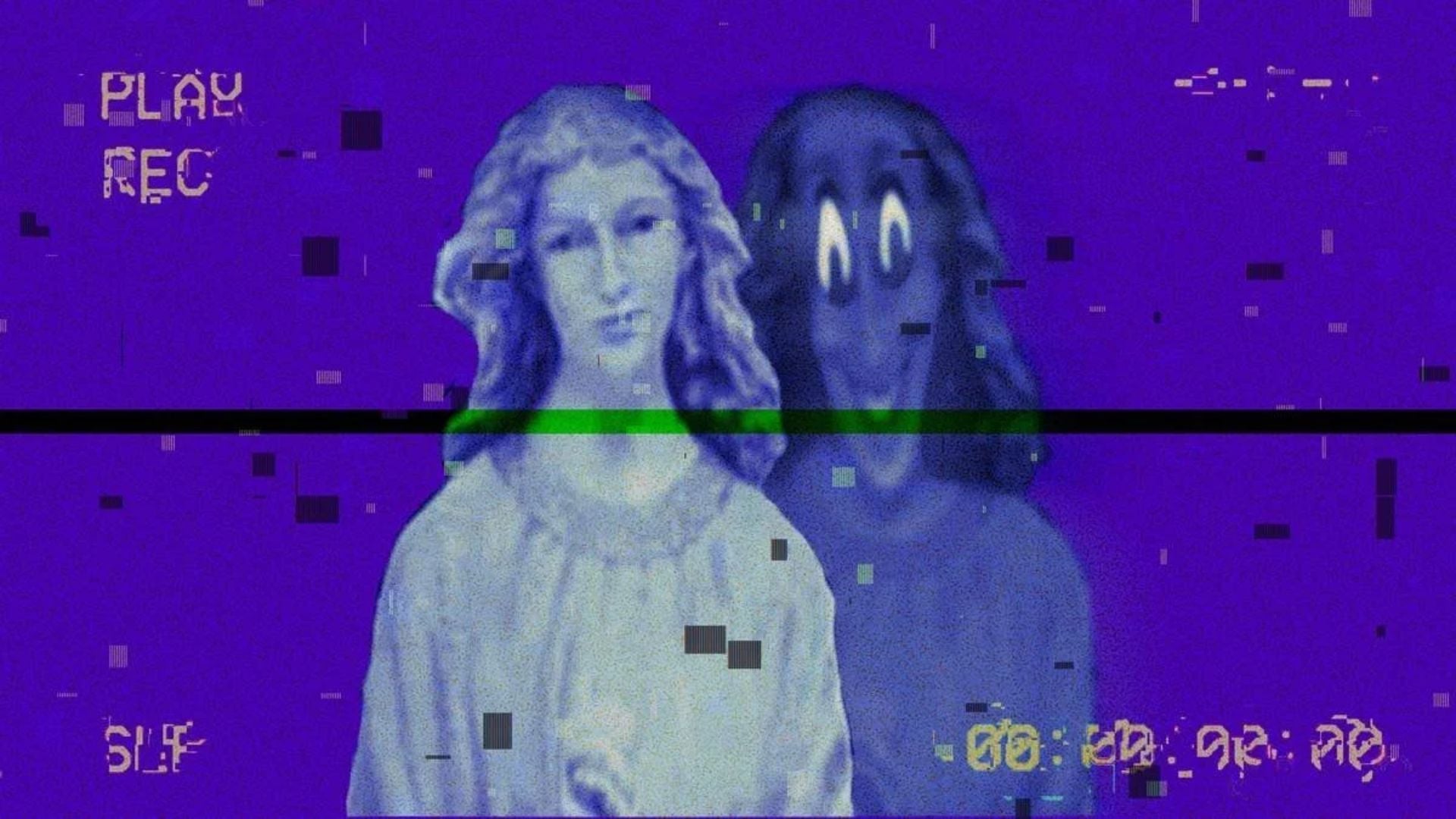
I first heard about The Mandela Catalogue through a couple of nephews who were obsessed with the ARG’s sinister mythology. It was only after watching Wendigoon’s in-depth analysis of the series that I realized just how deep this rabbit hole goes.
In fact, I’d already been exposed to the nightmarish visuals of Alex Kister’s YouTube creation for years at that point without even realizing that it was the origin of several viral “cursed images” and spooky memes that had leaked into the wider internet – with this viral element actually being a part of the Catalogue’s overarching narrative.
Flash-forward to 2026 and the unprecedented success of Kane Parsons’ Backrooms has led to Hollywood betting on horrific internet properties with existing fanbases, which means that Kister’s unique hybrid of both religious and analog horror is finally headed to the big screen with a script written by Kister himself alongside Tyler Clifton.
While this news shouldn’t be too surprising if you’ve been keeping up with the ongoing success of The Mandela Catalogue (both myself and Wendigoon having previously predicted that the series would inevitably make the jump to theaters one day), plenty of horror fans are likely confused as to why so many folks are excited for what appears to be a Hollywood adaptation of a series of creepy .jpeg images under a VHS filter.
With that in mind, today I’d like to invite fellow readers to accompany me as I explore the origins of Alex Kister’s viral hit and attempt to explain exactly why we should all be excited about the Mandela Catalogue adaptation!
From High School Writing Project to Internet Horror Phenomenon

The first seeds of The Mandela Catalogue were sown when Kister was still in high school and developed a writing project subverting religious tropes in a world where biblical history had been altered by demonic forces. A little while later, Kister came across an analog horror contest on Reddit and decided to adapt his ideas into a standalone video where he would edit a religious kids’ cartoon –The Beginner’s Bible: The Nativity, to be specific- into something far creepier. This is how the iconic Overthrone video was born, with this viral short film taking on a life of its own as fans demanded more eerie content from Kister.
Though the video was originally meant to be a one-and-done sort of affair, with Kister actually regretting some of its primitive visuals and considering the editing amateurish and “YouTube-Poop-like” when compared to his current standards, fan reaction and free time during the COVID-19 pandemic encouraged the (then) seventeen-year-old filmmaker to continue producing content set in this same world. The Mandela Catalogue name was inspired by the Mandela Effect conspiracy theory, as the series would slowly begin to explore the subtle horror of alternate histories.
Inspired by existential dread brought on by extended periods of quarantine as well as a personal crisis of faith, Kister continued to expand his alternate timeline where the rise of Christianity had been prevented by what was presumably the Devil disguised as the Archangel Gabriel. This alternate course of fictional events led to the existence of certain paranormal anomalies that had come to be accepted as “normal” by the 1990s, which is why most of the series’ supernatural horror is presented in such a matter-of-fact manner.
Most of this background information and religious lore is delivered by increasingly cryptic broadcasts and in-universe PSAs, as well as the occasional found footage video, that often have to be decoded by clever viewers. Of course, it’s the consistently disturbing imagery that made the series so popular – much of which was originally created by Kister on a smartphone!
The Alternates: Horror’s Most Unsettling Modern Monsters

The show’s early episodes mostly take place within the fictional Mandela County in Wisconsin and depict life in a world where demonic entities are capable of using media to enter our reality. This process usually involves scaring victims into killing themselves and then repurposing their bodies as horrific doppelgangers referred to as “Alternates”. This terrifying phenomenon has become so common that local police already have specialized procedures in place to deal with the issue, though this usually consists of simply ignoring calls for help so as to avoid spreading so-called “Metaphysical Awareness Disorder” any further.
Over time, Kister would expand this mythology and incorporate different kinds of Alternates into the mix, though the story never stopped deconstructing religious concepts. The series’ second volume exponentially increased both video quality and the overall narrative scope as we began to follow the lives of characters who had already grown up in this dystopian hellscape where the government is forced to prohibit religion, television, and even mirrors in the hopes of mitigating the damage done by the ongoing invasion of otherworldly entities.
The really interesting part comes into play when you realize exactly how the Alternates make use of scary media in order to spread their demonic influence, with the analog horror of it all being a diegetic part of the story and something of a memetic trap orchestrated by the false Gabriel.
I particularly appreciate how some characters begin to suspect that there’s something wrong with their version of reality and that things weren’t meant to play out this way, especially when Mark utters the haunting line “who have I been praying to all this time?” That’s why I think The Mandela Catalogue is an effective piece of religious horror even if you don’t subscribe to the Christian worldview, as the mere idea of a world where evil has already won is a universally terrifying concept in and of itself. Not only that, but the series’ uncanny analog imagery alone is already worth the price of admission, as you’ve likely already noticed by looking at the pictures accompanying this article.
Why The Feature Adaptation Could Be Horror’s Next Big Success

It’s actually been a whole year since Kister first announced that he had been working on a feature-length screenplay for a Mandela Catalogue movie since 2022, with his proposed story following an ensemble of high-school graduates who uncover a supernatural conspiracy after the mysterious disappearance of a fellow student. This premise sounds similar to narrative elements present in the series’ second volume, but I’m pretty sure that Kister is going to go the Kane Parsons route and make the movie more of a spin-off than a re-imagining of its source material.
While notable Hollywood producers like Aaron B. Koontz, Scott Stuber, and Steven Spielberg himself are backing the upcoming project, I feel like there’s no one better to adapt this deeply personal exploration of faith and the dark side of communication than the person who first came up with it. That’s why I can’t wait to see Kister’s work on the big screen, as I have a feeling that this young filmmaker is the next one on the list about to make cinematic history – especially since this is clearly a passion project that has been in the works for years at this point!
That being said, there’s always a chance that the film could end up unleashing a fresh wave of Alternate incursions, but I guess that’s just a risk we’ll have to take.
You must be logged in to post a comment.