
Editorials
Horror’s 10 Scariest Haunted House Movies

There are no shortages of haunted house horror movies, a major horror sub-genre. Paranormal horror makes for some of the spookiest, timeless horror features. The creaky floors, doors shutting on their own, and things that go bump in the night in what should be a safe space; your home. What further lends to the terror is the intangible nature of the paranormal, therefore the inability to effectively fight off attacks. Or the discovery of a home’s tragic history that refuses to stay dead. Over the decades, horror has presented a vast number of terrifying haunted abodes, from sprawling gothic mansions to the seemingly idyllic suburban home.
The very concept of a haunted house is vague enough that it lends well to reinvention time and time again, giving us classics like Alien, taking the haunted house blueprint and applying it to space, or The Shining, which uses a haunted house story set in a hotel to examine a break down a man’s sanity. To narrow down the scariest haunted house films in horror history, a broad sub-genre, all haunted buildings outside of traditional fare are eliminated; haunted asylums, orphanages, space stations, and the like all make for chilling locations to set a haunt, but exist beyond the scope of this list. Using that basic rule, the 10 scariest haunted house horror films are:
The Haunting (1963)

Adapted from Shirley Jackson’s classic novel The Haunting of Hill House, the plot follows a group of paranormal investigators as they study and investigate 90-year-old Hill House and its sordid history. Accompanied by Hill House heir Luke, Dr. John Markway, psychic Theo, and meek paranormal sensitive Eleanor navigate the labyrinthine mansion as subtle paranormal occurrences begin to pile up. The banging on the walls, the cold spots, and all the requisite signs of a home haunting occur. The most chilling moment comes when Eleanor tightly grips Theo’s handing in the middle of the night when an unseen stranger pounds their bedroom door. Only, it isn’t Theo’s hand at all. The Haunting is an unsettling story of creeping dread that proves horror doesn’t have to have an R-rating to get under your skin.
Burnt Offerings

Based on a novel of the same name, this haunter was co-written, produced, and directed by Dan Curtis (Dark Shadows). Starring Oliver Reed, Bette Davis, and Karen Black, this atmospheric gem favors slow burn mystery over jump scares. The Rolf family rent a bargain-priced summer home, a large mansion in Long Island, that comes with a strange caveat; the owners require that their elderly mother live upstairs and that the Rolfs care for her during their stay. Marian (Karen Black) agrees, so excited to claim the bargain price, and before long becomes obsessed with maintaining the expansive house. Unlike most haunted house fare, though, the house seems to thrive off the Rolf family’s presence. Particularly whenever they bleed. Moody, eerie, and fueled by a mysterious force the Rolf family can’t contend with, Burnt Offerings is an underseen horror film that subverts everything we knew about haunted houses.
The Others

If you have yet to watch this gothic ghost story, go in knowing as little as possible (don’t worry, no spoilers here). Alejandro Amenabar’s World War II-set haunter follows Grace Stewart (Nicole Kidman) as she cares for her two light-sensitive children and their servants in an isolated countryside house while her husband is presumably killed at war. With her kids refined to the house, weird events begin happening. The piano plays itself at night, things move on their own, and Grace’s daughter Anne claims to have seen strangers in their home. The ghostly jump scares stick their landing, and become even more unsettling with the psychological element; is Grace cracking under the pressure of upholding the home on her own, or is there an unwelcome presence?
The Pact

One of the most common themes explored in haunted house horror films is that of the past coming back to literally haunt. For Annie Barlow (Caity Lotz), she’s forced to confront her past in the wake of her mother’s death and her sister’s disappearance, who was last known to be finalizing funeral arrangements from their childhood home. Annie’s return to her childhood home to retrace her sister’s footsteps not only stirs up bad memories from growing up, but also makes her a target for attack by an unseen presence within. Written and directed by Nicholas McCarthy, The Pact manages to make even the most mundane suburban home sinister and reinvigorate old tropes. The Pact takes a huge left turn from the expected direction, with terrifying results.
Lake Mungo

This mockumentary style horror film written and directed by Joel Anderson tells a story of a family coping with the loss of their teen daughter Alice and the supernatural events that have emerged since her drowning. Alice’s brother Matthew sets up cameras around the Palmer household to record sightings of his dead sister, and the family seeks the help of parapsychologist Ray for answers. Part found footage and part faux documentary, including interviews with the family, Lake Mungo feels like a film within a film centered around the palpable grief of a daughter and sister. Anderson takes full advantage of found footage tropes, using the ghostly presence of Alice to deliver shocking twists and scares. In other words, it’s nothing like your average found footage film, and the ideas and imagery presented will linger with you long after the end credits roll.
Ju-On: The Grudge

Kayako and her son Toshio may be iconic, but it’s their house in which they are tethered and where the curse resides that gives them power. Takashi Shimizu’s Ju-On series has rivaled Ringu in terms of Japan’s most terrifying ghost stories, and it’s no surprise that this long-lasting franchise is getting an American reboot next year. The unnatural way Kayako and Toshio contort their bodies as they haunt their victims is enough to send chills down your spine, and Shimizu is a master of the jump scare. The Ju-On series brings a whole new layer to the haunted house concept; those who are brave (or dumb) enough to step foot inside the Saeki home are doomed to bring the curse back with them. In haunted house horror, the body count is typically quite low. That’s not the case here.
The Sentinel

When one thinks of haunted houses, usually the image of a gothic mansion or a dated home come to mind, not a Brooklyn brownstone. Yet it makes for one of the most unique and creepy haunted house flicks of all, when fashion model Alison Parker moves into one that’s been sectioned off into apartments. It doesn’t take long after move-in day for Alison to begin hearing strange noises, suffer insomnia and nightmares, and endure bizarre encounters with her equally bizarre neighbors. When she complains to her real estate agent, the agent is confused; the brownstone only has two tenants, Alison and the blind reclusive priest on the top floor. Also fitting in line with the Catholic horror of the decade, The Sentinel is an oft-overlooked gem with hellish roots.
The Conjuring

James Wan’s ode to ‘70s supernatural horror employed every tool in his horror arsenal crafted from previous work on supernatural films Dead Silence and Insidious, proving himself to be a modern master of horror with his uncanny ability to draw out excruciating tension and scares juxtaposed with an emotional story filled with characters the audience actually cares about. It even takes the controversial real-life figures of Ed and Lorraine Warren and turns them into horror’s most endearing couple as they investigate the haunting of the Perron family at their newly purchased farmhouse. Atmospheric, tense, and expertly paced, it’s no surprise this film launched a horror universe of its own.
Poltergeist

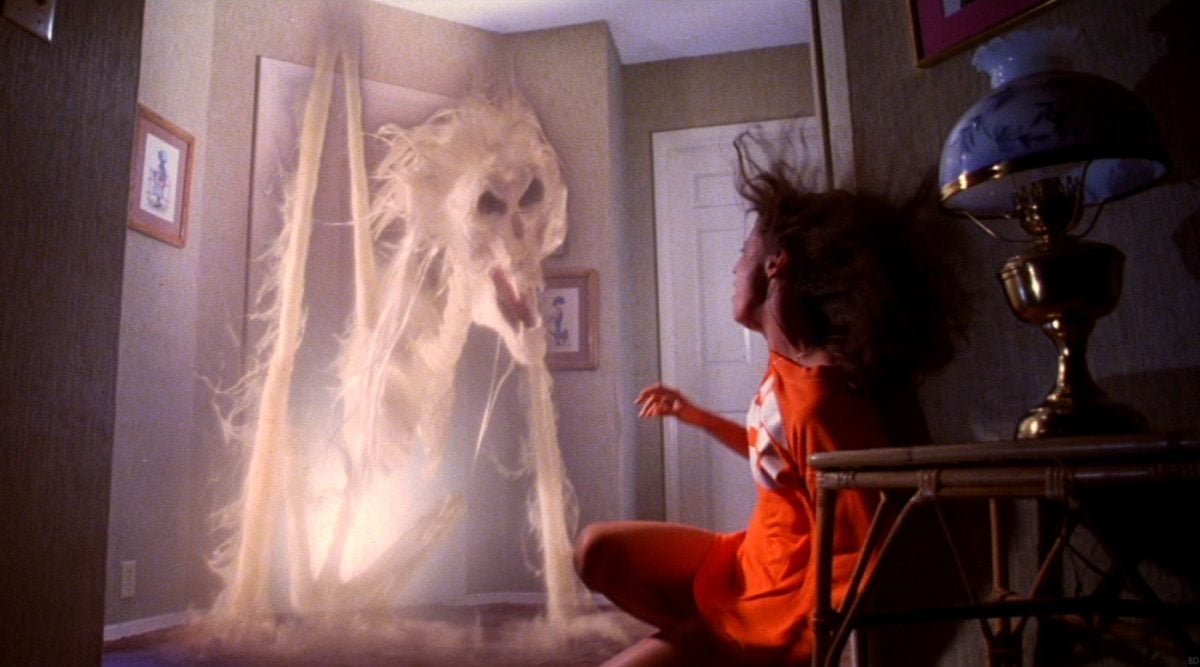
A well-regarded classic for a reason, this Tobe Hooper directed seminal haunted house story centered around the Freeling family proved that not even a newly built suburban home could be free from paranormal activity. Few horror protagonists are as amiable as the Freelings, led by patriarch Steve (Craig T. Nelson) and Diane (JoBeth Williams), and their plight of searching for missing daughter Carol Anne lends an emotional through line. More than that, Poltergeist brings one of the showiest haunted house films in cinematic history. From face peeling nightmares, corpse-filled swimming pools, and even attacking trees, Poltergeist is one epic spectacle that offers chills, laughs, and heart.
The Changeling

This definitive haunted house tale follows George C. Scott as John Russell, a music composer that moves into a large Victorian mansion in Seattle after the deaths of this wife and daughter. The usual phenomena begin shortly after moving in; banging on walls, spooky apparitions, and various other signs of hauntings. John begins to investigate the history of the house, finding a tragic secret and one very pissed off ghost at the center of the sprawling home. Scott’s compelling performance as a mourning man fueled by the mansion’s tragic mystery, the now iconic sounds and imagery (that wheelchair), and the way director Peter Medak frames his shots makes for one of horror’s scariest haunted house films ever. It’s so good that I’m surprised that it took them this long to attempt a remake.



Editorials
Not Another ‘Scary Movie’: Revisiting Forgotten Parody ‘Shriek If You Know What I Did Last Friday the 13th’

After Scream (1996) made a killing at the box office, as well as won over critics and audiences, a lot of folks in the movie biz thought they could do the same thing (and yield similar results). That thing, of course, being a slasher. Most of these opportunists wound up being pretty straightforward; they were low on humor or commentary. Yet others, like Scary Movie (2000), saw the potential for spoofing Scream, and acted on that impulse with both haste and excitement.
A few months after the Wayans’ comedy first hit theaters, Shriek If You Know What I Did Last Friday the 13th landed on the USA Network, as part of the channel’s “Shriek Week” programming. That straight-to-cable (then home video) destination is possibly why many people still don’t know about this one. Or they simply chose to forget. Whatever the reason, only one of these two horror parodies came out on top—and it’s certainly not the movie where Coolio channeled Prince, and Tom Arnold saved the day.
Shriek If You Know What I Did Last Friday the 13th previously went by the name of I Know What You Screamed Last Semester. That Trimark acquisition then settled on a wordier title, just so it could avoid the litigious wrath of Miramax Films. Folks may or may not remember that Columbia Pictures was sued over the “implied connection” between I Know What You Did Last Summer (1997) and Scream. So, yeah, there was no way that this competing Scream parody wasn’t going to be kept on a tight rein.
A Heavy Reliance on Late ’90s TV References

Simon Rex, Julie Benz, Majandra Delfino, Harley Cross, Danny Strong, Tom Arnold and Tiffani-Amber Thiesen in Shriek If You Know What I Did Last Friday the 13th.
Naturally, there would be similarities between Shriek If You Know What I Did Last Friday the 13th and Scary Movie—their scripts are built on the backs of the same two movies. It goes without saying that the other big slasher of the 1990s, I Know What You Did Last Summer, was as much of a target as Scream. However,the film pads itself with more TV references than Scary Movie did.
Half the cast coming off of (and in some cases, returning to) a WB show could be a reason why. Dawson’s Creek is particularly zeroed in on, based on how there’s a central character named “Dawson Deery“, and how the teen drama’s teacher-student affair plotline is satirized to the nth degree. As if there weren’t enough nods to television, Baywatch, VH1’s Pop Up Video, and even those cheesy Mentos commercials all serve as joke prompts.
Shriek director John Blanchard and writers Sue Bailey and Joe Nelms all hailed from television, so it’s understandable that they would stick close to home. The movie’s humor in general makes more sense, in light of learning that Blanchard worked on SCTV, Kids in the Hall, and MADtv. The writers, on the other hand, were each fairly green, with Bailey being the most experienced of the two; she wrote and produced the game show BattleBots. Nevertheless, they, plus Blanchard, churned out a passable, joke-a-minute movie. The whole thing is staggeringly of its time, but no one here was aiming for longevity.
Having seen enough of these kinds of movies, we know to expect jokes of the low-hanging fruit variety. That’s the parody’s whole prime directive. From the characters having names like “Screw Frombehind” and “Doughy Primesuspect”, to stereotyping that feels taboo nowadays, this is a movie from a different era of comedy. Its coarse, corny, and unapologetic sense of humor won’t sit well with everyone in these more enlightened times. In which case, Shriek If You Know What I Did Last Friday the 13th can be treated as a time capsule.
Does Shriek If You Know What I Did Last Friday the 13th Humor Still Hold Up Today?

“You may already be a victim”—Someone receives a most peculiar threatening piece of mail in Shriek If You Know What I Did Last Friday the 13th.
Although Shriek doesn’t live up to its own claims of being so funny that you’ll die of laughter, its bawdier parts could still lead to some nervous laughter. For instance, after this movie’s parallel to Drew Barrymore’s Scream character is done in—not by the killer but by a bug zapper—the movie throws a newspaper next to the victim’s fresh corpse. The headline? “Popular slut killed! Football team mourns”.
We then move on to the wacky and inappropriate goings-on at Bulimia Falls High School, home of the Hurlers. At this nexus of constant absurdity, indecency, and surrealism, students are seen fornicating on the lawn, cheerleading squad applicants are advised to be comfortable with partial nudity, and terrorists openly prepare for an anthrax attack. It can be a tad jarring to watch, especially if you didn’t grow up witnessing this style of comedy firsthand. Hell, even if you did, you may still have a “what the hell were they thinking?” reaction.
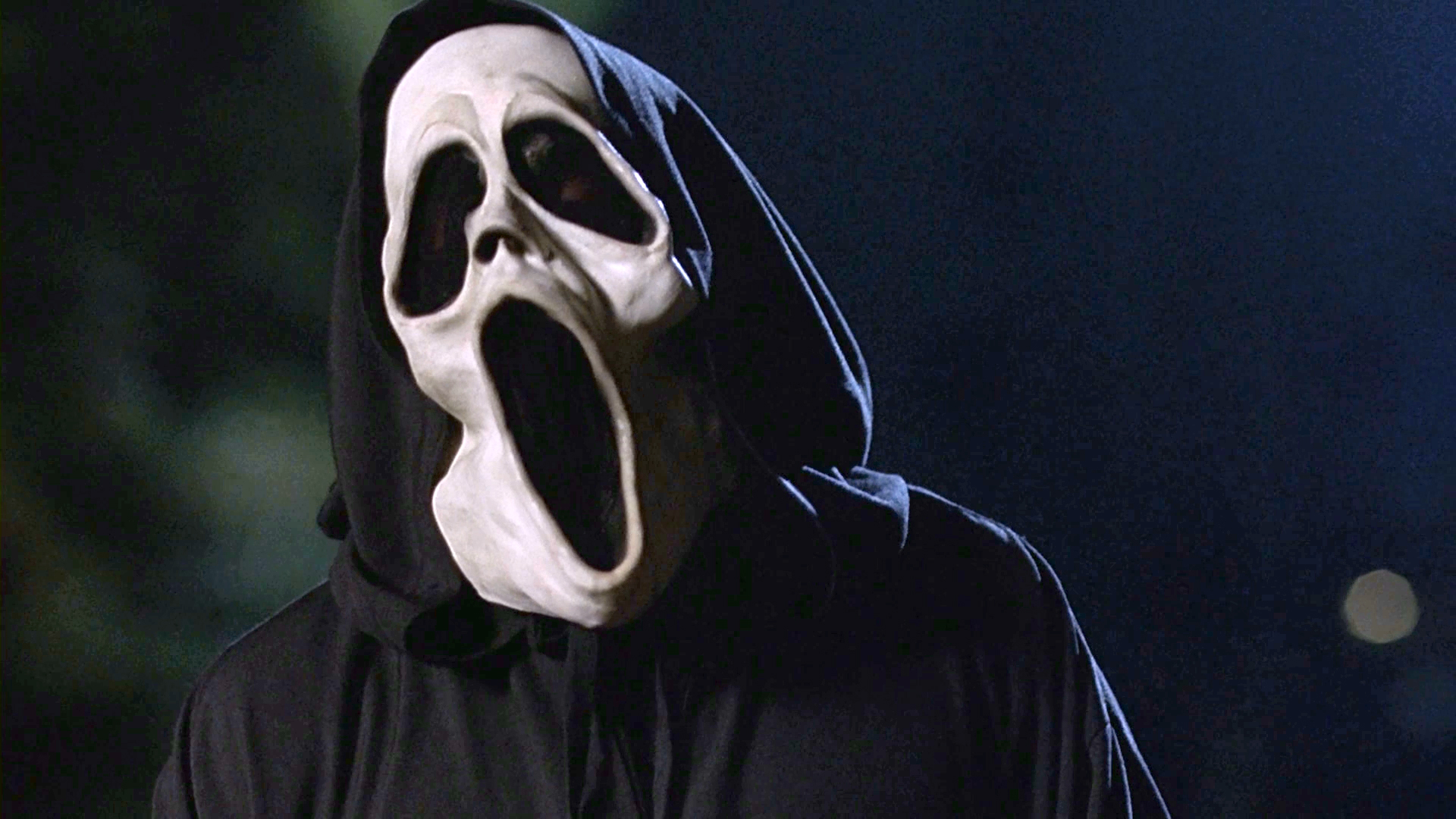
It’s not just the aggressively edgy humor here that can make you chuckle—the slapstick, the sight gags, and the ribaldry all have a decent chance of landing. The movie’s own villain, whose hockey mask was instantly transformed into a crudely Ghostface-esque one after coming in contact with an open flame, commits more cheap laughs than kills. His and his victims’ chase sequences, most of which are cartoonish in nature, left this writer grinning. The Scooby-Doo fan in me also totally ate up that clever unmasking joke.
Final Thoughts on This Forgotten Horror Parody

Shriek If You Know What Did Last Friday the 13th
Now, the jury is still out on whether these comedies are to blame for the death of the first slasher revival. There is more to consider than some parodies. At the very least, the likes of Scary Movie didn’t exactly encourage big studios to put their money on a trend that was being derided to death (and not as profitable as the spoofs). These sorts of movies also felt unnecessary at the time, given how their principal inspiration is already a deconstruction of the genre. But like anything else that quickly becomes popular, mockery is unavoidable.
Shriek If You Know What I Did Last Friday the 13th is indeed a movie nobody asked for, much less needed. As a sample of pre-millennium humor and cultural attitudes, it’s not always precise. But as I’ve laid out, your mileage may vary. Horror parodies typically don’t have the best track record, so managing one’s own expectations here is recommended.
Upon rewatching, I for one laughed a bit more than I did back then. Only this time, I responded to the jokes that my younger self didn’t notice or find all that amusing. So it just goes to show that the movies don’t change—we do.

Harley Cross and Majandra Delfino must unmask the killer a number of times in Shriek If You Know What I Did Last Friday the 13th before learning their true identity.
You must be logged in to post a comment.