Editorials
‘Ghostkeeper’ – New Year’s Eve Wendigo Horror Movie from the 1980s Chills to the Bone

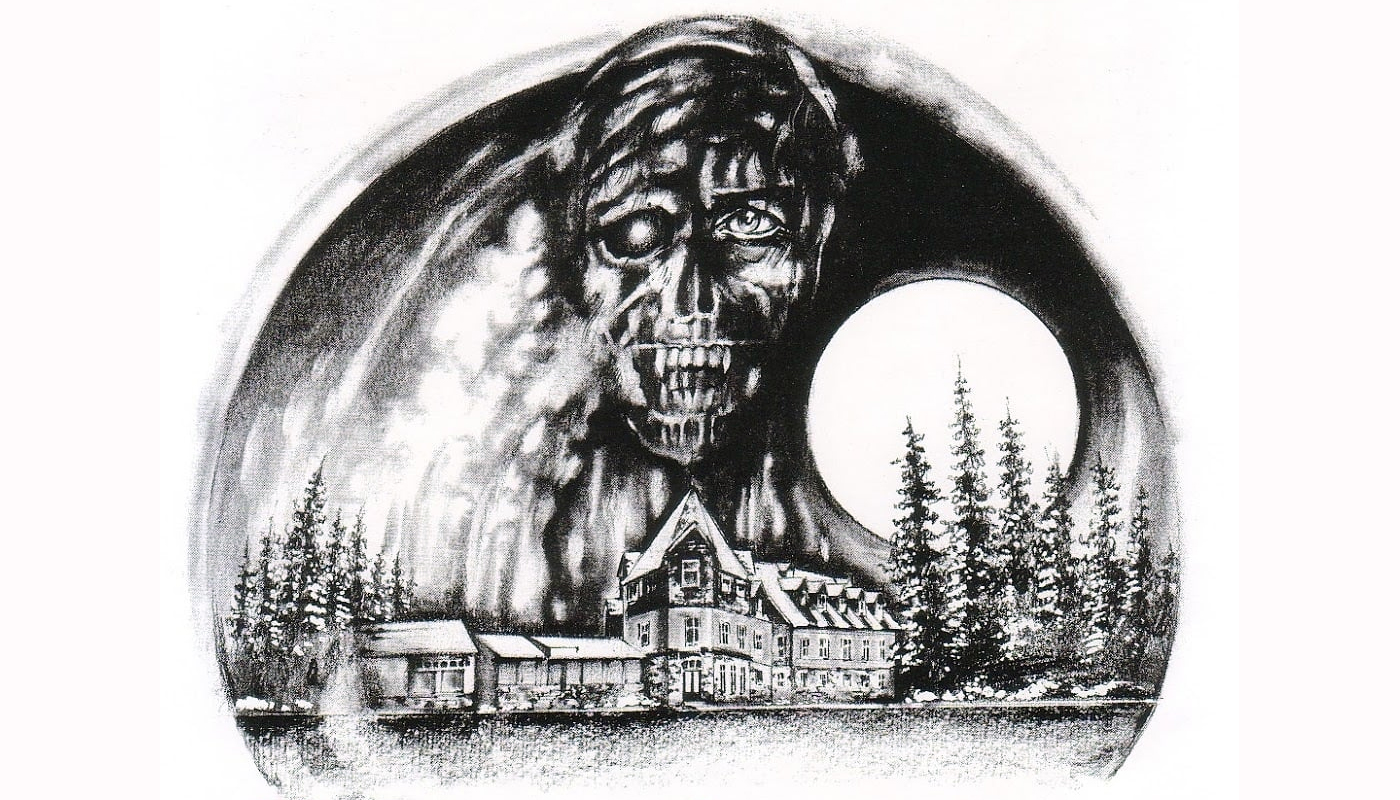
When talking about vintage Canadian horror, people naturally bring up the likes of Black Christmas, Prom Night and My Bloody Valentine. These movies were all part of the Great White North’s (in)famous “tax shelter” era, and many of them are now deemed cult classics. But mention Ghostkeeper and chances of recognition are slim to none. James Makichuk’s debut isn’t the kind of movie someone typically goes out of their way to watch, much less track down. And despite it being sold as a slasher, Ghostkeeper strays far off the well beaten path formed by its contemporaries. In place of the standard masked killer with a predilection for young victims is a threat that can barely be considered human.
Shot in Banff National Park in late 1980, Ghostkeeper mainly occurs at a single location. The normally picturesque Deer Lodge is transformed into a harsh hideaway where signs of life are hard to find, and blankets of pure white snow hide something ugly. Makichuk and director of photography John Holbrook (Shadow of the Hawk) don’t have to do too much to create their winter nightmare setting other than turn the camera on and start shooting. Snow-clad mountaintops and landscapes are in fact the result of using extensive B-roll footage to pad an otherwise short movie, but these continuous shots help reinforce the cold and dismal atmosphere.
Once Jenny, Marty and Chrissy (Riva Spier, Murray Ord, Sheri McFadden) get the standard greeting in these kinds of movies — a shopkeeper (Les Kimber) tells the tourists “there are worse things out there than getting lost” — they end up at an abandoned motel in the Rocky Mountains. The three characters have fulfilled a cardinal rule of horror movies by entering territory clearly marked with a “keep out” sign. As to be expected, they’re not as alone as they originally thought. Welcoming these unexpected visitors is the hotel’s one employee, a nameless old woman and the movie’s namesake (Georgie Collins).

Despite the controlled environment of a one-location shoot, Ghostkeeper slowly but surely starts to feel feverish and out of hand. On this fateful New Year’s Eve, the fine crack in Jenny and Marty’s relationship becomes a chasm as the perky and blonde Chrissy entices her one male listener with a lurid anecdote from her childhood. Jenny’s growing umbrage is at first unnoticed by her jerk of a boyfriend, but the old woman is visibly intrigued. Drawn to the woman whose trigger button is her late mother, the hotel’s caretaker sees something in Spier’s disgruntled character — maybe herself. She then starts to prey on Jenny’s cast of mind while the movie’s physical threat reveals itself in small increments.
By the time Ghostkeeper reached home video in 1986, it was evident that distributors didn’t know how to market the movie, especially since slashers had begun to lose their drawing power. Some were upfront about the actual plot, whereas others exaggerated the movie’s monster in a bid to attract a wider audience. Ghostkeeper is in no way a conventional slasher, but it’s even less of a creature feature. Makichuk isn’t vague about what’s living in the hotel’s basement; the Windigo (Wendigo) legend is brought up in the movie’s textual prologue as well as a book Jenny finds. Regrettably, the Windigo here looks downright underwhelming, all thanks to mediocre and insufficient makeup. And with the director literally making things up as he shot the movie over a span of two weeks, very little of this First Nations myth is inserted into the story.
Ghostkeeper’s budget was roughly under $700,000 USD, but once his funds were depleted, Makichuk opted to press onward rather than suspend the entire production. Continuing the shoot, though, meant making sacrifices in the story. No longer could the director afford the movie’s original ending. In its place is now a reduced conclusion where, above all, one character’s temporary refuge, from both the storm outside and the one brewing inside of her, ultimately becomes a permanent home. This inferred outcome robs the movie of a climactic finish and without a doubt leaves audiences wanting something more. Nevertheless, there’s a shuddery quality to this other ending.

It’s nearly impossible not to think of The Shining when watching this movie. Learning it was made only six months after Stanley Kubrick’s adaptation was released makes the likeness even more obvious. An isolated and empty hotel found in the midst of a bitter winter, the gradual maddening of an already strained couple, and a supernatural force working in the background — Makichuk’s greatest inspiration is barefaced. Another potential muse, based on how Ghostkeeper ends, is Jeffrey Konvitz’s novel-turned-movie The Sentinel.
Ghostkeeper is a cheapo, but it’s also a creepy curio that greatly benefits from location and mood. The happy accidents seen all throughout make this visit to Deer Lodge worth a look. While it would have been interesting to see what the movie could have been like had it been able to afford its bigger ideas and set pieces, parts of the finished product are surprisingly chilling.
Horrors Elsewhere is a recurring column that spotlights a variety of movies from all around the globe, particularly those not from the United States. Fears may not be universal, but one thing is for sure — a scream is understood, always and everywhere.





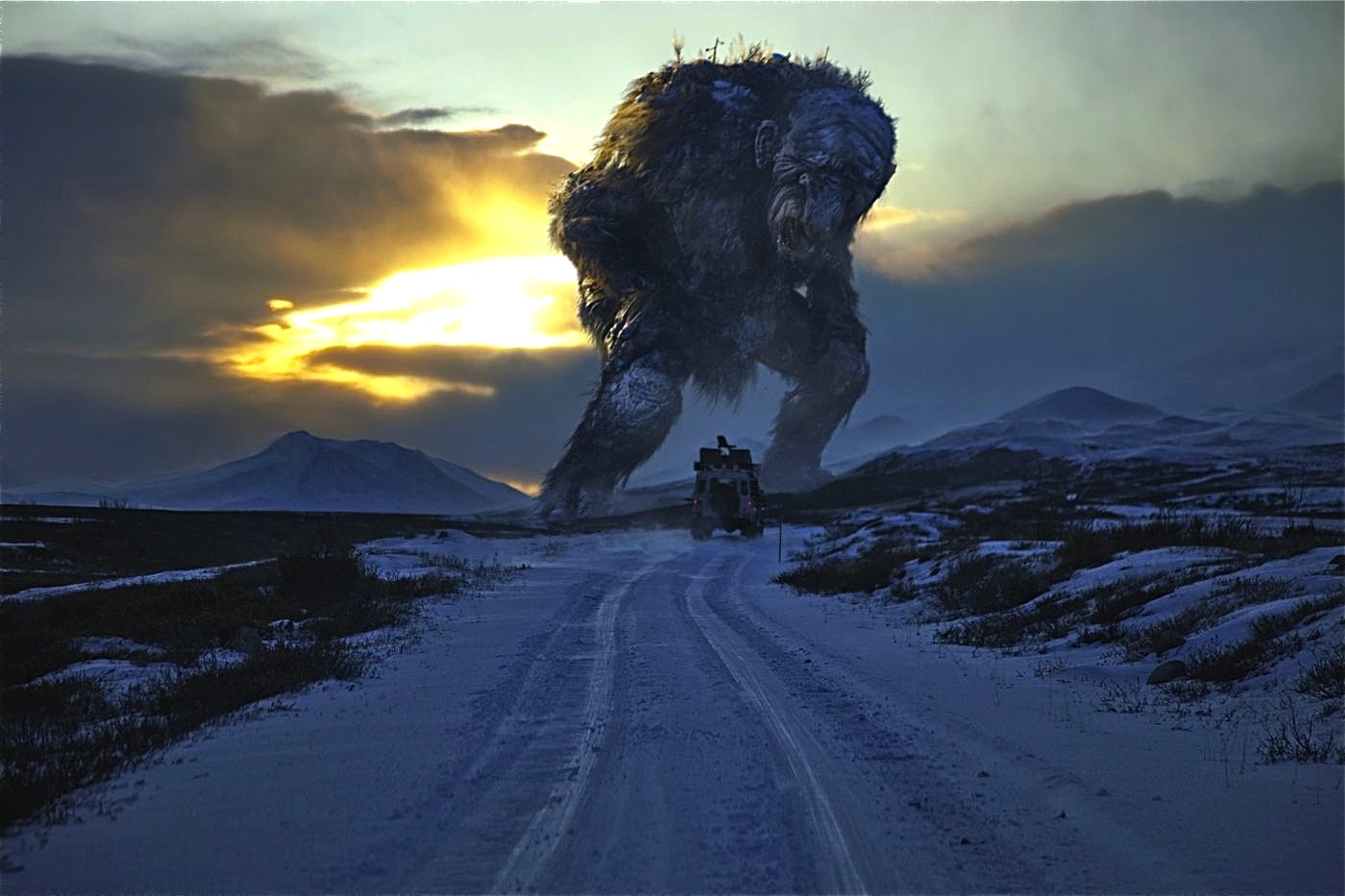
In this day and age, the word “troll” is often used to describe various online nuisances. Yet as abundant and irksome as the modern troll can be, they aren’t usually as fearsome as their mythological counterparts. I’m not talking about the small and gentler versions that have become more common to see in media. No, there are much bigger and scarier trolls out there—and André Øvredal’s movie Troll Hunter is one of the best places to find them.
It doesn’t take long for Troll Hunter (or Trolljegeren) to dump the Blair Witch Project-esque setup and aim for something a lot fresher. The trajectory of the story is augmented by Otto Jespersen’s character Hans, the titular Troll Hunter. The second he comes barreling out of the deep, dark woods and shouts “troll” at the camera, this movie takes a turn into what feels like uncharted territory. Not only subject-wise, but also conceptually.
For fantastical and made-up subject matter in cinema, found footage is a fast way to add a guise of believability. After all, what we accept to be the most crucial aspect of documentaries—the truth—rubs off on pseudo-documentaries, despite our understanding of the pretense involved. That is what Øvredal delivered with Troll Hunter: a movie so convincing that some viewers wondered if trolls really do exist. So, had this been straightforwardly made, it likely wouldn’t have been as effective. Conventional narratives would be more inclined to treat something like trolls as flat out unreal, and never try to convince the audience to think otherwise.

Hans petrifies the three-headed Tusseladd troll.
The viewers, like the characters trailing Hans, are quickly thrown into the deeper end of that extraordinary story. They have to process all this new information while staying on the go. So, although there is no significant amount of meandering, narratively or physically, there is still a good amount of atmosphere, not to mention tension building. It’s never anything frightful, but then again, Troll Hunter isn’t your standard offering of horror; it’s more on the low end of the dark fantasy spectrum. We aren’t ever spirited away to a faraway world—we stay in rather familiar surroundings, as well as dip into those less so. The outcome is a movie where you’re constantly more in awe than in terror.
As fantasy fiction might do, Troll Hunter prefers not to deal with incredulity. There is no time to waste on doubt, as interviewer Thomas (Glenn Erland Tosterud), soundperson Johanna (Johanna Mørck), and cameraman Kalle (Tomas Alf Larsen) all follow Hans around, recording whatever this character is willing to reveal about his bizarre job. Of course, the Troll Hunter himself is not an open book; in that respect, the diegetic documentary fails to fully capture and unpack the more interesting of its two subjects. Yes, all those giant, monstrous trolls are indeed incredible, but understandably, your mind wanders to their pursuer. What kind of person signs up for this gig and then chooses to stick with it for so long?
Reviews have called out Troll Hunter for its lack of character development. In regard to Thomas and his fellow documentarians, that criticism is valid, but bear in mind, they aren’t the focus of the story, either. Meanwhile, Hans is a well-crafted character. At least better than first realized. Before he was introduced, Hans had already grown tired of the troll grind. Fed up with that low compensation for his services, resentful of the bureaucracy, and wanting to expose his employer on a large scale, Hans’ discontent is glaring.
Then there are those finer details about the Troll Hunter, such as that indifference to both the natural splendor of his everyday surroundings and the affections of an obviously smitten colleague, that also suggest some level of despondency. So it is fair to say this movie doesn’t feature any sizable growth for its characters; however, the namesake isn’t underwritten. No doubt, putting a real-life character like Otto Jespersen in that role is partly why Hans is so fascinating—maybe even relatable.

Otto Jespersen as Hans the Troll Hunter.
There is always a small risk whenever using the term “mockumentary” to describe a found-footage movie, as the word could imply humor where there is none. In the case of Troll Hunter, the term’s usage is appropriate. Some folks have claimed the English-dubbed version has the more comedic tone, however, the Norwegian cut isn’t exactly humorless. Apart from the trolls’ absurd appearances, this is a movie where the characters nearly choke on the monsters’ farts, and Christians are like walking targets. Hans’ complete apathy towards everything is another cause of laughter. Overall, the comedy is intentionally dry and inconsistent. Unfunny, though? Absolutely not.
In a movie where endemic creatures are maltreated, as well as disavowed from living freely and peacefully, it’s hard not to notice the ecological message buried beneath the story. In addition to that is the unmistakable political satire. There is this whole business about intrusive and unsightly power lines—like trolls, they’re big blemishes on the land—that leads to what is perhaps the movie’s funniest moment. The scene in question is that one where certain electric lines, the ones secretly being used to keep the trolls at bay, go in a loop and don’t actually send power to any residents. Yet the monitors of said lines don’t find this at all weird. So it stands to reason that Øvredal was having a go at those who accept the government’s doings without question.
Looking past the fact that trolls aren’t actually real, this movie is an enlightening source of information. And not just for international audiences; Norwegians, too, get schooled about their homeland’s own mythology. It’s also evident from everything on screen that Øvredal and his crew were enthusiastic about the topic. The creature designs are the most indicative of that zeal; those imaginative yet myth-accurate manifestations are equally amusing and grotesque. One second you’re laughing at their phallic noses, the next you’re white-knuckling during a hairy sequence. Most surprisingly is how well the trolls’ visual effects hold up after fifteen years. It’s not all spotless, but on the whole, they remain impressive.
Vouching for a mockumentary about trolls isn’t easy, but those who do come around and give it a shot will more than likely be grateful for the recommendation. For Troll Hunter is a real find in that vast and varied genre we call “found footage“.

A bridge troll reaches up for food and finds Hans decked out in armor.
You must be logged in to post a comment.