Editorials
‘Next of Kin’ – The 1982 Ozploitation Slasher Praised by Quentin Tarantino

Linda Stevens inherited more than a house when her mother passed away; she also came into a wealth of fear. In the 1982 film Next of Kin, darkness closes in on Jackie Kerin’s character as she moves back to her rural hometown and honors her mother’s last wishes. Yet the longer she stays and digs into the past, the more Linda puts herself in danger. Death lurks around every corner of this Ozploitation classic.
There was a stretch of time where Australian horror was not commercially successful in its own homeland. The cinematic renaissance of the ‘70s and ‘80s (also known as the Australian New Wave) produced a number of homegrown horror films, yet the immediate public was not all that receptive. In fact, some of these films ended up being more beloved and victorious outside their birthplace. Next of Kin certainly did not find its audience until years later, but now the general consensus is overall positive. Tony Williams’ sole horror film is considered by many to be one of the most atmospheric and beautiful slashers in the history of this long and varied subgenre.
According to Williams, he did not intentionally set out to make a slasher when co-writing Next of Kin with Michael Heath. The film, which was originally a New Zealand production before finally moving to Australia, was modeled more after European horror than the likes of Friday the 13th. Williams particularly looked to Roger Vadim’s Blood and Roses as a source of inspiration. Nevertheless, this film has the makings of a traditional slasher along with a mood and aesthetic not always associated with Australian cinema.

While the Australian Gothic movement was in effect by the time Next of Kin was first released, Williams’ film deviated from the standard model being cultivated at that moment. A great deal of Australian Gothic films discover dread outside in nature rather than in the home, and they examine the dark side of Australian life. Next of Kin, on the other hand, primarily takes place in a Victorian setting. And unlike the Euro-horrors from which Williams took inspiration, the looming threat is not uncanny. There are no ghosts or vampires here.
Horror films from the Land Down Under tend to pull back the fabric of the Australian experience and reveal something uncomfortable and sinister underneath. From violent colonization to the merciless Outback to the continent’s menagerie of dangerous fauna, Australian horror routinely looks at itself when searching for terror. The “other” is frequently seen as something menacing in the genre, but many times over in film, Australia is its own source of frights. Next of Kin is then a complete change in routine because it offers a more universal hazard for its protagonist to contend with.
In her perilous attempt to bridge the gap between herself and her late mother, Linda maintains the family estate that has since been converted into a retirement home. By preserving the run-down Montclare as an old-age house, Linda can, in a way, keep her mother alive. Maybe make things right after years of estrangement. And after leaving her mother behind, selling the house and putting all the elderly residents seems out of the question for Linda. In the end, though, the film is a reminder about the pitfalls of clinging to the past and fixing what is inherently broken.
Although this is indeed a slasher, that revelation is hidden until the last act. Before then, this film is more consistent with old ghost stories. Stormy nights, dark corridors and spaces, and a nearly constant feeling of dread come with most scenes set inside Montclare. One second Linda finds herself seeing someone outside her window or across a patch of woods, and the next she is questioning both her sight and sanity. Linda also experiences uncomfortable dreams that do not necessarily contribute to the house’s current goings-on, yet they deepen her uneasiness. Williams channeling two-thirds of a classic haunted house film makes Next of Kin stand out from its Australian contemporaries.

When not being stalked by her unseen assailant, Linda is chased by death and old age. The mere sight of Montclare’s residents conjure up thoughts of mortality, even before they all start to die of unnatural causes. A man presumably drowns in the bathtub, and another suffers a stroke. Connie (Gerda Nicolson), an employee at Montclare, has the fortitude to withstand the anxiety attached to working around old folks, but Linda is clearly bothered. If she continues to carry on about vanishing visitors and water taps left running, perhaps she too would be sentenced to live in a place like this. Mix that penetrating fear of aging with unresolved issues with her mother, and Linda’s frantic state of mind is quite relatable.
“And now I know there is evil here in this house.” Not too long after Linda reads that ominous statement in her mother’s diary, the story confirms her suspicions. The film has so far moved at a deliberate pace, but once Linda and childhood sweetheart Barney (John Jarratt) go check out Montclare following Linda’s near breakdown at the town hall, Next of Kin steps on the gas. Bit by bit, Linda’s inevitable nightmare unfolds and the culprit behind all the killings is exposed. The discoveries of each new victim from here on out feel straight out of a giallo film; the Italianate quality of this film’s final phase is hard to deny. A lawn fountain and bathtub are each filled with blood and perfectly arranged corpses, and a menacing eyeball is seen through a keyhole. For sure Williams pipes in a hefty amount of European influences, however there are moments in the denouement that evoke comparisons to American horrors like The Texas Chain Saw Massacre.
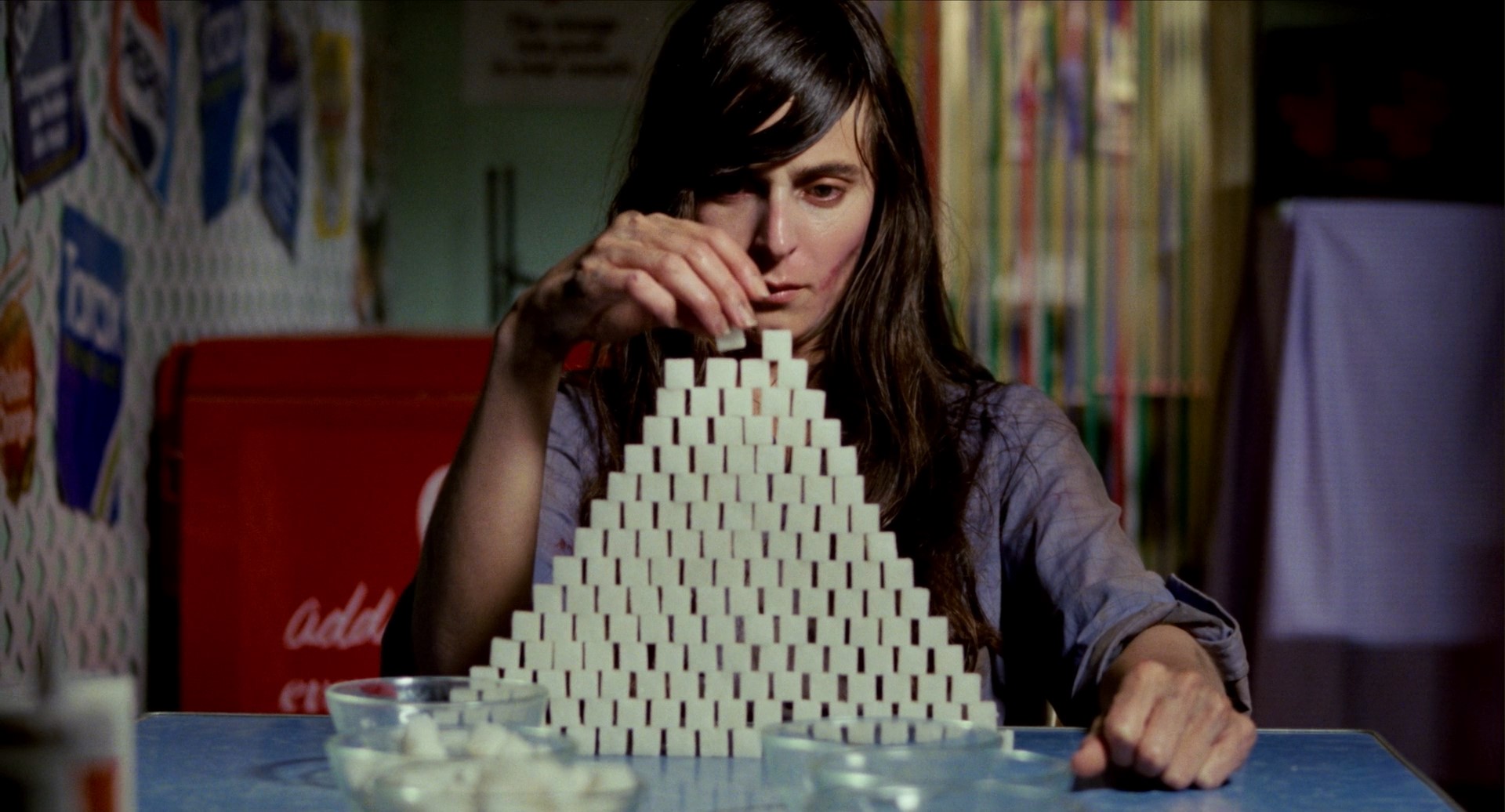
In a film already loaded with striking and exact visuals, Next of Kin outdoes itself in those last ten minutes. Linda’s momentous escape from the killer is boosted by a guttural soundtrack and spectacular overhead shots. Linda’s delirium is on full display here as she descends the spiral staircase seen all throughout. And as she holes up at a local diner with the owner’s son, waiting for her enemy, Linda builds tension by stacking a pyramid of sugar cubes. Lastly, the stunning explosion in the very end did not go as planned behind the scenes, but it worked out in the film’s favor.
Next of Kin went unnoticed for a number of years in Australia, but fans kept its memory alive. Quentin Tarantino, one of the film’s most vocal admirers, called it wonderful and compared it favorably to The Shining. High praise indeed, but also right on the mark.
Next of Kin is currently available on Blu-ray from Umbrella Entertainment, Severin Films and Second Sight Films, and it is streaming on services including SCREAMBOX.
Horrors Elsewhere is a recurring column that spotlights a variety of movies from all around the globe, particularly those not from the United States. Fears may not be universal, but one thing is for sure — a scream is understood, always and everywhere.





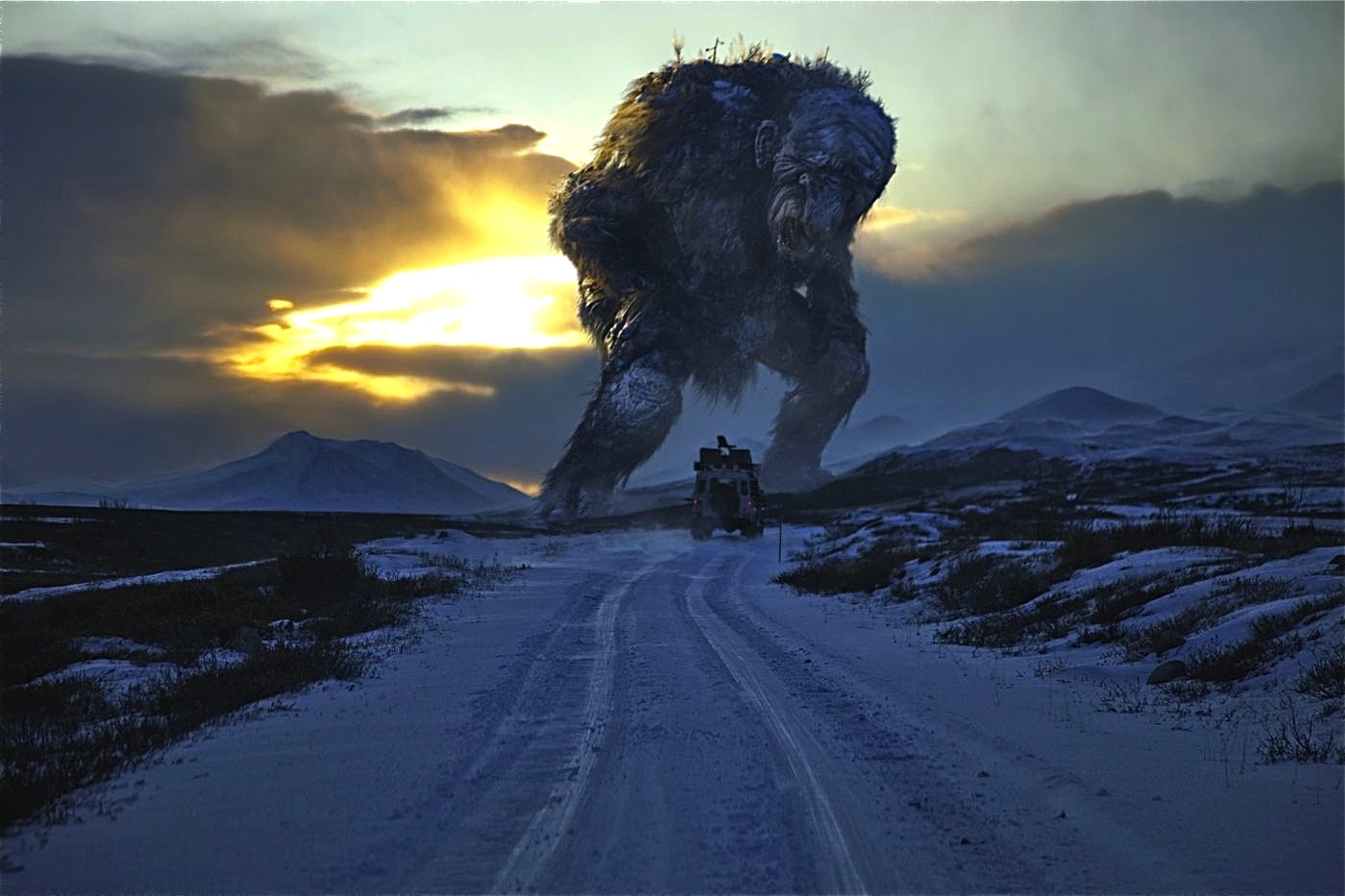
In this day and age, the word “troll” is often used to describe various online nuisances. Yet as abundant and irksome as the modern troll can be, they aren’t usually as fearsome as their mythological counterparts. I’m not talking about the small and gentler versions that have become more common to see in media. No, there are much bigger and scarier trolls out there—and André Øvredal’s movie Troll Hunter is one of the best places to find them.
It doesn’t take long for Troll Hunter (or Trolljegeren) to dump the Blair Witch Project-esque setup and aim for something a lot fresher. The trajectory of the story is augmented by Otto Jespersen’s character Hans, the titular Troll Hunter. The second he comes barreling out of the deep, dark woods and shouts “troll” at the camera, this movie takes a turn into what feels like uncharted territory. Not only subject-wise, but also conceptually.
For fantastical and made-up subject matter in cinema, found footage is a fast way to add a guise of believability. After all, what we accept to be the most crucial aspect of documentaries—the truth—rubs off on pseudo-documentaries, despite our understanding of the pretense involved. That is what Øvredal delivered with Troll Hunter: a movie so convincing that some viewers wondered if trolls really do exist. So, had this been straightforwardly made, it likely wouldn’t have been as effective. Conventional narratives would be more inclined to treat something like trolls as flat out unreal, and never try to convince the audience to think otherwise.

Hans petrifies the three-headed Tusseladd troll.
The viewers, like the characters trailing Hans, are quickly thrown into the deeper end of that extraordinary story. They have to process all this new information while staying on the go. So, although there is no significant amount of meandering, narratively or physically, there is still a good amount of atmosphere, not to mention tension building. It’s never anything frightful, but then again, Troll Hunter isn’t your standard offering of horror; it’s more on the low end of the dark fantasy spectrum. We aren’t ever spirited away to a faraway world—we stay in rather familiar surroundings, as well as dip into those less so. The outcome is a movie where you’re constantly more in awe than in terror.
As fantasy fiction might do, Troll Hunter prefers not to deal with incredulity. There is no time to waste on doubt, as interviewer Thomas (Glenn Erland Tosterud), soundperson Johanna (Johanna Mørck), and cameraman Kalle (Tomas Alf Larsen) all follow Hans around, recording whatever this character is willing to reveal about his bizarre job. Of course, the Troll Hunter himself is not an open book; in that respect, the diegetic documentary fails to fully capture and unpack the more interesting of its two subjects. Yes, all those giant, monstrous trolls are indeed incredible, but understandably, your mind wanders to their pursuer. What kind of person signs up for this gig and then chooses to stick with it for so long?
Reviews have called out Troll Hunter for its lack of character development. In regard to Thomas and his fellow documentarians, that criticism is valid, but bear in mind, they aren’t the focus of the story, either. Meanwhile, Hans is a well-crafted character. At least better than first realized. Before he was introduced, Hans had already grown tired of the troll grind. Fed up with that low compensation for his services, resentful of the bureaucracy, and wanting to expose his employer on a large scale, Hans’ discontent is glaring.
Then there are those finer details about the Troll Hunter, such as that indifference to both the natural splendor of his everyday surroundings and the affections of an obviously smitten colleague, that also suggest some level of despondency. So it is fair to say this movie doesn’t feature any sizable growth for its characters; however, the namesake isn’t underwritten. No doubt, putting a real-life character like Otto Jespersen in that role is partly why Hans is so fascinating—maybe even relatable.

Otto Jespersen as Hans the Troll Hunter.
There is always a small risk whenever using the term “mockumentary” to describe a found-footage movie, as the word could imply humor where there is none. In the case of Troll Hunter, the term’s usage is appropriate. Some folks have claimed the English-dubbed version has the more comedic tone, however, the Norwegian cut isn’t exactly humorless. Apart from the trolls’ absurd appearances, this is a movie where the characters nearly choke on the monsters’ farts, and Christians are like walking targets. Hans’ complete apathy towards everything is another cause of laughter. Overall, the comedy is intentionally dry and inconsistent. Unfunny, though? Absolutely not.
In a movie where endemic creatures are maltreated, as well as disavowed from living freely and peacefully, it’s hard not to notice the ecological message buried beneath the story. In addition to that is the unmistakable political satire. There is this whole business about intrusive and unsightly power lines—like trolls, they’re big blemishes on the land—that leads to what is perhaps the movie’s funniest moment. The scene in question is that one where certain electric lines, the ones secretly being used to keep the trolls at bay, go in a loop and don’t actually send power to any residents. Yet the monitors of said lines don’t find this at all weird. So it stands to reason that Øvredal was having a go at those who accept the government’s doings without question.
Looking past the fact that trolls aren’t actually real, this movie is an enlightening source of information. And not just for international audiences; Norwegians, too, get schooled about their homeland’s own mythology. It’s also evident from everything on screen that Øvredal and his crew were enthusiastic about the topic. The creature designs are the most indicative of that zeal; those imaginative yet myth-accurate manifestations are equally amusing and grotesque. One second you’re laughing at their phallic noses, the next you’re white-knuckling during a hairy sequence. Most surprisingly is how well the trolls’ visual effects hold up after fifteen years. It’s not all spotless, but on the whole, they remain impressive.
Vouching for a mockumentary about trolls isn’t easy, but those who do come around and give it a shot will more than likely be grateful for the recommendation. For Troll Hunter is a real find in that vast and varied genre we call “found footage“.

A bridge troll reaches up for food and finds Hans decked out in armor.
You must be logged in to post a comment.