Editorials
Neon-Soaked Cult Classic ‘Vamp’ Starring Grace Jones Still Has Bite 40 Years Later

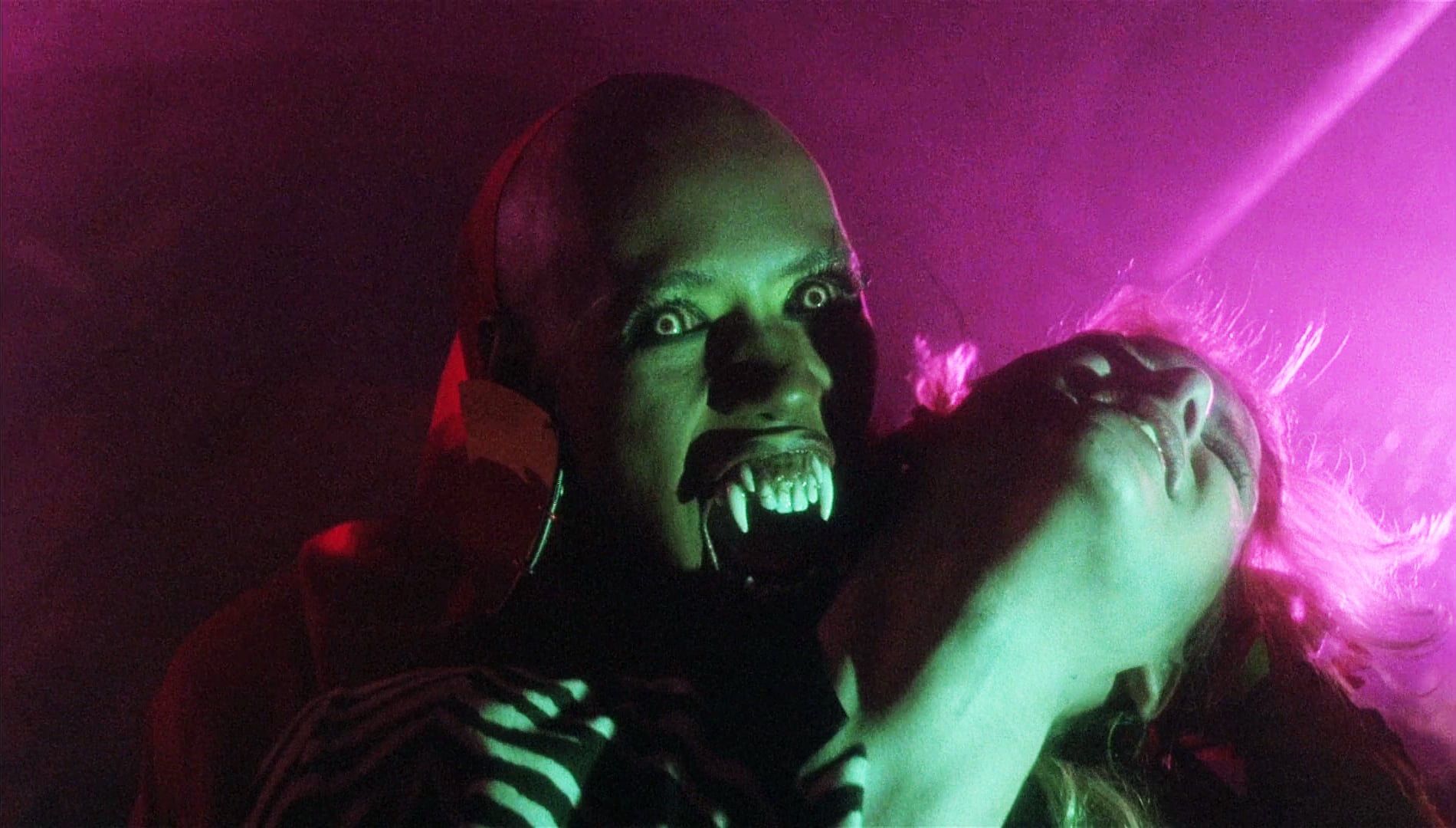
College kids, strippers and vampires—those were Donald P. Borchers’ only requirements when he approached Richard Wenk about writing and directing a movie for New World Pictures. As requested, Wenk cooked up Vamp (1986), a tailor-made blend of the decade’s teen movie craze as well as its horror boom.
Grim and earnest stories were still very much a part of the ’80s horror landscape, yet Vamp is something of a comedy. One difference between it and, say, Saturday the 14th, though, is the former avoids using schtick. Wenk’s movie proves that horror comedies also don’t have to subtract thrills from their recipes. Of course, it takes a minute before reaching that point; college antics and culture shocks preface this one macabre misadventure.
Vamp‘s initial setup is apt for a typical college-set, sex-driven comedy; to bribe their way into a fraternity house, two pledges (Chris Makepeace, Robert Rusler) go looking for some adult entertainment. Without wasting time on any further exposition, the characters embark on an all-in-one-night trip that quickly detours into terror.
To procure their elusive MacGuffin—a stripper willing to gyrate for some frat boys—Keith (Makepeace) and AJ (Rusler), plus a third wheel named Duncan (Gedee Watanabe), trade the safety of their remote college campus for the seediness of some unnamed city. The setting is recognizably L.A. by day, but as soon as night falls, downtown, along with the characters, slips into a kind of surreal universe. Director of photography Elliot Davis gave this early entry on his prolific résumé an unusual yet distinctive look; that Mario Bava-esque, magenta-green lighting is omnipresent, so much so that it’s almost its own character.

Chris Makepeace and Robert Rusler in Vamp
The faint comparisons to Martin Scorsese’s After Hours are merited, although not just because of Vamp’s distinguishing nighttime aesthetic. Save for the primary characters, the supporting roles in Wenk’s movie are also quite colorful and transactional in their behavior. The difference here, though, is the additional urge to ruin Keith and his friends at every turn. Some of that harm is humorous and tolerable enough, whereas the moment Vamp dishes out its first fatality, it’s abundantly clear how this movie qualifies as horror.
Vamp falls into that category of horror movie that reveals its genre with a scream rather than a series of whispers. The opening scene can function as a hint of what lies ahead—things are not at all what they appear to be—but otherwise, Wenk is more than happy to hold off on the horror. When that time does come, though, it catches the viewer off guard. In addition to the pure shock value is that sudden decision to upend the movie’s foremost feature. Or so it would seem.
If afraid of major spoilage, those new to Vamp would be wise to stop reading here. There’s just no skirting around the fact that the central fellowship in this buddy movie hits a serious snag when AJ is killed. That development causes the story to become more of a “long, bad night” journey for Keith and his romantic interest. So while Wenk scores points for subverting expectations, there is also a touch of sadness in his decision. Because if Vamp does anything well, it’s making the characters likable.
Something that comes easily to Vamp—and other teen horror movies from this same era—is its ability to invent young characters worth caring about, or at the very least, are interesting and not so immediately off-putting. More impressive is how Wenk did all this without actually fleshing out those characters. Still and all, Keith and his kind are a grade above cookie-cutter, and in some cases, aren’t completely devoid of growth.

Grace Jones in Vamp
Vamp appeals with an assorted cast of characters. No two are the same, nor are they operating on the same wavelength. The cinematically extroverted AJ, whose actor conveyed charm and vulnerability in near equal amounts, comes alive when he’s at his most undead. Makepeace then makes the chronically cautious Keith a sympathetic fellow, even as he’s more and more affected by the night’s bizarre events. Meanwhile, Duncan is indeed the designated loser of the whole bunch, but Watanabe still manages to humanize him. As a bonus, the role didn’t require him to pull a Long Duk Dong.
As for Dedee Pfeiffer, she is plain adorable as the mysterious After Dark server nicknamed “Amaretto”. She spends all night fixing her dress strap while at the same time trying to get Keith to remember how he knows her. As their offbeat romance grows, it becomes another highlight of this movie. Whether or not Pfeiffer’s character is really a vampire also creates some welcome tension in the story.
Like a lot of its contemporaries, Vamp went on to become a bit of a cult classic. That current status is determined by several factors, but without a doubt, the casting of Grace Jones is the most considerable. The image of her writhing on that unique-looking chair, a Keith Haring original, springs to mind whenever this movie is brought up.

Chris Makepeace, Billy Drago and Paunita Nichols in Vamp
Prior to that first display of unequivocal horror, local vampire queen Katrina (Jones) took to the stage and delivered a strip show like no other. One would expect nothing less from that renowned model and performance artist. By now reports of Jones’ tardiness on set are no secret, yet it’s also hard to deny her commitment to the part of Katrina. It was, in fact, Jones who took charge of her character’s appearance—on top of Haring painting her body and that now-iconic chair, she had Andy Warhol handle her costuming. And not too many actors could seize a room’s attention without saying a single line of dialogue.
In 2022, Vamp received a retrospective novelization from Encyclopocalypse. This literary union of preexisting source material—Wenk’s original screenplay—and new ideas from author Christian Francis amounts to a more comprehensive visit to the After Dark Club. The basic story there is no different than what’s shown on screen; however, Francis gets creative with the characters’ origins and designs, and he enhances a number of key scenes.
The novelization expands on the urban and social decay of the main setting, and supplies a background for the After Dark Club. Sandy Baron’s character, Katrina’s emcee and familiar, is given ample motivation for sticking around; up until the fiery end, he is loyal to his friend and former business partner “Squeak”, who looks like he was “fed through a combine harvester, and left as nothing more than a heap of mangled remains”. Then there is Billy Drago’s character Snow, the leader of a street gang called The Dragons. His reason for menacing Keith and AJ is more altruistic than in the movie; he and his peers act tough to scare off any potential food for the vampires.

Lisa Lyon in Vamp
If not for all the backstories, Francis’ Vamp would be a hell of a lot shorter. Instead, this tie-in read dives into how AJ met Keith—the orphaned Anthony Joseph hailed from a broken home back in Brooklyn—and how their friendship flourished over the years. Keith’s archership is no longer just an assumed part of his entire being; it’s a confidence-building extracurricular for a boy who got picked on before coming into the protection of the new kid in town. These supplemental, in-depth looks at the protagonists, plus their close connection, are maybe unnecessary. The movie already did a fair and concise job of addressing their platonic intimacy without the need for flashbacks and insights, specifically in that scene where AJ lays it all out as he sacrifices himself.
Where the novelization gets off course is its approach to the minor characters. Intermittently backstorying the likes of Katrina’s indentured servants, Seko (Leila Hee Olsen) and Vlad (Brad Logan), ends up disturbing the flow of the writing. Was it absolutely essential that readers know Vlad was the Grand Duke of the House of Romanov, or how Snow’s accomplice Maven (Paunita Nichols) became so dentally challenged? No, not really. However, one’s mileage with these random biographies may vary.
The novelization is a more substantial experience, but for a movie like Vamp, less is more. And as plentiful as they are, it never simply coasts on its campy charms, either. The character work sits comfortably in that realm between cursory and meticulous, the script is sharper than first realized, and Greg Cannom’s vampire makeup is straightforward yet effective. Most of all, the movie didn’t squander its out-of-the-box concept. Richard Wenk made his vision of a “comic nightmare in which just about anything that can go wrong does” come true, and it is very enjoyable.




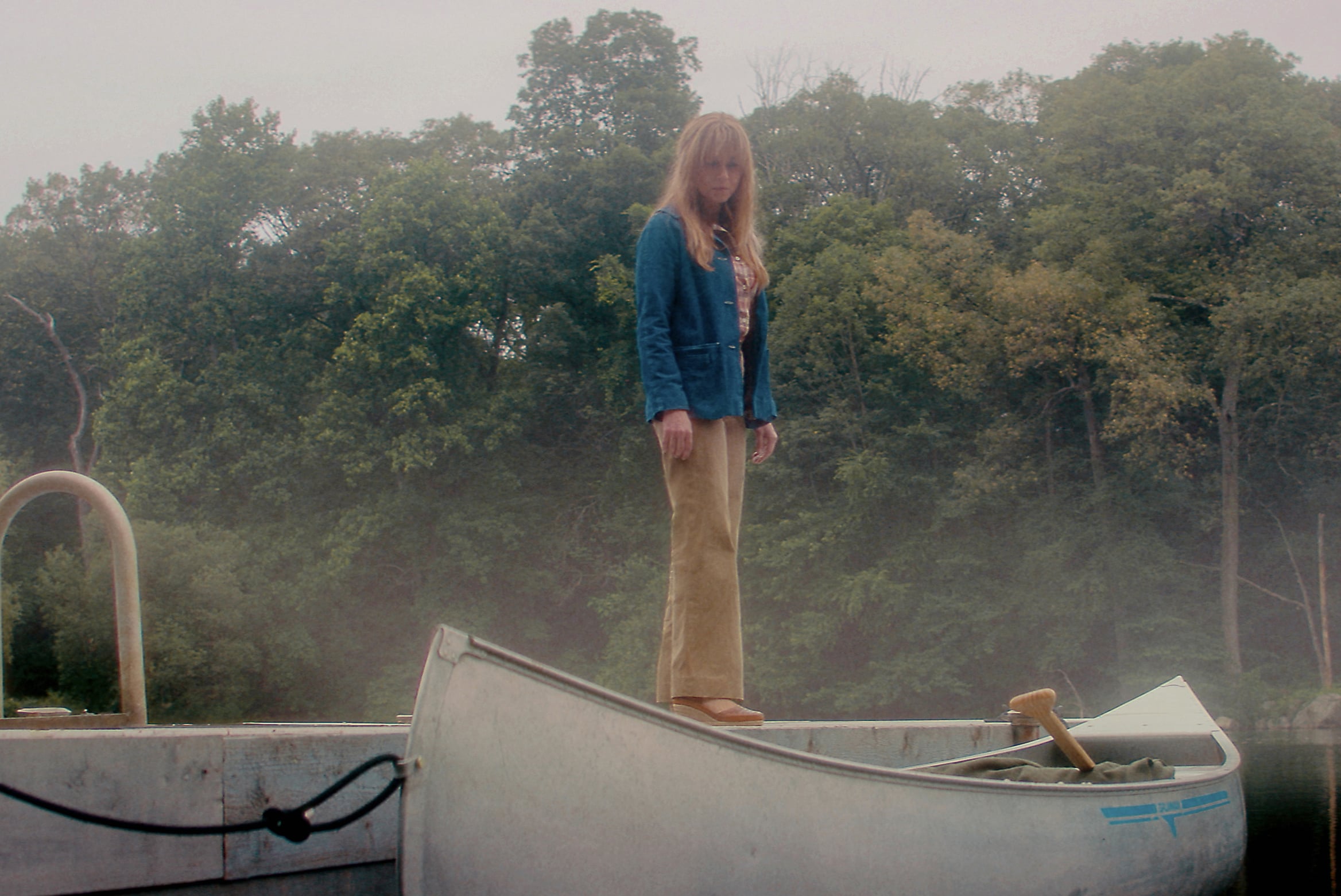
Genre fans rejoiced this week as Peacock finally released a teaser trailer for the upcoming Crystal Lake TV series starring Linda Cardellini as horror’s favorite killer mommy. This sneak peek is actually the first footage of an official Friday the 13th project since the Platinum Dunes remake came out over 17 years ago, so it makes sense that we’re all incredibly hyped for this long-awaited prequel.
While we’ve since received more information about the show -including how all eight episodes will be released at the same time on October 15– fans wasted no time in speculating about the direction they think showrunner Brad Caleb Kane intends to take the franchise next. After all, Kane’s team is free to adapt elements from the entire Friday the 13th franchise, so it seems that anything goes at this point. That being said, I doubt we’ll be seeing young Jason depicted as a fun-sized killer with an affinity for hockey masks, as I’m of the opinion that the show is likely reaching back to the original actress behind Pamela Voorhees herself in order to fill out the prequel’s story.
You see, after sifting through behind-the-scenes interviews and plenty of special features from my own Friday the 13th collection on physical media, I learned that the late, great Betsy Palmer had come up with an elaborate backstory for Ms. Voorhees that was never properly explored in the films. She may have only accepted the iconic role because she needed money for a new car, with Palmer notoriously referring to Victor Miller’s original script as a “piece of shit”, but that didn’t stop her from taking her work seriously – and eventually even warming up to the now-iconic film.

Trained in the Stanislavski Method, an infamous system where actors use the “art of experiencing” to more realistically portray their characters, Palmer decided to build off of Miller’s script and make her own notes in order to characterize Pamela as a more complex and arguably sympathetic figure, even if only a fraction of her contributions would actually make it onscreen.
The only real information she found in the script concerned her character’s prominent class ring, and from there Palmer extrapolated an entire backstory where Pamela had a high school boyfriend during the 1940s that got her pregnant and then skipped town. This led to Pamela being forced to raise her child all on her own during a deeply conservative period in American history – another reason why the character is so bothered by the camp counselors’ promiscuity.
It was Tom Savini who first revealed to Palmer that Jason was going to be depicted as being disabled (an idea that wasn’t in the original screenplay), with this crucial addition making the actress realize that Ms. Voorhees was already overburdened even before the death of her son. The tragedy only pushed her over the edge as she became a puritanical vigilante attempting to shut down Camp Crystal Lake at any cost.
For Palmer, this means that “Camp Blood” never had any curse, as the multiple fires and poisoned water incidents that kept the camp from reopening before the summer of 1979 were merely part of Ms. Voorhees’ years-long vendetta against the property’s owners. Palmer also insisted that the killer in the sequels isn’t the original Jason, as he definitively drowned at the bottom of Crystal Lake. According to her, having Pamela’s child return even as a killer revenant would undo her entire character arc, meaning that the masked murderer who takes over her legacy must be someone or something else entirely!

CRYSTAL LAKE — (Photo by: Matt Infante/PEACOCK)
These ideas match up with most of what we’ve heard about Peacock and A24’s plans for the upcoming series, which is set to follow Linda Cardellini as Pamela after she gives up a career as a singer in order to take care of her disabled son, played by Callum Vinson. That’s why I wouldn’t be surprised if the writing team decided to borrow from the woman behind the machete in order to make the series more authentic to the source material.
Of course, there are rumors floating around that the show could also feature a teenage Jason in some capacity, so we’re still not sure about how exactly Kane and company plan to adapt their project to the franchise’s ever-changing mythology. That’s why I’d like to invite fellow readers to comment below with your own theories about where you think the prequel show is headed!
For now, I think it’s safe to say that Friday the 13th fans are more than ready to binge-watch Pamela’s bloody origin story when it finally drops this October. And who knows? Maybe the show’s success could finally lead to a new mainline film…

CRYSTAL LAKE — Pictured: Linda Cardellini as Pamela Voorhees — (Photo by: Peacock)
You must be logged in to post a comment.