

Fox Home Entertainment is bringing several horror classics to hi-def Blu-ray as part of their Feed Your Fear campaign, with most of them already at a store near you. We’ve joined forces with them to bring you four top 10 lists related to one or more of the titles. In lieu of the classic Stephen King adaptations Misery and Carrie now available on Blu-ray, we present to you “The Top 10 Stephen King Adaptations.” Watch for another two features in the coming weeks leading up to Halloween.
Dont forget to also check out:
 The Top 10 Claustrophobic Horror Movies
The Top 10 Rock ‘n Roll Horror Movies!
The Top 16 Oscar-Worthy Horror Performances
A ‘Thirst’ For Redemption: 12 Movies They Won’t Show You At Bible Camp!
The Top 20 Horror Science-Fiction Films of All Time
The Top 13 Slashers in Horror Movie History
The Top 13 Kills in Horror Movie History!
The Top 10 Obscure Horror Gems For Halloween
The Top 10 Made-for-TV Horror Movies of All-Time
The Top 10 Horror Comic Adaptation
The Top 10 Worst Horror Director Collapses!
The Top 10 ‘True-Story’ Horror Movies of All-time!
The Top 10 Hottest Vampire Babes of All-Time
The Top 10 Most Unusual Zombie Occupations
The 10 Lamest Days of Horror the World Has Ever Known
The 10 Stupidest Motives In Slasher Movie History!
The Top 10 Most Batsh*t Crazy Horror Movie Doctors
The Top 10 Worst Things That Could’ve Been in Brundle’s Machine… Besides a Fly
The Top 10 Best Horror Remakes of All-Time
Top 10 “Doh” Moments in Horror History
15 Reasons FOR Remaking A NIGHTMARE ON ELM STREET
The Top 10 Reasons Why Bela Lugosi Still Rules
Top 10 Non-Zombies in a Zombie Film
Okay, can we just be real here? Most Stephen King movies kinda suck. But when you think about it, so do most movies in general. I mean, hardcore King fans are just being unrealistic when they expect a top-shelf adaptation of every single one of his stories. Of course, as with any author who has captured the popular imagination, King’s followers feel his work deserves a screen treatment to match the vivid, skin-crawling nightmares that he brings to the page. To that all I can say is: welcome to Hollywood, where the grandiose, unrealistic dreams of optimists everywhere are shattered daily. Thought of that way, it’s actually a minor miracle that we’ve had as many truly good, or at least decent, King adaptations as we have. Following, my list of the ten best. P.S.: I should note here that I set a few ground rules: 1) It had to be a straight horror/thriller (i.e. Shawshank, Dolores Claiborne, etc. don’t qualify); and 2) It had to be a feature film (i.e. no TV miniseries) that was a direct adaptation of one of King’s novels or short stories (i.e. no Sleepwalkers or one of those horrid Children of the Corn sequels). And now, as Stephen himself would say – enjoy the list, Dear Reader. And happy nightmares.

Christine is by no means a John Carpenter classic, or even a particularly good movie (how’s that for a ringing endorsement?), but there’s still some solid stuff here. And in his defense, Carpenter was up against a doozy of an obstacle from the start. Namely: cars aren’t scary. My advice? Don’t go in expecting to be frightened out of your wits, and you’re in for a relatively diverting 110 minutes. Actor Keith Gordon makes Arnie’s nerd-to-stud transformation surprisingly believable, and Carpenter gives the film a visual slickness that suits the material well. Two added bonuses: an excellent soundtrack, and a pre-stardom, pre-Scientology Kelly Preston in a minor role.
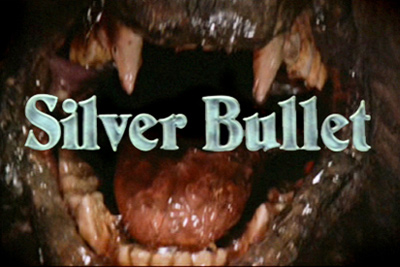
This mostly forgotten 1985 adaptation of King’s novella “Cycle of the Werewolf” is surprisingly decent. It features a pre-hot mess Corey Haim as a disabled kid living in a small town plagued by a series of grisly unsolved murders. After he encounters a werewolf on a bridge late one night, Haim enlists his lovable, alcoholic uncle, played by a pre-bat shit insane Gary Busey, to help solve the mystery. Busey has some great lines, and he and Haim share an easy-going chemistry that’s a pleasure to watch. The werewolf effects are okay, if a little rubbery-looking, but overall Silver Bullet has a sense of humor about itself (Stephen King scripted) that helps make it better than you’d expect.

Admittedly Pet Sematary is kind of a cheese-fest, but it still holds up as one of the better King adaptations due to a few genuinely creepy moments. This is mostly due to not only theose uber-disturbing flashback scenes, but the performance of young Miko Hughes, whose sweet, high-pitched voice and cherubic features come to serve as an ironic counterpoint to his murderous acts in the last third of the film (“Now I wan-too pway wiv you!”). Just prepare yourself for a few unintentional chuckles, not to mention one of the most grating performances by a child actor (the young girl who plays Miko’s older sister) ever.

Including this David Cronenberg adaptation of King’s fifth novel (if you don’t count the Bachman titles) comes dangerously close to violating the rules I set forth in the beginning – namely, the one about the films having to be straight horror/thrillers in order to qualify. But at the end of the day, The Dead Zone does possess enough thriller-centric qualities to make the cut. This is a really solid, if rather dry adaptation, with a strong central performance by Christopher Walken (despite that hideous, fit-for-an-80-year-old grandmother hairstyle he seems to sport in every movie). It’s no masterpiece, but it’s deeply felt; and if you haven’t read the book you’re in for a pretty nifty little ending.
Dee Wallace Stone is a perfect example of a really terrific actress who, over the course of her career so far, has never been given the opportunity to fulfill her sizable potential as more than just a terrorized genre-film heroine. This is due in large part to the enormous success of E.T., which pigeonholed her into the “frantic mother” role in seemingly every single film she appeared in thereafter. I just had to say that, because Stone really anchors Cujo, which could have been just another lame King adaptation, and makes every hysterical moment in that demonic-St. Bernard-battered Pinto entirely believable. Kudos also to Jan de Bont, who provided the cinematography that proved so effective during those heart-in-the-throat attack scenes.
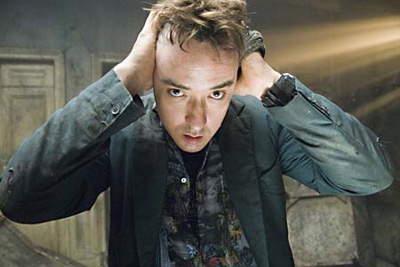
Ok, so if Michael Bay directed a King adaptation, it would probably look something like this, except with more super-hot, blouse-busting ghosts, bigger explosions, and minus all the nifty build-up. But if you take it for the market-tested, slot-filling big-studio product that it is, 1408 is a surprisingly decent little horror flick, with some inspired special effects and a truly creepy hotel-room setting. Of course, director Mikael Halfstrom also helmed that Jennifer Aniston snooze-fest Derailed. Given the cringe-inducing enormity of that debacle, he’s still got a long road to hoe before he repays his debt to society.
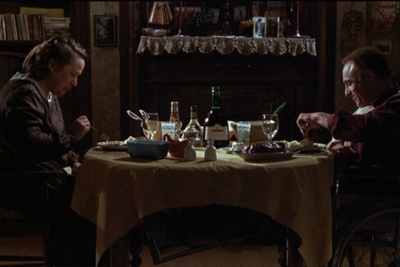
Funnily enough, Misery occupies the exact same spot as it did on my “Top Ten Claustrophobic Horror Movies” list, and it ranks so high on both simply because it’s such a solid, enjoyable little entertainment. Unlike the previous three entries, Misery doesn’t harbor any grandiose ambitions, which shouldn’t be a surprise given that Rob “Big-Studio Cocksucker” Reiner helmed the thing. But as a slick, modern-era Hollywood thriller, there are few as good as this one. Bates’ alternately hilarious and disturbing performance alone makes this worth a second viewing.

Frank Darabont, the director responsible for the terrific Shawshank Redemption and the overlong, if nearly-as-good Green Mile, delighted Stephen King fans everywhere when it was announced he would be tackling King’s grim, apocalyptic short story “The Mist”. For a horror-fiend like me, it was particularly welcome news that the man behind two of the best King adaptations would be taking on one of his more straight-ahead horror yarns. Needless to say, I wasn’t disappointed. Darabont hews miraculously close to King’s vision (save for that love-it-or-hate-it ending) while also managing the feat of making a truly scary horror film that functions equally well as a queasy, post-9/11 satire of American life.
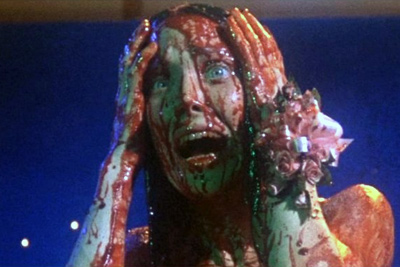
What misfit teen didn’t wish for telekinetic powers after Carrie, Brian De Palma’s near-perfect adaptation of King’s first novel, was released in 1976? True story: during my freshman year in high school, a Volkswagen Bug caught fire during a “Stuff the Bug” competition in the quad. Everyone inside (all of them associated with the popular crowd) escaped without injury, except one: a cheerleader in the back seat suffered first-degree burns on her ass. The unfortunate incident was blamed on a lit cigarette, but I liked to think that there was a mousy girl nearby, something like Carrie White, who started it all.
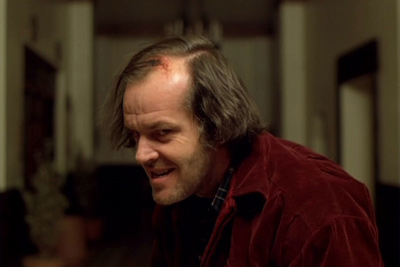
Yeah yeah, so I freaking love The Shining, alright? But what true horror fan (at least one who doesn’t hold movie directors to unrealistic standards of literary faithfulness) doesn’t? This was made back in the heady early days of Stephen King adaptations, where arty, top-shelf filmmakers were taking a crack at his work, rather than the hacks that mostly took over later on. For the record, I actually like the Kubrick version of the story better than King’s version, which includes the just-okay ABC miniseries with which he was officially involved. Sorry, but Steven Weber is no Jack Nicholson. So there. – Chris Eggertsen
