


Roald Dahl is undoubtedly one of the most influential children’s book authors in history. Dahl, known for his quirky characters and colorful writing style, is responsible for classics like Charlie and the Chocolate Factory and James and the Giant Peach. However, Dahl also wrote stories that were dark and sinister – ones that ultimately reflected aspects of the real world that are not typically explored in children’s literature.
Originally published in 1983, The Witches tells the story of a boy and his grandmother, who discover a plot by the Grand High Witch to destroy all the children in England. The book was inspired by Dahl’s childhood fascination with witches and magic and the grandmother in the book was partially inspired by his own mother. The book is still widely considered to be one of the scariest children’s books ever written, now more than 32 years after its initial publication.
The feature adaptation of the book was optioned by Lorimar Productions and the film was completed in 1989. Warner Brothers eventually bought the rights to the film after Lorimar Productions went bankrupt. It released in the United States on August 24, 1990 and received positive feedback from both critics and fans but performed poorly at the box office, generating a total of only $10,360,553. The film has since garnered cult status on VHS and DVD and has a perfect score on Rotten Tomatoes. The film also has the distinction of being the final one that world-renowned puppeteer Jim Henson, the creator of the Muppets, worked on before his death and also the final film that was completed while Roald Dahl was alive. Both men died in 1990.
The Witches, directed by Nicolas Roeg, an English-born director known primarily for adult-themed films such as The Man Who Fell to Earth and Don’t Look Now, translates Dahl’s book closely while exploring themes of child abduction and death through the eyes of “the boy”, who is given the name of Luke in the film.
The movie opens with Luke’s grandmother (Mai Zetterling) telling him all about witches: They dress in ordinary clothes, have ordinary jobs and live all over the world, led by the Grand High Witch. She details how they plot to kill children and how she herself was once a victim of a witch’s plot, displaying a stump where her pinky finger once was. She continues to describe witches as naturally bald (they wear wigs to look normal), with no toes, and having a purple tinge to their eyes. She also tells the story of her childhood friend Erika, who was abducted by a witch on her way to the market, and trapped within a painting until one day disappearing all together.
The visuals of seeing glimpses of what a witch looks like (which is fully explored later in the film) and the eeriness of seeing Erika trapped in the painting only hint at the true horror of this scenario. It is the idea of being abducted by a complete stranger that Roeg truly coveys with this opening scene. Child abductions have become common in society today and the thought of being taken and never seen again is all too real. Witches may use magic, but the real-life comparison is much worse to contemplate.
Roeg continues to explore the theme of death early on in the film, as we discover that Luke’s parents are killed in a car accident. The tragedy serves the purpose of reminding us that children are not immune to the tragic and somber aspects of life.
To cope with the death of his parents and a recent health issue with his grandmother, Luke and his grandmother take a holiday at a hotel, where all the witches in England are meeting to discuss their sinister plots – this is foreshadowed by an encounter Luke has with a witch who tries to abduct him by enticing him with chocolate and a snake… an unsettling scene to say the least.
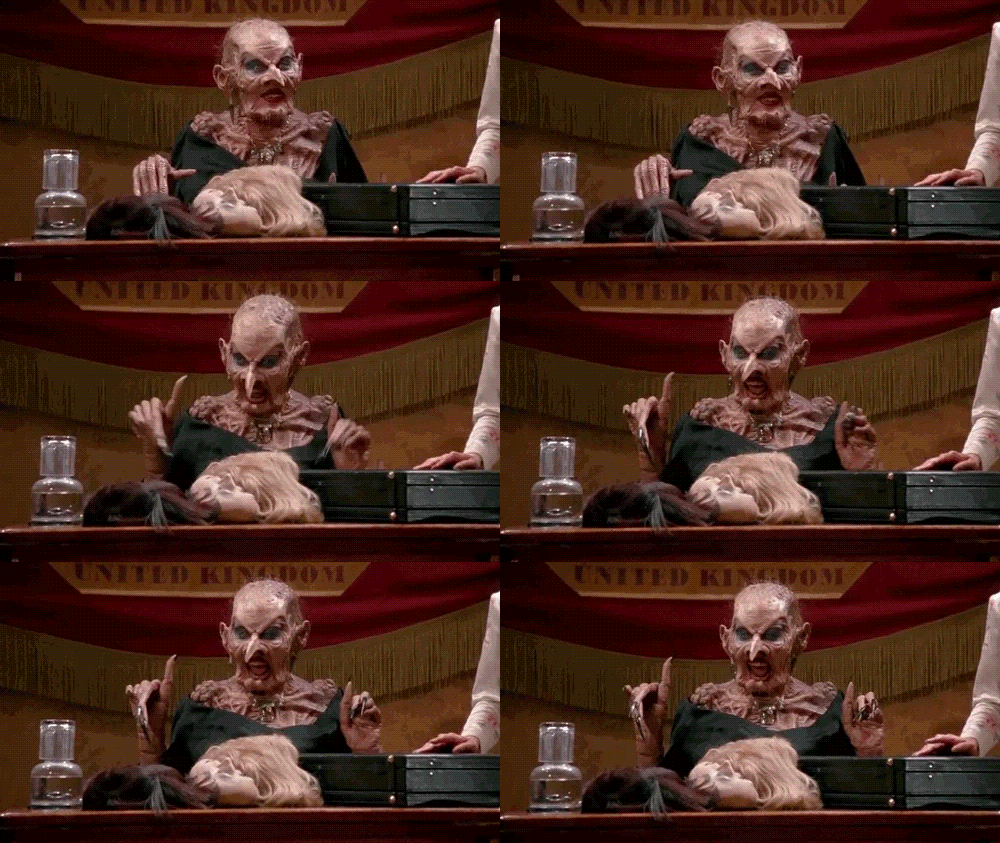
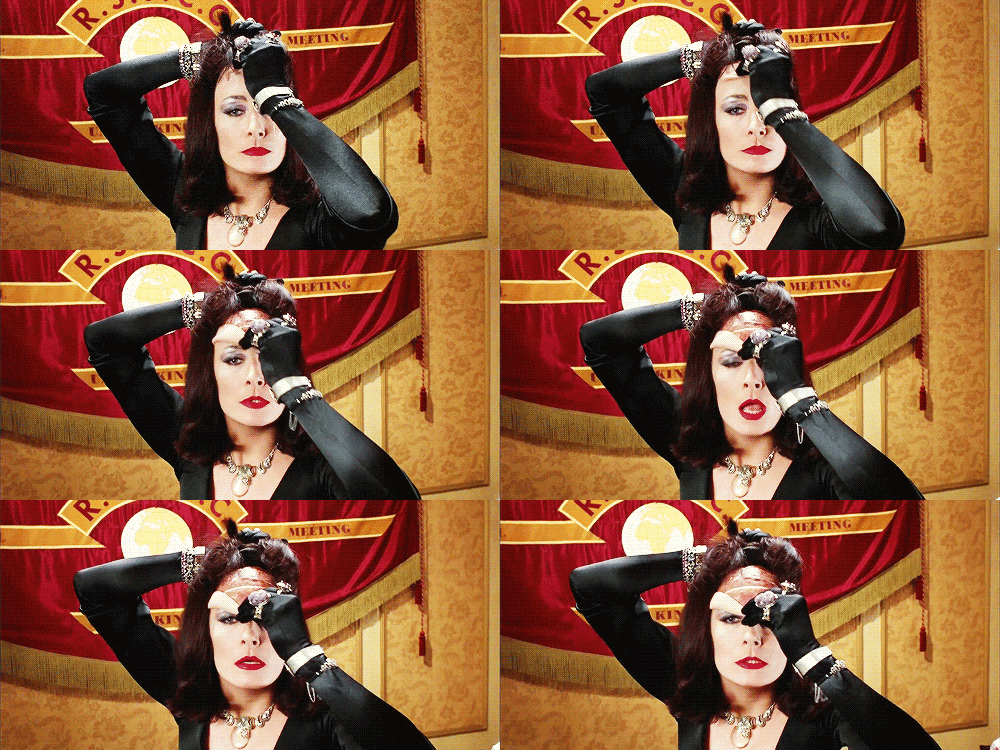
It is the witches meeting scene that perhaps gives us the most terrifying visual aspect of the film: We see the Grand High Witch (played perfectly by Angelica Huston) and the rest of the witches in England transform into their true selves, removing their shoes to reveal stumpy toes, scratching their wigs off to reveal scaly, rash-riddled bald heads and removing their gloves to reveal claw-like fingers. The Grand High Witch herself has to go as far as to remove her entire face to reveal the most hideous and disturbing sight this side of Freddy Krueger. Luke is witness to this entire reveal behind a panel to the side of the main platform.
Throughout the meeting, we see the witches picking at their heads, cackling and showing off their yellow rotting teeth and purple eyes as the Grand High Witch scolds her minions and even goes so far as to kill one of them by burning her to death with magic beams from her eyes, simply for disagreeing with her. The witches are cruel to each other and almost salivate at the idea of seeing harm come to any of them. They hang on every word as the Grand High Witch describes how to kill children and are delighted when they discover they will soon witness a child transform into a mouse.
There is also a scene that shows the Grand High Witch trying to blatantly kill a baby with no regard and several scenes involving children and the witches themselves transforming into mice that are visually impressive, yet horrifying and painful to watch at times – although Roeg does inject some humor into these transformations.
Jim Henson and company did a spectacular job of creating a Grand High Witch that is beyond terrifying and still gives me nightmares to this day. This, coupled with Huston’s sinister performance, give a lasting impression of a movie villain that transcends time. The score composed by Stanley Myers also gives the film a creepy vibe throughout.
Nicolas Roeg directed an adaptation that incorporated many aspects of the book (most notably absent was the book’s original ending) and injected it with a visual style that continues to terrify audiences. However, it is the real-life implications of what is possible without the element of magic that is truly terrifying.
The fact that a film that garnered a PG rating could tackle adult themes this well is a testament to its legacy.


