


SPOILERS AHEAD…
Hereditary, Ari Aster’s directorial debut is finally out, and it comes with the most amount of buzz for a horror film in years. This tale of family tragedy that curdles into a full-bore nightmare ride through hell was received with wide acclaim both at Sundance and SXSW, earning comparisons to William Friedkin’s classic The Exorcist. The comparison goes beyond the fact that both movies are great. Like the king of movies about demonic possession, Hereditary is first and foremost a story about the disintegration of a familial unit when struck by loss. Grief is one of the most common themes in horror movies, because of how vulnerable we are at times of loss. This is a premise that is also shared by recent horror films like The Witch, Verónica, and Pyewacket.
Folkloric tales have for centuries been used to try and explain the things we don’t understand. The award-winning, critically acclaimed podcast Lore devotes each episode to research folkloric tales and historical events bound by a common theme. Zombies, the Jersey Devil, witches, vampires. All these started as simple ways to try to explain things we couldn’t understand – to cope with tragedy. One of the most popular episodes deals with the theme of witchcraft. The creator of the podcast, Aaron Mahnke gives a possible reason for the popularity of witches during the 17th century. For him, it was the harsh world of early New England colonialism and religious tradition that made people blame everything that went wrong on demons and the devil.
Robert Eggers’ The Witch: A New-England Folktale best exemplifies this. The movie explores a family unit being slowly torn apart by panic, despair and superstition. We sense from the moment the family moves to a farm by the edge of a secluded forest that this is far from the supposedly “godly” land they think it is. The titular witch hangs over the family at every turn, making the very first sight of the New England woods a dreadful and cursed one. When the youngest son Samuel suddenly vanishes, the family quickly turns on the eldest, Thomasin for not watching the boy close enough. The incredibly annoying twin siblings Merce and Jonas go even further and accuse Thomasin of witchcraft.

The initial grief for Samuel starts growing and turning into mistrust and paranoia, fuelled by superstitions that were common at the time. While The Witch, Verónica, and Pyewacket focus on daughters, and Hereditary on a mother, all four films show families becoming so paranoid that they violently lash out against each other, before supernatural forces do come into play. The best parts of Ari Aster’s feature debut all involve the family trying to move on while knowing full well that they are beyond repair. Seeing a mother lash out and tell her son she tried to force a miscarriage is as scary as seeing her bang her head against a door while hanging from the ceiling. Perhaps even more so.
The cinematography, costume design and especially the dialogue in The Witch are all designed to make the audience feel as if they are watching a true-to-life story from the 17th century. That is until the words “Wouldst thou like to live deliciously?” are uttered and shit goes down, or should I say… up? Grief and paranoia finally turn Thomasin into the very thing her God-fearing parents accused her of being. As Margaret Atwood put it in her poem Half-Hanged Mary, “Before, I was not a witch. But now I am one.”
Similarly, the Spanish film Verónica, directed by Paco Plaza (of REC fame), uses grief as a gateway into the occult and a tale of demonic possession. The film is loosely based on true events known as “The Vallecas Case” in which an 18-year-old girl died mysteriously after she used an Ouija board; her family then started experiencing strange occurrences at home that the police still can’t explain. The film changes things a bit, and young Verónica is now 15 instead of 18, still grieving after the recent death of her father. With her mother working long hours at a bar, Verónica is left in charge of her three younger siblings – coincidentally, there’s also a set of twins here.

In both Hereditary and Pyewacket, characters turn to the occult to cope with their loss. The thought of an afterlife and the possibility that one can, in fact, contact the deceased is an appealing idea to anyone who has experienced a devastating loss. In the case of Verónica, she decides to play with an Ouija board with her friends at school, desperately trying to contact her deceased father. Obviously, things go wrong. Objects start flying across the room and Verónica spills some blood on the board, before it splits in half and a candle falls on an occult book, burning it. Oh, and Verónica starts convulsing before she lets out a demonic scream. While she becomes more and more convinced that a dark spirit has attached itself to her, the school thinks she has an iron deficiency, and her mother thinks she is being immature and tells her to grow up.
One of the best aspects of both Hereditary and The Exorcist is the guessing game the movies play with the audience, making you guess if it’s really a demon or some illness we are not aware of. What made the first half of Friedkin’s horror classic so scary was seeing Chris MacNeil going from doctor to doctor, unable to help her child. Horror movies that deal with the occult are best when you are not sure if it’s a demon you’re seeing, or a manifestation of the character’s grief. By the time the demon manifests itself in Verónica, you are not as scared of the demon as you are scared for the girl and her family. By the time the real police report is mentioned, Verónica becomes one hell of a sad horror film.
Likewise, the protagonist of Pyewacket is also fifteen and grieving over the death of her father. While her increasingly hostile mother turns to drinking to alleviate the pain, Leah finds solace in death metal and occultism. When her mom finally snaps and says something no child should hear (coincidentally, Toni Collette says the same thing to her character’s son in Hereditary), Leah runs off to the woods and summons a demon to kill her mother. Grief and occultism work so well in horror because it allows the audience to get a better understanding of a character’s inner struggle and mental well-being.
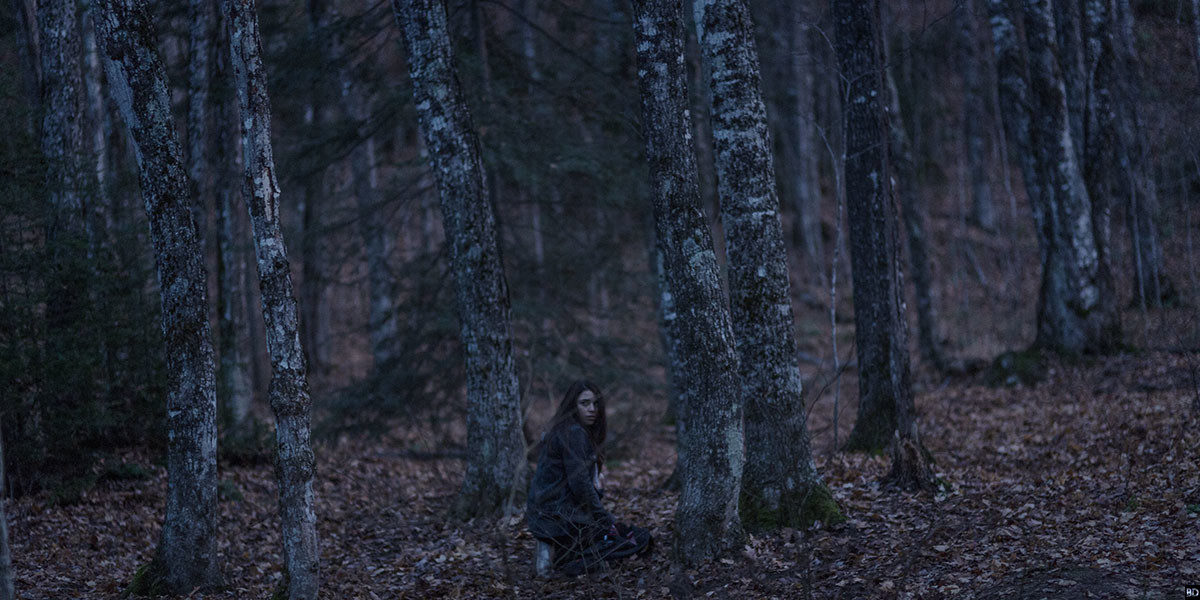
The best parts of Pyewacket and Hereditary have nothing to do with jump scares or a demon showing up, but with characters realizing their mistakes. The dread that slowly creeps up when Leah realizes what she has done; the horror that comes when you immediately regret your actions but know there is no way back. There is some incredibly disturbing imagery in Hereditary, but nothing surpasses the simple shot of Peter’s face as he sits in a car, unable to turn around because of the horror that awaits.
As NY Times writer Jason Zinoman put it: “A character coping with the death of a loved one is the new car of teenagers heading to a cabin in the woods.” And at least for the films some idiots are referring to as “elevated horror,” this is true. The difference being that unlike the teenagers going to Camp Crystal Lake despite all the warnings, we do care when a grieving mother starts having horrible sightings that may or may not be a threat to her family. What Leah, Verónica and even Thomasin are suffering resembles what Peter and Annie go through in Hereditary. Who could blame a grieving mother for taking up occultism and trying to conduct a séance to communicate with her deceased child? And who’s to say if that is indeed a gruesome ghost you’re seeing, or just a manifestation of your own grief?
Grief serves as the ultimate horror because there’s no way back from something like losing a loved one. The focus on something as real as the horror that comes after losing a loved one is what makes movies like The Babadook, The Witch, and now Hereditary stay in your mind long after the credits roll. While jump scares are effective in the moment, these films hold to something real that scares you for days after you leave the theater: the fear of failing your family and losing them. You may not be scared when you see Hereditary, but you will be deeply disturbed for a good long while afterwards. Especially when you hear that clucking noise…
Rafael Motamayor (@GeekWithAnAfro) is a recovering-cinephile and freelance writer from Venezuela currently based in Norway. He has written for Flickering Myth, Birth.Movies.Death, and SYFY.


