Editorials
00’s Retrospect: Bloody Disgusting’s Top 20 Films of the Decade…Part 4
You’ve all been waiting, and now it’s here: the unveiling of Bloody-Disgusting’s list of the Top 5 horror films of the last ten years. Again, the list reflects the opinions of all B-D contributors (each of whom came up with their own personal Top 20 list from which the results were tabulated). You may not agree with the films on the final list (in fact, it’s inevitable that the majority of you probably won’t, at least not in the order they’re assembled), but these five movies are all excellent examples of the genre that will go down in history as classics in the eyes of the majority of horror movie fans. Of course, if one of your faves was left out and you’d like to rant about it, let us know. We can relate: keep in mind that every B-D contributor had films from their own personal lists that didn’t make the cut either… And now, without further adieu, we present to you the Top 5 horror films of the 2000s.
Also read: 00’s Retrospect: Dead on Arrival — Ten Horror Duds of the Last Decade
The last ten years have been a wild ride for horror fans. Thanks to countless innovators and a host of amazing films, it can safely be said that the 2000’s trump the 1990’s by a wide margin. Sure, that decade had groundbreakers like Scream and The Blair Witch Project, but that’s nothing compared to the number of great horror films (and, for that matter, the number of total horror films) that this decade has had to offer. To celebrate, the staff of Bloody-Disgusting decided to take a vote on the Top 20 horror films* of the 2000’s (along with one honorable mention), and the below list is the result. Looking over it, it’s actually pretty telling that nearly half the movies (9 out of 21) were produced on foreign soil, which just goes to show that this decade in horror was as much about the range of impressive imports as it was about the American product. Your favorites aren’t on there? Cry us a river. Or better yet, let us know what we missed. And make sure, at some point before the New Year, to get on your knees, clasp your hands together and pray to the horror gods to make the next decade as good as the last. – Chris Eggertsen
5. Session 9 (USA Films; August 10, 2001)
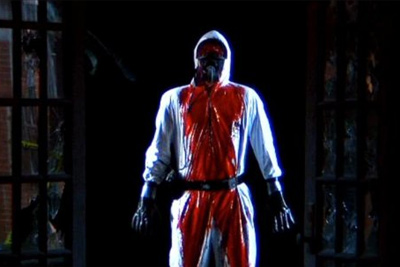
As they often say in real estate, location is everything. And Brad Anderson couldn’t have set his nerve-wracking, slow-burning horror opus in a better one: an abandoned New England mental hospital. Of course in filmmaking, location really isn’t everything, and Anderson clearly understands that. Which is why Session 9 isn’t just a cheap, hack `n’ slash, instantly-forgettable type horror film, but a psychologically probing, deeply unsettling journey off the edge and into the abyss of the human mind. The film is old-school in a lot of ways, particularly in that it doesn’t just rely on cheap shocks to scare the living daylights out of us. Indeed, the scariest moments in the film are those that involve disembodied voices, eerie visuals and the mere suggestion that something horrible is about to happen. This is the stuff bad dreams are made of.
4. The Mist (Dimension Films; November 21, 2007)
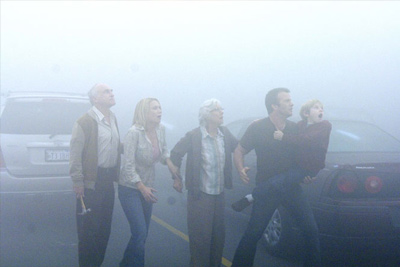
Frank Darabont, known for helming adaptations of Stephen King’s more dramatic works, totally nailed this adaptation of King’s short story about a group of small town folk who become trapped inside a grocery store when a mysterious mist rolls into town and simultaneously unleashes a host of nasty creatures. The scary stuff works extremely well (including a mostly-great use of CGI), but what really drives this one home is Darabont’s focus on the divide that forms between two factions of the townspeople – the paranoid, Bible-thumping types led by rabid fundamentalist Mrs. Carmody (played by a great Marcia Gay Harden) and the more rational-minded, decidedly left-wing members of the populace. Love or hate that downer of an ending, this allegorical microcosm of Bush Jr.-era America is spot on, and elevates an already-excellent film to even greater heights.
3. The Descent (Lionsgate; August 4, 2006)
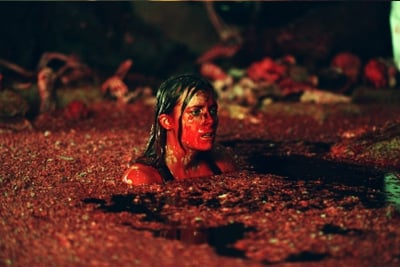
This Neil Marshall-directed film begins as a tale of gung-ho female empowerment and ends in a blood-soaked orgy of every-woman-for-herself pandemonium. One of the scariest films of this or any decade, The Descent is so effective because Marshall understands how to layer on the frights. It would be bad enough if this group of female spelunkers was facing flesh-eating humanoids in a normal, everyday setting, but the fact that they’re battling them while trapped in a series of claustrophobia-inducing caverns is almost too much to bear. Marshall is an expert at conveying an all-consuming dread and disorientation, but what really makes the film work is that he takes the time to give the characters actual personalities so we truly care what happens to them. Ultimately, The Descent is the purest kind of horror film – ruthless, unforgiving, showing no mercy.
2. Shaun of the Dead (Focus Features; September 24, 2004)
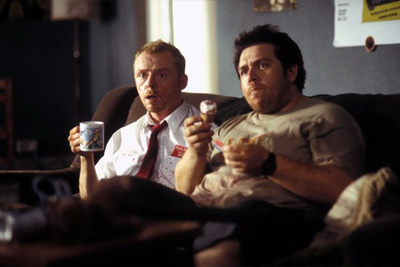
Shaun of the Dead isn’t just the best horror-comedy of the decade – it’s quite possibly the best horror-comedy ever made. Edgar Wright’s film about a couple of aimless English blokes caught in the middle of a zombie pandemic seemingly came out of nowhere and went on to become one of the biggest cult films of all time. It’s a case of all the right elements coming together at just the right moment – not only is the film smartly and stylishly directed, but the endearing performances by the entire ensemble cast are pure comic gold. Wright also takes a page out of Romero’s book by providing a sharp satiric subtext that serves to elevate the film above mere slapstick. Simply put, Shaun of the Dead is about as close to perfection as movies get; intelligent, thrilling, one-of-a-kind.
1. Let the Right One In (Magnolia Pictures; March 10, 2009)
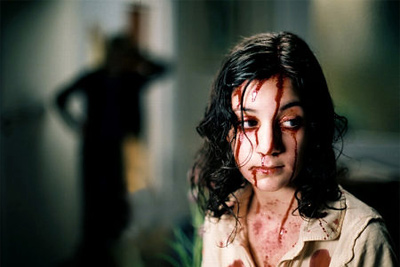
It’s rare enough for a horror film to be good; even rarer are those that function as genuine works of art. Let the Right One In, adapted from the novel of the same name by John Ajvide Lindqvist, is one of those films – an austerely beautiful creation that reveals itself slowly, like the best works of art do. The simplicity of the story – a young boy, bullied in school, meets a young girl who just happens to be a 200-year-old vampire – allows Swedish director Tomas Alfredson to focus on these two pre-teen characters with a penetrating insight that not only makes it a great vampire film but a great coming-of-age film as well. Of course, calling it a coming-of-age story is likely selling it short. Because at its core, Let the Right One In is, simply, a human story, a pensive meditation on the transcendent possibilities of human connection. Most of all, it’s a film that sticks with you, and whose stature will continue to grow in the decades to come.
Editorial written by Chris Eggertsen
*Editor’s Note: For those of you interested in knowing how the list came to be, here’s an explanation. Bloody Disgusting writers collaborated on a list of some of the best films this decade. The entire list was given to the Bloody Disgusting staff who then built their own Top 20 lists. Each film was given a point value. 20 received 1 point, 19 received 2 points, and so on all the way to number 1, which received 20 points. The numbers were tallied and the result are the top films listed. The bonus film had tied with #20 and the tie was broken by the number of actual votes.
The following participated in the project: Mr. Disgusting, Tex Massacre, BC, David Harley, Ryan Daley, Chris Eggertsen, Jeff Otto, John Marrone, Horror_Guy, Mr_Bungle, Klown, Caustic Coffee and Tool Shed
Editorials
Before ‘The Blair Witch Project’, ‘Alien Autopsy’ Showed How Real Found Footage Could Feel
The line separating artist from con man is a lot thinner than you might initially believe. While I think we can all agree that lying for the sake of profit is actively malicious behavior, isn’t it also true that the faux documentary aspect of The Blair Witch Project is half the reason why that film became such a cultural phenomenon? After all, if there’s one thing filmmakers have in common with stage magicians, it’s that misleading and misdirecting audiences is simply part of the job.
That’s why I’ve developed a habit of mostly ignoring the moral quandaries behind many of film and television’s biggest “hoaxes” in favor of appreciating the narrative elements that drive productions like Mermaids: The Body Found and even Animal Planet’s highly underrated The Cannibal in the Jungle. However, if there’s a definitive case of a highly publicized broadcast fooling the world into taking it seriously, it has to be Fox’s infamous 1995 TV special Alien Autopsy: Fact or Fiction.
It’s been over three decades since that eerie footage first haunted television screens right at the peak of the ’90s ufology craze, and in that time, the video has taken on a life of its own. From countless parodies and references in everything from The X-Files to Tony Hawk’s Pro Skater (as well as John Dower’s recently released tell-all documentary The Alien Autopsy Scandal, which I’d highly recommend to genre fans everywhere), there’s no denying the legacy of the Alien Autopsy video. However, I rarely see the tape discussed as what it truly is: a highly convincing found footage film directed by a passionate stage magician and brought to life by masterful practical effects work.
That’s why I’d like to invite readers to join me on a deep dive into one of the most infamous broadcasts of all time in an attempt to reevaluate the footage as a fascinating narrative experience rather than a complete hoax.
The TV Special That Convinced Millions It Was Real

Ray Santilli next to Extraterrestrial replica in ‘The Alien Autopsy Scandal’
For starters, regardless of whether or not you believe that there was in fact an extraterrestrial crash in Roswell during the summer of 1947 and that some form of autopsy was performed on the victims, the producers behind the black & white recordings, Ray Santilli and Gary Shoefield, insist that their video was a “restoration.” Though I’d argue that the proper word is “remake”of genuine footage that was too damaged to air on television. That’s why the duo went on to recruit filmmaker and eccentric magician Spyros Melaris and sculptor/monster designer John Humphreys to bring their version of the autopsy to life and sell it to the highest bidder.
This is where the story of the Alien Autopsy as a narrative experience really begins. Melaris claims that his approach to the faux recording consisted of striving for extreme period accuracy in both shooting equipment and setting while also planting subtle details that would initially seem like mistakes but could later be revealed to actually fit the time period. That being said, the filmmaker was under the impression that the short would be released for free as a PR stunt, with the team later producing and selling an informative documentary chronicling exactly how the footage was faked and commenting on how easy it is to manipulate public perception with a good old-fashioned magic trick.
This obviously isn’t how things went down, and that’s likely the reason why Melaris has since distanced himself from everyone else involved with the project. Yet, no amount of behind-the-scenes drama can undermine the genuine effort that went into making the short as impressive as it is. From the sourcing of real animal organs from a local butcher to make the organic part of the creature more lifelike to the highly detailed sculpt that made use of a hollowed-out underlayer that could be filled with fake blood and assorted viscera, there’s a reason why so many Hollywood specialists are still impressed with the artistry on display here.
Of course, the believability is only half the story, as I think that the best part of the autopsy is how Melaris builds on the existing tension by obscuring certain details and often embracing the chaos of what a real examination of extraterrestrial life could feel like. The camera often goes out of focus at just the right time to make certain effects hit even harder, and we can only speculate as to what the hazmat-suited doctors are gesticulating about during the operation. There’s a real air of mystery to the whole thing that almost makes it feel like a cosmically terrifying, cursed film containing forbidden knowledge that civilians were never meant to see.
So when Fox’s Fact or Fiction brings in the specialists to comment on the film and its otherworldly subject, it’s no surprise that we end up with one of the most memorable mockumentaries of all time – albeit one where the participants are unaware that the footage they’re commenting on is basically a large-scale practical joke. A joke that the network was obviously in on, as many participants claim that the TV special cut out significant portions where guests point out that they believe the footage to be an elaborate hoax.
The Lasting Impact of the Hoax Turned Cultural Event

Regardless, I remember going to bed terrified after watching reruns of the special and thinking about the respected pathologist who claimed that the body was almost certainly inhuman, with even effects maestro Stan Winston commenting on how difficult it would be to recreate some of these visuals through practical puppetry. That’s not even mentioning Jonathan Frakes’ dramatic hyping up of the disturbing imagery as if he was talking about the tape from The Ring, with his spooky demeanor here likely being responsible for his later role as the host of Beyond Belief: Fact or Fiction a few years later.
Personally, I’d argue that the Alien Autopsy phenomenon had just as much of an impact on me as a horror fan as The Blair Witch Project, a film that was almost certainly influenced by the success of this immensely popular hoax (to the point where they even produced their own TV special commenting on Heather’s found footage). Even if Fox didn’t intend to produce a narrative feature about the aftermath of the Roswell crash, the end product still holds up remarkably well as a highly entertaining mockumentary exploring the idea that we may not be alone in the universe.
While neither Santilli nor the rest of the production team has ever commented on this, I also think it’s very likely that the idea of a faux Alien Autopsy could have been influenced by Dean Alioto’s The McPherson Tape/UFO Abduction. I’ve already written about how this granddaddy of found footage was co-opted by rogue ufologists who began selling bootlegs of the tape at conventions as if it were real evidence of a close encounter, so it’s not that much of a stretch to imagine that Santilli and company could have heard about this phenomenon and been inspired to come up with their own highly profitable hoax.
At the end of the day, it’s unlikely that the Alien Autopsy film is recreating any real footage from Roswell, but I can still appreciate the short and the accompanying television event as a standalone horror story that still influences the way we see found footage to this very day.
After all, the possibility that something could be real is often much scarier than finding out for sure – and that’s why I think Alien Autopsy: Fact or Fiction is still worth revisiting three decades down the line.
You must be logged in to post a comment.