Movies
Fact: Post-Conversion 3-D Sucks… and So Does Prime Focus

If you could see me right now, if you were sitting right next to me you’d see that I’m bright red with smoke shooting out of my ears. No, this isn’t a cartoon, this is real life. And because this is real life you can turn off garbage whenever you so desire. So stop being used, stand up and put your foot down. Post-conversion 3-D processing is dog sh*t, it’s garbage, it’s thievery, although Prime Focus will lead to you believe otherwise. Read on for the latest 3-D rumbling and don’t become a fool. Spread the good word by teaching everyone around you why they shouldn’t see films like Clash of the Titans in 3-D. In fact, maybe it’s time to start boycotting them altogether?
 “There are a lot of different techniques,” said Chris Bond, president of Prime Focus, North America, and developer of the company’s View-D 2D/3D conversion method to the Hollywood Reporter. “I invite filmmakers to come and test their material, and to see ‘Clash.’ We have a lot of creativity and artistic drive to make sure the results look fantastic. I think it looks great.”
Either this guy is blind or he’s a narcissistic liar. How many of you have seen Clash of the Titans or Alice in Wonderland in 3-D? How many of you have seen one of the aforementioned films and something like Avatar, Up or even Monster House? Then you should know without a shadow of a doubt that REAL 3-D is the ONLY 3-D. Why? Let’s have the New York Times’ Manohla Dargis explain:
“The 3D in the Clash of the Titans remake, which was added after it was shot, has none of the immersive quality of Avatar and instead segments the image into discrete planes, bringing to mind the unintegrated levels of a pop-up book.”
A pop-up book. That’s exactly what I’ve been whining and complaining about on my Twitter page. Open up your head and think about it. How can you make something shot in 2-D and turn it into 3-D? I mean REALLY think about it guys. If the camera only captures the image right in front of it, how can some company like Prime Focus play God and create alternate angles of a flat image? Can you wrap your head around the idea of that poster on your wall being converted to 3-D?
Some of you will say yes, but you’re not understanding. You can create DEPTH OF FIELD, but you cannot create actual 3-D. What these studios are doing is adding LAYERS to a film (blacks in the back, reds and greens in the front) and claiming that it’s authentic 3-D. Why? So they can charge you nearly DOUBLE for ticket prices.
Fool me once, shame on you; fool me twice, shame on me.
Said Roger Ebert, a 3D skeptic: “One word of consumer advice: Explain to kids that the movie was not filmed in 3D and is only being shown in 3D in order to charge you an extra $5 a ticket. I saw it in 2D, and let me tell you, it looked terrific.”
These studio execs are foolish, absolutely foolish. While they think they’re being smart by making some extra cash off the fake 3-D, what they are doing is what I like to call the “Lionsgate” syndrome (although, recently the home entertainment department has been doing quite well).
In my little circle of friends, there was a time where we’d flip over a DVD box to see what company was releasing the film. Lionsgate was a no-brainer, at least until the shelves became cluttered with crap. It’s called consumer confidence. Provide a crappy product and eventually the consumer will catch on and turn their backs on you. We stopped renting every Lionsgate DVD release and became quite weary of what was on the shelf.
Post-conversion 3-D is Lionsgate syndrome in that all of the studios collectivly will screw over enough moviegoers to where they’ll turn their back on the process and we’ll lose 3-D forever. It’s hard work to do it right, but if you don’t it can even make the audience SICK.
“3D is a different medium and requires thinking a different way,” Sony Pictures Imageworks senior stereographer Rob Engle said. “For instance, (the animated) Monster House was originally planned as 2D, and in some shots they added camera shake. For the 3D version, we dialed it back — because we were able to dial it back in animation. In live-action, you can’t take out the camera shake. There are photographic styles that don’t lend themselves as well to 3D.”
The bottom line, he said, is “conversion is really hard. You are taking shots that were not intended as a VFX shot and making them a VFX shot. That is neither easy nor cheap. If you don’t have the appropriate amount of time, money and technical and creative talent, you are going to receive a result that is not satisfactory.”
Dave Walton, assistant vp marketing and communication at JVC Professional, cautioned: “No 3D is better than bad 3D. Those who view bad 3D can get headaches and nausea within a few short minutes. So conversion has to be accurate, and you have to pay attention to the brain’s ability to process the images without fatigue.”
I want 3-D, I love 3-D and I’m so so so so down with 3-D. Obviously, I wouldn’t want to see Hostel or Paranormal Activity in 3-D, but who wouldn’t mind something along the lines of Drive Angry or Piranha? Oops, did I say Piranha? FAKE 3-D. GARBAGE. But man, it would have been cool to see that in real 3-D.
Anyways, you can read more about this war over at THR, but please, please, please start spreading the word.
If enough of you stand up, bitch, moan, tweet, blog, etc etc about the injustice in the system, people will take note. We can make a difference.
I wish I could send Chris Bond a pop-up book in the mail so he can wrap his mind around it. Oh wait, he knows, he just wants to make money off YOU.


Movies
‘Tha Rae: The Exorcist’ Review: Gory Thai Possession Horror Faithfully Adheres to the Tropes [NYAFF 2026]

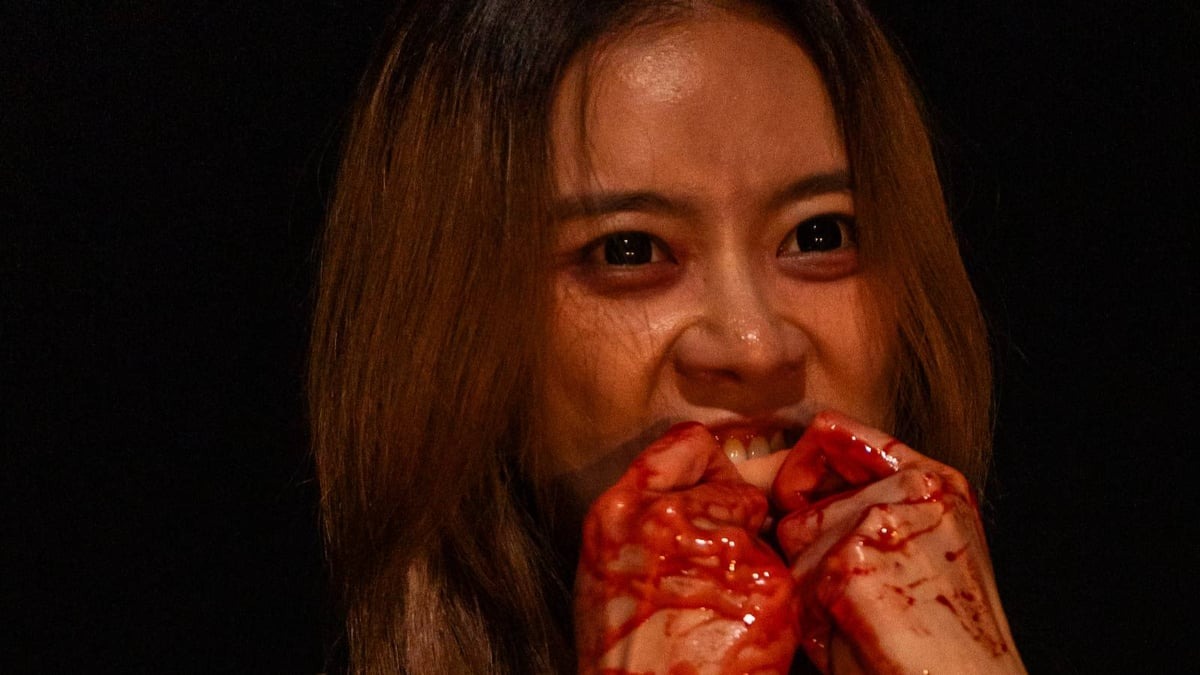
Possession films are an exceedingly common subgenre in horror to the point that far too many of them feel far too familiar. This is a generalization, obviously, but it too often seems that someone is possessed, a representative from the area’s dominant religion is called in, and a fierce spiritual battle comes to a dramatic conclusion. The idea that the demon in question always happens to be of the exorcist’s faith and denomination is simply chalked up to plot necessity.
Tha Rae: The Exorcist adds an intriguing wrinkle into that trope by introducing a demonic entity that rebuffs both a Catholic priest and a local Yao shaman. It’s only when the two join forces that they’re able to put up a fight against the evil being.
The film opens with a Catholic exorcist out of options. A possessed child writhes before him, pustules and other signs of devilish control wracking the little girl’s body with snarls and contortions. Unable to beat the demon, and unwilling to let it grow stronger and move to another host, the priest convinces the child’s mother that death is the only choice left – so they plunge a knife into the girl’s heart.
Forty years later, it’s that same priest, Ming (Thaneth Warakulnukroh), who’s become possessed to the point of attacking and trying to eat other villagers. His daughter Malee (Nichaphat Chatchaipholra) arrives to check in on her father, but she too soon falls prey to a possessive entity with a taste for flesh. Two exorcists with wildly differing faiths and styles are called in – Sopha (Phiravich Attachitsataporn) is a self-described Yao witch doctor and TikTok exorcist who uses props, dance, theatricality, and ancestral spirits to combat the forces of evil, while Father Paolo (Jirayu Tangsrisuk) is entrenched in the traditions and rituals of the Catholic Church.

Photo: © 2025 SAHAMONGKOLFILM INTERNATIONAL COMPANY LIMITED ALL RIGHTS RESERVED. North American Premiere
There’s both tragedy and betrayal at play in the narrative of Tha Rae: The Exorcist, but director/co-writer Taweewat Wantha puts the thematic focus on the collaboration and understanding required to go toe to toe with a deviously malevolent force. It’s an interesting spin on the expected formula, and while the rest of the film stumbles in its supporting players and follows more traditional beats – albeit with some fun, gooey gore – that core element is enough to make it stand apart from the crowd.
Wantha broke onto the film scene with 2004’s memorably titled Sars Wars: Bangkok Zombie Crisis and continued that trend with oddball genre comedies like The Sperm and Kindergarten War, but he found major success with the one-two horror punch of Death Whisperer and Death Whisperer 2. His latest is more in line with those hits as jump scares and local mythologies play into his creepy tale of possession and generational punishment.
Tha Rae: The Exorcist arguably has more personality and humor, and both are due in large part to the character of Sopha and the playful but sincere performance that brings it to life. Where Tangsrisuk is saddled with the more straightlaced priest, Attachitsataporn’s witch doctor enjoys his local celebrity and has fun while aiding his community. Sopha’s social media followers expect a show, and he delivers, but there’s an engaging dynamic at play within him.

Photo: © 2025 SAHAMONGKOLFILM INTERNATIONAL COMPANY LIMITED ALL RIGHTS RESERVED. North American Premiere
Sopha’s grandmother was the original witch doctor, and he was just her apprentice. When she passed – and subsequently became the primary ancestral spirit that he calls upon during his rituals – Sopha took up the mantle. For one reason or another, continuing her legacy requires him to carry on with his more feminine foot forward. Makeup, costumes, and a feminine lilt to the way he walks and talks are all part of the show. He apologizes to Paulo for it, but there’s no shame in his words or tone as he embraces the gifts he holds and the power he wields.
There’s no disdain between the two even as they seem initially unimpressed by each other’s efforts. Eventually, though, after each has struck out in dramatic and painful fashion, they realize a combined approach to fighting this particular demon is the only way forward. It’s here where the film shines brightest with the idea that beliefs can intermingle and co-exist without the need for disdain or dismissal.
The two of them are the heart of Tha Rae: The Exorcist, but the meat and potatoes of the genre come in the form of creepy antics and a bit of the ol’ gut munching. Intestines are nibbled, a feral man bursts through floorboards to terrorize young girls, and the possessed have a generally unsettling look about them. Wantha too often neuters his atmosphere and mood, though, by jumping quickly to the gore. It cuts into the horror of it all, leaving the film to work in fits and bursts rather than as a cohesive, propulsive whole.
Shortcomings in both the script and direction prevent the film from coming close to denser, more memorable, and atmospheric possession horrors like It Comes or The Wailing, but its main theme and dual lead characters still offer up an intriguing combination.
Genre tropes exist for a reason, but Tha Rae: The Exorcist is a good reminder that they also exist to be twisted, teased, and, when necessary, torn to shreds.
Tha Rae: The Exorcist made its North American premiere at the 25th New York Asian Film Festival.

You must be logged in to post a comment.