Movies
Drive Angry 3D
“Summit Entertainment put the pedal to the metal with Drive Angry 3D, Patrick Lussier and Todd Farmer’s latest collaboration that’ll induce a 155mph speed-boner… It knows exactly what it is and accelerates full steam into an hour and a half of blood, guts, sex, drinking, smoking, and chugging beer out of skulls.”

We’ve been screaming for original movie ideas off the top of the Empire State Building, and while most studios are ignoring us, Summit Entertainment put the pedal to the metal with Drive Angry 3D, Patrick Lussier and Todd Farmer’s latest collaboration that’ll induce a 155mph speed-boner.
The film stars Nicolas Cage as Milton, an escapee from Hell who is on the hunt for his daughter’s child that’s in the possession of a demonic cult lead by Jonah King (Billy Burke). He crosses paths with Piper (Amber Heard), a tough chick who is in search of meaning in her Southern, abused life. On a road trip to find his grandchild, Milton is being tracked down by “The Accountant” (played brilliantly by the awesome William Fichtner), a seemingly invisible man with the power to control minds – and decimate anyone who gets in his way.
Drive Angry is a mega-hybrid of genre films ranging from Terminator 2: Judgment Day to The Crow, Constantine, From Dusk Till Dawn, Tenacious D: The Pick of Destiny and even a little “Brutal Legend”. At no point does the movie take itself seriously, nor is it even apologetic. It knows exactly what it is and accelerates full steam into an hour and a half of blood, guts, sex, drinking, smoking, and chugging beer out of skulls.
While the CGI work and fantasy elements might cheese up the place on a few occasions, there are some simply remarkable moments such as Milton’s opening scene escape from the depths of Hell. Even the sort of “cartoonish” moments are overshadowed by the acting prowess of Fichtner, who brings distinct character to an otherwise T-1000 clone. Cage, who is known for going “over the top”, delivers one of his best performances in quite some time (missing in action were a bad hair piece, and a staple “freak out” moment).
Farmer’s screenplay, co-written by Lussier, looks to the world of Quentin Tarantino for inspiration. Part Desperado, Death Proof, Kill Bill and From Dusk Till Dawn, the otherwise action movie carries a slight overdose of exposition, leading to a few minor pacing issues. In fact, for a movie title Drive Angry, I was hoping it would play more like a “chase film” with more “driving action”.
While there were a few great high speed action sequences, some of the more memorable moments include a violent sex scene that takes from the page of Desperado, unloading hundreds of bullets into enemies as Milton drinks, smokes a cigar, and pleases a local blonde. Even Farmer cameos once again, stealing the show as he throws out a few quick one-liners before taking a blood-soaked beating to his death.
Drive Angry is intensely bloody, violent and carries quite a few payoffs that are well delivered. It’s also a movie you’d actually want to see in 3-D, unlike so many frauds in the marketplace these days. In fact, Lussier, who directed My Bloody Valentine 3D, shows his growth as a 3-dimentional director by taking Drive Angry to new heights. Seeing it in Real D, the depth was astounding, and Lussier throws a few CGI tricks right in the viewer’s face. Even more impressive was his flashback sequence that could easily become one of the most influential in the 3-D age (the way he layers three “thoughts” at once is mind-blowing visually). In short, it’s worth the extra few bucks.
While there are some pacing issues, and a heft of exposition, it’s impossible not to recommend Drive Angry to the “remake haters” of the world. They bitch and moan for a creative, original movie; it’s time for them to vote by opening their wallets and buying a ticket. I’d like to offer a small bit of advice: make sure you see this with a large group of people, there’s nothing worse than watching a guy have his hands and legs blown off, and you being the only one laughing. Yeah, I was that creep. Fill up on popcorn and friends, and then buckle up for the first “fun” horror movie of the year.


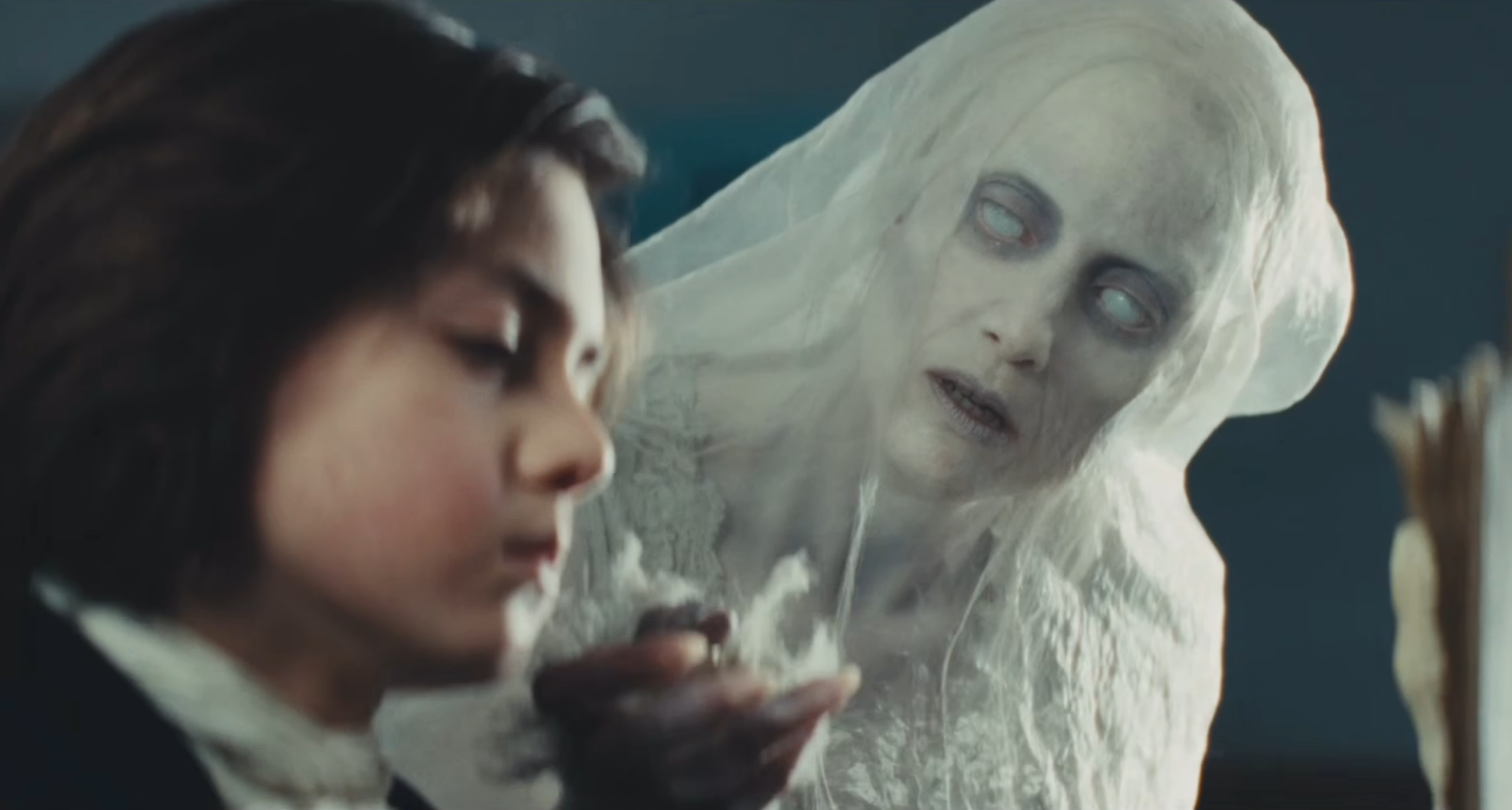
The trailer for Ti West’s upcoming adaptation of A Christmas Carol raised a lot of eyebrows when it dropped earlier this week. While plenty of folks initially dismissed Ebenezer as a derivative project meant to cash in on the recent wave of unnecessary prequels that expand the backstory of beloved characters (such as 2023’s Wonka), Charles Dickens’ original novel already made a point of exploring Ebenezer Scrooge’s origins in detail – meaning that this new film is likely just a particularly faithful adaptation of the source material under a different name.
Couple that with the fact that the movie is being helmed by a genuine horror auteur and I think it’s safe to say that the latest iteration of the first modern ghost story is in good hands.
That being said, one detail that immediately jumped out at me during the brief teaser (other than a blink-and-you’ll-miss-it nod to Johnny Depp’s iconic bedroom death scene from the original A Nightmare on Elm Street) is the fact that many of Ebenezer’s ghosts appear to have been directly lifted from the iconic John Leech illustrations that accompanied the first edition of Dickens’ novel.
Here are a couple of stills from the trailer compared to the original artwork:

The Ghost of Christmas Yet to Come in ‘Ebenezer’ and ‘A Christmas Carol’

The Phantoms in ‘A Christmas Carol’ and ‘Ebenezer’

Marley’s Ghost in ‘Ebenezer’ and ‘A Christmas Carol’
Mainly working with old-school wood and steel engravings that would later be transferred to print, Leech was instrumental in crafting the iconic look of history’s most influential phantoms – especially since Dickens is said to have been deeply involved with the creation of these so-called “comic illustrations.”
And since the novel is commonly said to have popularized spiritualism in Victorian England, much of the ghostly iconography that we still see in genre media to this very day (including some of Ti West’s previous films) can be traced back to the author’s partnership with Leech.
Ebenezer won’t be the first A Christmas Carol adaptation to borrow heavily from these designs, but I can appreciate how Ti West is incorporating an important part of horror history into his latest film.
Ebenezer will be available in theaters starting November 13.

You must be logged in to post a comment.