Back in 2015, Roar Uthaug released The Wave, the first disaster film made in Norway, based on the true tsunami that hit the town of Tafjord in 1934. The film was praised for its focus on human stories and small scope instead of big CGI destruction porn. The Wave went on to become the highest grossing film of the year in Norway, so of course, they made a sequel. The US may have the MCU and other cinematic universes, but now Norway wants to enter the game with an extended universe of disaster films that take very small natural disasters and blow them way out of proportion! Take that, Independence Day!
It’s been three years since geologist Kristian Eikjord (Kristoffer Jonner) saved the town of Geiranger from a tsunami. While Kristian is called a hero by newspapers and TV stations, his personal life is worse than before. He and his wife Idun (Ane Dahl Torp) are separated and she took the kids with her to the Norwegian capital of Oslo, leaving Kristian alone with his trauma post-tsunami, a messy apartment, and a wall full of newspaper clippings and pictures of all the people he couldn’t save. Kristoffer Jonner does a great job at selling the trauma this man has gone through, and the desperation he feels at seeing disasters everywhere he looks. Of course, his lonely and quiet life is interrupted when an old colleague suddenly dies after investigating a history of tremors near Oslo, and Kristian gets convinced that a new disaster is coming.
Now that Uthaug took his newfound success from The Wave and went to Hollywood (he directed the latest Tomb Raider film), it is up to newcomer John Andreas Andersen to direct the sequel. Andersen has only one other directing credit, but has worked as cinematographer for films like Headhunters, and episodes of Occupied. Just like the plot, Andersen’s camera moves slowly and eerily for most of the film, giving a calm but uncomfortable sensation that something big is about to drop. Once the titular quake hits, the camera goes handheld, frenetically following the action as buildings, streets, and people collapse in a blaze of destruction.
Just like in The Wave, the most interesting parts of The Quake have nothing to do with the titular natural disaster. It is in exploring what happens after you successfully predict a catastrophe, yet have no one listen to you, that feels more important. The film raises some interesting questions about how we handle trauma, and mental health. Because we seldom see sequels to disaster films, we don’t really deal with the consequences of such an event. In a pivotal scene, Kristian says “There are some things that are more important than a daughter, a son, a family.” That is the conundrum he faces throughout the film, as he struggles with trying to warn people about the upcoming disaster, versus trying to just take care of his family and leave everyone else to die.
Unfortunately, just like The Wave, this is first and foremost a disaster movie. The Quake not only follows every disaster movie trope to a T, but follows the same plot points in the same order as its predecessor. As soon as Kristian gets solid proof that an earthquake will soon obliterate the city of Oslo, absolutely nobody listens to him. He somehow never thinks of going to the police, or even the media who already know him as the guy who predicted the last disaster, but he does think of reporting a fake bomb threat to evacuate the building where his son is.
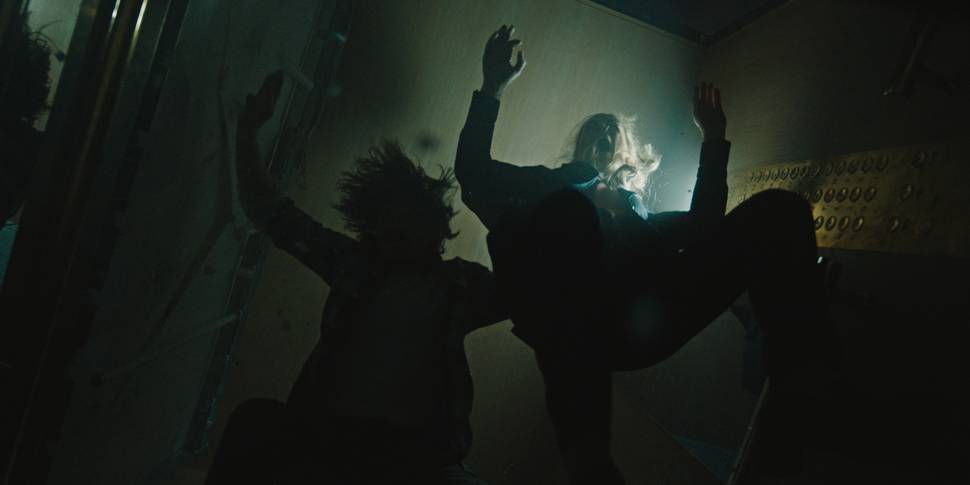
You must be wondering, “what about the earthquake?” And to be honest, it felt kind of underwhelming. After about 1 hour and 15 minutes of build up and character drama, we get about 2 minutes of CGI buildings collapsing, and some people being trapped and trying to escape. That being said, cinematographer John Christian Rosenlund and his CGI wizards make the most out of those 2 minutes, showing the beauty of Oslo before tearing it apart in full spectacle. For once, it was nice to see a city other than New York or San Francisco get destroyed.
The Quake didn’t reinvent the wheel in any way, but it did offer more human emotion than any disaster movie in years, while being a victory for people who cover their bedroom walls with graphics and newspaper clips connected with yarn. If this movie leads to a disaster film franchise exploring every natural disaster imaginable, with only one man capable of not warning everyone but saving a few, while destroying all of Norway, then I am all for it!