Reviews
‘MadS’ Review – A Single-Take Outbreak Horror Movie from the Director of 2006’s ‘Them’

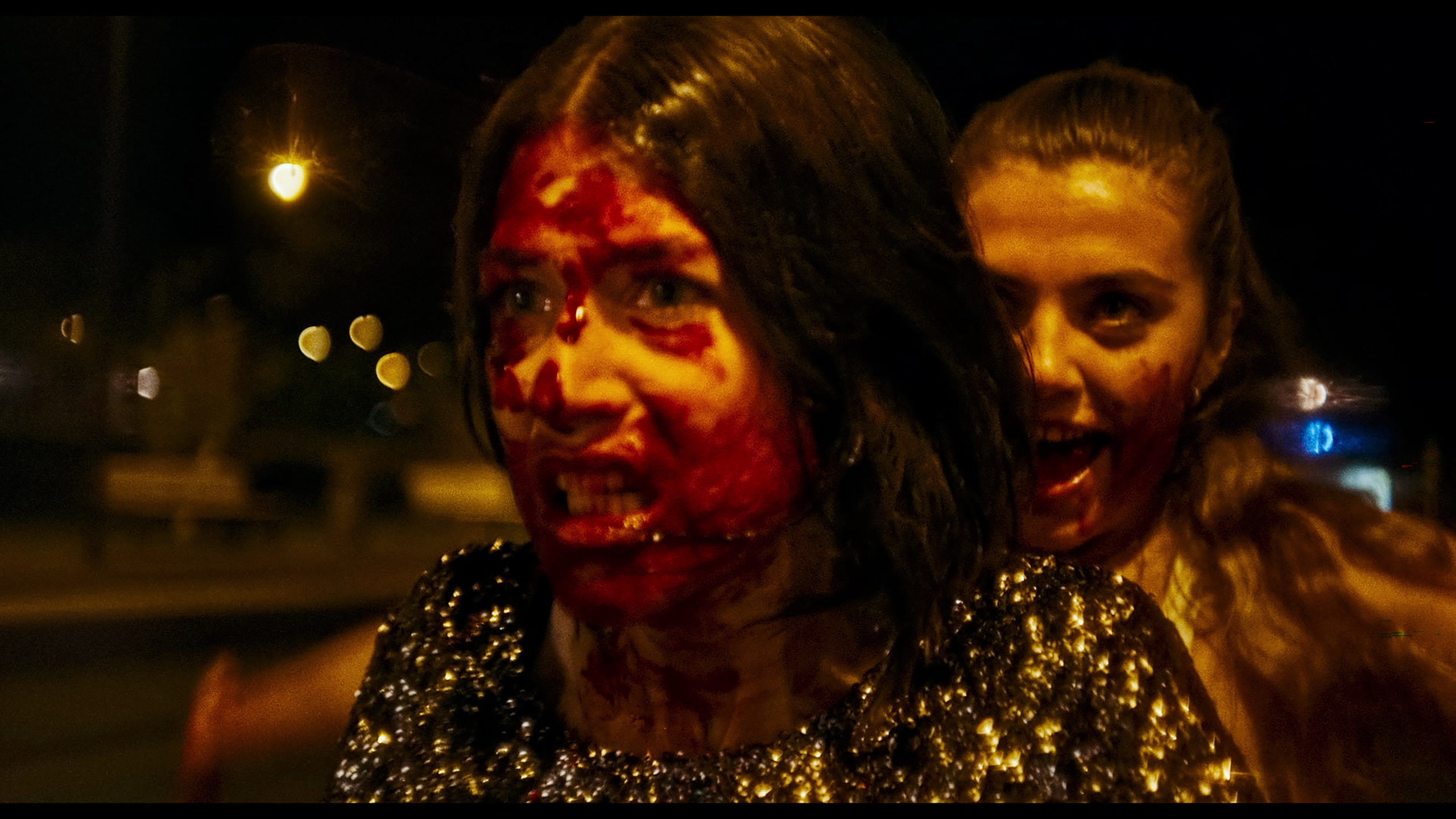
Director David Moreau knows a thing or two about helming intense horror set over the course of a single evening; the filmmaker previously unnerved with the 2006 home invasion horror Ils (Them). His latest, MadS, takes it a step further with an energetic horror movie presented as a single continuous take tracking a night that spirals out of control for young partyers. As stylish as that gimmick can be, the single-take format can’t distract from the familiar outbreak horror trappings.
The French horror film begins with Romain (Milton Riche), an affluent late teen/early 20-something snorting lines of a red-hued designer drug with his dealer in preparation for the night’s festivities with friends. Romain gets sloppy with his cigarette on his drug-hazed drive home, prompting him to inspect his dad’s Mustang for damage. A terrified, bandaged woman unexpectedly hops into the car while stopped, unable to speak but refusing to leave- the only form of communication is a tape recorder, indicating that she’s the subject of grotesque experimentation.
Romain attempts to take her to a hospital but instead heads home to hide the evidence when she stabs herself in the throat and gets blood everywhere- including his mouth. It’s the start of a transformative night of terror, even when Romain tries to carry on as if everything is normal.
Moreau locks the camera onto a single character at a time, using Romain as our entry point into the madness. The camera tracks Romain first through his shock at the strange woman’s behavior and sudden self-harm, then through his almost amusing attempts to hide her existence as girlfriend Anais (Laurie Pavy) drags him to a nearby house party. It’s here where MadS springs to life, letting the pulsing beat of the dance floor enhance the mysterious new affliction taking root.
MadS hits its peak when the baton is passed from Romain to Anais, with a spirited performance by Pavy stealing the entire film. She toggles between frantic survivor and unhinged lunatic, both riveting turns. It’s here where Moreau injects the most scares, too, with Pavy’s chilling performance working in tandem with clever camera and blocking trickery for maximum effect.
But it takes a while to get to Pavy’s knockout portion of the story, and once the baton is passed yet again to another key player, MadS‘ deceptive one-shot tracking has fewer places to hide narratively. The energy all but deflates after a particularly nerve-fraying chase sequence, with the third act succumbing to your conventional outbreak plot beats reminiscent of George A. Romero or 28 Days Later.
It’s here where the commitment to the single-take bit exposes narrative limitations. Everything must be carefully blocked in advance, and Moreau achieves this through simplicity. Light is meant to enhance the strength of the affected, and save for some style flourishes, it brings nothing to the mix. Outside of Pavy’s riveting section, MadS is prone to sparse stretches that only further highlight the familiarity of how this scenario will play out.
And it does ultimately play out how you’d expect, though Moreau and cinematographer Philip Lozano ensure the fluid camerawork and inspired closing moments make an impact. We’ve seen viral outbreak horror movies before, following the exact same path. But MadS‘ innovation is in the way it tells it. Limiting the perspective solely to a single person at a time, obscuring how the rest of the world is coping, adds to the suspense. It’s just too bad that too little time is spent with the film’s liveliest and most compelling character in Pavy’s Anais.
MadS screened at Fantastic Fest and debuts on Shudder on October 18, 2024.





Movies
‘Recluse’ Review – Harrowing Haunted House Horror With Lots Of Skeletons In Its Closet [Tribeca 2026]

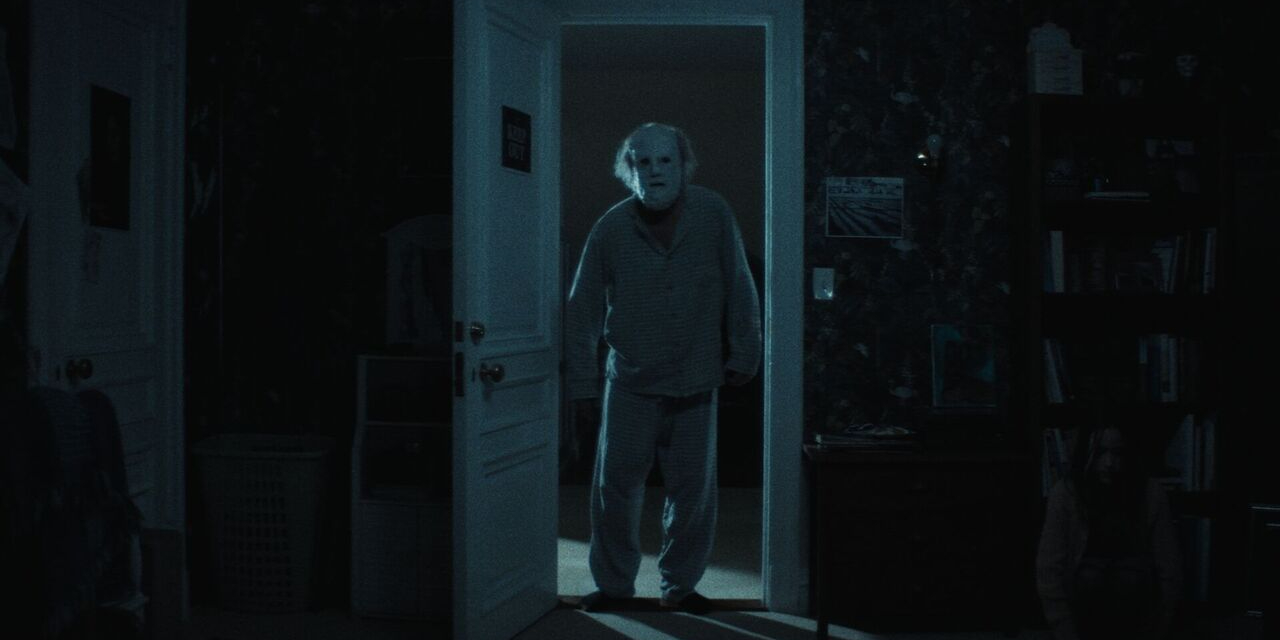
A haunted house story is tense, terrifying storytelling when it’s properly executed. There’s been a growing tendency in horror to blend together harrowing haunted house stories with traumatic homecomings. A family member’s illness or death triggers a return to something dark that was intentionally left behind. Recluse hits all the tropes that one expects to find in this type of horror film, yet it manages to push this story in a daring, disturbing new direction that uses sound as a superpower.
It’s a unique lens to experience a familiar story about family secrets, generational trauma, unresolved grief, and the importance of not just legacy, but preservation. It’s a hell of a directorial debut from Henry Chaisson that’s guaranteed to get under the audience’s skin as they’re dragged through this painful, toxic tale.
Recluse is a gothic haunted house story where an isolated audio engineer, Joan (Sasha Frolova), returns to her family’s estate to check in on her father after he suffers a terrible accident. Joan suddenly discovers something much more sinister that paints her family’s tragedies in a very different light. Chaisson’s debut functions as a fascinating companion piece to this year’s undertone, which does a lot of the same things.
These two films make for a fascinating case of parallel thinking that tackles comparable subject matter through a similar lens, albeit in a bigger, less claustrophobic story in Recluse’s case. In fact, it’s the perfect horror film for anyone who was let down by undertone and didn’t feel like it brought enough to the table. It’s a considerably more conventional horror film, but this isn’t meant to denigrate its high quality. Recluse may hit some familiar notes, but it’s a scary, well-crafted haunted house horror story that goes for the jugular.

A gripping mystery that involves the tragic, unresolved circumstances that surround Joan’s mother teases a chilling connection to the recent horrors that have afflicted her father. Joan desperately tries to put these pieces together and give her family some sense of grander peace before she’s pulled under and becomes another victim of this festering curse that’s systematically worked its way through the Wyatt family. By doing so, Recluse digs into some deeper commentary on collective trauma, a very literal look at the “sins of the father” adage, and how one selfish decision can ripple through generations and fracture off into different dilemmas. By the end, Recluse has brilliantly flipped the powerful concept of legacy on its head by illustrating the horrors and sense of entitlement that can be born out of this idea.
A legacy is just another name for a curse under the right context.
”Listen” is a simple but powerful command from Joan’s father that she briefly obsesses over. In a way, it becomes Recluse’s grander mission statement, whether it’s in response to Joan listening to the people in her life, the signals that her body and mind are telling her, or the world’s greater whims. It’s important to reconnect with these grounding pillars, especially when it feels like control is slipping away.
Recluse excels with how audio and soundscapes can create entire universes that are full of rich details that transport individuals to these environments. There’s also a level of objectivity when it comes to audio recordings and the evergreen permanence that they’re able to provide. Joan’s career as an audio engineer makes sense for someone who wants to cling to hard evidence and proof of existence. It provides great insight into Joan without ever getting lost in contrived exposition.
Joan’s entire life is built around audio engineering, and so it makes sense that Recluse features excellent sound design that really goes above and beyond with its production elements. All of the sound design is expertly handled and turns the film into something special. These auditory elements intuitively keep the audience on edge so that they’re more susceptible to the actual scares that eventually strike. The smallest sound effect gets turned into a crushing, cacophonous assault. It’s a really effective way to build terror. Writer/Director Chaisson also handles the film’s music, which achieves a sublime, unnerving dissonance that further heightens the free-floating anxiety.

The story at the center of Recluse is slightly generic in some respects, but the film’s visual language and tone make it feel distinctly memorable. It also doesn’t hurt that the home that Joan returns to is basically an eerie art studio that’s full of contorted paintings. Recluse never struggles to generate mounting dread and terror that pump through every scene. Powerful, thoughtful cinematography consistently reinforces the film’s themes. Joan is constantly reflected in different surfaces or viewed through mirrors. She’s also often confined to tight, constricting framing that all speaks to her refracted identity during this moment of loss and her attempts to regain agency and control by making sense of something that’s seemingly unexplainable.
Recluse is full of truly disturbing visuals that make it seem like Joan is lost in a dream that turns out to be an extended nightmare. It’s a surreal journey reminiscent of invasive psychological horror like Silent Hill, with a touch of Sinister and Hereditary thrown in for good measure. There are so many individual frames that could endlessly fuel urban legends and creepypastas.
It does a great job with how it presents Joan’s fragile state of mind, where chilling flashes of the past sneak up on her and unresolved trauma manifests into unsettling imagery. There are endless shots that are obscured in darkness, or shadow is creeping in from the corners of frames like a suffocating force of nature. It’s very rare that a scene is fully lit. It leads to a very lonely, isolating atmosphere that’s easy to get lost in.
Chaisson’s debut stands out from the many other high-minded haunted house horror films without succumbing to the same pretensions that often drag down these stories. It’s a grief-stricken character study that’s full of upsetting visuals that scratch at something visceral and raw. The horror elements connect, and the answers to its grander mystery provide an appropriate and believable sense of closure. Those who are looking for an atmospheric horror film that isn’t afraid to be different while still channeling something real will appreciate Recluse.
Recluse made its world premiere at Tribeca; release info TBD.

You must be logged in to post a comment.