Reviews
Netflix’s ‘Devil May Cry’ Hits a Bloody Bullseye With Hellbeasts, Brutal Battles & Buffoonery [Review]


Netflix’s ‘Devil May Cry’ is the latest video game adaptation to hit its mark through subversive storytelling and kinetic combat that’s full of demon-slaying bliss.
“Mythology exists to explain reality.”
“Edgy” is a buzzword that gets thrown around a lot to indicate that a certain genre or character strives to subvert expectations through an emphasis on exaggerated actions. “Edgy” is a double-edged sword, especially when it replaces genuine depth and character development, and most sophisticated audiences can pick up on this. It’s easy to complain about this variety of character, but they’re revelatory when they work. Devil May Cry’s Dante is an action hero who trades in excess and is perpetually cranked up to 11. It’s exactly why Dante is a video game icon who has been popular for nearly 25 years, even when the Devil May Cry franchise wasn’t.
It’s the perfect over-the-top title to receive an anime adaptation (the second one, in fact, following 2007’s Devil May Cry: The Animated Series) and Netflix’s Devil May Cry doesn’t disappoint. Yes, it’s endlessly edgy, but it turns this perpetual heightening into part of its chaotic structure. Devil May Cry is a worthy addition to Netflix’s growing roster of animated video game adaptations. It eviscerates demons that are far more intense than anything from Tomb Raider: The Legend of Lara Croft and engages in bewildering battles that put Castlevania to shame.
Right from the start, Devil May Cry feels authentic to the franchise’s ultra-violent sensibilities. Brains get blasted against walls and blood splatters across the screen within the series’ first minute. This is exactly how a Devil May Cry series needs to operate. Not only is this an exaggerated world that’s built upon clichés, but Dante is even more heightened and an extremely powerful character who has just as much in common with Bugs Bunny as he has with Guts from Berserk. This is a universe that thrives on lunacy and a perpetual raising of stakes that many other series just can’t handle.
Dante’s unrepentant and unhinged hijinks are guided by a broader story that involves an evil shadow corporation’s goal to to prevent a mass demon exodus – the Inferno – that would unravel society. It’s a simple enough story that facilitates constant combat and suspenseful showdowns between these factions before the cathartic final fight. There’s also a desire to exploit Dante’s otherworldly demon powers and turn him into the ultimate weapon or find a way to commodify his brute strength. Dante’s amulet from his mother is also an entertaining MacGuffin through the season. There’s definitely a lot in common between Devil May Cry and Castlevania, but it actually shares more in common with something like Spawn, Supernatural, or even Buffy the Vampire Slayer, where a dark underbelly of seemingly infinite monsters threatens to spill over into society.
Adi Shankar doesn’t hold back and takes full advantage of the Devil May Cry brand, what it represents, and what it can get away with. It’s as good of an introduction to this universe as any of the games. There were hints of this subversive storytelling in Shankar’s other video game-centric animated series, Captain Laserhawk: A Blood Dragon Remix, but Devil May Cry goes right for the jugular and it isn’t afraid to take these characters as far as possible. Unsurprisingly, Devil May Cry fits in very well with the rest of Netflix’s blood-soaked adult animated series, such as Blood of Zeus, Twilight of the Gods, Terminator Zero, or Castlevania. It has the potential to become the most popular of the lot.
Shankar is the right type of maniac who understands how to riff on material from Devil May Cry’s games without being too beholden to its source material. Shankar proves that he implicitly understands Devil May Cry’s DNA, which earns the series enough leeway to forge its own path and not just copy the games. In the end, the series becomes something that’s even more special that feels like an evolution of the video games, rather than merely an adaptation. This seems to be the smarter play and it turns Devil May Cry into a series that’s just as enjoyable and palatable to newcomers as it is for seasoned fans. This is a demon-slaughtering, chaos-creating apocalypse action parable that’s surprisingly accessible.
Devil May Cry likes to get lost in haunting iconography, but there’s still so much style and substance beneath its surface-level assessments. This is a horror-action series that waxes philosophical on society’s inherent prejudices and how it’s easy to vilify the “other,” all while a giant rabbit brandishes a glowing energy sword and slaughters a bunch of criminals, right before Limp Bizkit’s “Rollin'” kicks in as the opening theme song. Devil May Cry stands out from its supernatural action peers because it’s not just so absurdly over the top, but it’s aware of this and gleefully embraces the camp of it all. Castlevania’s Alucard and Trevor Belmont could be sassy during their slaughters, but that’s nothing in comparison to Dante. He’s an eccentric mix of farce and force of nature. It’s surely no coincidence that Dante is voiced by Johnny Yong Bosch, who is also responsible for the English voice of Trigun’s Vash the Stampede, a character who was very much the proto-Dante before Devil May Cry came around.

Dante is the perfect chaotic character to cleave through not only Devil May Cry’s monsters, but its self-serious attitude. This is a show that cues up Papa Roach’s “Last Resort” when Dante revs his motorcycle for action. On that note, there are some sublime needle drops across the board that capture Dante’s vibe between the use of Rage Against the Machine, Papa Roach, and Evanescence. These musical selections perfectly embody the grungy quality of Devil May Cry’s combat. It’s easy to see why Dante has become such a breakout character that’s acquired a life outside his own franchise. Devil May Cry properly establishes the legend of Dante and why he’s such a revered outlaw so that the audience gets fully invested in this mythic battle between good and evil.
Devil May Cry often trades in broad stereotypes, but it also finds the time to pull the curtain back a little bit and give depth to these stereotypes so that they become more nuanced, conflicted individuals who rise above their tropes. White Rabbit is also the ideal villain who is absolutely gonzo and allows for a lucid horror riff on Alice in Wonderland that’s simultaneously silly and scary. Devil May Cry is extremely hyperbolic and farfetched. However, it also allows itself time for characters to experience existential crises when they come to accept that the world is full of monsters and demons. It’s easy to get lost in the flashy demon slaying action, but the series makes space for characters to experience mental breaks while they reckon with this darker version of the world. Some of the best moments are these despondent ruminations on the sort of world that would allow such monstrosities to exist. The series examines a curious perspective where demons are presented as analogues to terrorists.
Devil May Cry showcases some fantastic monster designs that are unique, malleable, and unpredictable. Many of these creatures feel like they’re ripped straight from Go Nagai’s Devilman and it’s honestly not a bad idea to bring these worlds together. In addition to supernatural monsters, DARKCOM hires hordes of mercenaries and bounty hunters to exterminate Dante and retrieve his precious relic. It’s a direct obstacle that prioritizes constant action and a staggering body count. Lieutenant Arkham is an instantly-awesome demon hunter who is hard not to root for. Anders also fits in as her comic relief partner who is consistently in over his head when it comes to life-or-death combat.

To this point, Devil May Cry absolutely kills it when it comes to its visuals and action sequences. The battles match the same level of crazy that’s present in the video games so that the audience feels like they’re on a neverending roller coaster of carnage. There’s strong enough artistry behind the action and battle choreography that make this adaptation a sheer delight, simply on a visual level. It’s a series that’s a marvel to watch, even when the story is removed from the equation. There are some really creative art direction and stylistic choices that make the series a visual triumph in ways that go beyond the animation alone. The composition of these absurdist visuals and how they all come together feels like a punk rock burst of monster massacres. Devil May Cry is far from the best-looking animated series to be on Netflix, but it rises to the occasion and creates chaotic spectacles that do the franchise justice. It has the aesthetic and tone of a program from Fox’s ADHD, their short-lived Adult Swim competitor. This is high praise and a testament to how well Devil May Cry nails this style.
Devil May Cry juxtaposes this vicious bloodshed and carnage against gothic opulence and ornamented architecture. It’s a glib way to convey duality and the internal tug of war that consumes Dante, but it still effectively distills the atmosphere in powerful, economical ways. It’s a shotgun blast of creativity to the face that rivals Netflix’s other big animated video game adaptation — the aforementioned Castlevania. That being said, Devil May Cry finds its footing faster and more naturally. Castlevania’s first season feels like a practice round and prelude of greater things to come, while there’s a greater sense of satisfaction that’s reached by the end of Devil May Cry’s eight episodes. This first season is marvelously paced and it breezes through the story much faster than one would expect. There are elements that seem like they would sustain the entire season, only to be wrapped up within a few episodes. It’s more evidence of how Devil May Cry plays by its own rules and is confident to let vibes overpower logic.
Netflix’s Devil May Cry is another promising step forward when it comes to animated video game adaptations and the value in these pursuits. It’s doing the same thing as many other action-horror hybrids, yet it continues to slice its peers to pieces through calamity and confidence. Another series like this one arguably doesn’t need to exist, yet it’s extremely encouraging to see a project like this so passionately hit its mark. If Devil May Cry can be a success and – hopefully – run for several seasons then it’s increasingly possible for a BioShock or Fatal Frame series to come to life.
Jackpot.

The first season of ‘Devil May Cry’ is now available to stream on Netflix.





Movies
‘Recluse’ Review – Harrowing Haunted House Horror With Lots Of Skeletons In Its Closet [Tribeca 2026]
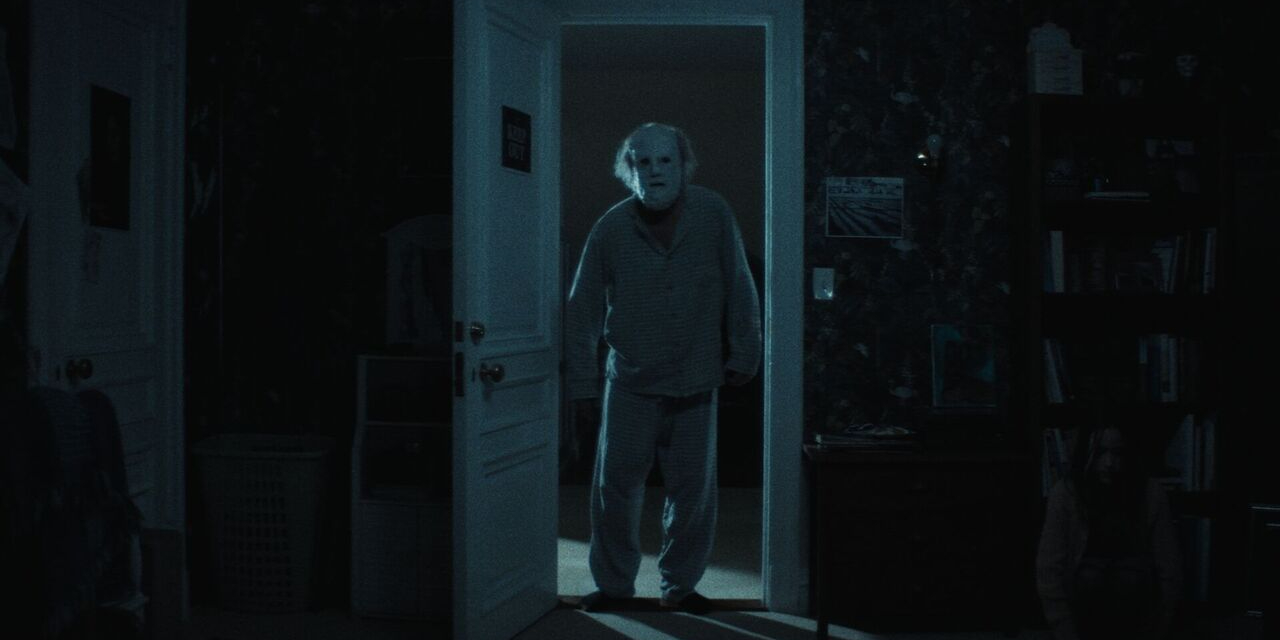
A haunted house story is tense, terrifying storytelling when it’s properly executed. There’s been a growing tendency in horror to blend together harrowing haunted house stories with traumatic homecomings. A family member’s illness or death triggers a return to something dark that was intentionally left behind. Recluse hits all the tropes that one expects to find in this type of horror film, yet it manages to push this story in a daring, disturbing new direction that uses sound as a superpower.
It’s a unique lens to experience a familiar story about family secrets, generational trauma, unresolved grief, and the importance of not just legacy, but preservation. It’s a hell of a directorial debut from Henry Chaisson that’s guaranteed to get under the audience’s skin as they’re dragged through this painful, toxic tale.
Recluse is a gothic haunted house story where an isolated audio engineer, Joan (Sasha Frolova), returns to her family’s estate to check in on her father after he suffers a terrible accident. Joan suddenly discovers something much more sinister that paints her family’s tragedies in a very different light. Chaisson’s debut functions as a fascinating companion piece to this year’s undertone, which does a lot of the same things.
These two films make for a fascinating case of parallel thinking that tackles comparable subject matter through a similar lens, albeit in a bigger, less claustrophobic story in Recluse’s case. In fact, it’s the perfect horror film for anyone who was let down by undertone and didn’t feel like it brought enough to the table. It’s a considerably more conventional horror film, but this isn’t meant to denigrate its high quality. Recluse may hit some familiar notes, but it’s a scary, well-crafted haunted house horror story that goes for the jugular.

A gripping mystery that involves the tragic, unresolved circumstances that surround Joan’s mother teases a chilling connection to the recent horrors that have afflicted her father. Joan desperately tries to put these pieces together and give her family some sense of grander peace before she’s pulled under and becomes another victim of this festering curse that’s systematically worked its way through the Wyatt family. By doing so, Recluse digs into some deeper commentary on collective trauma, a very literal look at the “sins of the father” adage, and how one selfish decision can ripple through generations and fracture off into different dilemmas. By the end, Recluse has brilliantly flipped the powerful concept of legacy on its head by illustrating the horrors and sense of entitlement that can be born out of this idea.
A legacy is just another name for a curse under the right context.
”Listen” is a simple but powerful command from Joan’s father that she briefly obsesses over. In a way, it becomes Recluse’s grander mission statement, whether it’s in response to Joan listening to the people in her life, the signals that her body and mind are telling her, or the world’s greater whims. It’s important to reconnect with these grounding pillars, especially when it feels like control is slipping away.
Recluse excels with how audio and soundscapes can create entire universes that are full of rich details that transport individuals to these environments. There’s also a level of objectivity when it comes to audio recordings and the evergreen permanence that they’re able to provide. Joan’s career as an audio engineer makes sense for someone who wants to cling to hard evidence and proof of existence. It provides great insight into Joan without ever getting lost in contrived exposition.
Joan’s entire life is built around audio engineering, and so it makes sense that Recluse features excellent sound design that really goes above and beyond with its production elements. All of the sound design is expertly handled and turns the film into something special. These auditory elements intuitively keep the audience on edge so that they’re more susceptible to the actual scares that eventually strike. The smallest sound effect gets turned into a crushing, cacophonous assault. It’s a really effective way to build terror. Writer/Director Chaisson also handles the film’s music, which achieves a sublime, unnerving dissonance that further heightens the free-floating anxiety.

The story at the center of Recluse is slightly generic in some respects, but the film’s visual language and tone make it feel distinctly memorable. It also doesn’t hurt that the home that Joan returns to is basically an eerie art studio that’s full of contorted paintings. Recluse never struggles to generate mounting dread and terror that pump through every scene. Powerful, thoughtful cinematography consistently reinforces the film’s themes. Joan is constantly reflected in different surfaces or viewed through mirrors. She’s also often confined to tight, constricting framing that all speaks to her refracted identity during this moment of loss and her attempts to regain agency and control by making sense of something that’s seemingly unexplainable.
Recluse is full of truly disturbing visuals that make it seem like Joan is lost in a dream that turns out to be an extended nightmare. It’s a surreal journey reminiscent of invasive psychological horror like Silent Hill, with a touch of Sinister and Hereditary thrown in for good measure. There are so many individual frames that could endlessly fuel urban legends and creepypastas.
It does a great job with how it presents Joan’s fragile state of mind, where chilling flashes of the past sneak up on her and unresolved trauma manifests into unsettling imagery. There are endless shots that are obscured in darkness, or shadow is creeping in from the corners of frames like a suffocating force of nature. It’s very rare that a scene is fully lit. It leads to a very lonely, isolating atmosphere that’s easy to get lost in.
Chaisson’s debut stands out from the many other high-minded haunted house horror films without succumbing to the same pretensions that often drag down these stories. It’s a grief-stricken character study that’s full of upsetting visuals that scratch at something visceral and raw. The horror elements connect, and the answers to its grander mystery provide an appropriate and believable sense of closure. Those who are looking for an atmospheric horror film that isn’t afraid to be different while still channeling something real will appreciate Recluse.
Recluse made its world premiere at Tribeca; release info TBD.
You must be logged in to post a comment.