Movies
The Thaw (V)
“In the end, The Thaw has a hard time getting past the been there, done that feeling that the film emits…”

What hath global warming wrought? The Prius? Leonardo DiCaprio? Recycled toilet paper that itches? Maybe a melting glacier in the Yukon unveils the carcass of a Mammoth whose body is infested with a prehistoric parasite that spells destruction for the whole human race. And to think, I was worried about saving the earth and my electric bill by switching to CFL bulbs.
Val Kilmer plays renowned scientist Dr. David Kruipen. Kruipen has discovered a mammoth body and is trying desperately to contain the outbreak lying under its flesh and, keep his estranged daughter Evelyn (Last House on the Left’s Martha MacIssac) from coming to the remote dig site. But thanks to Evelyn’s daddy issues, she’s headed up to the arctic with a batch of fresh-faced college kids to face pop’s head on. But, when they all arrive at the research station it begins to look like this lonesome desolate facility might just be their final resting place.
Sci-fi/Horror disguised as an eco-terrorism morality tale is really just a variation on The Thing. Only this time the thing(s) are tiny bugs that looks like a cross between a cockroach and an earwig. They get under your skin literally, lay a bunch of eggs, and pretty soon, you’re puking up your guts before they consume every inch of your flesh and leave you a slimy pile of bones and bloody guts.
In spite of all the grue, the film has a very clean, made-for-tv-movie look about it. The sets are sparse and the scenery is even more Spartan (they are in the middle of nowhere after all). It’s all pretty straightforward, with some passable characterizations from Kilmer (sorta phoning-in a standard pensive performance, we know he can do in his sleep) and MacIssac (who was much more effortlessly naturalistic in Last House on the Left). The rest of the gang are your standard issue cabin-in-the-woods horror movie types—the oversexed couple, the loaner and the stir-crazy lunatic who might just kill them all to save himself. It’s a set ’em up and knock ’em down thriller that offers only the most mildly distracting of modern twists to offset the textbook traumas that befall these kids.
In the end, The Thaw has a hard time getting past the been there, done that feeling that the film emits. It’s got lofty goals but like the characters suspect motivations in the script, they are problematic to pull off. Would it be worse if the film was preachy about its designs? Absolutely. But, by not making them terribly compelling it also fails to connect the view to the characters in the film. We don’t really feel a loss for MacIssac because it’s not really clear that she has lost anything in the film. Her big revelatory moment doesn’t carry the weight that it needs to make the narrative succeed. In fact, a lesser moment in the film where MacIssac is forced to strip in front of the others in order to prove she is not infected (a scene, I might add, that has been done many times before in other productions) is much more immediate and harrowing than anything in the films epic climax. Perhaps the filmmakers should have taken a cue from this scene and stripped their story down to a more raw and emotional place. Maybe then the audience could react with a little more human understanding and empathy to the tale they chose to tell.



The creators of internet icons that go on to inspire collaborative online fiction tend not to have much control over their creations once they leave the proverbial nest. From Victor Surge’s Slender Man to the anonymous user who first posted that Backrooms image with the accompanying text, once the internet hive mind takes over, artists are usually forced to sit back and watch as their stories take on a life of their own.
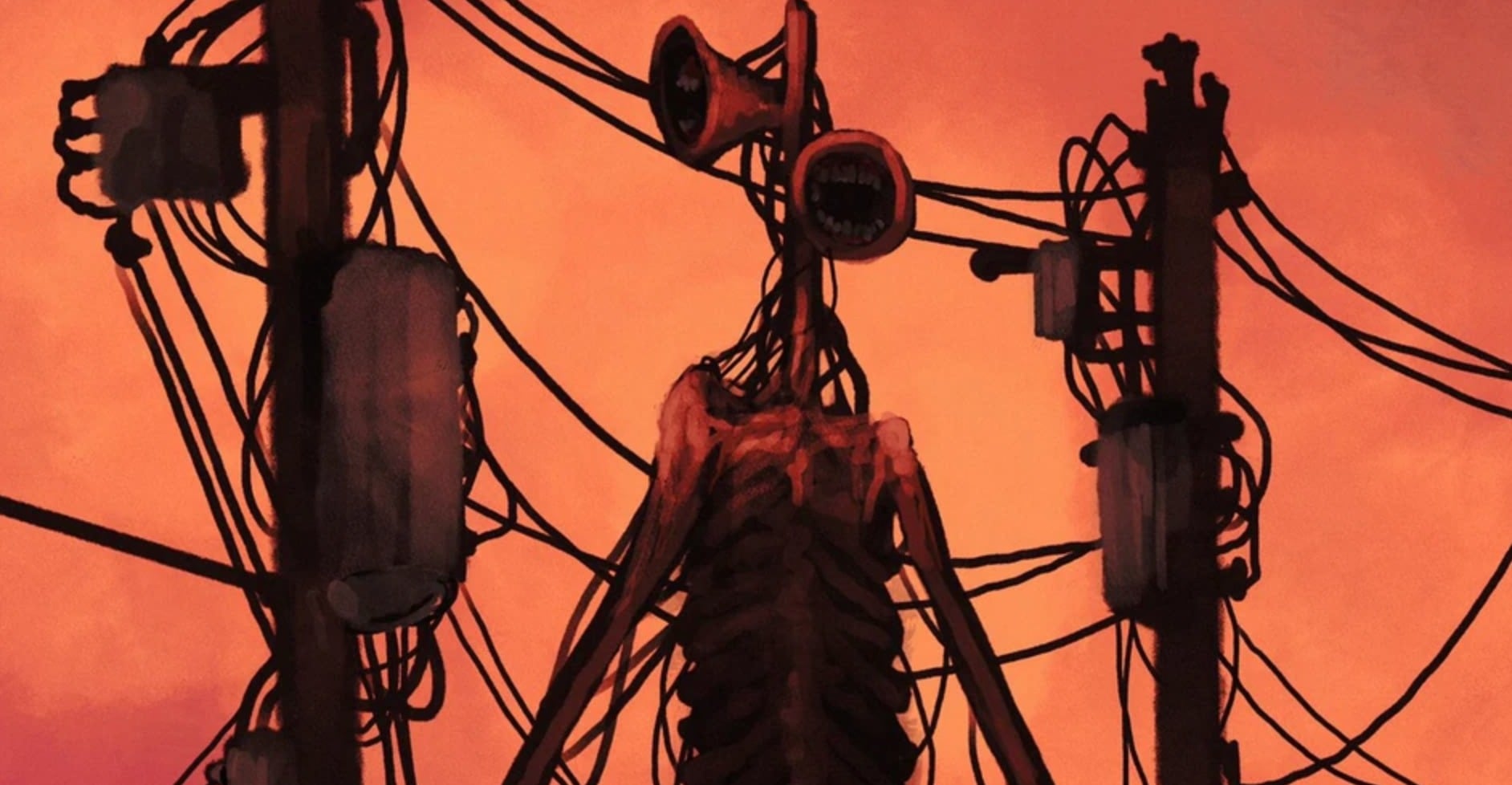
One exception to this rule is horror artist and creature designer Trevor Henderson. Back in 2018, Henderson introduced the world to an enigmatic figure named Siren Head and gave the online horror community their last great mascot. However, while the immensely popular creature made several unofficial (and sometimes unwanted) appearances in games, videos, and plenty of fan-art, Henderson miraculously managed to keep creative control over his monster even as it became a worldwide sensation.
With the success of Kane Parsons’ Backrooms film encouraging Hollywood to scour the internet for more online horror properties with an existing fanbase that might be enticed to show up to theaters, it makes sense that both Trevor and his digital offspring would be next in line for a big screen adaptation.
However, while Siren Head became a massive hit among the younger crowd who were in search of an online horror icon to call their own, much like my generation did with Slender Man, there are plenty of genre fans who aren’t familiar with the story behind this peculiar creature. That’s why I’d like to invite readers to join me as I dive into the origins of a beloved internet monster with more cinematic potential than you might initially believe.
Trevor Henderson’s Viral Horror Universe

To understand Siren Head, you first have to understand Trevor Henderson’s spooky body of work. A Canadian artist with a passion for coming up with online cryptids, Trevor went by the moniker of Slimyswampghost and would occasionally post photorealistic artwork on both Twitter and Tumblr as part of the internet tradition of sharing “cursed images” on social media. These found-footage-influenced digital paintings would often be accompanied by brief snippets of text contextualizing them within the artist’s larger universe of bizarre entities.
In August of 2018, Trevor posted several creepy creations that would end up becoming fan-favorites (from the 1930s-animation-inspired Creepy Cat to my personal favorite, Long Horse), though none of these could compete with the popularity of Siren Head. A tall, slender figure that camouflaged itself among telephone poles on isolated roadsides, this humanoid monster was inspired by the mysterious number stations phenomenon (real-life cryptic radio broadcasts that repeat coded numbers ad infinitum).
In his original post, Trevor included the following text alongside the picture:
She was on vacation with her husband, and they were scoping out graveyards on the way, as you do, when she saw it. Rising out of the old cemetery, big as an old (macabre) telephone pole. Was this some kind of bizarre art piece the authorities hadn’t gotten wise to yet? Even as she stepped out of the car, the megaphones on its “head” screeched to life. “NINE. EIGHTEEN. ONE. CHILD. SEVENTEEN. REMOVE. VILE“. A buzzing, doubled voice screamed random words at her. At this point, it jerked into motion, striding down the hill towards her.
And just like that, a new horror icon was born.
However, the creature didn’t become an overnight sensation like some other popular internet legends. It was only about six months later that Modus Interactive contacted Trevor asking for permission to include the monster in his contribution to that year’s Haunted PS1 Halloween Game Jam. The ensuing free-to-play title was a moderate hit, but Siren Head would lay dormant for a while after its release as Trevor continued to focus on other projects.
How Siren Head Went Viral

Then the COVID-19 pandemic hit, and short-form video content took over the internet. In April of 2020, Tiktokker and VFX artist Alex Howard created an eerily believable video of Siren Head towering over a cityscape, with this viral hit catapulting the character to mainstream recognition as genre fans raced to find out more about the enigmatic creature.
Suddenly, Siren Head was everywhere. Memes, toys, short film adaptations and even more videogame appearances led to the character occupying the same place that Slender Man had once held in popular culture. The only difference was that fans continued to refer to Henderson for more “official” lore about the monster, with the artist encouraging fan-made work but continuing to expand the mythology surrounding the character (which has since been revealed to be the physical manifestation of an Eldritch entity that preys on humankind).
Henderson even went so far as to discourage the character’s inclusion in the SCP Archives, as this would give Siren Head a Creative Commons license and allow bad actors to take advantage of the creature’s popularity. Not only that, but giving fans too much creative control over the monster would have inevitably lead to what some genre enthusiasts, such as Kane Parsons, refer to as “lore creep”: the overaccumulation of fictional information regarding a horror property that ultimately makes the story less scary.
While we’re past the peak of Siren Head’s online popularity, the character still holds a special place in genre fans’ hearts as an icon representing a particular moment in internet history. That’s why even horror titans like Junji Ito have expressed their love for the monster, and also why it makes sense for Hollywood to finally get off their butts and get around to adapting the creature to the big screen – especially since the monster’s success has led to Henderson developing a career in the horror genre (with several freaky projects ranging from Young Adult Horror novels to Bloody FM’s own Mayfair Watchers Society Podcast).
With the cinematic dream-team of both Zach Cregger and Brian Duffield joining forces in order to steer Trevor’s ideas towards box office gold, I think it’s safe to say that Siren Head is about to get the big-screen adaptation the fans deserve, and I know I’ll be there on opening night!

You must be logged in to post a comment.