Movies
Children of the Corn (Blu-ray)
“The label of cult classis is often assigned films long before they’ve had time to ferment in the culture of cinema. But, Children of the Corn by virtue of its tenacious longevity manages to embody that cult spirit in a great many ways. It’s hardly a brilliant film, but it’s also impossible to argue the fact that this little film that could has spawned a rabid following and a series of sequels that if nothing else show that name recognition alone is often all it takes to cement your place in pop culture history.”

When author Stephen King’s short story Children of the Corn first appeared in Penthouse magazine in March of 1977 the film world was less than 6 months into the beginning of King’s domination of the late 1970’s & 80’s box office. With the release of Carrie in 1976 followed up by Stanley Kubrick’s classic take on The Shining in 1980, King would become a cinematic force that in many ways equaled his domination of the literary world.
By the time Children of the Corn was adapted for motion pictures in late 1983, no fewer than seven features had already been released based on King’s work. What’s even more amazing is that by the end of 1984 that number would increase to nine films and represent the adaptation of all but two of King’s then written novels (The Dark Tower and The Stand). And even though all of these feature films had seen success, Children of the Corn was still something of a revelatory anomaly.
Children of the Corn tells the tale of married couple; Burt (Peter Horton) and Vicky (Linda Hamilton) who are traveling cross country to California when tragedy and mystery befalls them in rural Nebraska. Driving along the deserted back roads they hit a young child with their car. Upon further inspection they discover the child’s throat has been slashed and they speculate that he may have been pushed into the road. Wrapping the body in a blanket they head to the nearby town of Gatlin to notify authorities—only to discover that Gatlin is a ghost town with seemingly no life at all. But, Gatlin holds a secret. Three years earlier the children of Gatlin fell upon the adults and savagely murdered them all. The Children are led by Isaac a teenage preacher who claims to communicate with a god-like force known only as “He who walks behind the rows”.
An unequivocal box office success at the time of its release, Children of the Corn pulled in about 14 million dollars in receipts based on a budget of about 1.3 million dollars (nearly a third of which went directly into King’s pocket).
With operating capital of only about $800,000, the film was nothing if not a struggle to successfully realize. And that task fell to newly minted head of production for New World Pictures Donald P. Borchers. As Producer Borchers had two major hurdles to overcome. The first was adapting a Spartan 30-page short story into a 90-minute feature film. The second was to treat King’s somewhat inflammatory source material with kit gloves.
Borchers along with Writer George Goldsmith and Director Fritz Kiersch managed to solve the first problem by adding some minor backstory on the town of Gatlin, creating two pre-teen protagonists to help guide Burt and Vicky through the town and drastically increased the roles of Isaac and his henchman Malachi (a pair of characters that appear in less than 2 pages of the original story.). Additionally, they softened the relationship of Burt and Vicky considerably—in the original tale the couple are at wits end with one another and on the verge of divorce. They also wrap the plot up in a much more positive manner than in King’s bleak vision. And, though the film still deals with the thematic ideal that one should not blindly follow without question that which one should know is wrong, the film is not a direct attack on religion.
While Children of the Corn made more than its share of money at the Box Office and on home video—where it inspired an incredible 6 sequels—it’s hardly a great film. Clunky and full of arguments that any sane person would have never done the things that Burt and Vicky do in the film. These lapses in judgment often handicap the narrative and often leave viewers smacking their heads in disbelief.
For example, in the book, Burt and Vicky are forced to Gatlin because it’s the closest town for 70 miles. In the film the next nearest town is less than 20-minutes away—begging the question why in the world they would even stop in a town that they were specifically warned (by an unlucky gas station attendant) would be of no help to them. The film also would have us believe that Burt would essentially abandon Vicky to go exploring the ghost town knowing full well that something is very wrong here. The book is more organic in the capture of Vicky and much more effective in explaining what has been going on in the town since the parents were all killed–which in the movie is a mere 3-years ago but in the book it’s closer to 12-years. Of course the film has one other major drawback. Due to the budgetary restrictions the final special effects sequence is amateurish and laughingly cartoonish—and truly one of the worst I can recall from a movie made in the 1980’s.
Still, what makes the film work is the deft casting of not only Horton and Hamilton as the hero and heroine, but bringing in veteran actor R.G. Armstrong (El Dorado, Heaven Can Wait) and newcomer’s Robby Kiger (The Monster Squad) as Job, Courtney Gains (Can’t Buy Me Love) as Malachi and the amazing John Franklin as Issac. Franklin is the revelation of the film. In the original work Issac is only 9-years old. Franklin, who suffers from Growth Hormone Deficiency (GHD) and only stands 5 feet tall, is alluded to be older than nine in the film (they never specifically state his age) but the actor was 24 at the time the production was lensed. With that strange man/child performance Isaac delivers mouthfuls of pseudo-biblical-verse with an otherworldly aura of weirdness that completely contributes to the overall aesthetic of the film.
The film arrives for a 25th anniversary special edition on Blu-ray DVD courtsey of Anchor Bay entertainment where it retains all of the previous bonus features that were made available on the studio’s 2004 Divimax Edition DVD. Those features include audio commentary with director Fritz Kiersch, producer Terrence Kirby and actors John Franklin and Courtney Gains as well as the 36 minute documentary “Harvesting Horror: Children of the Corn“.
In addition to the maintaining the original special features, the Blu-ray offers over 40-minutes of new material including “Fast Film Facts” a pop-up trivia track that runs in conjunction with the film and three featurettes. “Welcome to Gatlin: The Sights & Sounds of Children of the Corn” (15:23) focuses of Production Designer Craig Stearns and Composer Jonathan Elias. In “It was The Eighties!” (14:09) star Linda Hamilton reflects on what was essentially her first major theatrical role. And finally, with “Stephen King on a Shoestring”, Producer Donald Borchers discussed the film’s hectic production schedule and the upcoming reincarnation for the SyFy network. The disc is rounded out with a Theatrical Trailer, Poster & Still Gallery, Original Storyboard Art and Original Title Sequence Art.
If you can measure a film’s success by nothing more than its lasting impact then Children of the Corn is an even greater success in 2009 than it was 25-year earlier. The label of cult classis is often assigned films long before they’ve had time to ferment in the culture of cinema. But, Children of the Corn by virtue of its tenacious longevity manages to embody that cult spirit in a great many ways. It’s hardly a brilliant film, but it’s also impossible to argue the fact that this little film that could has spawned a rabid following and a series of sequels that if nothing else show that name recognition alone is often all it takes to cement your place in pop culture history. “Hear that Outlander?”



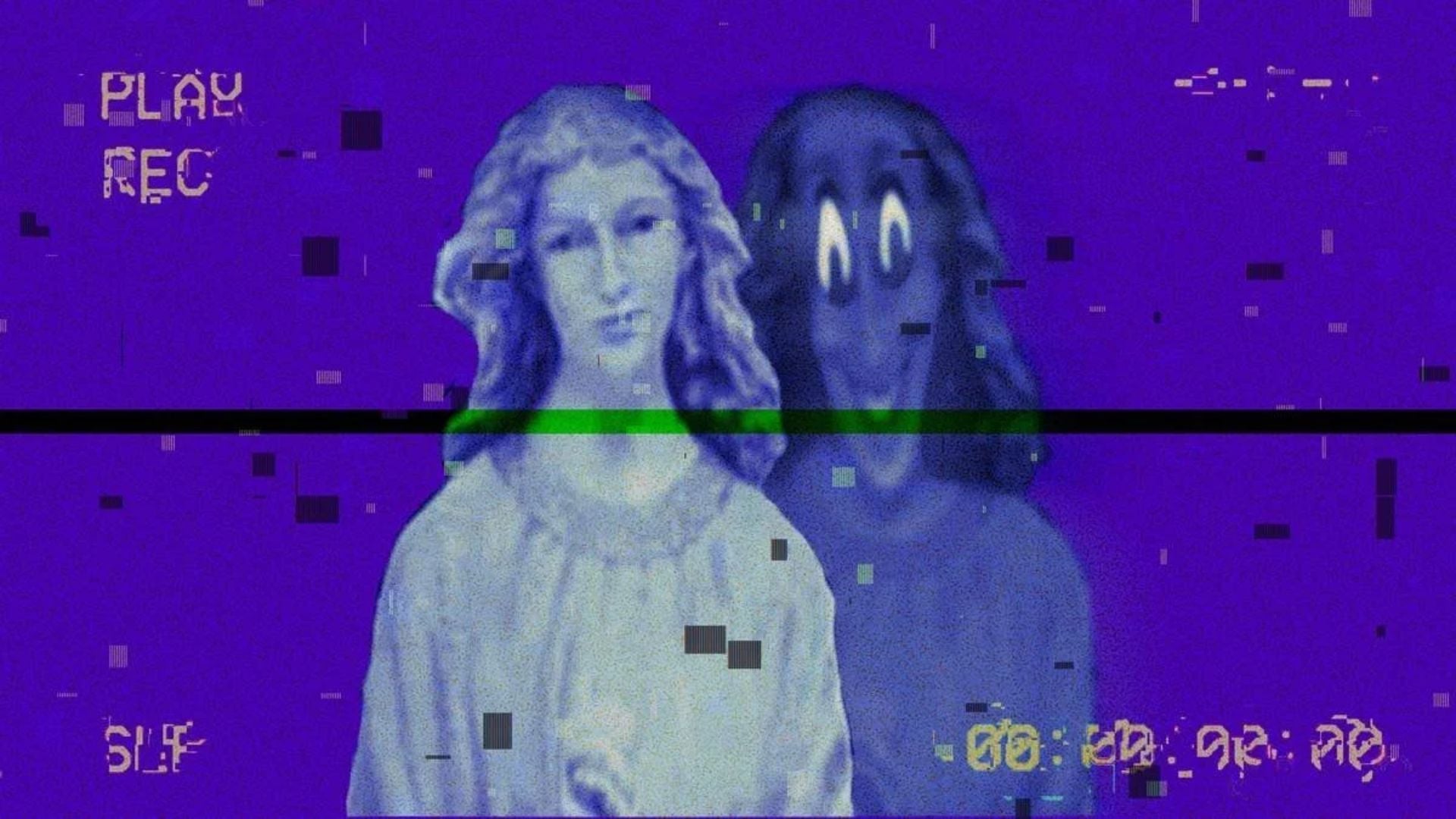
I first heard about The Mandela Catalogue through a couple of nephews who were obsessed with the ARG’s sinister mythology. It was only after watching Wendigoon’s in-depth analysis of the series that I realized just how deep this rabbit hole goes.
In fact, I’d already been exposed to the nightmarish visuals of Alex Kister’s YouTube creation for years at that point without even realizing that it was the origin of several viral “cursed images” and spooky memes that had leaked into the wider internet – with this viral element actually being a part of the Catalogue’s overarching narrative.
Flash-forward to 2026 and the unprecedented success of Kane Parsons’ Backrooms has led to Hollywood betting on horrific internet properties with existing fanbases, which means that Kister’s unique hybrid of both religious and analog horror is finally headed to the big screen with a script written by Kister himself alongside Tyler Clifton.
While this news shouldn’t be too surprising if you’ve been keeping up with the ongoing success of The Mandela Catalogue (both myself and Wendigoon having previously predicted that the series would inevitably make the jump to theaters one day), plenty of horror fans are likely confused as to why so many folks are excited for what appears to be a Hollywood adaptation of a series of creepy .jpeg images under a VHS filter.
With that in mind, today I’d like to invite fellow readers to accompany me as I explore the origins of Alex Kister’s viral hit and attempt to explain exactly why we should all be excited about the Mandela Catalogue adaptation!
From High School Writing Project to Internet Horror Phenomenon

The first seeds of The Mandela Catalogue were sown when Kister was still in high school and developed a writing project subverting religious tropes in a world where biblical history had been altered by demonic forces. A little while later, Kister came across an analog horror contest on Reddit and decided to adapt his ideas into a standalone video where he would edit a religious kids’ cartoon –The Beginner’s Bible: The Nativity, to be specific- into something far creepier. This is how the iconic Overthrone video was born, with this viral short film taking on a life of its own as fans demanded more eerie content from Kister.
Though the video was originally meant to be a one-and-done sort of affair, with Kister actually regretting some of its primitive visuals and considering the editing amateurish and “YouTube-Poop-like” when compared to his current standards, fan reaction and free time during the COVID-19 pandemic encouraged the (then) seventeen-year-old filmmaker to continue producing content set in this same world. The Mandela Catalogue name was inspired by the Mandela Effect conspiracy theory, as the series would slowly begin to explore the subtle horror of alternate histories.
Inspired by existential dread brought on by extended periods of quarantine as well as a personal crisis of faith, Kister continued to expand his alternate timeline where the rise of Christianity had been prevented by what was presumably the Devil disguised as the Archangel Gabriel. This alternate course of fictional events led to the existence of certain paranormal anomalies that had come to be accepted as “normal” by the 1990s, which is why most of the series’ supernatural horror is presented in such a matter-of-fact manner.
Most of this background information and religious lore is delivered by increasingly cryptic broadcasts and in-universe PSAs, as well as the occasional found footage video, that often have to be decoded by clever viewers. Of course, it’s the consistently disturbing imagery that made the series so popular – much of which was originally created by Kister on a smartphone!
The Alternates: Horror’s Most Unsettling Modern Monsters

The show’s early episodes mostly take place within the fictional Mandela County in Wisconsin and depict life in a world where demonic entities are capable of using media to enter our reality. This process usually involves scaring victims into killing themselves and then repurposing their bodies as horrific doppelgangers referred to as “Alternates”. This terrifying phenomenon has become so common that local police already have specialized procedures in place to deal with the issue, though this usually consists of simply ignoring calls for help so as to avoid spreading so-called “Metaphysical Awareness Disorder” any further.
Over time, Kister would expand this mythology and incorporate different kinds of Alternates into the mix, though the story never stopped deconstructing religious concepts. The series’ second volume exponentially increased both video quality and the overall narrative scope as we began to follow the lives of characters who had already grown up in this dystopian hellscape where the government is forced to prohibit religion, television, and even mirrors in the hopes of mitigating the damage done by the ongoing invasion of otherworldly entities.
The really interesting part comes into play when you realize exactly how the Alternates make use of scary media in order to spread their demonic influence, with the analog horror of it all being a diegetic part of the story and something of a memetic trap orchestrated by the false Gabriel.
I particularly appreciate how some characters begin to suspect that there’s something wrong with their version of reality and that things weren’t meant to play out this way, especially when Mark utters the haunting line “who have I been praying to all this time?” That’s why I think The Mandela Catalogue is an effective piece of religious horror even if you don’t subscribe to the Christian worldview, as the mere idea of a world where evil has already won is a universally terrifying concept in and of itself. Not only that, but the series’ uncanny analog imagery alone is already worth the price of admission, as you’ve likely already noticed by looking at the pictures accompanying this article.
Why The Feature Adaptation Could Be Horror’s Next Big Success

It’s actually been a whole year since Kister first announced that he had been working on a feature-length screenplay for a Mandela Catalogue movie since 2022, with his proposed story following an ensemble of high-school graduates who uncover a supernatural conspiracy after the mysterious disappearance of a fellow student. This premise sounds similar to narrative elements present in the series’ second volume, but I’m pretty sure that Kister is going to go the Kane Parsons route and make the movie more of a spin-off than a re-imagining of its source material.
While notable Hollywood producers like Aaron B. Koontz, Scott Stuber, and Steven Spielberg himself are backing the upcoming project, I feel like there’s no one better to adapt this deeply personal exploration of faith and the dark side of communication than the person who first came up with it. That’s why I can’t wait to see Kister’s work on the big screen, as I have a feeling that this young filmmaker is the next one on the list about to make cinematic history – especially since this is clearly a passion project that has been in the works for years at this point!
That being said, there’s always a chance that the film could end up unleashing a fresh wave of Alternate incursions, but I guess that’s just a risk we’ll have to take.
You must be logged in to post a comment.