News
Dante’s Inferno Review: I Went To Hell And It Was Fun

The creative minds behind arguably one of the best horror games of this console generation have decided to escape the black void of deep space in favor of a trip to Hell. Dante’s Inferno follows Dante on a mission to save his wife from the confines of Hell as described by Dante Alighieri in his epic poem, Inferno.

This is a man who truly defines being fearless as he traverses the nine rings of Hell filled with the multitudes of wicked creatures and diabolical traps. The game is loosely based off the fourteenth century epic poem, the inspirations from which can be seen everywhere. Is this a game worth going to Hell and back for? You’ll have to continue reading to find out; or you could just scroll down to the score but every time you do that an unbaptized baby gets decapitated, and you don’t want that, do you? Let me get something out there right away, because this bothered me a lot. The most surprising thing about this game is just how uninspired and repetitive the gameplay is. These are the guys that did Dead Space? Seriously? The minds behind Strategic Dismemberment and Zero-G Combat? Then why is the combat in this game so shallow and, more importantly, why is this game essentially arena after arena?
You get one main weapon that tends to all your up close and personal needs, a cross that’s great for giving you some breathing room, and an assortment of spells. That’s it. Other games in this genre load you up with a usually impressive arsenal of unique weaponry and gadgets but here you will use the same two weapons over the entire course of the game. I would’ve liked to see a little more variety in the actual gameplay, which boils down to puzzle, platforming, arena, and repeat while sprinkling in a few boss fights. That’s just not enough to sustain a player’s attention over the course of the game.
Now, that’s not to say the weapons you do have at your disposal aren’t satisfying, because they are, immensely. The scythe is quick and deadly and is surprisingly versatile whether you’re looking for light or strong attacks. The cross is a much better weapon than I thought it’d be, and came in handy when I needed some enemies to back the fuck off. Both of these can be upgraded by punishing or absolving enemies, which nets you good or bad points that upgrade either the scythe or the cross. You can also invest souls (the currency of the genre it seems as God of War, Darksiders, and now this game all use the same thing) into upgrading your maximum health and mana, unlocking new moves, and make you more of a complete badass. When those two weapons get boring, the spells you acquire as you progress through Hell are exceptionally fun to use.

To break up the puzzle, platforming, arena, boss fight formula they threw in some sections where you control a giant demon and wreak havoc on Hell and its minions. These moments were quite fun and I would’ve liked to see more of them. You could also say they broke up the repetition by giving you a very interesting world to explore, a world filled with hidden items and people to either punish or absolve. This definitely helps keep the game from getting annoyingly repetitious and it also gives you another reason to return to the game for another play through.
Now I’m going to say something that a large majority of you will disagree with me on. In my opinion (as is everything in this review), Dante’s Inferno has way too many boobs. It actually has an excess of boobage. I know by saying this I probably just helped EA sell a few more copies, but I’m pretty sure by the end of the game I had actually overdosed on breasts. I understand the need to break the mold and prove your game has balls (and the final boss fight with the well endowed Lucifer proves this) but playing through the game felt like I was in some 13 year-old boy’s wet dream.
In case you weren’t aware, Dante’s Inferno looks great. Hell is both frightening and wondrous to behold as I observed walls of corpses, giant statues of heads vomiting rivers of even more corpses, corpses on pikes, flaming corpses falling from the sky, and most of that can be found in the first level. If this game does anything right it would be boobs and corpses (oh, look at that, I just sold a few more copies).

The cinematics in particular, are stunning, and look like they came from a top tier animation studio. At first I wasn’t sure if the cartoony animation style (‘cartoony’ probably isn’t the best way to describe them but I can’t think of a better word) worked with the gruesome personality of the game. But by the time I had finished I didn’t care whether they worked with the game’s look and feel because they’re just so well done and fun to watch that it really doesn’t matter.
Dante manages to separate itself from other games in its genre an admittedly smaller but no less welcome way of handing out achievements fairly regularly. You can play through similar games like Bayonetta and Devil May Cry twice and still not have even half of the achievements, so it was nice to be rewarded more often.
While you’re playing this game you will undoubtedly notice that Dante’s Inferno suffers from a ton of poor design decisions that most games this generation just shouldn’t have. I don’t think, in 2010, that I should still have to talk about the inability to skip cinematics, because that’s Game Design 101. If you die after a cut scene you have to watch it over again, if you want to play through the game another time you have to watch all of them again, it’s ridiculous.

There’s also the problem that I completed the game, on Normal, in under six hours, placing it below the average game’s single player campaign length and well below the expected length for a single player only game (until the St. Lucia DLC comes out).
The next two problems go hand in hand: the static camera and tons of instant deaths as one tends to fuel the other. There are a myriad ways to die quickly and, most of the time, unexpectedly. I don’t think an actual enemy ever killed me; instead all my deaths can be tallied up to environmental traps and the damn frustrating camera. One of this game’s strongest features is its world, a world that’s been beautifully and lovingly crafted by some seriously tormented individuals. Unfortunately, I can’t see any of it because I have absolutely no control over the camera. This begs the question: why would you spend so much time in creating such an amazing world and not let me look around and enjoy it?
Visceral Games has once again proved themselves the masters of all things grotesque and disturbing but the final product is a disappointment when compared to their past work. The world they’ve created it truly frightening and every minute of the game will introduce to you more unsettling insights into the creative minds behind the game. It’s obvious Visceral Games played it a little safer after the lower than expected sales of Dead Space, otherwise we probably would’ve seen more innovation in this game. My problems with Dante’s Inferno are mostly made up of poor design decisions because everything else is very well done, so if you’re looking for a game that is sometimes unforgiving, always interesting, and more than a little disturbing, Dante’s Inferno is all that and more.
Final Score: 4/5 Skulls




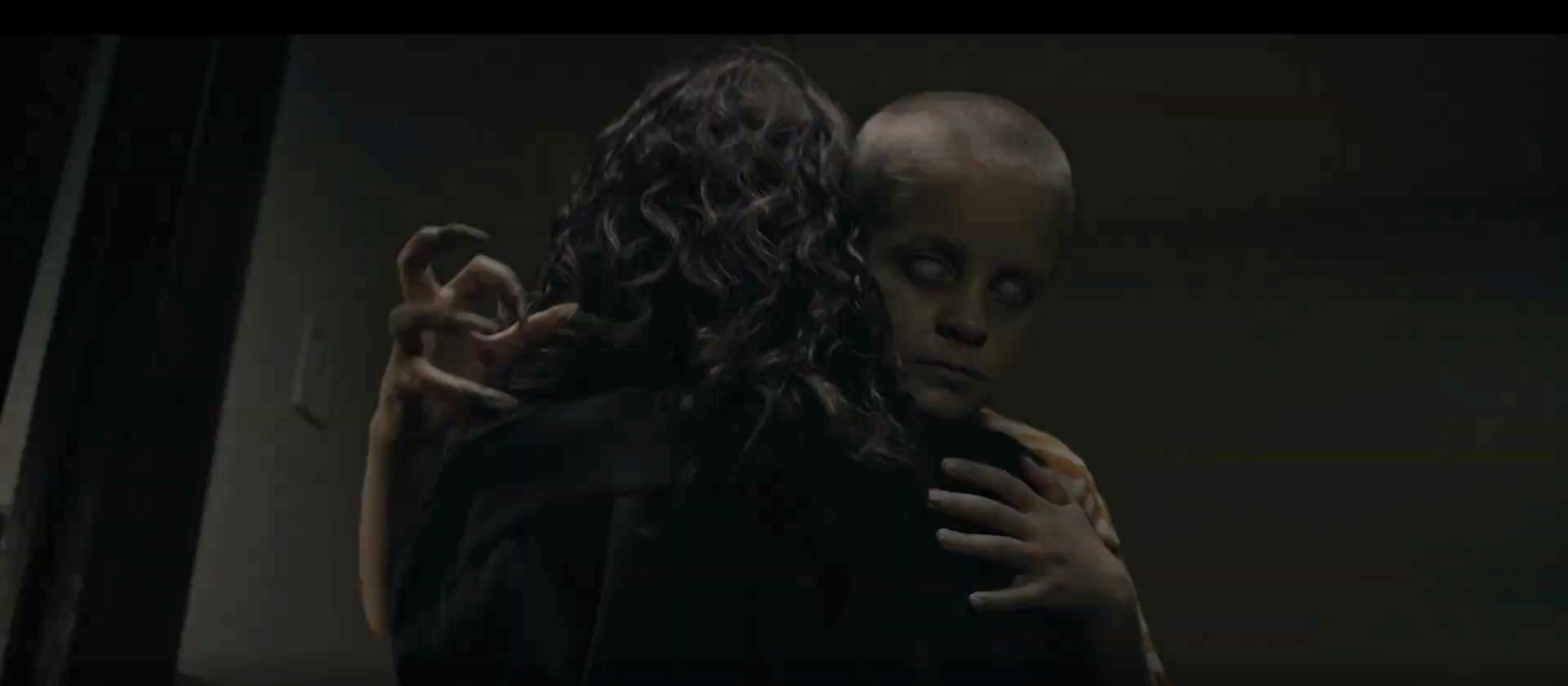
Let’s start with the good news. Lockbox looks far better than its misleading marketing materials suggest, a supernatural horror movie so darkly lit and color graded that you’ll have to squint your way through jump scares. It’s also anchored by reliable genre performers. That’s also about where the good news ends with this rote adaptation of Knifepoint Horror Podcast story “Winthrop.”
The empathetic Carla Gugino gives her all as Ellen, a saint of a woman with boundless patience who takes on life’s hard luck with a kind smile. After giving up her career as a fashion designer to become caretaker for a dying mother, she’s then forced to reinvent herself once more when her caretaker role ends. That catches us up to the events of Lockbox, where Ellen is asked to take in a cousin she hasn’t seen in quite some time who’s dealing with severe PTSD.
Just as Ellen finally establishes a real connection with Winthrop (Lou Taylor Pucci), it’s interrupted by the arrival of peculiar neighbor Vahna (Katharine Isabelle), who spells clear trouble. When Vahna shows up dead, it sets in motion a supernatural battle of possession.

Image Credit: Aura entertainment
Director Daniel Stamm (The Last Exorcism, Prey for the Devil) and screenwriter Justin Yoffe approach Lockbox in the broadest of brushstrokes, dooming it from the start with clunky storytelling and woefully underdeveloped themes of heady topics like PTSD. Winthrop is a character that comes loaded with emotional baggage and trauma that’s piled on throughout his tragic life, but much like its title, his interiority and history are treated like a tightly guarded secret meant to prolong the supernatural mystery.
The problem here, though, is that Lockbox is too sparse to sustain mystery at all, and it instead robs Winthrop of characterization. It winds up trapping the talented Pucci without anywhere to go, toggling between wounded animal and mentally disoriented.
From there, Lockbox bounds through plot developments without any sense of stakes or purpose, peppered by a smattering of haphazard paint-by-numbers jump scares. The only unwavering constant is Ellen’s resolute faith, and Stamm seems to leave it entirely to Gugino to guide confused audiences through this inconsequential story right up until its supernatural climax.

Image Credit: Aura entertainment
To give more credit, Lockbox at least injects an unconventional exorcism here; just don’t expect much in the way of explanation. When the film finally reveals the meaning behind its title, it dangles a fascinating carrot it has zero interest in delivering. More than a severe lack of fleshing out its characters beyond plot drivers or devices, this faith-based flick also seems terrified to offer any worldbuilding whatsoever.
Yoffe’s script stretches the short story beyond its means instead of fleshing it out, and Stamm fills out the gaps with cheap CGI scares and overwrought performances; Isabelle’s Vahna is beyond cartoonish in her villainy. It’s also pretty nonsensical, treating only Ellen’s faith with the utmost sincerity and largely squandering its typically reliable talent. So much so that the final imagery, pure sunkissed saccharine sentimentality, leaves you with the feeling that this horror movie might be better suited as an entry in Chicken Soup for the Soul.
Lockbox releases in select theaters on July 3, 2026.

You must be logged in to post a comment.