News
Splinter Cell: Conviction Review: Fun In The Shade With A Friend

Stealth gaming has never been my strong suit; I find my longtime strategy to run in guns blazing ineffective in games like these. It’s because of this weakness that I’ve never laid a hand on the Splinter Cell franchise; I like causing chaos and having everybody know that I am the one behind the destruction. This might be why I like sandbox games so much, because I’m free to let loose my inner child for hours on end.

However, that all changed when a game called Assassin’s Creed came along, another of Ubisoft’s titles, mixing the best elements of stealth and sandbox gameplay. I like to consider my adventures with Altair a stepping-stone into the dark and cautious world of stealth gaming. Now, I’m an addict, some might even go so far as to call me a Stealth Connoisseur, but I have yet to hear anyone bestow upon me such a title. I’m happy to say that Conviction was more than willing to go easy on me, holding my hand as it taught me through kind words how to grab and toss people out of windows, disrupt the lighting with EMP grenades, and perform some rather kick-ass execution moves. Maybe this is because I’m not terribly adept at certain shooter games, but I love it when I can execute a few well-timed button presses and have the game I’m playing make me look like a complete badass. Just walk up to someone in Conviction, press B, and you’re rewarded with a quick, silent, and immensely satisfying takedown. You know a game is good when you have people who either aren’t terribly fond of video games or simply ignorant towards their existence walk by and say “Wow”, and you know the game is great when said individual sits down to watch you play.
For the most part, Conviction’s story will be familiar to anyone who has experience with a Tom Clancy game. There’s the customary government conspiracy theory and familiar looming bomb threat almost expected from games of this type, but thrown into the mix is the very effective scenario of a father on a mission to find his daughter, whom he had long thought dead, as well as some very effective plot twists.

A surprising thing about this game, despite the fact that I had never played a Splinter Cell game before so I didn’t really know what to expect, was the amazing music. Now, I don’t know if the previous games had scores as memorable as Conviction’s, but it felt like Akira Yamaoka’s work (on the Silent Hill franchise) but infused with a powerful, action movie makeover. Even those who don’t usually pay attention to the music in the games they play will notice the score in this game.
Fisher’s newest foray into the world of stealth and shadows is great, but it’s not all sunshine and rainbows. I’ll admit the issues I have with the game are minor, but my problem is they shouldn’t be an issue in the first place. Let’s take the Sticky Camera gadget you get later on in the game. Now, I’m pretty sure I understand what it does and how to use it but for the life of me I could not get the ‘distraction’ feature to get anyone’s attention. I would attach it to the wall of a room crawling with baddies, press the distraction button, and apparently I was the only person that hears the jolly jingles that emitted from the device. It’s such a cool idea, I would love to lure m- unsuspecting foes to my not-so cleverly disguised sticky cam, only to detonate it so I could watch their rag doll corpse flail across the room. Unfortunately, I was never able to execute this correctly.
Another tiny, yet equally frustrating problem I had with the game was the plethora of times I found myself in an impossible to escape Choke Hold. Sometimes, my partner would save me from said predicament only to get grabbed by another guy a few seconds later. I like having to rely on my friend to survive, and I love being able to punch the guy holding me to provide my partner with a better shot, but if my enemies are going to be so proficient in choking me I would’ve liked to have another way to escape from the hold. Either that or they shouldn’t grab you every five seconds. Yeah, that works too.

If you’re like me than you’re pretty cheap. This isn’t necessarily a bad thing; it just means you like to have a reason to play your games after you’ve beaten the campaign. Luckily, Conviction has plenty of things to keep you busy long after you beat the main story. There’s the campaign, which is about as long as we’ve come to expect from games this generation, meaning you can finish it up in about eight hours. After that you have the online or split-screen multiplayer that includes a separate cooperative campaign where you work through areas with a friend, and the Deniable Ops modes that includes Hunter, Infiltration, Last-Stand, and Face-Off. These modes have you playing with or against your friend trying to kill as many (or all) of the enemies as you can, or defending an object in the map against waves of increasingly stronger foes.
In the end, Conviction has enough to keep longtime fans of the series happy while at the same time being different enough to keep things fresh and bring in new players. If you like stealth games, action shooters, or are simply looking for an incredibly fun (and challenging) multiplayer experience, Splinter Cell: Conviction has it all.
Final Score





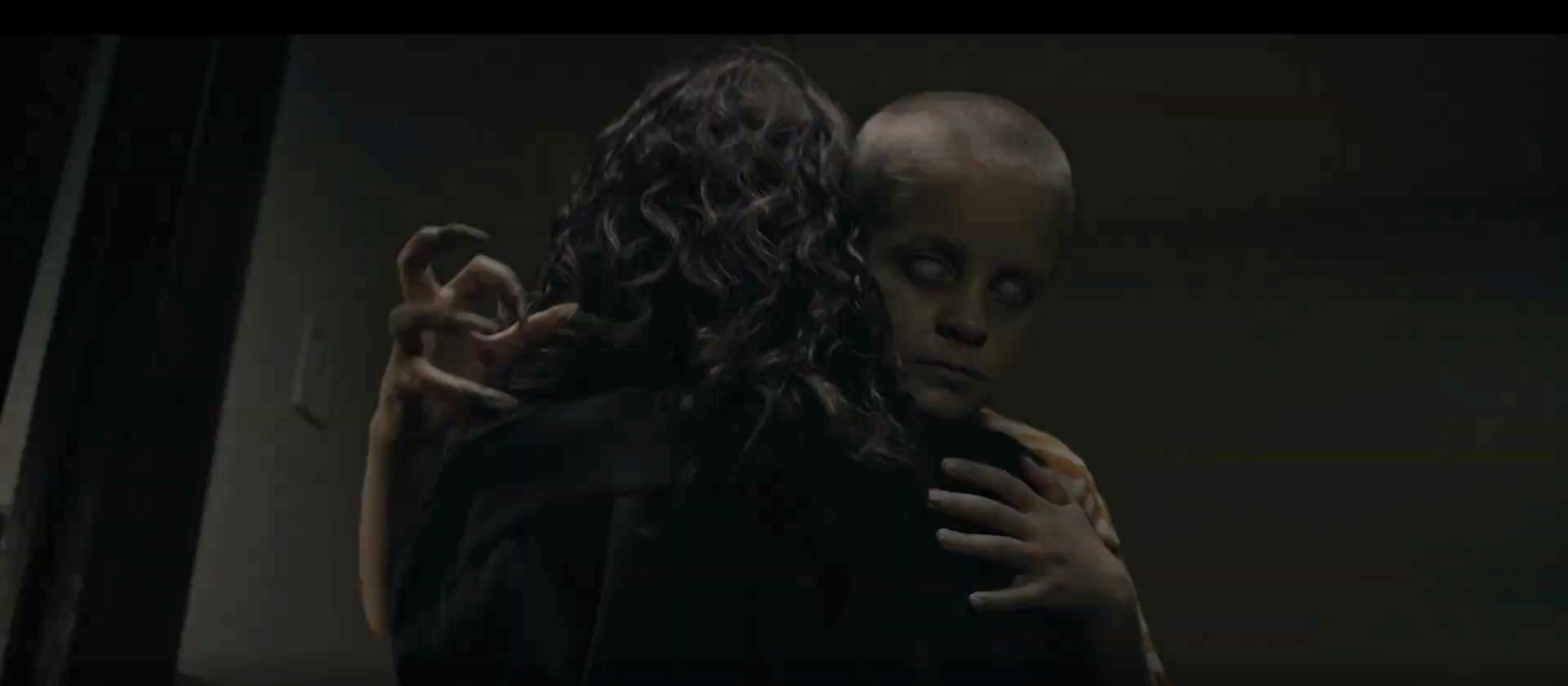
Let’s start with the good news. Lockbox looks far better than its misleading marketing materials suggest, a supernatural horror movie so darkly lit and color graded that you’ll have to squint your way through jump scares. It’s also anchored by reliable genre performers. That’s also about where the good news ends with this rote adaptation of Knifepoint Horror Podcast story “Winthrop.”
The empathetic Carla Gugino gives her all as Ellen, a saint of a woman with boundless patience who takes on life’s hard luck with a kind smile. After giving up her career as a fashion designer to become caretaker for a dying mother, she’s then forced to reinvent herself once more when her caretaker role ends. That catches us up to the events of Lockbox, where Ellen is asked to take in a cousin she hasn’t seen in quite some time who’s dealing with severe PTSD.
Just as Ellen finally establishes a real connection with Winthrop (Lou Taylor Pucci), it’s interrupted by the arrival of peculiar neighbor Vahna (Katharine Isabelle), who spells clear trouble. When Vahna shows up dead, it sets in motion a supernatural battle of possession.

Image Credit: Aura entertainment
Director Daniel Stamm (The Last Exorcism, Prey for the Devil) and screenwriter Justin Yoffe approach Lockbox in the broadest of brushstrokes, dooming it from the start with clunky storytelling and woefully underdeveloped themes of heady topics like PTSD. Winthrop is a character that comes loaded with emotional baggage and trauma that’s piled on throughout his tragic life, but much like its title, his interiority and history are treated like a tightly guarded secret meant to prolong the supernatural mystery.
The problem here, though, is that Lockbox is too sparse to sustain mystery at all, and it instead robs Winthrop of characterization. It winds up trapping the talented Pucci without anywhere to go, toggling between wounded animal and mentally disoriented.
From there, Lockbox bounds through plot developments without any sense of stakes or purpose, peppered by a smattering of haphazard paint-by-numbers jump scares. The only unwavering constant is Ellen’s resolute faith, and Stamm seems to leave it entirely to Gugino to guide confused audiences through this inconsequential story right up until its supernatural climax.

Image Credit: Aura entertainment
To give more credit, Lockbox at least injects an unconventional exorcism here; just don’t expect much in the way of explanation. When the film finally reveals the meaning behind its title, it dangles a fascinating carrot it has zero interest in delivering. More than a severe lack of fleshing out its characters beyond plot drivers or devices, this faith-based flick also seems terrified to offer any worldbuilding whatsoever.
Yoffe’s script stretches the short story beyond its means instead of fleshing it out, and Stamm fills out the gaps with cheap CGI scares and overwrought performances; Isabelle’s Vahna is beyond cartoonish in her villainy. It’s also pretty nonsensical, treating only Ellen’s faith with the utmost sincerity and largely squandering its typically reliable talent. So much so that the final imagery, pure sunkissed saccharine sentimentality, leaves you with the feeling that this horror movie might be better suited as an entry in Chicken Soup for the Soul.
Lockbox releases in select theaters on July 3, 2026.

You must be logged in to post a comment.