Movies
Year in Review: BC’s Worst Horror Films of 2008!

Leading up until the New Year we’ll be unloading the best and worst lists of 2008 from all of Bloody-Disgusting’s official reviewers. Beyond the break you can check out BC’s Worst Horror Films of 2008, with lists from David Harley, Ryan Daley and myself coming soon. Click here to keep up with the full year in review and also feel free to post your thoughts below, or at our forum’s Top 10 of 2008 forum thread.

Mr. Disgusting’s Best & Worst / Ryan Daley / BC’s Best & Worst / David Harley’s Best & Worst / Tim Anderson
Also check out this year’s Best & Worst Posters
2008 was a rollercoaster year for horror fans. The only bona fide hit was The Strangers, and it’s no coincidence that it was one of the few films of the year that was not a remake, a sequel, or based on anything else that came before (those of you who say it is a remake of Them – shut up. I don’t recall Liv Tyler running into the goddamn sewer for no reason). And two of the best horror films in ages came along, neither from the US. We saw films get buried by their own studios (Midnight Meat Train and Repo from Lionsgate; Trick R Treat by Warner Bros), while pointless nonsense like Shutter and One Missed Call get treated with 2000+ screen releases. And the remakes! Remakes of movies no one has been able to see yet (Quarantine), remakes with new endings that render the movie pointless (The Eye), and remakes that got so reworked that the original’s creators no longer needed to be given credit (Prom Night, April Fool’s Day).
There was also a movie about a Finnish metal band dressed up like monsters and running around a hospital.
Granted, it would have been hard to live up to 2007, which saw a record number of high quality films (The Mist, Hatchet, Grindhouse…), but even so, 2008 ranks as a disappointment overall, because so many of the films listed below (good and bad) weren’t even given a wide release, which just put everyone in a bummed mood. Let’s hope My Bloody Valentine and Friday the 13th manage to bring audiences back to theaters so more distributors will take a chance on our beloved genre.
NOTE – I only count films that were made available to US audiences in 2008 (not counting film festival screenings, which is why Trick R Treat, as great as it is, does not make the list). All of the following top 10/bottom 10 movies are available on DVD and/or are playing in general (if not wide) release in theaters.
BC’s Worst of 2008
Click here to read BC’s Best of 2008 list.

Killer… fucking… trees.
You know, if they had been upfront with this idea, and if Shyamalan wasn’t always so goddamn serious about everything (does anyone in his movies ever even crack a joke?), The Happening could have been high concept, ridiculous fun. Instead we get a somber, moody movie depicting how the world might react if our pine trees wage war. Add in a career worst turn by Mark Wahlberg, and Zooey Deschanel playing her 8 millionth sad-sack introvert, and you end up with a movie that may have killed the value of Shyamalan’s name once and for all.

I would think that combining The Craft with a Last House on the Left type movie would be a lot of fun. So why does director Zach Passero and writer Chris Sivertson seemingly go out of their way to prove me wrong?
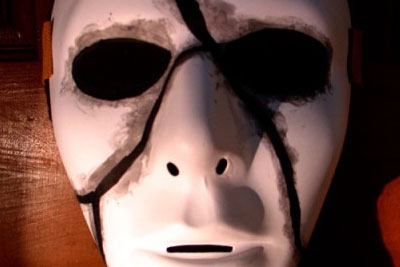
I hate to knock on an independent movie, but writer/director/star Seth Landau talks about himself as if he is the next Spielberg, so I guess it’s fair to judge it same as I would one of his films. It’s bad enough that Bryan Loves You is incoherent, poorly acted, and is one of far too many recent genre films to have a bunch of horror vets in single scene turns, but Landau can’t even stick to his own concept. The whole idea is that it’s the found footage of a guy who was investigating a cult, but after about 30 minutes the entire movie is simply presented via security camera angles. Which would be fine, if not for the fact that A. every room apparently has like 6 cameras in the ceiling (plus others that seem to be placed on the table or whatever the characters are sitting around), and B. the cult group says that filming is a sin and is not allowed. Then why do they have cameras covering every nook and cranny in and around their compound?

Despite the fact that not a single J-horror remake has been successful since 2004, that didn’t stop the big studios from releasing this trio of pointless retreads almost back to back in the early part of the year. Looking back, I can’t tell any of them apart beyond their cast members, all of whom (even Jessica Alba) deserve better. One Missed Call didn’t change anything from the original, which is a problem because it stunk to begin with, and The Eye changed the ending, which was the only saving grace of the Pang brothers version. Shutter was probably the best of the trio, simply because it surprisingly kept the protagonist’s rather grim back-story intact.

A Lost Boys 2 has been in some stage of development since the 90s, and THIS is the best they could come up with? A friend of mine put it best: “Surfing vampires? A priest goes to the ocean and makes the sign of the cross. BAM, movie’s over.” When the most fan-pleasing scene occurs during the end credits, you know you’re in trouble. P.S. There aren’t any fucking Dunkin Donuts in CA!

Ripping off countless of other slasher movies isn’t the worst thing about this Russian import (released by Ghost House); being so dull and anticlimactic is. None of the Ghost House Underground movies were exactly amazing, but Trackman singlehandedly sunk the set down a notch.

The first Rest Stop was terrible. Rest Stop 2 wasn’t as good.

How can David Ellis, who made the junky but fun Snakes on a Plane and Cellular (not to mention the borderline brilliant Final Destination 2) make such a boring mess like Asylum? The killer is just a Freddy clone, and the producers even have Mark Rolston made up to look suspiciously similar to Tobin Bell. Plus, it hit DVD at the same time as the vastly superior Insanitarium, which stole some of its nuthouse thunder.

The only good thing about Catacombs is the very end, and to say what it is would be spoiling it. If you’ve seen it, you know what I mean. If you haven’t, well… trust me, it’s not worth sitting through the repetitive, ugly, and pointless 85 minutes that led up to it. Between this and One Missed Call, someone really needs to keep Shannyn Sossamon the fuck away from horror movies.

The only thing people remember and/or the thing they hate most about the original April Fool’s Day was that it was all fake. No one really died, it was all a prank, ha ha ha. So why the fuck did the “Butcher Brothers” (who aren’t brothers, nor are they named Butcher) chuck everything else out from the original movie – which is actually pretty fun until the ending – and keep only the idiotic twist? Worse, the kills in the movie are painfully staged, to the extent where I thought they were purposely trying to make the audience THINK it was fake, only to have the “twist” be that everyone was indeed dead. Then I remembered no one involved with this piece of shit was that clever. And here I thought I had already seen the worst Scout Taylor-Compton remake.
BONUS
When you think of the guys behind the Saw films, three names will come to mind: James Wan, Leigh Whannell, and Darren Bousman. None of them were involved with Saw V.
It shows.
While hardly a good movie, Prom Night managed to be mildly entertaining for what it was, and racked up a decent body count (and some minor bloodshed) despite the PG-13 rating. People may bitch about the rating, but the movie was designed, from the ground up, to play to 15 year olds, not whiny fans of the original. To me, that’s like complaining that a diet soda isn’t as sugary as its regular counterpart. I’d rather mildly enjoy a movie made for a younger crowd than hate one aimed at my generation.
A direct to video movie about a killer ventriloquist’s dummy, from the creator of Leprechaun? Has to be a super-cheesy “comedic” horror movie, right? Nope. While not without humor, Triloquist is actually kind of dark and depressing, with more than a dash of originality to boot. Somehow, watching a B movie you expect to suck is better than watching an A movie you thought would be better.
Aja. Jack Bauer. A jaw being ripped in half. With all the talent (and money) behind it, Mirrors should have been a perfect blend of gore and J-horror style suspense and scares, with bonus quality acting, but instead it was a snoozer, and Keifer seemingly can’t separate himself from his signature role anymore. Worse, the only real gore scenes in the entire movie were shown in their entirety as part of the marketing.
There was a lot of behind the scenes turmoil during Red’s production, but I guess it was all for the best. Of the three recent Jack Ketchum adaptations, this is the only one that made me want to read the book. Tom Sizemore gets his best role in years, and Bryan Cox proves that he can play a sympathetic lead just as well (if not better) as he can play the villains he’s primarly known for. But why they tried marketing it to horror fans is beyond me; this barely qualifies as a thriller. Doesn’t make it any less great though.
Ghost House tried selling The Tattooist as straight up horror, but in reality it’s just a drama with some supernatural thriller elements tossed in on occasion. But even if you know that going in, it’s still a dull mess, with terrible acting from Jason Behr and a finale that centers on two guys scuffling in a house. Way to ramp up the excitement.
Warner Bros is one of the few `director friendly’ studios in Hollywood (as opposed to say, FOX, in which just about every movie they release comes with negative press about post-production tinkering without the filmmaker’s consent), but if they don’t get off their ass and release Mike Dougherty’s amazing movie soon, they will probably start to get the same sort of treatment usually reserved for Lionsgate and Dimension from horror fans. I have yet to talk to a single person who didn’t like this movie; I think the worst review I heard was “it was great!”. So why has it been sitting on a shelf for two years? Who knows. All I know is this: when it does see the light of day (preferably on a wide release, and it would be nice to have it kick Jigsaw’s ass right out of the Halloween weekend), John Carpenter and Tim Burton will be forced to accept that Mike Dougherty has joined their exclusive club of must-see movies for October 31st.
It started out as a remake of Terror Train, but it eventually just became a tired and mind-numbingly boring ripoff of Hostel, with some Turistas thrown in for good measure (or possibly to simply avoid a lawsuit from Eli Roth). If Captivity didn’t manage to end the “torture” genre once and for all, this piece of shit surely will, if it ever gets released (it’s been completed for over a year). On the other hand, if they decide to keep it locked in a box forever, the horror genre as a whole will be the better for it.


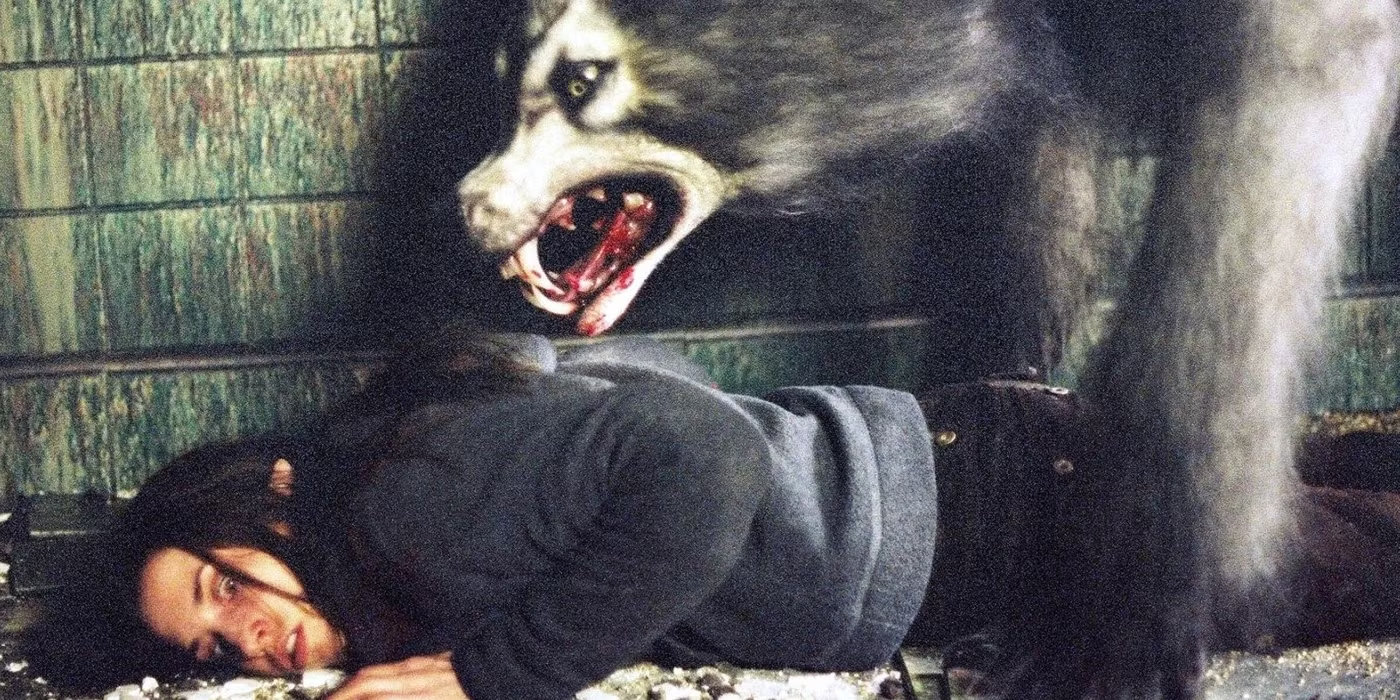
Before director John Fawcett and writer Karen Walton introduced the world to the Fitzgerald sisters, werewolves had all but vanished from the big screen. In fact, the last theatrical offering of lycanthropic horror, prior to Ginger Snaps, was 1997’s An American Werewolf in Paris. And as one might recall, the reviews for that movie weren’t so hot. So, clearly, the genre was in desperate need of fresh eyes.
Ginger Snaps first emerged some years after what many deem to be the peak of Canadian horror: the 1970s and ‘80s. Or as cinephiles like to call it, the “tax shelter era”. Yet unlike a lot of the movies produced back then (and even now), this cult classic isn’t vague about its story’s location. Rather than passing off the Great White North as the U.S., Ginger Snaps was squarely set in Canada. The fictional suburb of Bailey Downs is indeed an amalgam of multiple places, but nonetheless, it is 100% Canadian.
In an editorial titled “What Canadian Horror Tells Us about Our Deepest Fears”, journalist Harrison Mooney related deep-seated Canadian anxieties to Canadian horror cinema. Although Ginger Snaps wasn’t one of the mentioned titles, Mooney’s notion that Canadian horrors feed on homegrown fears is still applicable. Ginger Snaps is a movie that very much deals with “the loss of control” and “the violent outsider”, as well as the Canadian land itself. That last point—“colonialism has traumatized even the settlers”—is most apparent in the prequel, Ginger Snaps Back: The Beginning; however, it can also pertain to the trilogy’s other entries.

Katharine Isabelle and Emily Perkins in Ginger Snaps 2: Unleashed.
Before reaching that period prequel, and after first getting to know the two Fitzgerald sisters, the Ginger Snaps trilogy touches down in an urban locale (really Edmonton). Ginger Snaps 2: Unleashed vaguely picks up where the original movie left off, with Brigitte (Emily Perkins) going things alone after losing Ginger (Katharine Isabelle). The cozy-turned-creepy atmosphere of Bailey Downs has also been swapped out with a comprehensively bleaker one as Brigitte endures more than just another harsh Canadian winter.
As with any other sequel intent on not repeating things, Ginger Snaps 2 chronicles a different struggle for its main character. The affliction remains the same as before, but the fight to stave it off is unique to Brigitte Fitzgerald. The movie fully understands that no two werewolves should ever be the same. And ensuring that distinct transformation was a newcomer named Megan Martin. What the screenwriter lacked in sheer experience, she made up for in wild ideas.
After passing the directorial reins to Brett Sullivan, the first movie’s editor, Fawcett stayed on as a producer. Walton’s characters were left in capable hands with Martin, who more than delivered on that potential for familial grief entwined with detachment issues. Naturally, one might worry that Ginger’s demise dampens the possibility of a good story; she is the namesake, after all. On the contrary, Sullivan and Martin found a clever, if not familiar, way to keep Ginger around, all without sacrificing character development for the sequel’s actual protagonist.

Tatiana Maslany in Ginger Snaps 2: Unleashed.
While Ginger Snaps is one of many movies that enthusiastically dispels the myth of safety in the suburbs, Ginger Snaps 2 leans into the idea of cities being crime-ridden and dangerous. Of course, the threat lurking around every corner here is not that forward, but an otherwise harmless librarian (Brendan Fletcher) who was hoping to score Brigitte’s number. No, it’s that mysterious werewolf who has taken a liking to the main character—and then continues to stalk her throughout the story.
As if the literal beast on her tail wasn’t an ample enough reminder of her own looming fate, Brigitte is also being viciously haunted by her past. That come-and-go-as-she-pleases specter of Ginger, a manifestation born from grief, unresolved trauma, and monkshood abuse, fluctuates between comforting and cruel. She can either soothe little sis during her syringe sessions, or she can sardonically read her as no one else can.
While it is certainly Isabelle playing the ghost, that depiction is less Ginger and really more Brigitte. This damning evidence of the Fitzgerald girls’ codependency problem—not even death can put an immediate stop to it—shows how Brigitte can only be honest with herself by filtering her thoughts through a likeness of Ginger. Ultimately, though, there is a breakthrough moment for Brigitte; it’s one where she can stop living in her sister’s shadow and, at least for a few minutes, relinquish her overwhelming survivor’s guilt.

Emily Perkins in Ginger Snaps 2: Unleashed.
Werewolf stories are often psychological by nature. Scarcely ever do humans seem to willingly give in to that bone-breaking transformation—that complete lack of self-control. This internal conflict has been there since the beginning of the genre, and movies like Ginger Snaps 2 run away with the concept. So while setting the sequel inside a rehab center feels a little on the nose, that location offers a potent playground for the characters. It’s also one most befitting of gritty, post-Y2K horror.
With its emphasis on psychology, the sequel is constantly studying its characters and how they tick. Brigitte obviously gets the most extensive analysis; on top of Ginger’s intermittent commentary, the Happier Times staff gives its latest in-patient a clinical, and sometimes amusing, evaluation. In addition to Brigitte’s review are these less spoken assessments of the supporting characters. These particular deuteragonists, such as that deceptively clean-cut orderly (Eric Johnson) who trades drugs for sex, are key components in the movie’s overall sense of weirdness.
Of all those offbeat side characters who make Ginger Snaps 2 an unusual, not to mention worthwhile, viewing, Tatiana Maslany’s Ghost is the most influential. Almost always doing or saying something that provokes unease, Ghost is fascinating enough to warrant her own movie. It would be hard to convince anyone this petite, blonde, and twisted teen is lovable, yet that growing instability of hers becomes a surprising source of entertainment in the sequel. So, yes, this movie absolutely found someone more frightening than a werewolf, and her name is Ghost.
Without getting caught up in any arguments about which of the first two movies is better, Ginger Snaps 2 is an impressive follow-up. Fully doing its own thing and not trying to catch lightning in a bottle twice, the second movie is tailor-made for cinephiles who crave bold and very strange sequels.

Emily Perkins in Ginger Snaps 2: Unleashed.
You must be logged in to post a comment.