Movies
B-D Chats With the Cast and Crew of ‘Saw VI’, New Traps Revealed!

Bloody-Disgusting’s Mike Pereira was on hand in Toronto, Canada while Lionsgate was wrapping up the production of Saw VI, which arrives in theaters October 23. At a special press day, Mike was able to talk with Director Kevin Greutert, along with many of the cast and crew, who reveal all sorts of inside goodies on Jigsaw’s latest game including details on two forthcoming traps! In addition, we’ve also learned that there is in fact discussion for Saw VII to hit theaters in 3-D. Read on for the story!
 In all honesty, optimism and enthusiasm was not in the cards before this SAW VI press event. Like many, SAW V left a bad taste in my mouth. For the first time in the ludicrously successful series, wear and tear was apparent. When you devote a couple of scenes explaining how the obese corpse from the first installment was captured, desperation doesn’t quite say it. Still, it’s completely dumbfounding that this franchise has managed to stay this engaging for this long. As a fifth chapters go, it could have been a hell of a lot worse and certainly has been as horror fans know all too well (HAlLOWEEN 5 , anyone?). It was quite fascinating to say the least to hear the cast and crew enthusiastically explain why they believe SAW VI is going to prove non-believers such as myself wrong.
Producer, Troy Begnaud promises more of the same but a lot bloodier. In total agreement, Props Master, Jim Murray told Bloody-Disgusting, “We are kicking the gruesome up. When every SAW movie comes out, the fans expect more. People are becoming more and more desensitized to this kind of stuff. We have to take it up a notch. We will push that envelope without being too ridiculous because in the past some of our traps were ridiculous and with this one, we’re trying to bring it back.” In his feature directorial debut, Kevin Greutert adds, “It’s very gory but in a service to the story.”
SAW VI puts emphasis on returning to the franchise’s roots especially concerning the traps. “I think in SAW IV and V, we kind of got into these bigger room traps with a lot more people,” Jim Murray elaborates. “Everything got so big and you have to ask yourself ‘how the hell does this guy with cancer able to pull all of this stuff off?’ I think the traps in SAW VI go back home to what the traps were. It’s more personal. It’s about you and the trap.” Kevin Greutert promises a nice balance of intimate and “gargantuan” traps. “There’s quite a range of stuff going on in the most awful parts in this film. There are some elements that are the most grandiose anyone will have ever seen in a SAW film.” The series’ Director of Photography, David Armstrong, who just recently announcing this will be his final SAW gig, enthusiastically teases that “the traps are visually stunning.” He contunues revealing one of the new “rooms” in SAW VI. “There is a Carousel Room. It’s very carnival, playground-like. It’s just nasty. [There are] spinning red lights in there. It’s really overwhelming to walk in and look at because everything is spinning,” also revealing yet another room called the “Steam Room,” one of the cooler traps in SAW. “Also, there’s one place called the Steam Room that’s probably the best looking SAW trap of them all. It’s big and expensive. It’s got furnaces, fires and steam. It’s muti-leveled. The most complex Saw. We had techno cranes flying through. It was pretty amazing.”
When asked about the look of SAW VI, David Armstrong thinks visually, it might be his favorite. “We’re kind of pulling back a little bit in the color palette. It’s going to be more suggestive and not so vibrant, in your face like III and IV. It’s more neutral and shows natural flesh tones. On SAW V, I pulled back a little bit and on this one, I pulled back even more.”
One of the stronger aspects of SAW has always been the complexity of its characters. With every installment, another layer is exposed. Nothing is ever what it seems. When questioned about the potential difficulty of being lost in the ever-twisting plot, Tobin Bell aka John Kramer aka Jigsaw simply asks a lot of questions and attempts to come up with as many answers as possible. “Try to fill it in your mind about its logic, credibility and purpose. Frankly, I think that’s a lot like John Kramer. He is detailed-oriented. There is no end to its depth.” Costas Mandylor playing Detective Mark Hoffman uses the fear of disappointing the fans as a major motivation. “I met them (fans) at a convention and they are really clever. It’s like having a coach that keeps you on the edge of your seat or otherwise your going to be benched and you don’t want to be benched.” Betsy Russell, who plays John’s wife, Jill couldn’t have said it more simply, “(You) always have to keep thinking, stay on top of it or you’ll get lost“.
 When asked about their characters’ present state, Betsy promises we will see a lot more of Jill this time around plus what’s inside the box from SAW V. “You find out a little more about if Jill is good or evil. Pretty much you’ll know (in SAW VI). I don’t know if it was ever answered in the previous ones if I knew he was a killer. We will find out in this one that I do know that about him. We have an amazing love affair and I have a reason to be with him. She is definitely in the present main plot, as well as, flashbacks with more backstory to answer more questions.” As for the present story’s antagonist, Mark Hoffman, Costas feels “the maturity of Tobin’s character shows the rough edges Hoffman is still showing. (Hoffman) sort of torn of becoming a mad man or becoming a guy that’s more composed, coming from a pure place like Jigsaw. That’s my character’s dilemma; does he go fucking crazy or follow the rules of the boss?”
Kevin Greutert, who was also the editor for all of the previous installments, believes SAW VI will be a great character drama that settles a lot of issues of the series, as well as, a lot of completion to the line of Jigsaw’s overall intent. “To me, (SAW VI) has finality to it and that’s something I’ve always wanted to see in the series. Obviously, there was finality to SAW III but to me; this is the end of a second trilogy“. Kevin elaborates, “we have a lot more characters than we ever had in a SAW movie. A lot of new faces and obviously, we had to be true to previous stories. I didn’t want any violations of logic and chronology.”
There are already plans for SAW VII. Troy Begnaud feels as long as audiences want it, they’ll continue making them. “When making an installment, we not only think of year’s past but about the future.” When asked about the possibility of a SAW sequel in 3D, Troy said there have been discussions but no decisions have been made. Troy feels unlike other films, SAW would lend itself well to 3D without having to trying to hard. “It’s not so much about axes flying into the audiences to hit pin-point scares. I think our story could be told really well in 3D and give people a really visceral experience in terms of what these people are going through in their games. I wouldn’t be surprised if it happens.”
Despite what one may think about the SAW franchise, there’s no denying it’s stranglehold on the modern horror audience. Six films in and they have yet to be regulated to the video market like most in the genre, which is astonishing in of itself. When asked about an opinion on SAW’s staying power, everyone had a pretty common opinion. “If I’m approached by skateboarders, I’d ask what they liked about it,” Tobin Bell states, “One little guy responded that it taught him stuff. So somehow you can juxtapose information like that when its surrounded by such intense imagery and experience, it somehow makes stuff like that resonate in a certain way that it wouldn’t resonate surrounded by the same thing. So there are sub-textural things we continue to hammer away and try to keep it present in a place where it can be overwhelmed.” David Armstrong puts it perfectly when he adds, “You know those movies with people being killed in cabins in the woods? It’s just people killed in cabins in the woods. Jigsaw’s message prevails. In his own demented, twisted way, he’s still trying to communicate a lesson; to get you to appreciate your life. People respond to that. It’s a rubix cube. Can I solve this puzzle? Is it solvable? People love a good yarn. When I hear people talk, the visual rollercoaster is one thing that brings them into that. Also, the traps. They’re interactive. Everyone thinks of what they would have done. When things are interactive, you have the audience. They’ll go away and talk about it and argue.”
SAW fans obviously still are and most likely will continue to when SAW VI is unleashed this October.



I first heard about The Mandela Catalogue through a couple of nephews who were obsessed with the ARG’s sinister mythology. It was only after watching Wendigoon’s in-depth analysis of the series that I realized just how deep this rabbit hole goes.
In fact, I’d already been exposed to the nightmarish visuals of Alex Kister’s YouTube creation for years at that point without even realizing that it was the origin of several viral “cursed images” and spooky memes that had leaked into the wider internet – with this viral element actually being a part of the Catalogue’s overarching narrative.
Flash-forward to 2026 and the unprecedented success of Kane Parsons’ Backrooms has led to Hollywood betting on horrific internet properties with existing fanbases, which means that Kister’s unique hybrid of both religious and analog horror is finally headed to the big screen with a script written by Kister himself alongside Tyler Clifton.
While this news shouldn’t be too surprising if you’ve been keeping up with the ongoing success of The Mandela Catalogue (both myself and Wendigoon having previously predicted that the series would inevitably make the jump to theaters one day), plenty of horror fans are likely confused as to why so many folks are excited for what appears to be a Hollywood adaptation of a series of creepy .jpeg images under a VHS filter.
With that in mind, today I’d like to invite fellow readers to accompany me as I explore the origins of Alex Kister’s viral hit and attempt to explain exactly why we should all be excited about the Mandela Catalogue adaptation!
From High School Writing Project to Internet Horror Phenomenon

The first seeds of The Mandela Catalogue were sown when Kister was still in high school and developed a writing project subverting religious tropes in a world where biblical history had been altered by demonic forces. A little while later, Kister came across an analog horror contest on Reddit and decided to adapt his ideas into a standalone video where he would edit a religious kids’ cartoon –The Beginner’s Bible: The Nativity, to be specific- into something far creepier. This is how the iconic Overthrone video was born, with this viral short film taking on a life of its own as fans demanded more eerie content from Kister.
Though the video was originally meant to be a one-and-done sort of affair, with Kister actually regretting some of its primitive visuals and considering the editing amateurish and “YouTube-Poop-like” when compared to his current standards, fan reaction and free time during the COVID-19 pandemic encouraged the (then) seventeen-year-old filmmaker to continue producing content set in this same world. The Mandela Catalogue name was inspired by the Mandela Effect conspiracy theory, as the series would slowly begin to explore the subtle horror of alternate histories.
Inspired by existential dread brought on by extended periods of quarantine as well as a personal crisis of faith, Kister continued to expand his alternate timeline where the rise of Christianity had been prevented by what was presumably the Devil disguised as the Archangel Gabriel. This alternate course of fictional events led to the existence of certain paranormal anomalies that had come to be accepted as “normal” by the 1990s, which is why most of the series’ supernatural horror is presented in such a matter-of-fact manner.
Most of this background information and religious lore is delivered by increasingly cryptic broadcasts and in-universe PSAs, as well as the occasional found footage video, that often have to be decoded by clever viewers. Of course, it’s the consistently disturbing imagery that made the series so popular – much of which was originally created by Kister on a smartphone!
The Alternates: Horror’s Most Unsettling Modern Monsters

The show’s early episodes mostly take place within the fictional Mandela County in Wisconsin and depict life in a world where demonic entities are capable of using media to enter our reality. This process usually involves scaring victims into killing themselves and then repurposing their bodies as horrific doppelgangers referred to as “Alternates”. This terrifying phenomenon has become so common that local police already have specialized procedures in place to deal with the issue, though this usually consists of simply ignoring calls for help so as to avoid spreading so-called “Metaphysical Awareness Disorder” any further.
Over time, Kister would expand this mythology and incorporate different kinds of Alternates into the mix, though the story never stopped deconstructing religious concepts. The series’ second volume exponentially increased both video quality and the overall narrative scope as we began to follow the lives of characters who had already grown up in this dystopian hellscape where the government is forced to prohibit religion, television, and even mirrors in the hopes of mitigating the damage done by the ongoing invasion of otherworldly entities.
The really interesting part comes into play when you realize exactly how the Alternates make use of scary media in order to spread their demonic influence, with the analog horror of it all being a diegetic part of the story and something of a memetic trap orchestrated by the false Gabriel.
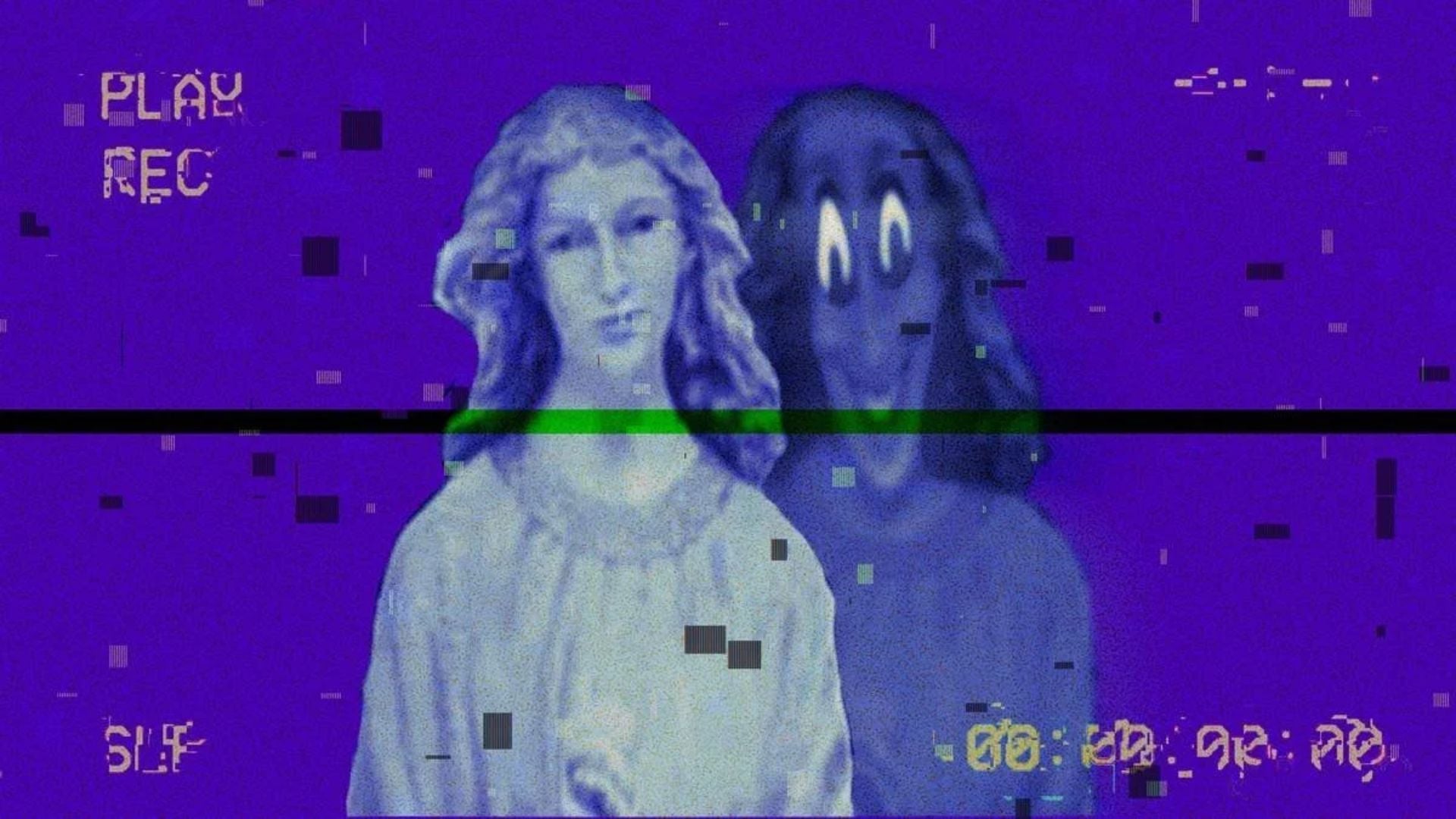
I particularly appreciate how some characters begin to suspect that there’s something wrong with their version of reality and that things weren’t meant to play out this way, especially when Mark utters the haunting line “who have I been praying to all this time?” That’s why I think The Mandela Catalogue is an effective piece of religious horror even if you don’t subscribe to the Christian worldview, as the mere idea of a world where evil has already won is a universally terrifying concept in and of itself. Not only that, but the series’ uncanny analog imagery alone is already worth the price of admission, as you’ve likely already noticed by looking at the pictures accompanying this article.
Why The Feature Adaptation Could Be Horror’s Next Big Success

It’s actually been a whole year since Kister first announced that he had been working on a feature-length screenplay for a Mandela Catalogue movie since 2022, with his proposed story following an ensemble of high-school graduates who uncover a supernatural conspiracy after the mysterious disappearance of a fellow student. This premise sounds similar to narrative elements present in the series’ second volume, but I’m pretty sure that Kister is going to go the Kane Parsons route and make the movie more of a spin-off than a re-imagining of its source material.
While notable Hollywood producers like Aaron B. Koontz, Scott Stuber, and Steven Spielberg himself are backing the upcoming project, I feel like there’s no one better to adapt this deeply personal exploration of faith and the dark side of communication than the person who first came up with it. That’s why I can’t wait to see Kister’s work on the big screen, as I have a feeling that this young filmmaker is the next one on the list about to make cinematic history – especially since this is clearly a passion project that has been in the works for years at this point!
That being said, there’s always a chance that the film could end up unleashing a fresh wave of Alternate incursions, but I guess that’s just a risk we’ll have to take.
You must be logged in to post a comment.