Editorials
The Top 10 Stephen King Adaptations!

Fox Home Entertainment is bringing several horror classics to hi-def Blu-ray as part of their Feed Your Fear campaign, with most of them already at a store near you. We’ve joined forces with them to bring you four top 10 lists related to one or more of the titles. In lieu of the classic Stephen King adaptations Misery and Carrie now available on Blu-ray, we present to you “The Top 10 Stephen King Adaptations.” Watch for another two features in the coming weeks leading up to Halloween.
Dont forget to also check out:
 The Top 10 Claustrophobic Horror Movies
The Top 10 Rock ‘n Roll Horror Movies!
The Top 16 Oscar-Worthy Horror Performances
A ‘Thirst’ For Redemption: 12 Movies They Won’t Show You At Bible Camp!
The Top 20 Horror Science-Fiction Films of All Time
The Top 13 Slashers in Horror Movie History
The Top 13 Kills in Horror Movie History!
The Top 10 Obscure Horror Gems For Halloween
The Top 10 Made-for-TV Horror Movies of All-Time
The Top 10 Horror Comic Adaptation
The Top 10 Worst Horror Director Collapses!
The Top 10 ‘True-Story’ Horror Movies of All-time!
The Top 10 Hottest Vampire Babes of All-Time
The Top 10 Most Unusual Zombie Occupations
The 10 Lamest Days of Horror the World Has Ever Known
The 10 Stupidest Motives In Slasher Movie History!
The Top 10 Most Batsh*t Crazy Horror Movie Doctors
The Top 10 Worst Things That Could’ve Been in Brundle’s Machine… Besides a Fly
The Top 10 Best Horror Remakes of All-Time
Top 10 “Doh” Moments in Horror History
15 Reasons FOR Remaking A NIGHTMARE ON ELM STREET
The Top 10 Reasons Why Bela Lugosi Still Rules
Top 10 Non-Zombies in a Zombie Film
Okay, can we just be real here? Most Stephen King movies kinda suck. But when you think about it, so do most movies in general. I mean, hardcore King fans are just being unrealistic when they expect a top-shelf adaptation of every single one of his stories. Of course, as with any author who has captured the popular imagination, King’s followers feel his work deserves a screen treatment to match the vivid, skin-crawling nightmares that he brings to the page. To that all I can say is: welcome to Hollywood, where the grandiose, unrealistic dreams of optimists everywhere are shattered daily. Thought of that way, it’s actually a minor miracle that we’ve had as many truly good, or at least decent, King adaptations as we have. Following, my list of the ten best. P.S.: I should note here that I set a few ground rules: 1) It had to be a straight horror/thriller (i.e. Shawshank, Dolores Claiborne, etc. don’t qualify); and 2) It had to be a feature film (i.e. no TV miniseries) that was a direct adaptation of one of King’s novels or short stories (i.e. no Sleepwalkers or one of those horrid Children of the Corn sequels). And now, as Stephen himself would say – enjoy the list, Dear Reader. And happy nightmares.

Christine is by no means a John Carpenter classic, or even a particularly good movie (how’s that for a ringing endorsement?), but there’s still some solid stuff here. And in his defense, Carpenter was up against a doozy of an obstacle from the start. Namely: cars aren’t scary. My advice? Don’t go in expecting to be frightened out of your wits, and you’re in for a relatively diverting 110 minutes. Actor Keith Gordon makes Arnie’s nerd-to-stud transformation surprisingly believable, and Carpenter gives the film a visual slickness that suits the material well. Two added bonuses: an excellent soundtrack, and a pre-stardom, pre-Scientology Kelly Preston in a minor role.
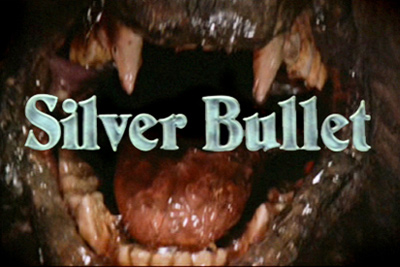
This mostly forgotten 1985 adaptation of King’s novella “Cycle of the Werewolf” is surprisingly decent. It features a pre-hot mess Corey Haim as a disabled kid living in a small town plagued by a series of grisly unsolved murders. After he encounters a werewolf on a bridge late one night, Haim enlists his lovable, alcoholic uncle, played by a pre-bat shit insane Gary Busey, to help solve the mystery. Busey has some great lines, and he and Haim share an easy-going chemistry that’s a pleasure to watch. The werewolf effects are okay, if a little rubbery-looking, but overall Silver Bullet has a sense of humor about itself (Stephen King scripted) that helps make it better than you’d expect.

Admittedly Pet Sematary is kind of a cheese-fest, but it still holds up as one of the better King adaptations due to a few genuinely creepy moments. This is mostly due to not only theose uber-disturbing flashback scenes, but the performance of young Miko Hughes, whose sweet, high-pitched voice and cherubic features come to serve as an ironic counterpoint to his murderous acts in the last third of the film (“Now I wan-too pway wiv you!”). Just prepare yourself for a few unintentional chuckles, not to mention one of the most grating performances by a child actor (the young girl who plays Miko’s older sister) ever.

Including this David Cronenberg adaptation of King’s fifth novel (if you don’t count the Bachman titles) comes dangerously close to violating the rules I set forth in the beginning – namely, the one about the films having to be straight horror/thrillers in order to qualify. But at the end of the day, The Dead Zone does possess enough thriller-centric qualities to make the cut. This is a really solid, if rather dry adaptation, with a strong central performance by Christopher Walken (despite that hideous, fit-for-an-80-year-old grandmother hairstyle he seems to sport in every movie). It’s no masterpiece, but it’s deeply felt; and if you haven’t read the book you’re in for a pretty nifty little ending.
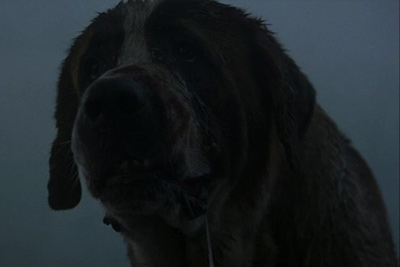
Dee Wallace Stone is a perfect example of a really terrific actress who, over the course of her career so far, has never been given the opportunity to fulfill her sizable potential as more than just a terrorized genre-film heroine. This is due in large part to the enormous success of E.T., which pigeonholed her into the “frantic mother” role in seemingly every single film she appeared in thereafter. I just had to say that, because Stone really anchors Cujo, which could have been just another lame King adaptation, and makes every hysterical moment in that demonic-St. Bernard-battered Pinto entirely believable. Kudos also to Jan de Bont, who provided the cinematography that proved so effective during those heart-in-the-throat attack scenes.
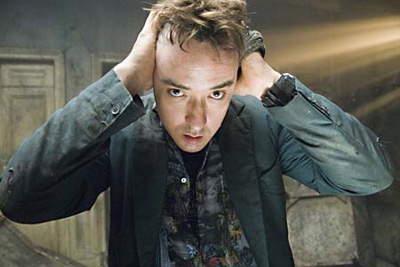
Ok, so if Michael Bay directed a King adaptation, it would probably look something like this, except with more super-hot, blouse-busting ghosts, bigger explosions, and minus all the nifty build-up. But if you take it for the market-tested, slot-filling big-studio product that it is, 1408 is a surprisingly decent little horror flick, with some inspired special effects and a truly creepy hotel-room setting. Of course, director Mikael Halfstrom also helmed that Jennifer Aniston snooze-fest Derailed. Given the cringe-inducing enormity of that debacle, he’s still got a long road to hoe before he repays his debt to society.
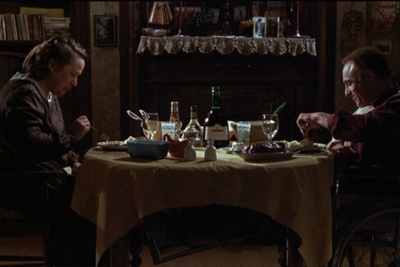
Funnily enough, Misery occupies the exact same spot as it did on my “Top Ten Claustrophobic Horror Movies” list, and it ranks so high on both simply because it’s such a solid, enjoyable little entertainment. Unlike the previous three entries, Misery doesn’t harbor any grandiose ambitions, which shouldn’t be a surprise given that Rob “Big-Studio Cocksucker” Reiner helmed the thing. But as a slick, modern-era Hollywood thriller, there are few as good as this one. Bates’ alternately hilarious and disturbing performance alone makes this worth a second viewing.

Frank Darabont, the director responsible for the terrific Shawshank Redemption and the overlong, if nearly-as-good Green Mile, delighted Stephen King fans everywhere when it was announced he would be tackling King’s grim, apocalyptic short story “The Mist”. For a horror-fiend like me, it was particularly welcome news that the man behind two of the best King adaptations would be taking on one of his more straight-ahead horror yarns. Needless to say, I wasn’t disappointed. Darabont hews miraculously close to King’s vision (save for that love-it-or-hate-it ending) while also managing the feat of making a truly scary horror film that functions equally well as a queasy, post-9/11 satire of American life.
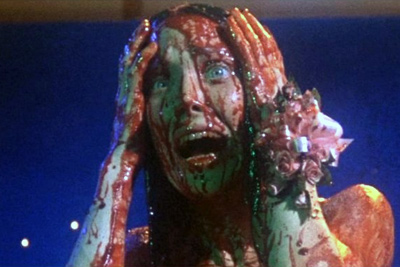
What misfit teen didn’t wish for telekinetic powers after Carrie, Brian De Palma’s near-perfect adaptation of King’s first novel, was released in 1976? True story: during my freshman year in high school, a Volkswagen Bug caught fire during a “Stuff the Bug” competition in the quad. Everyone inside (all of them associated with the popular crowd) escaped without injury, except one: a cheerleader in the back seat suffered first-degree burns on her ass. The unfortunate incident was blamed on a lit cigarette, but I liked to think that there was a mousy girl nearby, something like Carrie White, who started it all.
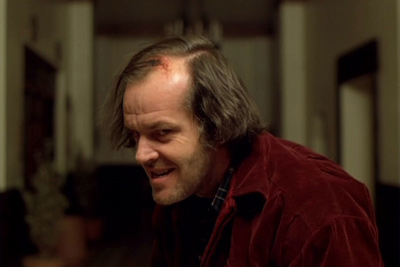
Yeah yeah, so I freaking love The Shining, alright? But what true horror fan (at least one who doesn’t hold movie directors to unrealistic standards of literary faithfulness) doesn’t? This was made back in the heady early days of Stephen King adaptations, where arty, top-shelf filmmakers were taking a crack at his work, rather than the hacks that mostly took over later on. For the record, I actually like the Kubrick version of the story better than King’s version, which includes the just-okay ABC miniseries with which he was officially involved. Sorry, but Steven Weber is no Jack Nicholson. So there. – Chris Eggertsen




On July 13th, 2026, the world lost one of its brightest stars.
Beloved New Zealand actor Sam Neill passed away from pneumonia after a long battle with stage 3 lymphoma. The multifaceted movie star will be remembered by mainstream audiences for his iconic role as Dr. Alan Grant in Steven Spielberg’s 1993 masterpiece Jurassic Park, as well as powerful turns in A Cry in the Dark (1988), The Piano (1993), and Hunt for the Wilderpeople (2016), and prestige TV series The Tudors and Peaky Blinders. But horror fans know him as one of the genre’s most surprising Scream Kings.
Through a handful of memorable starring roles, Neill spent the 80s and 90s bringing life to a wide variety of characters and finding humanity in the most unusual leading roles, regardless of how heroic or villainous.
The Final Conflict (1981)

After a decade on the stage and screen in New Zealand and Australia, Neill made his international debut as Damien Thorn in Graham Baker’s The Final Conflict, the third installment of The Omen franchise. Now a 36-year-old businessman, Damien is fully aware of his devilish parentage and hell-bent on world domination. But rather than a hooved and horned monstrosity, Neill’s Antichrist is a suave businessman who leads his followers in an expensive suit and seeks to bring about the apocalypse through deceptive altruism rather than grand proclamation.
Despite his austere demeanor, the man’s true evil knows no bounds. When a prophecy foretells the second coming of Christ, known in the film as “the Nazarene,” Damien commands his followers to commit widespread infanticide, murdering all baby boys born on a specific date. He seduces a high-profile reporter while transforming her teenage son into a bloodthirsty disciple, then uses the child as a human shield. This tricky role allows Neill to demonstrate his trademark versatility, easily charming the outside world while dropping his suave mask of normalcy behind closed doors. Though certain aspects of The Final Conflict are admittedly dated, Neill’s performance feels eerily prescient. He’s mastered the heinous portrayal of a politician willing to sell his soul for power that will ultimately bring about the end of the world.
Possession (1981)

Though Andrzej Żuławski’s Possession is often remembered for Isabelle Adjani’s stunning depiction of a woman on the edge, Neill delivers an equally unhinged performance as Mark, a spy returning home from a lengthy assignment in divided Berlin. Upon discovering that his wife Anna (Adjani) wants a divorce, Mark desperately tries to hold his family together even at the expense of her sanity. Filmed the same year as The Final Conflict, Neill dives headfirst into this visceral role, managing to evoke sympathy for the distraught father who becomes ever more desperate to regain control. Inspired by his own divorce, Żuławski resists blaming either party for the separation, instead showing the chaos and heartache that comes in the wake of a family’s dissolution.
Once considered to replace Roger Moore as the next James Bond, Neill has fun with the international spy persona as Żuławski’s plot grows increasingly bizarre. But the skilled actor never lets us forget that Mark is a flawed human being struggling to keep his life from falling apart. A second character emerges in the film’s mesmerizing climax, allowing Neill to lean into full villainy with a glassy-eyed stare that chills to the bone. Now a cult classic, Adjani and Neill bounce off each other’s seething rage, creating one of the most effective cinematic duets in the history of horror.
Jurassic Park (1993)

When Steven Spielberg’s creature feature first hit theaters, Neill was by no means a household name and hardly a traditional leading man. Without the swashbuckling swagger of Harrison Ford, the mega-watt smile of Tom Cruise, or the chiselled jaw of Brad Pitt — all famous action stars of the era — Neill felt like an unconventional choice for this massive role. But he perfectly captures the essence of Grant, an aloof academic who prefers dig sites to fancy fundraisers and social events. Despite an aversion to children, the dinosaur expert finds himself tasked with saving the theme park’s youngest survivors who gradually break down his emotional walls. Grant’s transformation into a courageous caretaker is a landmark deconstruction of traditional gender norms wrapped in the guise of a rugged outdoorsman.
Neill proves to be the perfect action star, effortlessly navigating Spielberg’s stunning set pieces without losing the character’s relatable hook. But perhaps the film’s most touching moment is Neill’s childlike wonder at seeing a dinosaur for the first time. Stunned to speechlessness, he channels the audience’s wondrous joy when Grant first spies a real, live Brachiosaurus. But he seamlessly weaves this infectious awe into serious concerns about the creature’s existence, amplifying the story’s prophetic messaging. Jeff Goldblum may utter the film’s iconic warning, but the duality of Grant’s performance perfectly illustrates the scientific imperative, reminding us that just because we can doesn’t mean we should.
Neill would go on to lead Joe Johnston’s 2001 sequel Jurassic Park III, in which Grant is again tasked with saving a child. In 2022, he would appear in Colin Trevorrow’s legacy sequel Jurassic World Dominion, which merges the franchise’s two distinct eras while bringing the carnage onto mainland shores. Despite turning in strong performances, neither film is able to top the magic of Spielberg’s original or Neill’s captivating performance as the stoic leading man. But his nuanced depiction of Alan Grant inspired a generation of would-be paleontologists and quiet kids who could now see themselves as courageous academics capable of surprising strength.
In the Mouth of Madness (1994)

After catapulting to worldwide fame, Neill returned to horror proper to lead John Carpenter’s mind-bending In the Mouth of Madness. We first meet John Trent (Neill) as he’s dragged, kicking and screaming, into a padded cell. An unknown stretch of time later, he recounts an unbelievable story while covered in protective crosses scrawled into his skin — and the cell’s walls — with black crayon. A private investigator, Trent has been tasked with locating Sutter Cane (Jürgen Prochnow), a world-famous yet elusive genre author whose work has been driving his ravenous readers to disturbing acts of random violence.
A love letter to fans of horror fiction, we delight in watching Trent explore literary easter eggs that lead him down jarring rabbit holes. A late-night road trip takes Trent and Linda Styles (Julie Carmen), an editor for Cane’s publishing house, to a tiny New England hamlet teeming with darkness. While investigating an ominous cathedral on the outskirts of town, Trent realizes that he’s somehow been transported into the author’s interdimensional story and become its unwitting protagonist.
Neill serves as a skeptical everyman and the audience’s conduit through this bizarre tale of literary monsters that find a way to burst through the page. An often overlooked Carpenter film, In the Mouth of Madness spirals into insanity, but Neill keeps us grounded throughout each outlandish twist. A shocking conclusion leaves us gaping at our screens and contemplating our own relationship with horror fiction. After all, does free will truly exist? Or, like Trent, are we merely pawns in someone else’s monstrous creation?
Event Horizon (1997)

One of the scariest movies ever set in space, Paul W.S. Anderson’s Event Horizon builds upon the heroic image Neill established for himself in Jurassic Park. Dr. William Weir (Neill) is a physicist temporarily joining the crew of the Lewis and Clark to assist in their latest rescue mission. Seven years after vanishing without a trace, a spaceship called the Event Horizon has suddenly reappeared near Neptune’s orbit. As the creator of a top-secret gravity drive designed to facilitate faster-than-light travel, Dr. Weir has been sent to explore the ship and find out what happened to its missing crew.
Still haunted by his late wife’s suicide, Dr. Weir is a sympathetic figure, particularly in comparison to the harsh Captain Miller (Laurence Fishburne) who commands the crew of the Lewis and Clark. But Weir’s desperation to return to the infamous ship hides a sinister secret that leads his fellow astronauts to the threshold of hell. Neill’s talent for playing the everyman pays off in spades as the formerly sympathetic widower transforms into a disciple of this frightening dimension. Resembling a long-lost cenobite, Weir claws out his own eyes and prepares to drag the crew into a world consumed with sadistic pain.
Daybreakers (2009)

Neill returns to his Omen roots in Michael and Peter Spierig’s action-packed film as a secretly sinister businessman. But rather than the Antichrist, Charles Bromley (Neill) is a proud vampire convinced of the species’ superiority. With human blood in short supply, Bromley Marks Corp. is working on a synthetic substitute to prevent the human race from impending extinction. While hematologists perfect the formula, Bromley oversees disturbing fields of humans chained to massive machines that systematically harvest their blood.
Neill chills in this sinister role with vampiric yellow eyes, a pale complexion, and subtle fangs. But more upsetting is the fact that he honestly doesn’t believe he’s wrong. Once diagnosed with cancer, Bromley was delighted to find that vampirism would totally reverse his illness and grant him the gift of eternal life. He begged his daughter Alison (Isabel Lucas) to turn alongside him, but she has rejected her father’s controversial choice and is now hunted by his bloodthirsty goons. In a heartbreaking moment of clarity, Bromley brings his daughter to the brink of death, then turns away in disgust when she will not embrace his undead lifestyle.
Daybreakers is a surprisingly thrilling exploration of survival and sustainability. Similar to a plot Damien Thorn would hatch, Bromley’s ultimate plan is to placate the vampire population with synthetic blood while allowing the human population to replenish itself. With a larger stock, he plans to sell authentic humans at a premium, hunting these poor souls to season the meat. Bromley rejects a cure that would reverse the vampiric disease, choosing to enrich himself over saving the world. The strangely captivating villain’s end is a cathartic nightmare and fitting punishment for a wealthy man who places himself above everyone else.

In the Mouth of Madness
While the world may remember Neill for his signature role as a gruff but compassionate paleontologist going head to head with a raging T-Rex, horror fans may picture the versatile actor maniacally rocking back and forth in a filthy Berlin apartment, commanding a boardroom of corporate vampires, disappearing into the darkness of a haunted spaceship, sermonizing to satanists, or giggling over popcorn in a deserted movie theater. Or perhaps you have another favorite role in the beloved actor’s stellar career. But whether he was playing a hero or villain, Neill brought undeniable humanity to every role, redefining our idea of masculinity and the very nature of goodness vs. evil. By bringing such disparate characters to life, Neill challenged audiences with a variety of complex roles, asking us to examine the humanity of each character no matter how flawed or virtuous.
You must be logged in to post a comment.