Quantcast
Connect with us

Music

[Original] Metallica And The Case Of The Entitled Fans

Published

on

metallicaoriginal2012
I feel like I need to clear something up. You see, I’ve been kinda hard on Metallica here. I called them “average joe schmoes” in my article about how the Internet stole the mystery of musicians and I ripped Lulu apart in my review. It’s probably safe to say that were one to look solely at my articles about Metallica, you’d think I hated, or at the least didn’t think much of the band. 
But this couldn’t be further from the truth. As a matter of fact, I love Metallica. They’re the band that got me into metal. Nothing Else Matters is the song that inspired me to learn the guitar and is a song I teach to each of my students. Until It Sleeps is still one of my all time favorite music videos. Simply put, I respect the hell out of these guys and rock out to their music all the time.
So why am I bringing this up? After all, I’m not here to just profess my admiration for Metallica. I can do that via Twitter, right? Well, the problem that I see is what I like to call the “entitled fan”. Need an explanation? Well, I shan’t leave my dear readers hanging!

Note: This was a topic that Bill and I spoke about on the ninth episode of Aural Pleasures, which you can listen to here. I wanted to expand my thoughts a bit in article form for those of you who like to read rather than listen.
The “entitled fan” is that jackass that talks about how a band sold out and whines and moans that the artists they love don’t put out the same music that they used to. Think about it and you’ll realize you know that person. Hell, you might even be that person. If that’s the case, stop reading, because I’m probably going to offend you a little.
See, at the heart of it, the “entitled fan” might actually have something of a point. Bands do change sounds and bands can become popular. That is a fact that cannot be argued. 
The problem is that the “entitled fan” sees this as a bad thing. And that’s where things can go down a slippery slope. After all, shouldn’t change be seen as a positive thing? Without change and growth, things would get very boring, very quickly.
So how does this relate to Metallica? Well, by the very nature of the fact that Metallica is the biggest metal band in the world, they therefore have an insane amount of fans. And with fans come the rare, yet incredibly vocal, lifelong Metallica-heads who have been “listening to the band since before Kill ‘Em All“. Not a problem in and of itself, but when they start kvetching, I immediately get a headache.
There are two main complaints I hear from people when it comes to Metallica and I’d like to address them each separately:
metallicablackalbumcover
1) “They sold out with ‘The Black Album'”
This is an absolutely ridiculous claim. First of all, by the time The Black Album came out the band was already headlining arenas thanks to the popularity of Master Of Puppets and …And Justice For All, both of which did very well sales-wise despite a lack of serious marketing. Admittedly, …And Justice For All had a bit of a bigger push thanks to the music video for One.
But the claim that the band sold out with The Black Album makes absolutely no sense. I’m pretty damn sure that the band didn’t go into the studio thinking, “Hey fellas…what do you say we write an album that will become the top selling album of the Nielsen Soundscan era? Think we can pull that off?” If that were the case, we’d see a hell of a lot more bands “selling out”.
I’m 100% positive that the band went into the studio, wrote a ton of killer tracks and released an album that they were proud of. What happened once the album hit the streets was completely beyond their control. It all boiled down to how the label would market the album and how the public would react. The rest, as they say, is history. 
So what is is about The Black Album that made it so popular? Well, I have a few theories that I’d like to share:
1) The production – Say whatever you will but this album sounds incredible! It has some of the biggest sounding drums and the tightest, angriest sounding guitars I’ve ever heard. To this day I put on the album and just revel in how crisp and tight the band sounds. It truly is a landmark album in that respect.
2) The songwriting – Again, say whatever you will but every song on this album is tight, direct, focused, and a lot of fun. Sure, I’m pretty sick and tired of hearing Enter Sandman, but that doesn’t mean that I think the album sucks. Personally, I love The Black Album.
But what’s important about the songwriting here is that as a result of the tracks being shorter and more focused, the general public could latch onto them much easier. One is a great song, no doubt about it. But at nearly seven and a half minutes, the song challenges the everyday, casual listener who is used to three to four minute songs. The Black Album found a happy medium whereby the singles were, on average, around the five minute mark. 
3) The timing – Coming out in 1991, The Black Album was released at the end of the “hair metal” craze of the 80’s and well into the “grunge” era. As a result, it was perfectly placed to stand out and have its own voice. This was an album that provided an alternative for those who wanted something heavier and cleaner. 
Look, to summarize the argument against Metallica having sold out with The Black Album, they didn’t plan on it being so successful. Were the odds in their favor? Yes. But I don’t think anyone planned on the reception it received. They just did what any band does, which is to release an album that they believed in.
If you want to blame the success of the album on anyone, blame it on everyone who bought an album. All nearly 16 million in the United States alone.
metallicamasterofpuppetscover
2) “They need to release an album like ‘Master Of Puppets’ again!”
To say that this statement irritates the hell out of me is an understatement. It’s such an impossible, improbably request that even asking for it is ludicrous. You know why? 1986.
That’s the year that Master Of Puppets was released. Twenty six years ago. Let that sink in for a moment. Twenty. Six. Years. Do you know what can happen in that time? How about marriages, divorces, children, line-up changes, Grammy Awards, a Rock And Roll Hall of Fame induction, an illegal downloading scandal, etc… That’s only scratching the surface of what they’ve been through in that time. 
So, the question is not if they can put out another Master Of Puppets. The question is can Metallica ever return to the frame of mind that they were in when they recording that album? The answer should be pretty obvious (it’s ‘no’). 
That’s not to say that they can’t record some badass material. I think that Death Magnetic proved that the band can write incredibly kickass songs. That album, in my opinion, was a return to classic form for a band that had taken many risks and done a great deal of experimentation with their sound.
Look, I know why “entitled fans” love Master Of Puppets so much. It’s an awesome album full of metal songs that have proven to withstand the test of time and will continue proving that.
I can also see why there is such a hostility towards the releases after Master Of Puppets. Well, maybe not …And Justice For All. But with The Black Album, Load, Reload, S&M, and St. Anger, the band went through a period of taking risks and experimenting with their sound. Sure, it might not have all been as solid as their earlier efforts but I admire and respect a band that has the balls to follow their own musical journey rather than try to recreate the success of The Black Album. If they had gone that route, THEN they would’ve been sell outs.

I see the years of the above albums as times when Metallica was exploring the boundaries of metal and rock. Think about it for a second and it’ll actually make a lot of sense. Until It Sleeps could easily be considered “gothic metal”. Mama Said is country. St. Anger could almost be seen as nu-metal. Do I like everything put out during that time? Nope, can’t say that I do. But a few gems definitely stick out and I’ll enjoy them quite happily.

So what does the future for Metallica hold? Well, the band has stated that there will be a new album in the near future, even possibly this year (but I’m not holding my breath). Lars has stated that the songs will be shorter and more to the point than the tracks on Death Magnetic. Kirk said that “…if Death Magnetic was a logical successor to [1988’s] …And Justice For All, the next album will be a heavier Black Album.” [source]

As a longtime Metallica fan, I can say that I’m filled with anticipation, not apprehension. Sorry “entitled fans”, your arguments haven’t dissuaded me at all. If anything, you give me the resolve to support the band all the more.

Got any thoughts/questions/concerns for Jonny B.? Shoot him a message on Twitter!

Managing editor/music guy/social media fella of Bloody-Disgusting

Click to comment

Music

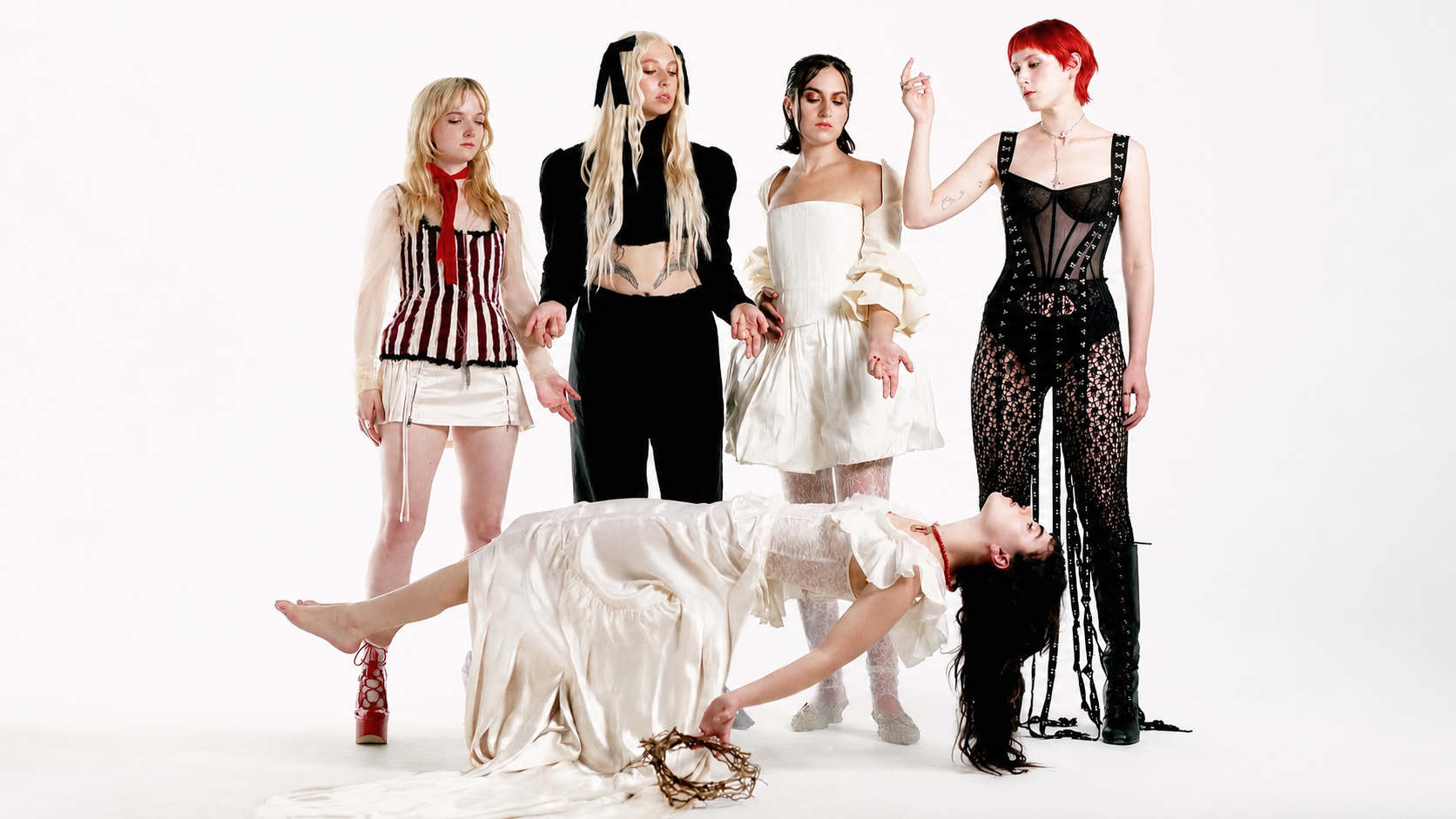
The Last Dinner Party Talk Horror, Dario Argento, and Why Beauty Makes Terror Stronger

Published

on

The Last Dinner Party

Multi-award-winning and unapologetically cinematic UK band The Last Dinner Party have always seemed drawn to the places where opposites collide. Beauty and violence. Grief and ecstasy. The sacred and the grotesque. It’s there in their music, performances, and in the worlds they’ve built around themselves since the band’s earliest days.

Their songs often feel less like traditional rock music and more like myths in motion, unfolding somewhere between a dream, a film, and a fevered memory. Perhaps that’s why horror feels so naturally at home within their creative universe. 

For Abigail Morris, the group’s charismatic ringleader, some of horror’s most enduring filmmakers understand that terror becomes more powerful when it exists alongside beauty. 

Discussing the work of Dario Argento, she points to films like Suspiria and Phenomena as perfect examples of that tension. 

I think it’s actually the proximity of those things rather than the distance,Morris explains.The things that are really beautiful and the things that are really terrifying. It’s like the idea of the sublime. The closer that beauty is to terror, the more beautiful it is and the more terrifying it is rather than the juxtaposition. I think that that’s where the sweet spot of fear and tension and intrigue and pure and real beauty is, where it’s almost the other. And I think that’s what Argento does really well with the sort of the beautiful casting and the sets and the lighting and then the buckets of red blood.

She cites Argento’s ability to place stunning imagery directly beside the grotesque or unsettling. The vivid colors, dreamlike sets, and beautiful performers suddenly interrupted by buckets of blood, swarms of insects, or moments of genuine nightmare. 

I love how he plays with that,she says. 

That fascination with contradiction extends far beyond horror films. The Last Dinner Party’s work frequently occupies a similar emotional space, where longing can feel catastrophic, and heartbreak transforms into mythology. Morris brings up one of her favorites, Andrzej Żuławski’s Possession (1981), as another example of horror expressing emotional truths more accurately than realism ever could. 

A divorce is a very human thing that happens,she says.And then to turn that into this psychological body, spiritual, eldritch horror is how it must feel to go through a divorce. And it’s more accurate.” 

Not surprisingly, news of the upcoming Possession remake sparked a passionate response.I’m fucking furious,Morris laughs. While generally skeptical of remakes, she makes an exception for Luca Guadagnino’s Suspiria, praising the filmmaker for creating something entirely his own rather than attempting to recreate Argento’s original. 

He wasn’t trying to capture the energy of Argento’s film. It felt like a story in its own right.She goes on to explain,…if they do that with Possession, then I’m interested.

The conversation also reveals just how deeply cinema has been embedded into The Last Dinner Party from the very beginning. Long before sold-out shows and award nominations, the band envisioned themselves not simply as musicians but as architects of an entire world. 

When we started the band, the visuals were of equal importance to the music,Morris says.Before we played a show, before we shot a music video, we decided that what we wanted this band to be was something that was a complete world.” 

That commitment led to elaborate mood boards, film references, styling concepts, and even a 72-page presentation that helped define the band’s visual identity before many people had ever heard a note of their music. 

For composer, songwriter, and keyboardist Aurora Nishevci, many of those same cinematic instincts have begun finding new outlets. She speaks passionately about the horror scores that continue to inspire her, including the work of Mica Levi and Hildur Guðnadóttir. Rather than relying solely on traditional horror techniques, she is fascinated by artists willing to challenge expectations. 

You can decide to go the traditional route,Nishevci says.Or you can completely go another way and still be terrifying.” 

That fascination has now become something more personal. Nishevci reveals that she is currently working on her first horror feature as a composer, bringing her own musical language into the genre that has influenced her for years. 

The band’s connection to horror has also found an unexpected audience among fans of Yellowjackets. Online, edits pairing The Last Dinner Party’s music with scenes from the series have become increasingly common. At concerts, fans have even begun holding up photos of Jackie during performances ofWoman Is a Tree.” 

At first, Morris couldn’t understand what she was seeing. 

I thought it was someone’s grandma,she says. Only later did she realize the mysterious photographs were actually tributes to one of the show’s most beloved characters.It’s fucking Jackie from Yellowjackets!” 

The band enthusiastically express interest in seeing those worlds collide one day. 

While The Last Dinner Party’s future remains unwritten, horror seems destined to remain part of it. Asked what creative paths still excite them, Morris immediately begins dreaming beyond albums and tours.

We’ll do a horror movie as well.” 

Nishevci quickly adds another possibility that has apparently been living on the band’s mood board for some time.We keep talking about doing a folk horror EP.” “That’s been on the mood board,Morris confirms. 

For a band already obsessed with mythology, ritual, transformation, storytelling, beauty, and terror, both ideas feel less like surprises and more like inevitable next chapters. For much more with Abigail Morris and Aurora Nishevci, including further musings on Argento, Possession, Salò, Hausu, and the future of The Last Dinner Party, check out The Boo Crew Podcast Episode 473 available now on Apple, Spotify, and wherever you get your podcasts.

The band joins Olivia Rodrigo on the road next year for multiple sold-out residencies in New York and LA. Follow the Last Dinner Party on Instagram.


Continue Reading