Interviews
Interview: ‘Red Hill’ Star Ryan Kwanten

Westerns are pretty few and far between these days, but Red Hill will satisfy cravings for those who like wild west tales of the uncommon variety. Part western, part horror, and part revenge tale, newcomer Patrick Hughes’ film tells the story of officer Shane Cooper and his irregular first day on duty in a rural Australian town. We sat down with star Ryan Kwanten (True Blood, Dead Silence, Knights Of Badassdom) to talk about Cooper, his experiences working in the genre, and the best animal cameo of the year.
 David Harley: Before I watched Red Hill, I was flipping through the press notes and saw that a letter from Patrick [Hughes] was included, which talked about the background of the film and how he was able to pull together financing. With all the favors and the amazing crew that he got together from working on shorts, it makes it sounds like this quick, dirty guerrilla film making experience, which is obviously a departure from working on True Blood. And Red Hill is this epic, Leone-meets-Ford western. What were the biggest challenges working like that? Given the scope and rigorous nature of the action sequences, was there anything you were really skeptical of going into it?
Ryan Kwanten: The big challenges were time and money. In retrospect, me and Patrick were talking about if we had more time and money, we would’ve made a different film but would we have made a better film? We don’t know. I see it as a beautiful relationship. In that relationship, you fall in love with the person because of the things you love about them; the imperfections. For me, I love this project because it was a western, and a different kind of character to play in a western. What keeps me in love with it were all the hard things, all the imperfections; the fact that we didn’t have a lot of money; the fact that we only had time for one or two takes; the fact that we’re shooting in subzero temperatures; the fact that we all had to ban together to make this happen. That, to me, is far more endearing. As far as being skeptical, as an actor, you have to put your utmost trust in the filmmaker. I had plenty of occasions where I looked at Patrick where I just didn’t want to question him; you just can’t do that. I knew how much he loved the genre, and he knew how much I loved it. Our relationship survived on trust. He had to trust that I knew that character, and could give the performance he needed in one or two takes. It worked both ways, I trusted that he was getting the coverage he needed and was getting the performance he wanted. You don’t have the time to do hours and hours of discussions about character motivation. You just have to get in there, shoot it, and hope for the best.
B-D: With your character, Shane, you get the impression that he’s a pacifist right from the beginning – he doesn’t bring his gun to his first day of work. He’s quiet and reserved, which is exactly the opposite of Jason Stackhouse.
Kwanten: I love shooting the show for 6 months out of the year, and I love the character, but nothing could be more uninspiring to me than going off and shooting something else that had me playing the exact same type of person. That’s not what I’m in the industry for. I’m always looking for the next challenge; something that’s going to be outside of the box and be as hard of work as possible. I really want to work my ass off, and create a job that I’m going to be proud of. No great achievement has ever been the result of doing something that was easy.
B-D: Your performance is more expression and body-language driven than other films of its ilk. You manage to bring a lot of the subtext and situations, and obviously the emotions, in Red Hill to the forefront without loads of exposition and dialogue.
Kwanten: That’s really amazing to hear. So many factors had to fall into place for the film to get to this point. Ultimately, it’s going to be word of mouth that sells this film; it’s not going to be the millions and millions of dollars that studio films have to be marketed. Word of mouth is still the best form of advertising.
B-D: There’s quite a lack of westerns nowadays. In Australia, there aren’t too many traditional westerns. When I saw Not Quite Hollywood a few years back, which focused on Ozploitation films of all kinds, a big chunk of it was devoted to Mad Dog Morgan, which is a fantastic film. I’ve seen more recent stuff like The Proposition, but Red Hill comes across more like an Australian take on American westerns, rather than an homage to native ones.
Kwanten: Yes, absolutely. We were more alluding to the classic western genre. We definitely have our own version of the Wild West. The critics and press that have seen it so far have been saying it’s kind of like an Australian version of No Country For Old Men. And that’s pretty much what it is. We have a certain amount of authenticity with that western world, because we had our own version of the Wild West. It happened, and it was there. We had some of the best cowboys in the world; we had the colonial history that you guys also had. There are a lot of interesting parallels.
B-D: Going back to something I touched on briefly earlier, one of the most interesting things about the film is the lack of exposition. The audience is thrust into that first day along with Shane, and you guys just get down to the nitty gritty with the film. The town goes to hell in a single day, and you don’t really find out what is going on with Jimmy Conway (Tommy Lewis) until the third act. How did you approach that? Did you kind of play fill in the blank? Because, really, there’s not one scene in the entire film that has useless dialogue to pad out the time, which is something a lot of other films are guilty of.
Kwanten: That’s an incredible point you made, and that to me… I’m very, very callous with the script that I read. I can see through them very quickly, and I was amazed at the lack of fat on the bone of this script. Everything that should have been there was there and there was nothing that was really left on the cutting room floor. That showed such maturity on Patrick’s part, for a first time filmmaker. You’d never guess watching this story that place that he was a first time director. I feel like I’m going to look back on this experience in 10 years and say, `I was a part of the very first Patrick Hughes film,’ in the same way that any actors involved in the first Sergio Leone or Quentin Tarantino film would. I feel like we’re witnessing the birth of a seminal director as he’s launching himself into the industry.
B-D: There’s something really understated about your character, in the sense that he moves to the middle of nowhere to live in this town because of his wife’s miscarriage and the pressures of the big city, and there’s this unexplored vibe he gives off which gave me the impression that he was extremely frustrated with his job from the previous town, and not just because of his wife’s conditions.
Kwanten: Not necessarily frustration, but it’s more of just the ashes of the past. Things happened there that were tough to confront, and it’s somewhat of a break to him, even though he uses his wife as the ultimate reason why they moved there, to a country town where nobody knew them and had no ideas about the mistakes of the past. So here he was, at his very first day of work, with this boss that’s prying all this information out of him. He can’t help but feel confronted.
B-D: Aside from the film throwing you into the thick of things very quickly, one of the other things that stood out to me about Red Hill was its transition between genres. It starts out the same way a lot of slasher films do, and it progresses that way through the first act, turning into a revenge western about halfway through the film. And once you find out Jimmy’s back story, the character turns into this sympathic monster, almost like Frankenstein. It’s a really interesting blend of genres, especially since that mixture isn’t normally seen. Did you find it hard to maintain a balance to your character tonally as the film makes its numerous transitions?
Kwanten: Acting wise, nothing really changed because you have to stay true to the story. I, like you, saw a mashing of a few genres, but at its heart it’s still a western. Once the wheels are really in motion, about the halfway point, any kind of comedy should be taken out of it. The audience really shouldn’t be laughing at anything up until that point. The only instance of comedy I could possibly see during the second half is when Shane goes home and accidentally wakes his wife, and she asks him how his day is. He turns and says it was great. The audience should turn and laugh at the irony.
B-D: The film features some very uncompromising violence, and a lot of practical effects. Because of that, there’s very long portions of the film without any substantial dialogue. You and the other actors use nothing but facial expressions and actions to tell the story most of the time. Taking the setup of the film into consideration – it’s your first day, you have no idea what’s going on, and you don’t really know anyone that lives in Red Hill, let alone your co-workers – and knowing the angle of storytelling going on, was there any method involved? Did you intentionally distance yourself from the other actors in order to make it seem more organic?
Kwanten: I would love to say yes, but we were all in the same trailer. The budget didn’t provide for us to be separated. We were all in it together, and there was no other way to pull it off. At the end of the day, I can just jump right into that character. There was no real separation from anyone. It was just playing it how it was. It sounds cliché, but I was just doing what I get paid to do.
B-D: There’s a specter-like panther in the film that serves as an interesting parallel to as Jimmy, in that it stealthily blazes through the town, unnoticed for the most part in the beginning, and seems to be invincible, kind of like a slasher villain.
Kwanten: The beauty of what you just said is that that’s what you saw in the panther. Patrick and I have stopped saying what we see in the panther because the beauty of it is that everyone gets a different meaning from him. It’s like a piece of art hanging on a wall; everyone’s going to analyze it and get something different from it. We’re leaving it as this mysterious force that’s there to get whatever you want from it.
B-D: As of right now, I believe you’re finishing up or have just finished shooting Joe Lynch’s Knights Of Badassdom. You’re working with a lot of practical effects on that as well, and there’s really not a lot out there about the film. Is there anything you can fill us in on?
Kwanten: A lot of the effects on that are in-camera. We used a lot of the same people that worked on the Hellboy series, so a lot of it is in-camera. Obviously, there are some parts that have to be CGI, but outside of that… I’m just as intrigued as you are to see how it turns out, I really have no idea. I’m really keen to see the sort of magic Joe Lynch worked on the film. Joe was talking about doing a soft release at Comic-Con next year.
B-D: At the end of season four of True Blood, Jason is left in charge of this platoon of people left behind by Crystal. What’s next for Jason? It’s kind of scary to think he’s in charge of anything.
Kwanten: I have no idea, your guess is as good as mine. Any delusions of grandeur that I could possible conjure up in my head would pale in comparison to what Alan has in store for everyone. I just know it’s a frightening prospect to think Jason is trying to take care of anyone, especially a large group of people.


Interviews
Paul Tremblay on Fighting AI with Horror in New Novel ‘Dead But Dreaming of Electric Sheep’

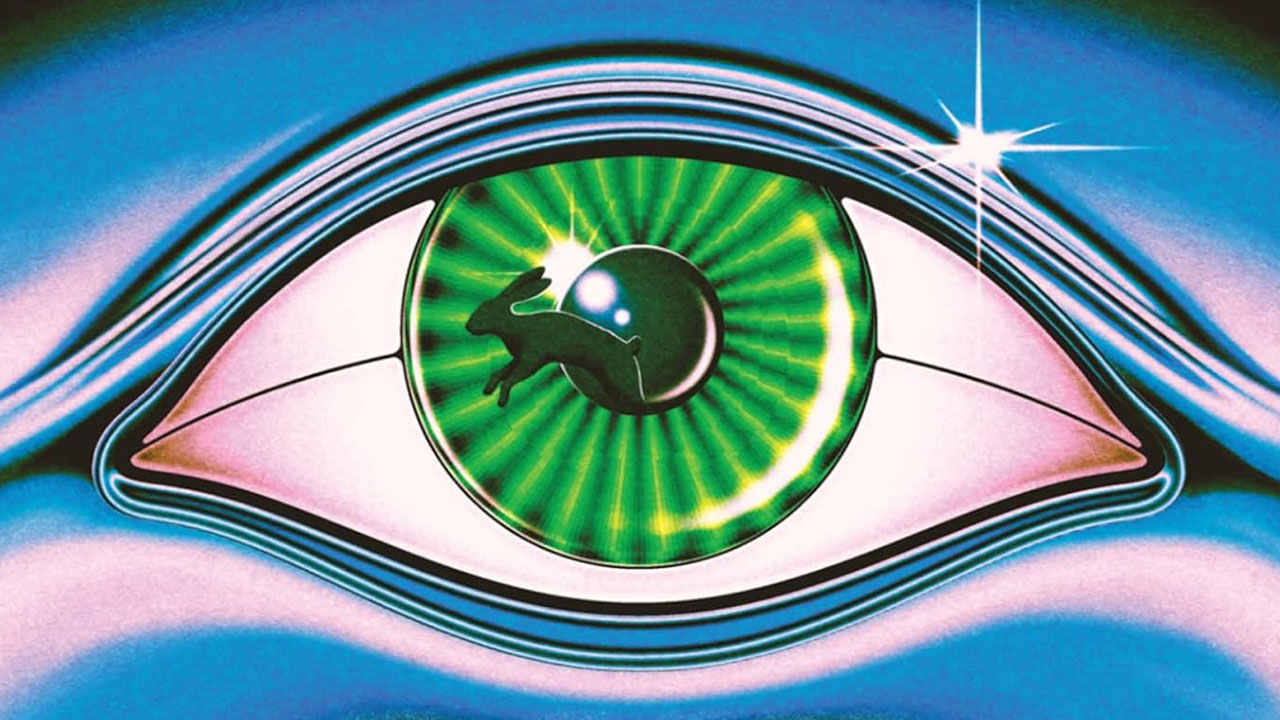
Paul Tremblay didn’t start his writing career believing he’d be battling machines over the sanctity of his job, but like so many writers of his generation, the battle found him. In the years since Large Language Models (LLMs) and neural networks started gaining traction as an advertised shortcut to creativity, Tremblay has been active in lawsuits to prevent the use of his works in training AI models, and he’s found that, with each new project, he has to consider the possibility that some LLM, somewhere, is going to latch on to what he’s creating.
“Now I feel like I’m thinking about, ‘Man, how am I going to write things that would be really hard or impossible for an AI to replicate?’,” Tremblay told me, speaking by Zoom from his home in Massachusetts. “Maybe some of that is ego. I’m sure every writer thinks, ‘Oh, an AI could never write what I write.’ Yes, I’d be lying if I said that wasn’t part of the thought process.”
While that’s something Tremblay might consider with any new work at this point in his career, the Bram Stoker Award-winning author of A Head Full of Ghosts, The Cabin at the End of the World, and many other novels and short stories tackled it in a more direct way with his latest book. Inspired by Philip K. Dick, Harlan Ellison, and the quirky humor of the Coen Brothers, Dead But Dreaming of Electric Sheep is Tremblay’s attempt at a sci-fi-horror mash-up that’s both darkly funny and existentially nightmarish. It’s also, in his own words, a screed against the movement by AI companies to supplant human artists.
“I didn’t want to make it too didactic, but no, I playfully described this book as an anti-AI screed,” he said. “This book, in particular, was driven by anger and frustration, for sure. Not every book is going to be driven that way.“
Despite the emotions that fueled it, Dead But Dreaming of Electric Sheep does not read like a screed. Instead, wielding offbeat humor and tech concepts that feel both lived-in and frighteningly tactile, the book lays out tandem narratives all building to the same conclusion, each of them exploring our relationship to machine learning in a different way. One of these narratives belongs to Julia, a former gaming streamer looking for a new challenge in life, who gets a call from a California tech company with an interesting offer.

Paul Tremblay in documentary series “First Word on Horror”
The company has, it seems, implanted some new technology in a brain-dead middle-aged man which will, in theory, allow them to pilot the man’s body through a rudimentary, still-developing system of controls. Julia, with her gaming background, would be the pilot, in her own way just as much a test subject as the human vegetable she’s controlling.
Julia is a Gen Z streamer with an omnivorous pop culture appetite, inspired by Tremblay’s own adult children, who riffs on The Big Lebowski constantly and calls her strange new meat puppet “Bernie” in reference to Weekend at Bernie’s. Her wide frame of reference, and her interest in art and stories far beyond video games, is in part informed by Tremblay’s own experiences with Gen Z, and in part a response to AI companies who scrape art and culture as a means of consuming it for reference without really experiencing a story.
“I know that one of the arguments that OpenAI and other tech companies are trying to make is like, ‘Hey, you writers, you artists, you take pop culture, you take your influences, and you create something. That’s just the same thing that the bots are doing.’ And it’s just not,” Tremblay said. “I wanted to have Julia have her outlook informed by all this pop culture, and I wanted to make that feel really human as a way to show how inhuman the AI is.”
The other side of the story belongs to “Bernie,” who’s addressed in his point-of-view chapters as “You.” In these chapters, the technology in Bernie’s body starts to flicker images through his seemingly dead brain, delivering half-remembered imagery and perspective in a nod to the “hallucinations” of an AI model groping for understanding it can never reach. These chapters in particular show off Tremblay’s flair for formalist shake-ups, and echo the kind of hyperstimulated writing that Dick and Ellison made so influential.
“I think it was more just the general Philip K. Dick feeling of ‘The world is so strange,'” Tremblay said. “He’s a lot funnier, I think, than maybe a lot of people credit him. That’s definitely what I was thinking of when writing the book.“
Bernie’s chapters embody the strangeness of Dead But Dreaming of Electric Sheep, presenting imagery that’s at times puzzling, at times eerily filmic, and always unnerving. They also mirror Julia’s own journey in fascinating ways as the odd couple – the Gen Z gamer and the middle-aged vegetable – traverse the United States, and the tech in Bernie’s body wakes up to the possibilities of using his flesh for its own purposes. It’s a compelling narrative technique, but it presented some new writing challenges for Tremblay.
“I quickly realized I couldn’t write this book the same way I have in the past,” he said. “By that, I mean all my other novels I had written in the order in which it was presented, even things that are nonlinear, which is most of them. I knew I couldn’t do that in this book. It’s not a spoiler, but hopefully the readers figure out pretty early that the Bernie chapters are a little bit of a preview of the next chapter from Julia, what’s actually happening with Julia. It’s all refracted from him.”

Mary Roach’s Stiff
Dead But Dreaming of Electric Sheep began with a simple image, inspired by Tremblay’s reading of Mary Roach‘s book chronicling the history of our treatment of corpses, Stiff. As he read, Tremblay imagined a body sitting on an airplane, remote-controlled by someone else. At the time, it was a “silly what-if” concept, filed away in his head. Years later, when he became an author suing a tech company to keep AI from scraping his work for ideas, it started to feel frighteningly plausible, taking the “silly what-if” into the territory of a high-concept horror show about what happens when we try to exploit and commodify uniquely human aspects of consciousness.
“It stuck with me,” Tremblay said of that what-if imagery. “And then a few years later, when I was a part of the case suing OpenAI on behalf of writers, that what-if suddenly didn’t seem as silly. The more I learned about how that corporation operates and without really any sort of ethical thought to anything, I was like, ‘Oh, I’m going to play with that. That’s actually happening.”
So, what if someone actually in favor of generative AI picks up Tremblay’s self-described “anti-AI screed?” He hopes that, at the very least, he’s made the ride enjoyable in a distinctly human way that might begin to reshape the conversation.
“I think that was another reason why I wanted to have the humor,” Tremblay said. “If people are reading this book who aren’t on the side of like, ‘Hey, LLMs taking authors’ books is bad,’ maybe if they read something that’s cut with some humor, that maybe they’ll be more easily swayed.”
Dead But Dreaming of Electric Sheep is now in bookstores everywhere.

You must be logged in to post a comment.