Editorials
Time to Revisit…’Tales From the Crypt: Demon Knight’

Ever wonder why some of your favorite lesser-known horror movies sit idly by while other films seem to capture all the glory? I know I do. That’s why I’ll be taking a look at a few horror movies over the next few days and weeks that I feel merit much more appreciation than they’ve actually received. Further, I’ll be holding these under-appreciated gems up against the examples of much more prominent similar movies to make my case for why they deserve a reappraisal.
In this edition, I take a look at the overlooked 1995 supernatural horror flick Tales From the Crypt: Demon Knight and discuss why fans of Sam Raimi’s first two Evil Dead entries – as awesome as those movies are – could maybe stand to throw a little recognition in the direction of Ernest Dickerson’s dust-collecting mini-classic.
Beloved Favorites: The Evil Dead (1981) and Evil Dead II (1987)
Number of votes on IMDB: 49,409 and 47,475, respectively

The Plots: An assortment of individuals, led by valiant protagonist Ash, become stranded in a remote cabin and must do battle with an evil force capable of possessing the bodies of the living and transforming them into murderous demons.
Why they’re so celebrated: While tonally quite different from one another, the first two films in the Evil Dead series are landmarks of the horror genre and famous for kick-starting future Spider-Man director Sam Raimi’s career. Their “D.I.Y.” origins, over-the-top grotesqueness and willingness to “go there” (I’m particularly referring to the infamous “tree rape” scene in the first entry) won over legions of hardcore genre fans, and in subsequent years the films have become widely accepted as horror classics by both top-shelf movie critics and more mainstream filmgoers. Not to mention, they are regularly cited as major influences by several future auteurs of the genre.
Why it’s time to backburner them for awhile: Make no mistake: I am in no way suggesting that Evil Dead 1 and 2 are bad movies, or somehow undeserving of the praise they have received. They are, in fact, excellent films, and they’ve proven remarkably influential on subsequent generations of independent filmmakers. But that’s just the thing: we all know they’re great, we all recognize their importance in the scheme of the horror genre, and many of us have probably watched each of them at least half a dozen times. Maybe it’s time to take a step back for a bit? Revisit a similar title that doesn’t garner near the amount of recognition as the Evil Dead films but perhaps deserves a little more appreciation? Possibly a film like…
Undervalued Also-Ran: Tales From the Crypt: Demon Knight (1995)
Number of votes on IMDB: 6,942

The Plot: An assortment of individuals, led by a mysterious stranger named Frank, must fend off a horde of monsters in a remote boarding house when the Collector, a vicious demon disguised as a man, comes to retrieve a mystical artifact from Frank’s possession that has the power to open the gates of Hell.
Why it’s not so celebrated: The first of a planned trio of Tales From the Crypt spin-off films, Demon Knight posted respectable enough box-office and home-video sales/rental numbers to warrant a second (though essentially unrelated) entry in the series – the inferior Dennis Miller vampire flick Bordello of Blood – but it nevertheless failed to make much of a dent in the popular consciousness. Though it certainly has a few admirers, it’s now generally viewed as a failed experiment at extending the Tales from the Crypt brand into a successful theatrical franchise. It also debuted at a time in which the horror genre was at a relative low point both artistically and commercially, with Scream nearly two years away and the slasher boom of the `80s long since relegated to the cultural dustbin.
Why it deserves a revisiting: Ok, I’ll admit that director Ernest Dickerson (Bones, The Walking Dead) is no Sam Raimi – he doesn’t possess near the amount of stylistic panache – but with Demon Knight he managed to deliver a fun, solidly-crafted supernatural horror flick that stands as one of the most underrated genre entries of the `90s. Blessed with a very good cast including Billy Zane, William Sadler, Thomas Haden Church, and CCH Pounder (Jada Pinkett is in it too) and sporting some genuinely impressive (and wonderfully gory) practical effects work, Dickerson admirably balances the horror and comedic elements in a way that doesn’t feel forced.
The film also boasts some sharply-drawn (though expectedly broad, given the genre) characters and a mythology surrounding the central MacGuffin (a mystical key containing the blood of Christ) that works surprisingly well. While the film doesn’t reach the same manic heights as the Evil Dead films, it’s still a fast-paced, energetic ride that’s definitely worth a (second?) look for anyone who counts themselves as fans of Raimi’s early work.
Clip:


There’s a lot of reading left to do in 2026, between the glut of summer releases and the approach of fall, when horror titles get a special push from publishers, but this has already been an incredible year for horror literature.
Some of the biggest names in the genre have turned in outstanding work, rising stars have made their mark, and we’re only halfway through the year.
To celebrate the midway point of 2026, with plenty of horror books still to come, we’re taking a look back at the best horror books we’ve read this year so far, listed alphabetically by author.
If you missed any of these books earlier in the year, consider this your reminder to catch up.
Japanese Gothic by Kylie Lee Baker

A student running from a crime he may or may not have committed escapes to his father’s country home in Japan, only to find himself haunted by strange apparitions, while in the past, a young samurai tries to find salvation for her family and finds a door to the future instead. Kylie Lee Baker’s Japanese Gothic begins with this dialogue between past and present, and then blossoms into so much more, a cross-time ghost story about old wounds and what it really takes to finally heal them. I got so happily lost in this one that I would have read at least 200 more pages.
Persona by Aoife Josie Clements

In this tale of shut-ins, sex workers, artists, and the horrors they both summon and recoil from, Aoife Josie Clements weaves something that feels less like a story to be experienced and more like a psychic wound to be endured, and I mean that in the most complimentary way possible. Evocative in its prose and nightmarish in its imagery, Persona is a story of the masks we wear, and the understanding that not all of our masks are particularly pretty or even easy to breathe through. It’s a dense, literary, unnervingly vicious book, and while it’s already attracted an audience, it deserves a much bigger one.
Dead First by Johnny Compton

Johnny Compton’s latest novel opens with a throwing down of the gauntlet, a sequence that made me instantly think “How on Earth is he going to top this?” It’s a story that begins with a billionaire hiring a private investigator to determine why, despite trying in many brutal ways, he cannot die. That premise, and the scene which sets it all off, is so alluring and delightfully gruesome that you almost can’t believe it’s the way a book begins, and then Compton just keeps going, delivering a supernatural mystery that I could not put down.
Make Me Better by Sarah Gailey

A woman grieving for the life she wanted visits a mysterious island renowned for the healing salt its residents harvest and sell, seeking renewal and relief. What she finds instead is a strange cult with a twisted history with surprising resonance in her own life, and a people who are more than willing to grant the relief she wants, for a price. Laced with beautiful prose and moments of profound realization alongside folk and even cosmic horror, this is vintage Sarah Gailey.
Partially Devoured by Daniel Kraus

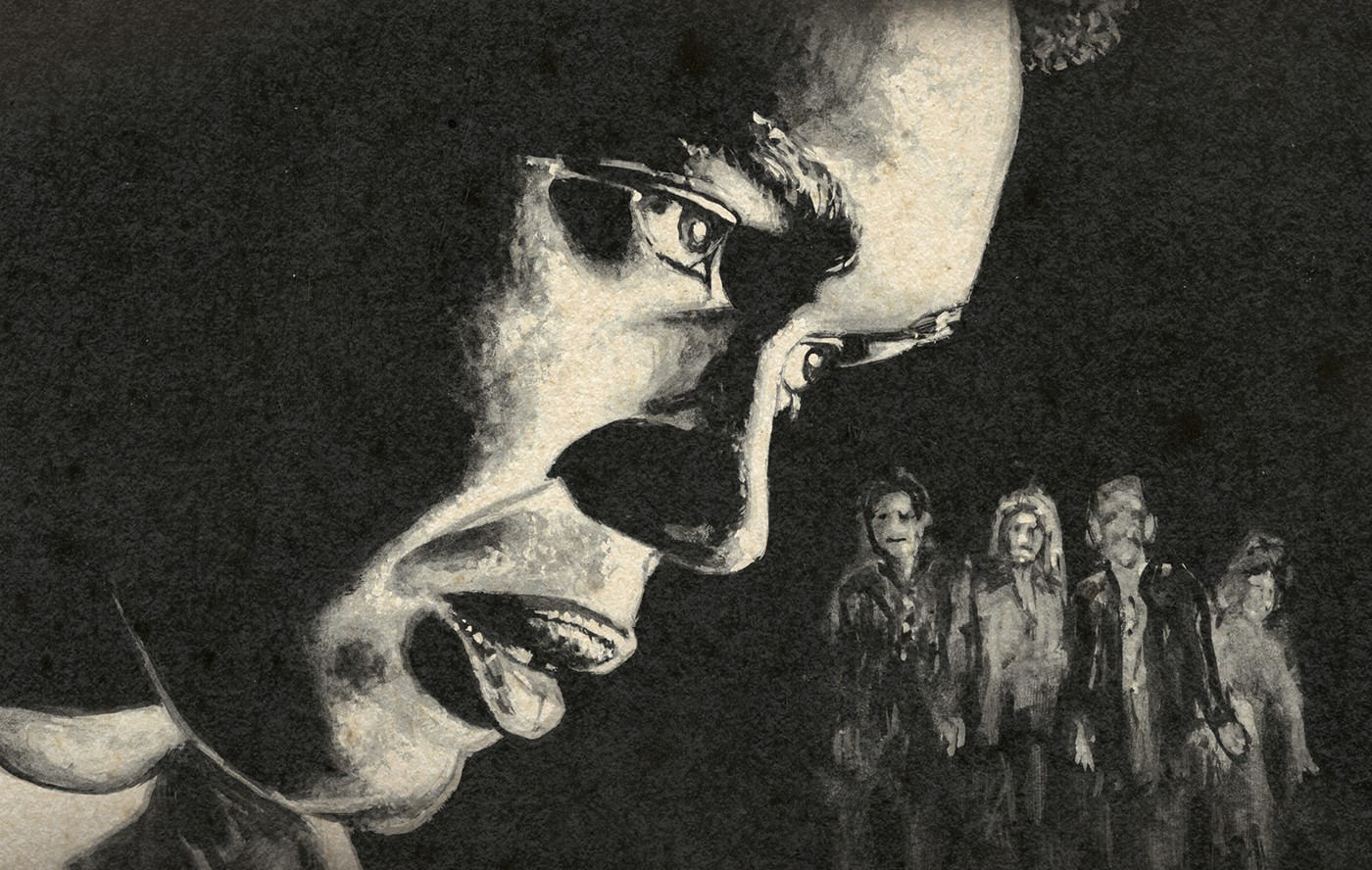
If you love horror film history and analysis, Partially Devoured is an essential. Written by Pulitzer Prize-winner Daniel Kraus, the book is a deep dive into his favorite movie of all time, George A. Romero‘s Night of the Living Dead, complete with exhaustive research into the making of the film and passages of deeply moving memoir woven in. If you’ve ever wanted to know what the eerie music that opens the film is called while also bursting into tears at how horror movies can save your life, this is a must-read.
Wretch by Eric LaRocca

Our reigning King of Extreme Horror, Eric LaRocca weaves books of uncommon beauty out of the most nightmarish parts of humanity, and Wretch is no exception. The story of a grieving man who longs for relief and searches for it amid a strange support group that might be a cult, Wretch is a brutal journey into the darkest part of us all, and explores what salvation we might find when we get to the rotten core of the world and peel back its layers. LaRocca’s on a tear of great work right now that few other genre writers can match.
Headlights by CJ Leede

A mystery, a serial killer horror show, a tribute to Stephen King‘s The Shining. All of these things describe CJ Leede’s Headlights, and yet they don’t begin to cover the full breadth of horror awaiting you in this novel. The story of a former FBI agent drawn back into the cold case that haunts him most, it’s a shocker brimming over with vivid moments that’ll live behind your eyes. CJ Leede has now published three novels, and they’re all bangers, so it’s time to get on board if you haven’t already.
It Came From Neverland by Cynthia Pelayo

Cynthia Pelayo has been one of our finest genre writers for years now, but It Came From Neverland is my favorite thing she’s written, and it’s not even close. A dark take on Peter Pan from the perspective of an adult Wendy Darling living in World War I-era London, Pelayo’s book works as both a satisfying horror narrative and a rich exploration of what it really means to never grow up. The horror never loses its potency, but it’s the search for the meaning behind the Peter Pan phenomenon in our own lives, and what we can do about it, that sticks with me most.
Filth Eaters by Ito Romo

Ito Romo’s Filth Eaters is a slim volume, one you can read in just a couple of hours if you’ve got the inclination, but it has the feel of a generation-spanning epic. The story of a breed of vampires born in Central America, the European vampires who encounter them, and the offspring they eventually produced, it spans centuries and packs loads of juicy lore into its pages while never losing its grip on character and narrative drive. I would read hundreds more pages of this world, but I’ll settle for this uncommonly grand-scale novella for now.
Dead But Dreaming of Electric Sheep by Paul Tremblay

A former pro gamer gets a job at a tech company to pilot a brain-dead human body across the country, and so Paul Tremblay’s sci-fi-horror juggernaut begins. Indebted to Philip K. Dick, the primal snarl of Harlan Ellison, and the quirky comedy of The Big Lebowski, and yet wholly original, this is a towering and ambitious novel by one of horror’s most respected voices. What starts as a high-concept tech thriller soon becomes a startling meditation on the value of stories, who gets to tell them, and what happens when we cede too much control to machines we don’t understand. It’s a stunner.
You must be logged in to post a comment.