Editorials
Special Feature: Chills Over Kills – A Look at the Current State of the Horror Boxoffice

Unless you’ve been living under a rock lately, you’re probably aware that despite industry predictions, high-profile franchise entry Scream 4 (a bloody slasher) floundered at the box-office recently, while the lesser-hyped Insidious (a supernatural fright flick) became a sleeper word-of-mouth hit. It doesn’t appear to be an isolated incident, as over the last couple of years (roughly since the time Paranormal Activity exploded onto the scene) we seem to have experienced a shift in the viewing habits of horror audiences – in essence, a move away from bloody slasher/splatter films (Scream 4, Saw 3D, A Nightmare on Elm Street) and a gravitation toward lower-key offerings that put the emphasis on “chills over kills” (Insidious, Paranormal Activity, The Last Exorcism).
But does this observation hold up in light of the actual numbers? From Saw in 2004 to Insidious in 2011, B-D’s Chris Eggertsen sifts through the last seven years of horror box-office to get to the bottom of it all. Check out the full rundown inside.

There’s an over-utilized cliché about horror films – mostly propagated by snobby mainstream critics who lack a proper understanding of the genre – that “what you don’t see is the scariest thing of all.” While there’s certainly a kernel of the truth in that statement, it’s too often thrown out as a way to demean films that feature explicit violence without actually taking their artistic merits into consideration.
Yes, atmosphere is an essential component in spinning an effective horror film, but that’s not to say that because a director utilizes other tricks of the trade in addition – i.e. the literal blood and guts – that his/her product is somehow inferior. I agree that atmosphere – the “what you don’t see” – is the thing makes a movie frightening, but in the hands of a skilled filmmaker, that atmosphere will come through regardless of whether it’s used in service of a film featuring overt visual shocks, low-key shivers, or an effective mixture of both.
Nevertheless, shortsighted critics of slasher/splatter films must certainly be pleased at some of the latest developments at the box-office – specifically, the apparent petering out of the “torture porn” craze paired with several recent successful titles that cater in relatively blood-free, more supernaturally-oriented scares. I’d hate for these individuals to feel any more self-satisfaction than they already do, but this is nevertheless where the horror genre seems to be headed at the moment.
Ok, so let’s back up a few weeks. Insidious, a supernatural horror film from Saw director James Wan, is quietly released in about 2,400 theaters and grosses a surprisingly potent $13 million. The following weekend, it drops less than 30% and takes in another $9 million. To date, it has grossed over $50 million and become the very definition of a sleeper hit.
Two weeks later, Scream 4, a heavily-hyped bloody slasher sequel with a top-grossing trilogy behind it, debuts to a surprisingly low $19 million. The following weekend, it drops over 60% and takes in a little over $7 million. To date, it has grossed about $37 million and become the very definition of a box-office disappointment.
A couple days after Scream 4‘s soft opening, I receive an email from Mr. Disgusting commenting on the surprising turn of events. In it, he mentions that horror audiences more or less seem to be turning their backs on the old bloody franchise offerings (Saw, Scream, A Nightmare on Elm Street) while embracing exciting new works dealing with the supernatural (Paranormal Activity, Insidious, The Last Exorcism). He then asks me if I can prove or disprove this observation in an article.
Given my closet tendency to salivate over stats (I tend to enjoy sifting through data to find patterns) I happily obliged, and subsequently combed through the box-office charts from the last seven years or so to find out whether the math supported Mr. D’s theory. Curious to hear how it panned out? Well then, keep on reading…

In essence, there have been two major signposts in the horror genre over the last seven years: James Wan’s Saw (2004) and Oren Peli’s Paranormal Activity (2009). Both films were made with very small budgets, both proved extremely profitable relative to those budgets, and both spawned new trends in the horror genre – gory “torture porn”/new-wave splatter films (Saw) and smaller-budgeted supernatural horror films (Paranormal Activity). Both also seemed to toll the death knell for the dominant horror trends that preceded their releases (Saw for the “J-horror” sub-genre, Paranormal for the “torture porn” sub-genre).
Indeed, since the phenomenal success of Paranormal in autumn 2009, there seems to have been a shift in the movie-going habits of horror audiences. The once-mighty Saw franchise, which succeeded in kick-starting the “torture-porn” craze, had already begun looking a little stale after the release of the fourth installment in 2007, which grossed around $63 million domestically – a significant drop from Saw III‘s $80 million just one year prior. The following year, Saw V grossed even less, with $57 million in domestic receipts.
It was right around that point that the genre seemed to fall into a kind of limbo similar to the period in the early `90s that came between the fading of the `80s slasher boom and the surprise success of Scream. Though gory slasher/splatter films continued to perform well – bloody remakes of Halloween, Friday the 13th and My Bloody Valentine all scored with audiences – none hit with quite the same force as the Saw franchise, which had come to define horror (for better or worse) in the mid-2000s. Nevertheless, gore-intensive R-rated remakes and franchise entries continued to show strength, and the studios continued to churn them out.
When Paranormal Activity was released in September 2009, it seemed to signal the pent-up desire from horror audiences for something new. The micro-budgeted found-footage film ultimately grossed over $100 million at the domestic box-office, making it one of the most profitable titles of all time. By contrast, Saw VI grossed a relatively meager $28 million domestically – less than half of what Saw V had managed – and was handily beaten in its opening weekend by Paranormal, already in its second week of wide release.
A few months later, in April 2010, the Nightmare on Elm Street remake – which despite its supernatural overtones falls much more in line with bloody offerings like Saw than Paranormal – also proved to be a box-office disappointment. While its $63 million take by no means qualifies it as a flop, it still fell short of what most box-office prognosticators had been predicting and seemed another indicator of audiences’ fatigue concerning bloody horror flicks – ushered in by the success of Saw – that put the emphasis on, as I like to call it, “kills over chills”.
Adding further fuel to this idea was the mediocre Stateside box-office performance of Saw 3D in October 2010, which despite its inflated 3D ticket prices made barely half of what Paranormal Activity 2 – released just the week before – managed by the end of its run. Meanwhile, supernaturally-tinged horror flicks such as mock-doc The Last Exorcism ($41 million domestic off a $1.8 million budget) and Devil ($34 million domestic off a $10 million budget) – not to mention “semi-horror” blockbusters such as Martin Scorsese’s Shutter Island ($128 million) and Darren Aronofsky’s Black Swan ($107 million) – were managing to connect with audiences (though the latter two admittedly have only one foot in the genre).

Looking at the box-office charts in greater detail, I first started with October 29, 2004 – the date Saw was released in theaters – and took account of the commercial performances of the horror films that followed in its wake. To be clear, I’ll only be looking at “pure” works of horror – i.e., films produced with the express purpose of eliciting fear and/or disgust in audiences by utilizing standard genre tropes. Coming up with the “pure horror” definition was something of a challenge, but I ultimately arrived at what I feel is a fair cut-off point:
Both Saw and Paranormal Activity definitely count under the “pure horror” definition, for pretty obvious reasons. On the flipside of that, successful franchises like Resident Evil and Underworld do not count, as those movies – while they do utilize elements of horror – function mainly as action films. The same goes for offerings like I Am Legend (apocalyptic sci-fi/horror/action hybrid), The Mummy (tent-pole summer adventure film), Cloverfield (giant monster/disaster film), and Legion (supernatural action film) – all movies with horror elements that nevertheless fall outside the “pure horror” label.
Movies like the aforementioned Black Swan and Shutter Island also don’t qualify, for while both can certainly be termed “horror”, they could just as easily be classified as “psychological thrillers” – the latter designation of which you’d have a much harder time applying to, say, Hostel or Insidious (both of which count as pure horror films).
Using the above definition to weed out non-“pure” genre entries, then, here are the top ten grossing horror films in the domestic market released between October 29, 2004 (Saw‘s release date) and September 24, 2009 (the day directly prior to Paranormal Activity‘s release).
(Note: The titles are color-coded depending on which of the two above-stated categories they most easily fall into – “torture porn”/splatter/bloody slasher (RED) or spooky supernatural fare (BLUE).
Top 10 Domestic Grossing Horror Films 10/29/04-9/24/09
Saw II $87m (2005)
Saw III $80m (2006)
The Ring Two $76m (2005)
1408 $72m (2007)
The Final Destination $66m (2009)
The Amityville Horror $65m (2005)
Friday the 13th $65m (2009)
Saw IV $63m (2007)
Halloween $58m (2007)
Saw V $57m (2008)
As the chart clearly indicates, the horror box-office during this five-year period was dominated by bloody “kills over chills”-oriented horror fare, with seven of the top ten films falling into that category. By contrast, the sole supernatural offerings on the list that count as bona fide hits are 1408 and The Amityville Horror, while The Ring Two, while it became a profitable title after factoring in its worldwide box-office take, fell far below expectations and made less than 60% of the first film’s total domestic gross.
By contrast, here is how the box-office chart for horror films shapes up over the period spanning September 25, 2009 (Paranormal Activity‘s opening weekend) to the present day:
Top 10 Domestic Grossing Horror Films 9/25/09-present
Paranormal Activity $108m (2009)
Paranormal Activity 2 $85m (2010)
A Nightmare on Elm Street $63m (2010)
The Wolfman $62m (2010)
Insidious $50m [so far] (2011)
Saw 3D $46m (2010)
The Last Exorcism $41m (2010)
The Crazies $39m (2010)
Scream 4 $37m [so far] (2011)
Devil $34m
Now this one’s a little trickier, for a couple of reasons. First off, while five of the ten films on the chart still fall into the slasher/splatter category (thereby seeming to represent a more or less equal share of the box-office), it’s imperative that you look past the single number representing each film’s domestic box-office gross and take other factors into account.
The highest-grossing slasher/splatter film on the list is A Nightmare on Elm Street with $63 million, which is considerably less than the domestic box-office take of both Paranormal Activity entries and a disappointment relative to how it was expected to perform. While it managed to gross a strong though relatively disappointing $33 million its opening weekend (nearly $8 million less than Friday the 13th, despite that film having opened in around 200 fewer theaters), it dropped precipitously in the coming weeks, and ultimately struggled to top $60 million. It ended up making slightly less than both the lower-budgeted Friday the 13th remake ($65 million final) and reboots of franchises with considerably lesser name value, including The Texas Chainsaw Massacre ($80 million final) and The Amityville Horror ($65 million final).
In addition, with its $35 million price tag – indicative of Platinum Dunes’ confidence in the iconic title’s ability to draw big box-office numbers – Elm Street was a considerably bigger gamble than previous recent horror reboots (Texas Chainsaw Massacre had a $9.5 million budget; Friday the 13th and The Amityville Horror both cost $19 million; Halloween and The Hills Have Eyes both cost $15 million, etc.), and its profit margin was therefore quite a bit narrower.
As for other “kills over chills” entries on the above list, The Wolfman – which arguably fits into the Saw/Hostel category given its rather high body-count and succession of gory deaths, though in fairness it doesn’t comfortably fit into either category – was an out-and-out commercial failure ($150 million budget, $62 million domestic, $139 million worldwide), while both Saw 3D and Scream 4, two highly visible slasher/splatter franchise sequels, were also considered disappointments relative to industry expectations (though it should be noted that Saw 3D still made a very impressive $136 million worldwide against a still-modest $20 million budget, despite its rather weak $46 million domestic take). The Crazies, meanwhile, proved only a modest commercial success that pales in comparison to the supernatural offerings on the list, particularly when you take into account its relatively low profit margin ($39 million domestic gross off a $20 million budget, for a total of $54 million worldwide).
By contrast, every single “chills over kills” horror film on the list is generally regarded as either an outright blockbuster (Paranormal Activity 1 and 2), a hit relative to its budget and marketing visibility (Insidious, The Last Exorcism) or a minor success (Devil, which grossed over three times its $10 million budget domestically).
Of course, one need only look at the top two entries on each of the above lists to get a sense of the shift in the viewing behavior of horror audiences: in the 2004-2009 period Saw II and Saw III (gory “torture porn”) took the top slots, while in the 2009-2011 period the top two films were Paranormal Activity and Paranormal Activity 2 (low-key supernatural offerings).
One thing that should be noted is that the time period covered in the second list (2009-2011) is obviously shorter than the time period covered in the first (2004-2009), so it remains to be seen whether the trend is set to continue over the next few years. Nevertheless, given the numbers as they stand now, we do seem to be headed for a renaissance of sorts for supernatural horror.
A final note on this would be that despite one type of horror films’ dominance over any given period, it doesn’t mean that horror films falling outside that model are somehow doomed to failure during the same timeframe. Even during the “torture porn” years, supernatural hits like 1408, The Amityville Horror, White Noise, and Boogeyman managed to rise above the blood-drenched landscape and post impressive box-office numbers. During the same span of years, gory disappointments like House of Wax, Hostel: Part II, Captivity, and Turistas failed to join their bloody peers at the top of the box-office heap.
In other words, and despite what Hollywood might think, horror fans don’t just want bloody slasher movies at one point, and just supernatural offerings at another, or whatever other negligible trend the studios choose to latch onto. The simple fact is, most horror fans I’m familiar with prefer a buffet of options that includes both the savage and the sinister. Our seeming fickleness – i.e. our tendency every few years to change our viewing habits in rather dramatic ways – simply grows out of our fatigue when Tinseltown, grabbing desperate hold of any audience patterns they can ascertain, proceeds to bombard us with a host of copycats and sequels that largely dilute what we found so special about the film or films we made successful in the first place.



The problem with filming sequels back-to-back is that, unless you can afford expensive reshoots, there’s no easy way to adjust course in between movies if fans react badly to where the story is headed. That’s why it’s important to have a complete narrative thought out well in advance lest you accidentally kill a budding franchise.
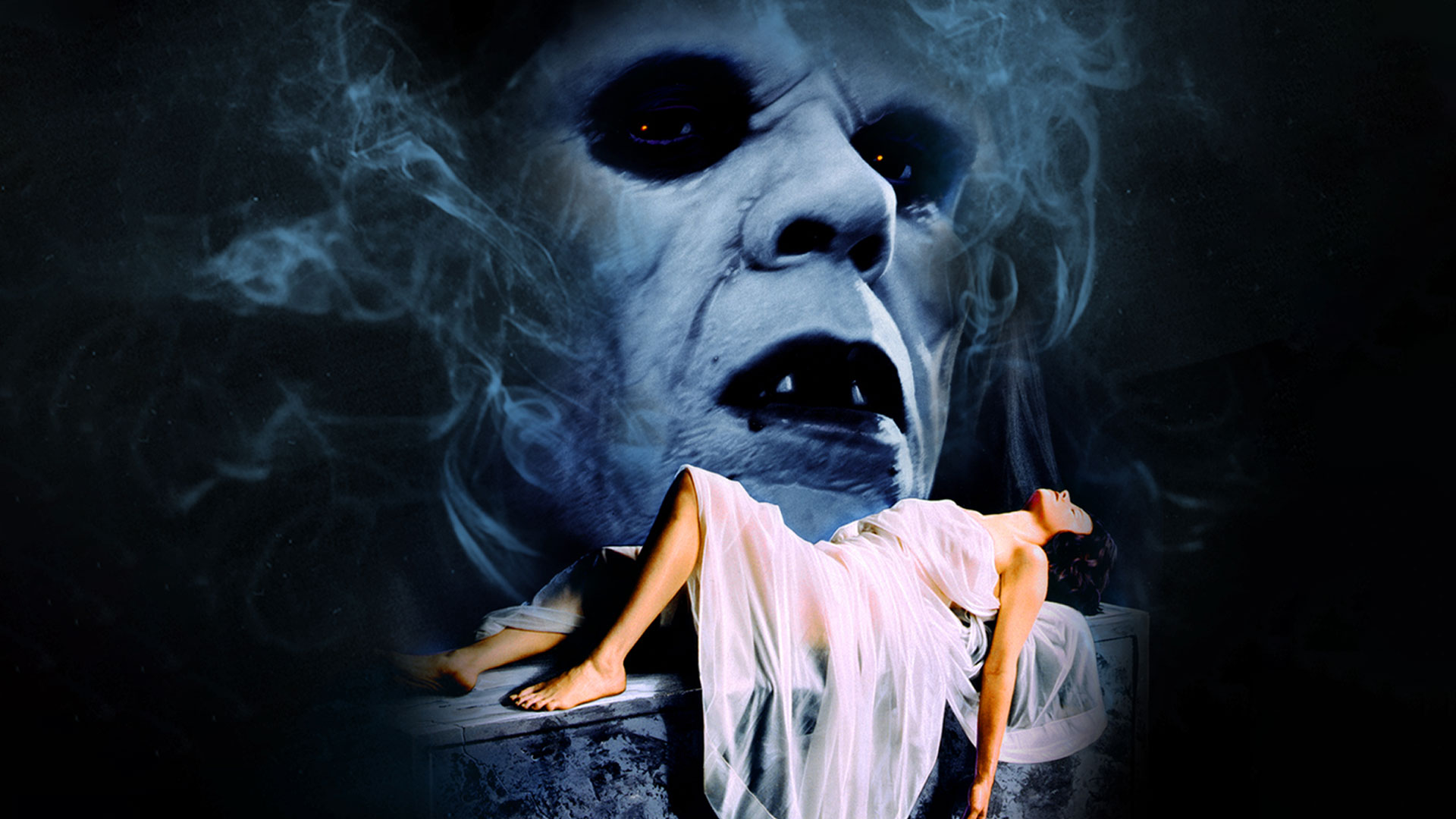
However, this isn’t always the case. Every once in a while, it seems like the cinema gods smile upon certain chaotic productions and gift moviegoers with complete franchises that feel like more than the sum of their hastily produced parts. Ted Nicolaou’s Bloodlust: Subspecies III is precisely one of these miraculous pictures, with the raw talents of the artists involved (as well as the continued support from Romania) turning the feature into an effective conclusion for a series that kind of made things up as the filmmakers went along.
That’s why I’d like to invite my fellow readers to join me on this third part of our journey through the Subspecies franchise as we look into Bloodlust and talk about how it remains a surprisingly satisfying finale to the original trilogy.
A Trilogy Planned on the Fly

Released only a year after Bloodstone found plenty of success in rental stores and mail-in VHS catalogues worldwide, 1994’s Bloodlust was produced at the same time as its predecessor in (mostly) the same locations and with the same team. This means that the movie benefited from all the same upgrades as Bloodstone, with the crew now being more experienced with the ins and outs of surviving a low-budget Romanian production and the cast really settling into their characters.
At this point, everything from location scouting to the makeup process had been streamlined, with Wayne Toth and Norman Cabrera, the main duo behind special effects, even switching out time-consuming prosthetics for latex gloves in order to speed up Anders Hove’s monstrous transformation. The titular “subspecies” demons were also once again relegated to a mere cameo appearance due to the laborious puppetry required to bring them to life.
The only real hiccup came from the fact that actress Denice Duff had replaced the first film’s Michelle (Laura Mae Tate) and was immediately expected to portray the character as both an innocent victim in part II and as a secondary villain in part III. According to behind-the-scenes interviews, the hectic production schedule that blended two different movies meant that Duff would often find herself having to alternate between two incredibly different versions of Michelle during the same shooting day – though it’s obvious that she’s having more fun with Bloodlust’s more traditionally vampiric version of her character.
In the finished film, we pick things up immediately where the previous entry left off as Rebecca (Melanie Shatner) is forced to leave her vampire sister Michelle (Duff) behind in the dungeons of Castle Vladislav due to the rising sun. This allows Mummy (Pamela Gordon) to use Michelle’s blood to revive the vicious Radu (Hove) so that he may continue his quest for the coveted Bloodstone – a magical artifact that perpetually drips the Blood of Saints.
Meanwhile, the dreamy US embassy agent Mel (Kevin Blair) agrees to help Rebecca plan a rescue mission, though they’re unaware that Radu has become infatuated with Michelle during his attempts to guide her growing bloodlust. This all culminates in a climactic confrontation meant to tie up all of the series’ loose ends in one of Full Moon Pictures’ most ambitious productions.
The Evolution of Radu

Like its predecessor, Bloodlust: Subspecies III was also warmly received by fans who argued that the series was an even bigger success than Full Moon’s other major horror franchise, Puppet Master. This praise wasn’t unanimous, however, as 1994 had seen the rise of a more modern breed of sexy vampire popularized by Anne Rice, with old-school Nosferatu like Radu being viewed as obsolete when compared to the likes of Lestat and Gary Oldman’s take on Dracula.
In a way, one might argue that Nicolaou’s film is something of a swan song for the classic vampire story, as Bloodlust combines all of the traditional elements we tend to associate with these tales into a single tragic yarn that ties a neat little bow on Radu’s story as well as the old-fashioned monster movies that he represents. The finale remains shocking despite the fact that this is the third time we see Radu get brutally killed onscreen, with the brief tease that he may one day return feeling more like a nod towards the nature of evil rather than sequel bait.
The film dabbles a bit in gothic romance and even explores the inherent power fantasy behind transforming into an immortal creature of the night, but the filmmakers never lose sight of Radu as a demonic force even when he’s willing to betray his beloved Mummy for Michelle’s sake. In fact, his twisted “love” for his fledgling makes him even creepier as we get the feeling that his passion comes from a dark and disturbing place.
Anders Hove is at his absolute best in this film, with the effects department boosting his moments of what the younger generation would call “aura farming” whenever Radu emerges from shadows like a 90s version of Count Orlok. There are even a couple of surprisingly effective jump-scares here, which is why I’d argue that Bloodlust cements Radu as one of the most memorable cinematic vampires of all time despite his humble origins.
Subspecies Saves Its Best For Last

Nicolaou and Vlad Panescu also saved the best for “last” (more on that in a bit) regarding the film’s visuals, with the cinematography and overall atmosphere of Bloodlust absolutely surpassing what we saw in the previous films. Everything feels appropriately climactic this time around (including the wonderful soundtrack that was co-composed alongside an authentic Romanian orchestra), and I appreciate how this is the fastest-paced entry in the trilogy since the film doesn’t need to waste time setting anything up.
Bloodlust still suffers from some of the same low-budget blemishes as its predecessors, but there’s so much creative passion here that no amount of wonky effects work or stilted dialogue can get in the way of appreciating the flick’s gothic grandeur. That’s why it’s not surprising that the movie’s definitive(-ish) ending would later be retconned as fans begged for more Radu.
Of course, the next entry in this series would be a different kind of vampiric endeavor altogether, with the filmmakers attempting to engage with the same trends that ultimately killed Radu and his antiquated kin. That, however, is a story for another time. For now, I’ll merely insist that Bloodlust: Subspecies III remains a highlight of Full Moon’s expansive catalogue and is definitely worth seeking out today.
You must be logged in to post a comment.