Interviews
[Interview] ‘Shark Night 3D’ Cast: Sara Paxton, Dustin Milligan and Joel David Moore!

Just when you thought it was safe to go back in the water…again, this weekend brings Shark Night 3D, director David Ellis’ contribution to the underwater horror genre.
Recently BD sat down with several members of the film’s cast including Sara Paxton, Dustin Milligan and Joel David Moore to discuss the upcoming thriller, with topics including the film’s animatronic sharks, how to avoid panic when you’re submerged in a cage, and what makes the film different from November’s Piranha 3DD.
See inside for the full story.

“Pigs kill more people per year than sharks.”
That fun fact comes courtesy of Dustin Milligan, who stars as “Nick” in this weekend’s Shark Night 3D, helmed by Snakes on a Plane and The Final Destination director David R. Ellis. So why didn’t they make a movie about killer swine, then?
“‘Pig Night 3D’“, pitched Milligan’s co-star Sara Paxton, who plays a character named, coincidentally, “Sara“. “I’m just throwing it out there.”
“Or ‘Shark Pig Night’, where the sharks open their mouths and then a pig flies out,” chimed in Milligan.
But while very few people are actually afraid of pigs, the vast majority of us can’t help but harbor a mostly-unreasonable fear of being yanked underwater by a giant set of razor-sharp teeth.
“It’s a universal fear, not necessarily of sharks,” said Milligan, speaking during roundtable interviews last week in anticipation of the film’s release. “But then I think when we get into an environment where we’re totally unfamiliar with it, such as deep water, the ocean, I think that’s what the film kinda preys on. Everybody’s [afraid], to some extent, of something bigger than them with sharper teeth that’s looking for a little bit of a snack… It’s always irrational, but I don’t think that makes it any less real.”
Speaking of real, there were no actual sharks used in the making of the film – though the animatronic models that were built (representing several different species, including the hammerhead and the Great White) did boast bona fide shark teeth. (Note: there will also be CG sharks featured.)
“It’s a pretty realistic shark,” said Paxton. “It’s huge, it swims really fast, and it has real shark’s teeth in it. So people were actually getting bit…the on-set photographer, the camera guys, [they] got bit by the fake shark, because it’s not completely predictable underwater. They have like three guys remote-controlling it.”
One for the tail, one for the body, and one for the mouth.
“It was so funny…watching [the animatronic technicians] miming the movements [of the mechanical sharks],” said Milligan. “One would kinda be like shaking his hips when he was doing the tail and stuff. It was so funny.”
Paxton described a near-panic moment while shooting a scene (heavily emphasized in the marketing) where her character is submerged inside an underwater cage as one of the predators tries to get at her.
“It was really hard because we’d be underwater like 45 minutes at a time to do the scenes with the regulators, breathing with the regulator, and I remember a few times we were not shooting yet and I would look up and I would see Dustin’s feet dangling, meaning he was getting real oxygen,” she recounted. “[And] I was stuck in a cage…It was real scary. You had to become completely Zen, because if you start panicking then your heart starts beating really fast and you’re using up more oxygen, so it helped that I had training from the Navy SEALS.”
The SEALS were there throughout to make sure the cast was both prepared (they all received dive training in pre-production) and safeguarded during the shooting of the underwater sequences, which alternately took place in a studio tank and in an actual lake located near Shreveport, Louisiana. While shooting the tank scenes, the cast members were forced to endure the hardship of having their eyes burned by the chlorine that was almost continuously being pumped into the water.
“We all were in chlorine for so long with our eyes open that at the end of the day we all went temporarily blind,” said Paxton. “That was the scariest part. And like the medic had nothing…I’m like ‘my eyes are falling out of my head!’”
The lake shoot wasn’t exactly a walk in the park, either.
“There’s alligators there. And locals,” joked Joel David Moore, who plays “Gordon“. “The locals are maybe more vicious than the alligators.”
It’s also not exactly great for taking a swim.
“In that kind of water you have to take a plastic baggie of fresh water…put Crystal Geyser or something in a plastic baggie, take that down and put that in front of your mask so you can have two inches of visibility,” said cast member Chris Carmack, who plays “Dennis“. “I mean it’s mucky, mucky water.”
The shoot was so physically trying, according to the cast members we spoke to, that during the more intense underwater action scenes there wasn’t necessarily much “acting” involved at all.
“Being underwater, often you don’t really have to act, because you’re just trying to hold your breath and not drown,” said Milligan. “And that’s the look they were going for.”
“I think in an action film with so much action, I think the most difficult part is when sometimes the acting becomes an afterthought, when something’s exploding, or a shark’s after you, or you’re on a jetski, or on a boat,” said Chris Zylka, who plays “Blake” (and will also appear as “Flash Thompson” in next year’s Amazing Spider-Man). “You have to really focus.”
Zylka, it should be noted, also stars in another 3D film about killer underwater creatures later this year, with his role in the highly-anticipated Piranha 3DD. The irony of being involved in both projects was not lost on him.
“As soon as I heard the news about ‘Piranha 3DD’, the irony swept straight across my face and across my mind,” he said. “It was like, ‘how many more fish movies…?’ So my last three films have been sharks, piranhas, and spiders. I think it’s time an indie or something like that.”
One person who may definitely be yearning for a less-intense experience on her next project is Alyssa Diaz, who plays “Maya“, the “feisty chica” of the group (I swear to god, that phrase is in the press notes). The actress, who told us she is genuinely terrified of sharks, recounted a day during filming when she had a close brush with another type of underwater carnivore – only this one wasn’t mechanical.
“One of the scenes I was shooting, I was about to get in [to the water], and I hear all these gasps, and they pull me back…and I’m like ‘what’s going on?’” said Diaz. “And I look out and I see this thing floating…and they’re like ‘oh, it’s a log.’ And I’m like ‘a log?’ [Then] I look back, [and] it’s gone. …It was a 14-foot alligator in the water. …So not only am I terrified of sharks, I’m like ‘ok, now there’s an alligator in the mix, a real alligator.’”
As revealed in the trailer, actor Sinqua Walls, who plays “Maliki“, is the first of the friends to have a chunk taken out of him, with his dire condition serving as the main motivation for the group to get off the island. He talked about how he managed to convey what being bitten by a shark might actually feel like while he was shooting his character’s fateful attack scene.
“I honestly just envisioned what it would be like to get shot, I guess,” he said. “Because that’s the only thing I can liken it to, is something so traumatic happening where at first that shock hits you, and you really don’t know how to respond. You don’t feel pain…and then the pain sets in later.”
Luckily for those involved in the project, they’re beating Piranha 3DD to theaters by nearly three months. But aside from the similar premises, how alike are the films really?
“I don’t think it’s as campy as ‘Piranha 3D’,” said the leggy Paxton, the “pert blonde” of the group (press notes!). “I think we tried to make the scares pretty real.”
“Yeah, I think that was the intention was to take the fun that similar…underwater 3D killer fish type movies have done, [and] just take it a little bit more seriously,” said Milligan. “It’s still really, really fun, and it’s still crazy, and wild things will happen…it just doesn’t involve a lot of boobs all the time.”
“There are some boobs,” interjected Paxton.
“A lot of man boobs,” agreed Milligan. “I’m shirtless the whole time.”
Lest we forget, with a PG-13 rating that’s the only kind of cleavage the MPAA will allow.


Interviews
Paul Tremblay on Fighting AI with Horror in New Novel ‘Dead But Dreaming of Electric Sheep’

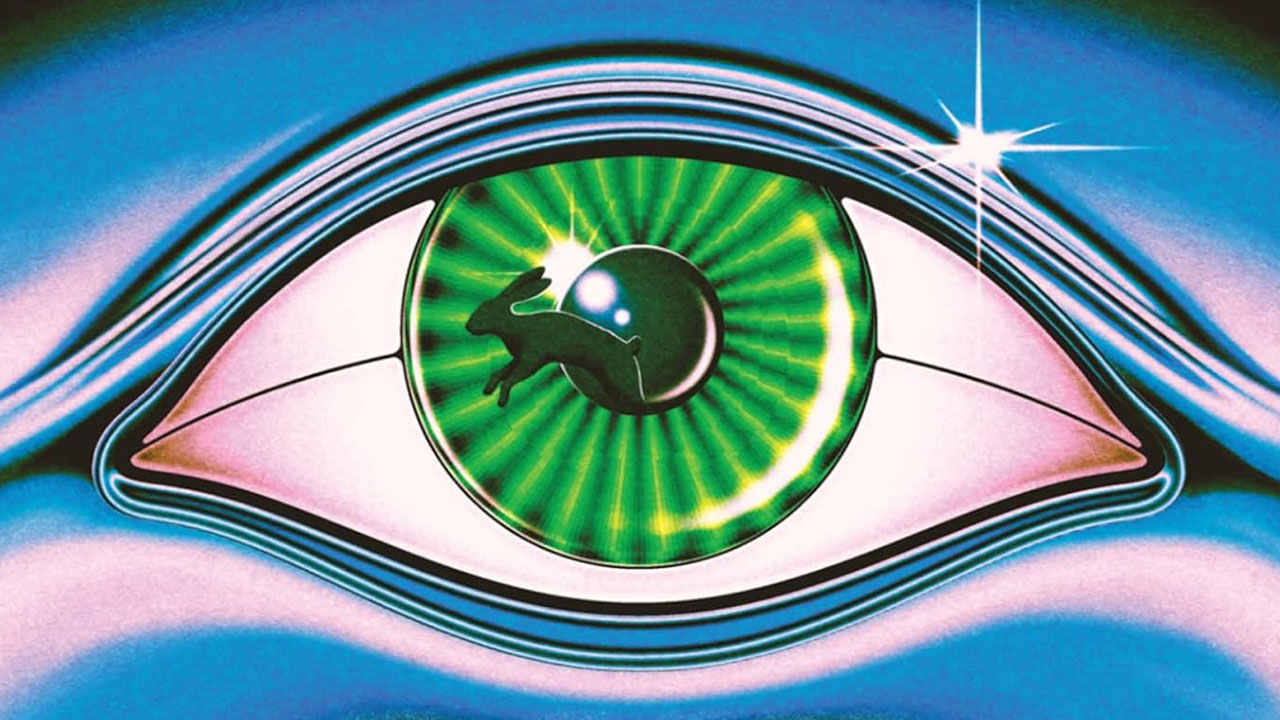
Paul Tremblay didn’t start his writing career believing he’d be battling machines over the sanctity of his job, but like so many writers of his generation, the battle found him. In the years since Large Language Models (LLMs) and neural networks started gaining traction as an advertised shortcut to creativity, Tremblay has been active in lawsuits to prevent the use of his works in training AI models, and he’s found that, with each new project, he has to consider the possibility that some LLM, somewhere, is going to latch on to what he’s creating.
“Now I feel like I’m thinking about, ‘Man, how am I going to write things that would be really hard or impossible for an AI to replicate?’,” Tremblay told me, speaking by Zoom from his home in Massachusetts. “Maybe some of that is ego. I’m sure every writer thinks, ‘Oh, an AI could never write what I write.’ Yes, I’d be lying if I said that wasn’t part of the thought process.”
While that’s something Tremblay might consider with any new work at this point in his career, the Bram Stoker Award-winning author of A Head Full of Ghosts, The Cabin at the End of the World, and many other novels and short stories tackled it in a more direct way with his latest book. Inspired by Philip K. Dick, Harlan Ellison, and the quirky humor of the Coen Brothers, Dead But Dreaming of Electric Sheep is Tremblay’s attempt at a sci-fi-horror mash-up that’s both darkly funny and existentially nightmarish. It’s also, in his own words, a screed against the movement by AI companies to supplant human artists.
“I didn’t want to make it too didactic, but no, I playfully described this book as an anti-AI screed,” he said. “This book, in particular, was driven by anger and frustration, for sure. Not every book is going to be driven that way.“
Despite the emotions that fueled it, Dead But Dreaming of Electric Sheep does not read like a screed. Instead, wielding offbeat humor and tech concepts that feel both lived-in and frighteningly tactile, the book lays out tandem narratives all building to the same conclusion, each of them exploring our relationship to machine learning in a different way. One of these narratives belongs to Julia, a former gaming streamer looking for a new challenge in life, who gets a call from a California tech company with an interesting offer.

Paul Tremblay in documentary series “First Word on Horror”
The company has, it seems, implanted some new technology in a brain-dead middle-aged man which will, in theory, allow them to pilot the man’s body through a rudimentary, still-developing system of controls. Julia, with her gaming background, would be the pilot, in her own way just as much a test subject as the human vegetable she’s controlling.
Julia is a Gen Z streamer with an omnivorous pop culture appetite, inspired by Tremblay’s own adult children, who riffs on The Big Lebowski constantly and calls her strange new meat puppet “Bernie” in reference to Weekend at Bernie’s. Her wide frame of reference, and her interest in art and stories far beyond video games, is in part informed by Tremblay’s own experiences with Gen Z, and in part a response to AI companies who scrape art and culture as a means of consuming it for reference without really experiencing a story.
“I know that one of the arguments that OpenAI and other tech companies are trying to make is like, ‘Hey, you writers, you artists, you take pop culture, you take your influences, and you create something. That’s just the same thing that the bots are doing.’ And it’s just not,” Tremblay said. “I wanted to have Julia have her outlook informed by all this pop culture, and I wanted to make that feel really human as a way to show how inhuman the AI is.”
The other side of the story belongs to “Bernie,” who’s addressed in his point-of-view chapters as “You.” In these chapters, the technology in Bernie’s body starts to flicker images through his seemingly dead brain, delivering half-remembered imagery and perspective in a nod to the “hallucinations” of an AI model groping for understanding it can never reach. These chapters in particular show off Tremblay’s flair for formalist shake-ups, and echo the kind of hyperstimulated writing that Dick and Ellison made so influential.
“I think it was more just the general Philip K. Dick feeling of ‘The world is so strange,'” Tremblay said. “He’s a lot funnier, I think, than maybe a lot of people credit him. That’s definitely what I was thinking of when writing the book.“
Bernie’s chapters embody the strangeness of Dead But Dreaming of Electric Sheep, presenting imagery that’s at times puzzling, at times eerily filmic, and always unnerving. They also mirror Julia’s own journey in fascinating ways as the odd couple – the Gen Z gamer and the middle-aged vegetable – traverse the United States, and the tech in Bernie’s body wakes up to the possibilities of using his flesh for its own purposes. It’s a compelling narrative technique, but it presented some new writing challenges for Tremblay.
“I quickly realized I couldn’t write this book the same way I have in the past,” he said. “By that, I mean all my other novels I had written in the order in which it was presented, even things that are nonlinear, which is most of them. I knew I couldn’t do that in this book. It’s not a spoiler, but hopefully the readers figure out pretty early that the Bernie chapters are a little bit of a preview of the next chapter from Julia, what’s actually happening with Julia. It’s all refracted from him.”

Mary Roach’s Stiff
Dead But Dreaming of Electric Sheep began with a simple image, inspired by Tremblay’s reading of Mary Roach‘s book chronicling the history of our treatment of corpses, Stiff. As he read, Tremblay imagined a body sitting on an airplane, remote-controlled by someone else. At the time, it was a “silly what-if” concept, filed away in his head. Years later, when he became an author suing a tech company to keep AI from scraping his work for ideas, it started to feel frighteningly plausible, taking the “silly what-if” into the territory of a high-concept horror show about what happens when we try to exploit and commodify uniquely human aspects of consciousness.
“It stuck with me,” Tremblay said of that what-if imagery. “And then a few years later, when I was a part of the case suing OpenAI on behalf of writers, that what-if suddenly didn’t seem as silly. The more I learned about how that corporation operates and without really any sort of ethical thought to anything, I was like, ‘Oh, I’m going to play with that. That’s actually happening.”
So, what if someone actually in favor of generative AI picks up Tremblay’s self-described “anti-AI screed?” He hopes that, at the very least, he’s made the ride enjoyable in a distinctly human way that might begin to reshape the conversation.
“I think that was another reason why I wanted to have the humor,” Tremblay said. “If people are reading this book who aren’t on the side of like, ‘Hey, LLMs taking authors’ books is bad,’ maybe if they read something that’s cut with some humor, that maybe they’ll be more easily swayed.”
Dead But Dreaming of Electric Sheep is now in bookstores everywhere.

You must be logged in to post a comment.