Editorials
[Interview] ‘Straw Dogs’ Director Rod Lurie

Director Rod Lurie (The Contender, Nothing But The Truth) has had a long three years of dodging and absorbing criticism ever since it was announced that he would be taking the reigns on a remake of Sam Peckinpah’s 1971 classic, Straw Dogs. Loosely basing his film on the book “The Siege At Trencher’s Farm” by Gordon Williams, Peckinpah fashioned a unique statement about the politics of masculinity in his story about American mathematician David Sumner (Dustin Hoffman) and his wife Amy (Susan George) who visit her hometown in England only to find fissures in their marital dynamic. The cracks in their relationship are tested by the differing cultural environment and the local populace (including Amy’s ex-boyfriend Charlie) and by the end of the film, well… things get a little out of hand.
When the wildly controversial original film was released in 1971 it was met with public outcry, forced edits by the US studio, and an `X’ rating in the United Kingdom (in fact, 13 years after the film’s release in the UK the uncut version was banned, which remained in effect until 2002). Many critics felt the film’s exploration of violence and was both fascist and misogynistic. Whatever Peckinpah’s true moral and sociological intentions may have been, the film is a masterpiece.
All of this obviously adds to the stakes of tackling a remake. Taking on one of the hallmark films of a legendary director, a film that touches on issues that are very much still culturally sensitive, well it’s certainly a risk.
I had the chance to touch base with Rod Lurie this week to discuss his version of Straw Dogs which stars James Marsden and Kate Bosworth as David and Amy Sumner as well as Alexander Skarsgard as Amy’s ex-boyfriend Charlie. Rounding out the cast are James Woods, Rhys Coiro, Walton Goggins, Willa Holland and Dominic Purcell.

Speaking by phone from his hotel in New York, Lurie discussed the film’s location shift to Mississippi, how his view of humanity differs from Sam Peckinpah’s, and how James Marsden approached his character from a different place than Dustin Hoffman.
Note: Towards the end of the interview I asked Lurie about a central scene, in both the original film and the remake, and he declined to comment on it. I have omitted both my question and his response. Lurie did, however, offer to speak with me in a followup interview. If that falls into place I’ll be glad to share some more in-depth discussion down the line.
Bloody-Disgusting: I actually haven’t had a chance to see the new one yet. I was supposed to come out to New York and see it a few weeks ago and talk to the cast but –
Rod Lurie: Hurricane Irene cancelled all that, yeah.
BD: Well I’m a fan of the first one and thought it had an interesting take on the notion of masculinity, especially in the 70`s. So I wanted to talk with you while I had the chance. What attracted you to this project in the first place?
RL: What attracted me in the first place was, first of all the opportunity to make it, that’s the first one. And my producing partner Martin Freeman was able to obtain the rights, and he asked me if I thought I wanted to direct it. And, like everyone else, I said “oh they’re really going to come after me. I’m going to have a bullseye on my back”. And that is exactly what happened as soon as I announced I was going to do it. But it was Dustin Hoffman who talked me into it actually, and he basically told me, you know Straw Dogs is a western after all and as a result what you can do is put your own spin on it. Peckinpah had his own point of view of humankind and you can put your own point of view on it. And we do have different points of view. Peckinpah is much more from that school of violence being biologically embedded in us and and I’m from the point of view that violence is conditioned into us. So we told the same story but from different points of view.
BD: Did you go back to the [book] “Siege Of Trencher’s Farm” and extrapolate anything new out of it?
RL: No. No I didn’t. I went entirely from the film. A little bit like Peckinpah, he didn’t use the book really at all. In fact I went almost entirely off the Peckinpah film, that’s what really interested me. That’s the experiment that interested me.
BD: What were some of the benefits of transporting the story to Mississippi?
RL: Well the primary interest for me was to find a community, and it didn’t necessarily have to be Mississippi, it could be many many towns in the United States but I wanted to have a town where sort of violence was a part of the town. For example a town where football is king, a town where hunting is king, a town where the preacher is talking about God smiting people from the earth. A town that where violence is so much a part of it that when it is perpetrated, barely an eyebrow is raised.
BD: Earlier you mentioned having a target on you when this was announced, which I think was in 2008 right?
RL: Right.
BD: And when I heard about James Marsden being cast I certainly remember thinking that he’s such a kind of strapping and handsome person that he’d certainly be less nebbish than Hoffman’s character in the original.
RL: That was very much on purpose because, you know, I could have hired one of those actors who are very Hoffman-like but, I decided not to do that because I decided it would be an impossible burden for that particular actor to carry. I went for a very different kind of David, someone who was not really a character actor at all, someone who was more of a movie star, someone more in the Redford or Paul Newman mode. I thought that would be less of a burden and create another contrast.
BD: Between Skarsgard and Marsden, Marsden is very much playing a different version of David from what I’ve seen [clips] at least and –
RL: I would say that and again that was very much done on purpose. The David that exists in the Peckinpah film is certainly a guy who is possessed of violence. That is what his very existence is. Within him there is a simmering violence. And I don’t think that’s true of my guy. My guy is a guy who is driven to violence, not a guy whose violence is released from him and therefore he is a different sort of character.
BD: You changed his profession to being a screenwriter, is there anything in your personal experience that informed that?
RL: In the original he’s a mathematician, meaning that he lives by rigid rules and, by the way, is very non-confrontational and not argumentative because mathematics is ‘2+2=4’. My David is a screenwriter so he lives in a world of greater ambiguity and in fact he’s writing a screenplay in the movie about Stalingrad.
BD: In the original it feels like Dustin Hoffman is baiting the violence a little bit.
RL: Well that’s exactly what it is. Peckinpah said in the film that David was the heavy of the movie. So I think you have that exactly right. So now let’s see whether or not mine resonates at all. I hope that it does.
Straw Dogs is in theaters September 16th.



Some movies are just so beloved that you can experience them through cultural osmosis without ever sitting down to actually watch them. From loving parodies to meticulous recreations of iconic scenes, memorable filmmaking lives on even after the curtains close on the silver screen. And when it comes to horror, few films can compete with the massive impact that Stanley Kubrick’s The Shining had on popular culture as a whole.
Whether or not you think the flick is a good adaptation of Stephen King’s seminal novel, 1980’s The Shining slowly but surely grew into one of the most influential genre movies ever made, inspiring everything from surprisingly heartfelt sequels to classic episodes of The Simpsons. However, not all The Shining references are created equal, and today I’d like to shine a light on six unexpected homages to Kubrick’s iconic film.
In this list, we’ll be focusing on references and Easter eggs that either came out of the blue or came from creators that you wouldn’t expect to be fans of this classic ghost story. That being said, don’t forget to comment below with your own favorite references to the Torrance family and the Overlook Hotel if you think we missed a particularly memorable one.
With that out of the way, onto the list!
5. A Nightmare on FaceTime – South Park (2012)

Regardless of the brand’s iffy reputation among former employees, the death of Blockbuster Video was a serious blow to fans of physical media. Of course, some folks were more affected by this than others, and South Park’s Randy Marsh definitely took things a little too far in the twelfth episode of the show’s sixteenth season.
Titled A Nightmare on FaceTime, the main plot of this 2012 story is a surprisingly faithful recreation of The Shining where Randy purchases an empty Blockbuster store and begins to go mad once he realizes that his investment may not have been a very good idea due to the rise of streaming and the now-defunct RedBox storefronts.
4. The Overlook Hotel Level – Ready Player One (2018)

I was never really a fan of Ernest Cline’s Ready Player One, so I viewed Stephen Spielberg’s divisive adaptation of the novel as an improvement over the source material despite having its own narrative issues. In fact, I actually prefer how Spielberg changed the story by removing several references to his own work and replacing a lengthy Blade Runner detour with an over-the-top homage to The Shining.
A CGI-heavy recreation of the film’s most iconic moments that feels like a big-budget ghost train ride set within the Overlook Hotel, this intense sequence is more of a recreation of the freaky aesthetics of The Shining rather than its mind-bending narrative. However, it’s still fun to see Spielberg make a heartfelt tribute to a filmmaker that was once his close personal friend.
3. IKEA Singapore Halloween Ad (2014)

It makes sense that commercials don’t typically borrow from the horror genre, as it might be a bad idea to scare away potential customers, but some references are just too much fun to pass up.
That’s probably why the publicists behind this Ikea ad from Singapore were allowed to turn their commercial into a genuinely unsettling recreation of Danny’s tricycle scene from The Shining. After all, nobody cares if your store is haunted so long as it offers late-night shopping hours and a large selection of merchandise that you can become lost in forever and ever…
2. The End of ‘Bondage and Beta Male Sexuality’ – Community (2014)

Community is no stranger to recreating iconic movie moments within the show, and the series had previously tackled horror tropes in episodes like the fan-favorite Epidemiology. However, the most laugh-out-loud moment on this particular list comes from a brief gag towards the end of the season five episode ‘Bondage and Beta Male Sexuality’.
The majority of this episode has nothing to do with scary movies, but there’s a brief subplot involving supporting character Chang and a possible encounter with ghosts that leads him to question his own existence. This subplot culminates in the episode’s hilarious ending where the camera zooms in on a black-and-white photograph of Chang in period clothing at some kind of celebration, just like Jack Nicholson at the end of The Shining.
However, the picture’s subtitle eventually reveals that it’s merely a conveniently placed keepsake from the ‘Old Timey Photo Club’.
1. The Overlook Hedge Maze Sequence – Zootopia 2 (2025)

Disney movies are pretty far removed from both the gruesome horror of Stephen King and the heady filmmaking of Stanley Kubrick, so I don’t think anyone was expecting the climax of last year’s Zootopia sequel to take place in an animated version of the snowy hedge maze from The Shining.
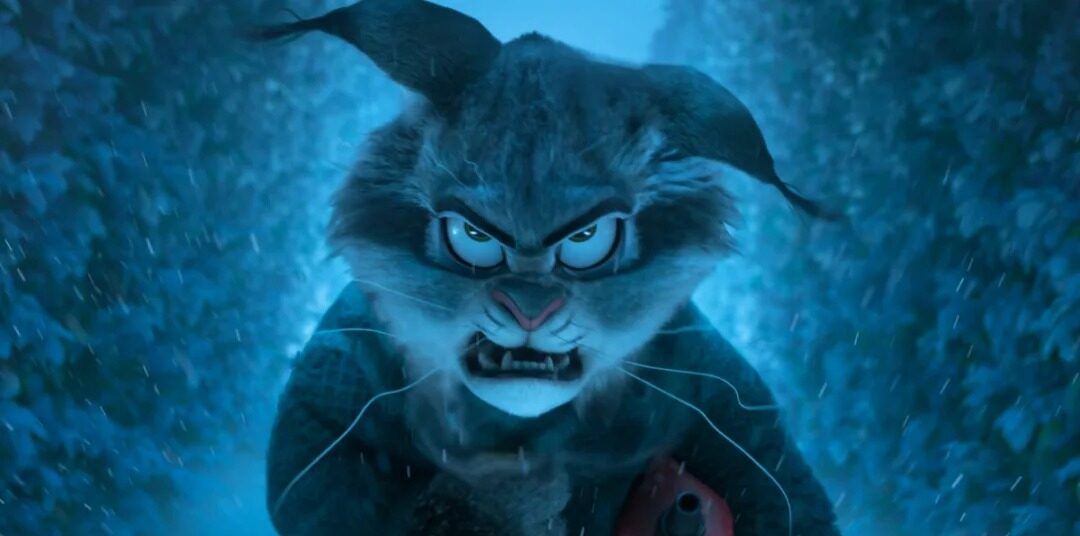
In this unexpectedly intense sequence, friend-turned-villain Pawbert Lynxley (an unhinged lynx cat played by Andy Samberg) chases our protagonists through a creepy labyrinth in a loving recreation of Jack Nicholson’s icy demise outside the Overlook Hotel. The actual ending here might be a little more child-friendly than what’s being referenced, but it’s amazing that the filmmakers were able to push the horror elements as far as they did – especially since the scene doesn’t really have anything to do with the rest of the movie.
You must be logged in to post a comment.