Interviews
[Interview] Sir Ridley Scott On Technology, Prequels And How ‘Alien: Paradise’ Became ‘Prometheus’


I’ve seen Ridley Scott’s Prometheus twice now and I like it quite a bit. It’s not without its issues, but I think it’s an interesting, inquisitive and intense movie that’s full of questions (if not so many answers).
Myself and a few other journalists sat down with Scott a few days ago in London to talk about the journey of Prometheus to the screen. We also touch on a question a lot of people are asking, “why does the technology in this film look different than in ‘Alien’?” Scott also discussed his original plans for the film (back when it was titled Alien: Paradise).
“With ‘Prometheus,’ Scott creates a groundbreaking mythology, in which a team of explorers discover a clue to the origins of mankind on Earth, leading them on a thrilling journey to the darkest corners of the universe. There, they must fight a terrifying battle to save the future of the human race.”
In theaters June 8, Noomi Rapace, Michael Fassbender, Charlize Theron, Idris Elba, Sean Harris, Guy Pearce, Kate Dickie, Rafe Spall, Logan Marshall-Green, Benedict Wong, Emun Elliott and Patrick Wilson all star.
Head inside to check out the interview.

Ridley enters and sees our tape recorders.
Look at this technology. Jesus Christ. 40 years ago when Kirk said “Beam me up, Scotty” we used to think that was fucking ridiculous, remember? Seriously, that’s been 40 years and then when he says the “disintegration” of his matter into the “reintegration” of his matter in the next space, that right there is light speed. So they touched on light speed. I’ve talked to NASA about this and they’ve said that’s light speed. So “Can you do it?” They said “Yeah. Have you got seven glasses of water?” I go “Not the seven glasses of water trick, please.” There were all scientists in the room and he started to explain to me the relativity and the speed of light. “Can you do it?” “Yeah.” He said the only barrier is “us.” He said, I can mathematically explain how, but we haven’t gotten there with that.
Can you talk about approaching how you wanted the technology to look in this movie? Because it’s unclear but this is a more advanced technology than that of Alien.
Yeah, but I couldn’t help that, because I didn’t know, did I? (Laughs) For all intents and purposes this is very loosely a prequel, very, and then you say “But how did that ship evolve in the first Alien?” Then I would say “Actually he’s one of the group that had gone off and his cargo had gotten out of control,” because he was heading somewhere else and it got out of control and actually he had died in the process and that would be the story there. That ship happened to be a brother to the ship that you see that comes out of the ground at the end [of Prometheus]. They are roughly of the same period give or take a couple hundred years, right? Other than that, there’s no real link except it explains I think who may have had these capabilities, which are dreadful weapons way beyond anything we could possibly conceive, bacteriological drums of sh*t that you can drop on a planet and the planet… Do you know anything about bacteria? If you take a teaspoon and drop it in the biggest reservoir in London, which also scares the sh*t out of me, and amazes me that there are not huge guards around it. That’s the way to do it. You don’t do 9-11, you just get a teaspoon of bacteria, drop it in, and eight days later the water is clean and then suddenly on the eighth day the water goes dense and cloudy, but by then it’s been sent to every home and several million people have drunk it, you’ve got bubonic. It’s that simple. That’s how scary it is, so these evolutions of these guys who have developing galloping DNA, it’s like “How can DNA grow that quickly, sitting in front of me on a table?” The Gulf of Mexico they believe is a huge asteroid [hole]. That was an impact zone, you know that? Yeah, for that big a thing to actually hit our globe, it would have had to adjusted the spin, the axis. That probably created the first massive cataclysmic thing which took away all of the dinosaurs, so that after that you’re left with water, that’s why the Grand Canyon was a sea and it is now a dry valley.

In your Sci-Fi projects (Alien, Blade Runner, Prometheus) you have been almost obsessed with AI and robots. Why is that fascinating to you?
I don’t know. I think it evolved out of the box in Blade Runner because Roy Batty was an evolved [being]. Ash in Alien had nothing to do with Roy Batty, because Roy Batty is more humanoid, whereas Ash was more metal and Ash’s logic was on every space ship “if I have a space ship worth god knows how much money and I’ve got to have a company man onboard and that company man is going to be a god damn secret.” So that was the Ash thing. Now I’m doing this and I thought it was an interesting acknowledgement, the marvelous idea of Ash, which I think is a pretty good idea. It was a one off for that to be a surprise, that “Ash is a goddamn robot” and we gave all the clues early by having stiff joints and doing his thing. I just wanted to have the same idea that the corporation would have a robot onboard every ship, so that when you are asleep in hyper-sleep for three or four years going at 250,000 knots an hour, you will have guy wandering around like a housekeeper. He’s a housekeeper and he’s got full access to everything. He can look at all of the films. He can go into the library… he can do whatever he wants, and that’s David.
This originally started out as more of a [straight] Alien prequel from what I’ve read or heard. What was the central idea that caused you to extrapolate outward from that and create something that’s more of its own film and has some of its own ideas?
The very simple question was “Who the hell was in that ship? Who is sitting in that seat?” and “Why that cargo?” and “Where was he going?” no one asked the question, so I thought “Duh.” It’s a “duh,” isn’t it? They’re [the other directors in the Alien franchise] all bright guys. Jim [Cameron] and David [Fincher] and the French guy [Jean-Pierre Jeunet], and I thought “Wow, duh.” And I just kind of sat and thought about it for a while and I was busy, so I didn’t really do anything about it and then when they finally put it to bed in Alien Vs. Predator. I thought “You know what? This is a good idea here.” The more I talked about it, I thought “Goddamn.” I was going to call it Alien: Paradise because I thought that had a spooky connotation to the idea, because it concocts our notion and idea of paradise and “what is that?” And paradise to us suggests religion and religion says “God” and then God, who created us, and that’s certainly… you’ve got a scientist who believes in God and there’s lots of scientists who believe flatly in God and even though they may be in quantum physics, they say “I get to a wall and some times wonder “who the hell thought of this one?” and I can’t get through the wall. When I get through the wall more is revealed and I still see another wall, so who is making this sh*t up?”
The creator-creation dynamic is played out many ways in the film. It’s parent-child, god-man, and then man and AI and kind of delving into facing your creator and it doesn’t pan out very well for any of them. Do you think that that’s the fundamental appeal of this kind of myth in the sci-fi realm? It’s that cautionary tale about overreaching your bounds?
Totally. Very good. Yeah, we go too far. Are we living better today, despite all of the problems that exist, than the fifties? Yes, of course we are. Then the 1850’s? No comparison. The 1900’s? No comparison in any way, shape or form. But are we heading towards a much larger problem? Definitely.
This film asks a lot of questions that are not answered…
In the next one…




Interviews
Paul Tremblay on Fighting AI with Horror in New Novel ‘Dead But Dreaming of Electric Sheep’

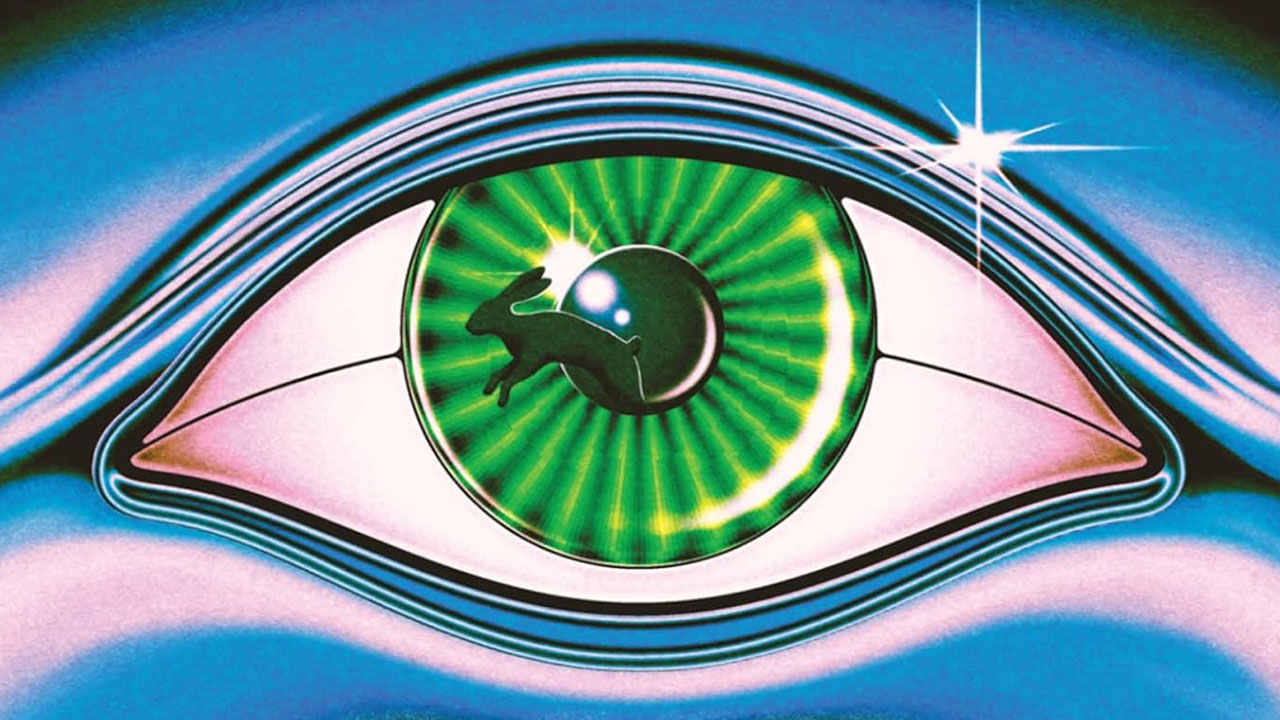
Paul Tremblay didn’t start his writing career believing he’d be battling machines over the sanctity of his job, but like so many writers of his generation, the battle found him. In the years since Large Language Models (LLMs) and neural networks started gaining traction as an advertised shortcut to creativity, Tremblay has been active in lawsuits to prevent the use of his works in training AI models, and he’s found that, with each new project, he has to consider the possibility that some LLM, somewhere, is going to latch on to what he’s creating.
“Now I feel like I’m thinking about, ‘Man, how am I going to write things that would be really hard or impossible for an AI to replicate?’,” Tremblay told me, speaking by Zoom from his home in Massachusetts. “Maybe some of that is ego. I’m sure every writer thinks, ‘Oh, an AI could never write what I write.’ Yes, I’d be lying if I said that wasn’t part of the thought process.”
While that’s something Tremblay might consider with any new work at this point in his career, the Bram Stoker Award-winning author of A Head Full of Ghosts, The Cabin at the End of the World, and many other novels and short stories tackled it in a more direct way with his latest book. Inspired by Philip K. Dick, Harlan Ellison, and the quirky humor of the Coen Brothers, Dead But Dreaming of Electric Sheep is Tremblay’s attempt at a sci-fi-horror mash-up that’s both darkly funny and existentially nightmarish. It’s also, in his own words, a screed against the movement by AI companies to supplant human artists.
“I didn’t want to make it too didactic, but no, I playfully described this book as an anti-AI screed,” he said. “This book, in particular, was driven by anger and frustration, for sure. Not every book is going to be driven that way.“
Despite the emotions that fueled it, Dead But Dreaming of Electric Sheep does not read like a screed. Instead, wielding offbeat humor and tech concepts that feel both lived-in and frighteningly tactile, the book lays out tandem narratives all building to the same conclusion, each of them exploring our relationship to machine learning in a different way. One of these narratives belongs to Julia, a former gaming streamer looking for a new challenge in life, who gets a call from a California tech company with an interesting offer.

Paul Tremblay in documentary series “First Word on Horror”
The company has, it seems, implanted some new technology in a brain-dead middle-aged man which will, in theory, allow them to pilot the man’s body through a rudimentary, still-developing system of controls. Julia, with her gaming background, would be the pilot, in her own way just as much a test subject as the human vegetable she’s controlling.
Julia is a Gen Z streamer with an omnivorous pop culture appetite, inspired by Tremblay’s own adult children, who riffs on The Big Lebowski constantly and calls her strange new meat puppet “Bernie” in reference to Weekend at Bernie’s. Her wide frame of reference, and her interest in art and stories far beyond video games, is in part informed by Tremblay’s own experiences with Gen Z, and in part a response to AI companies who scrape art and culture as a means of consuming it for reference without really experiencing a story.
“I know that one of the arguments that OpenAI and other tech companies are trying to make is like, ‘Hey, you writers, you artists, you take pop culture, you take your influences, and you create something. That’s just the same thing that the bots are doing.’ And it’s just not,” Tremblay said. “I wanted to have Julia have her outlook informed by all this pop culture, and I wanted to make that feel really human as a way to show how inhuman the AI is.”
The other side of the story belongs to “Bernie,” who’s addressed in his point-of-view chapters as “You.” In these chapters, the technology in Bernie’s body starts to flicker images through his seemingly dead brain, delivering half-remembered imagery and perspective in a nod to the “hallucinations” of an AI model groping for understanding it can never reach. These chapters in particular show off Tremblay’s flair for formalist shake-ups, and echo the kind of hyperstimulated writing that Dick and Ellison made so influential.
“I think it was more just the general Philip K. Dick feeling of ‘The world is so strange,'” Tremblay said. “He’s a lot funnier, I think, than maybe a lot of people credit him. That’s definitely what I was thinking of when writing the book.“
Bernie’s chapters embody the strangeness of Dead But Dreaming of Electric Sheep, presenting imagery that’s at times puzzling, at times eerily filmic, and always unnerving. They also mirror Julia’s own journey in fascinating ways as the odd couple – the Gen Z gamer and the middle-aged vegetable – traverse the United States, and the tech in Bernie’s body wakes up to the possibilities of using his flesh for its own purposes. It’s a compelling narrative technique, but it presented some new writing challenges for Tremblay.
“I quickly realized I couldn’t write this book the same way I have in the past,” he said. “By that, I mean all my other novels I had written in the order in which it was presented, even things that are nonlinear, which is most of them. I knew I couldn’t do that in this book. It’s not a spoiler, but hopefully the readers figure out pretty early that the Bernie chapters are a little bit of a preview of the next chapter from Julia, what’s actually happening with Julia. It’s all refracted from him.”

Mary Roach’s Stiff
Dead But Dreaming of Electric Sheep began with a simple image, inspired by Tremblay’s reading of Mary Roach‘s book chronicling the history of our treatment of corpses, Stiff. As he read, Tremblay imagined a body sitting on an airplane, remote-controlled by someone else. At the time, it was a “silly what-if” concept, filed away in his head. Years later, when he became an author suing a tech company to keep AI from scraping his work for ideas, it started to feel frighteningly plausible, taking the “silly what-if” into the territory of a high-concept horror show about what happens when we try to exploit and commodify uniquely human aspects of consciousness.
“It stuck with me,” Tremblay said of that what-if imagery. “And then a few years later, when I was a part of the case suing OpenAI on behalf of writers, that what-if suddenly didn’t seem as silly. The more I learned about how that corporation operates and without really any sort of ethical thought to anything, I was like, ‘Oh, I’m going to play with that. That’s actually happening.”
So, what if someone actually in favor of generative AI picks up Tremblay’s self-described “anti-AI screed?” He hopes that, at the very least, he’s made the ride enjoyable in a distinctly human way that might begin to reshape the conversation.
“I think that was another reason why I wanted to have the humor,” Tremblay said. “If people are reading this book who aren’t on the side of like, ‘Hey, LLMs taking authors’ books is bad,’ maybe if they read something that’s cut with some humor, that maybe they’ll be more easily swayed.”
Dead But Dreaming of Electric Sheep is now in bookstores everywhere.

You must be logged in to post a comment.