Movies
The Driller Killer

While growing up in the 70’s and 80’s, and still not of R-rated age, I used to fantasize what the new adult horror releases were like. I’d cut the movie one-sheets out of the newspaper and paste them onto my bedroom wall – on Fridays usually, when the black and white posters were big – sometimes full page. After two or three years, Id collected a wall full of yellowed newspaper clippings with classics like Madman, Chopping Mall, etc. (it goes on forever), and one that perplexed me for years – a poster with a man getting his forehead drilled to death with a long, merciless drill bit. For years until I saw the film, it mesmerized my imagination, and my splatter loving heart would swell when Id wonder what horrible, skin churning, hole boring terrors it could possibly behold.
The film was none other than Abel Ferrara’s The Driller Killer, a slasher movie by every sense of the word, released just about a year before Friday the 13th and Halloween made the claim to the sub-genre. When a young New York City artist Reno Miller (played by director Abel Ferrara) inadvertently meets his indigent father in a local church, a combination of stress and fear and a nightmare that he himself will end up on the street goes into motion. A fear that ignites homicidal, psychopathic behavior once pushed over the edge, after a punk band Tony Coca Cola and the Roosters move into his building and practice all night long – night after night – destroying the peace of mind he needs to finish his painting, so he can pay his backed up rent. All of these factors eventually boil over and drive him to murder.
The Driller Killer is low budget by every sense of the word, shot in and around the dark, bum ridden, late seventies streets of New York City circa Ferrara’s Union Square lair at the time. But where it lacks in production, it makes up for with some interesting, if not absurd, characters. Reno Miller looks like a cross between Krug Stillo (David Hess) from Last House on the Left and Frank Zito (Joe Spinell) from Maniac. Tony Coca Cola (D. A. Metrov) and his pseudo New York Dolls band party with lesbians, practice bad sets, and wig out on drugs. Just about every character in this film is a sleazy sight to behold, and accurately reflective of the Mayor Koch era, when the scum of the underground was literally pouring out into the general public of the city.
One night Miller sees a Porta-Pack being advertized on a television commercial. It allows the user to go mobile with plug-in electrical appliances. Of course, his inner psychotic self knows enough to buy one for his drill. After dealing with countless nerve frying hours of bad music, Miller goes over the edge and stabs the shit out of a skinned rabbit head (which is real, and a meaty disgusting moment) – and eventually he hits the street to put his power tool fantasy to the test. Before long, a local bum is thrashing on the sidewalk, with a drill bit boring its way deep into his heart. Bright red blood flows strong and splashes everywhere.
Later all characters converge at the live show for Tony Coca Cola and the Roosters, where several of Miller’s issues come to a head and explode. This is where he runs into the streets and begins attacking at will. His homicidal killing spree claims eight people that night. While the kills are aggressive and spill a lot of arterial fluid, it’s a bit hard not to laugh amidst the wincing, as Miller’s vulgar display of power really does nothing to better the situation that drove him mad.
If the film were made nowadays, with the way plots are tweaked out the ass to try and make them “perfect”, the mad artist would have gone after his landlord who wanted the rent, his employer who treated him like shit and snubbed his work, his girlfriend and her lesbian cheating, and/or that entire band and its groupies – the people ruining his life and deteriorating his mind. But in 1979’s The Driller Killer, per the actual nature of a maniac, he jumps random strangers at bus stops and department storefronts, whether they be bums or locals. There was something about this that felt true to the psychotic behavior that took over. He becomes an actual homicidal maniac. The result is a gritty, semi-realistic street tale of an unstable man who snaps and takes it out on the people around him via an electric drill, whether he knows them or not.
Abel Ferrara’s street grit piece about a man who goes over the edge sweating his rent and his possibly desolate future in a punk dense 1970’s NYC ends up as low budget slasher artistry – reflecting the New York City punk rock underground and its slithering society against a contrast of judgmental Catholic religiousness, gifted works of art, and nude scenes of lesbianism. While initially banned in the UK (and quite possibly responsible for initiating the British “video nasty” ban list), and most notably remembered for the one-sheet with the man being drilled through the forehead, most of its cult status was achieved from these factors, and not from the film’s final product being anything of extreme offensiveness or legendary distress. Hearts pop and necks are leaked, but its almost always done through insinuation and clothing, and doesn’t get much worse than imagination plus bright red paint. Still, in some odd fashion, it’s the Clockwork Orange of pre-Halloween, low-budget slashers, and the title that landed Abel Ferrara in the center of the horror map.


Movies
‘Werewolf By Night 2’? Michael Giacchino Says It’s Being Talked About But “Everything Takes Forever”

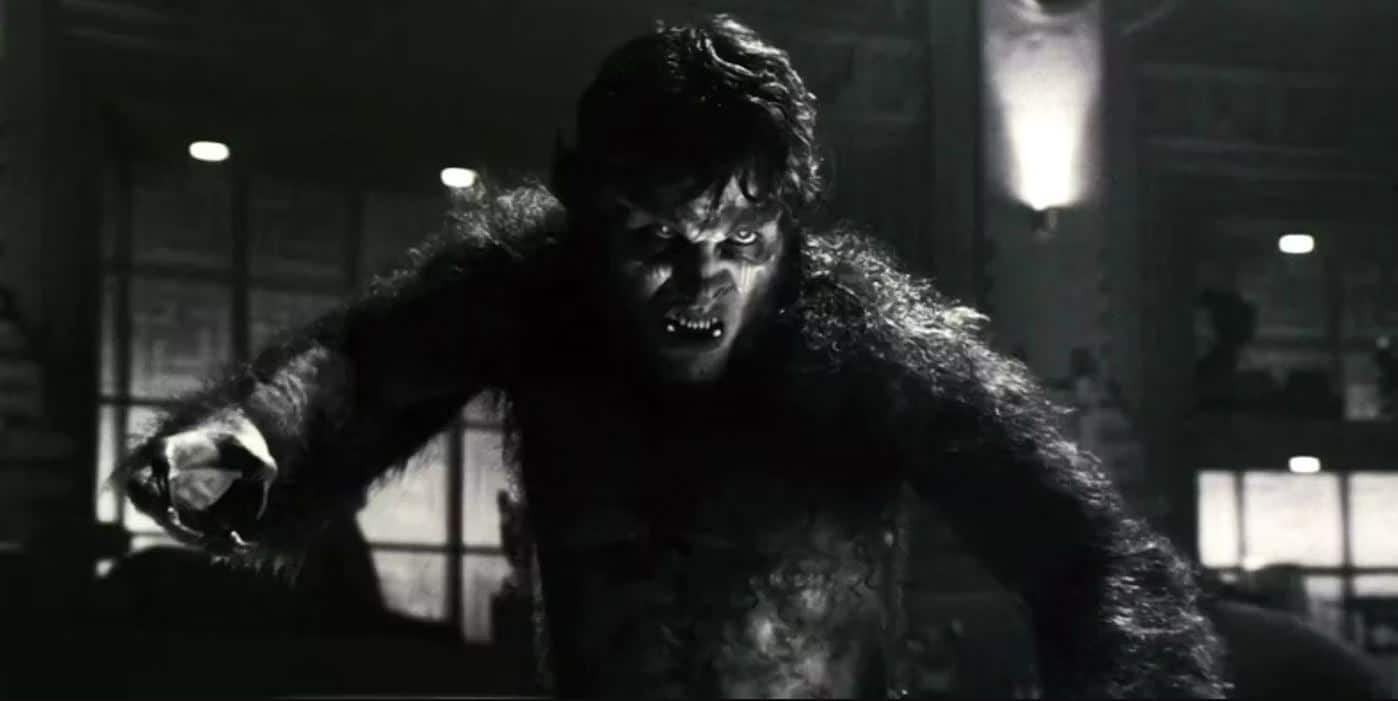
It was Oscar-winning composer Michael Giacchino who sat in the director’s chair for Marvel’s Disney+ Halloween special Werewolf by Night back in 2022, which was released in both throwback black & white as well as full color. But are we ever getting a sequel?
Giacchino tells Screen Rant in a new chat this week that he remains hopeful.
“We’re talking about it,” Giacchino explains. “Everything takes forever to do. There’s a lot of planning that has to happen. Everything has to fit in a particular place at a particular time.”
He adds, “So, nothing moves as fast as we’d like it to. But I hope one day that you will be sitting there watching another Werewolf by Night. That’s my hope.”
Inspired by horror films of the ’30s and ’40s, Marvel Studios’ Werewolf by Night takes place on a dark and somber night as a secret cabal of monster hunters emerge from the shadows and gather at the foreboding Bloodstone Temple following the death of their leader.
In a strange memorial to the leader’s life, the attendees are thrust into a mysterious and deadly competition for a powerful relic—a hunt that will ultimately bring them face to face with a dangerous monster.
Meagan Navarro wrote in her review for BD, “The MCU kicked the horror into overdrive with Werewolf by Night. The nearly hour-long feature presents as a classic horror movie, dropping viewers into the middle of a secret world of monster hunters. Film composer Michael Giacchino directs the special, penned by Heather Quinn and Peter Cameron. Giacchino focuses on evoking the classic horror vibe to assist in the initial worldbuilding. The events play out in monochrome, save for the vibrant red glow of the Bloodstone. Cigarette burns and film grain get added for that retro look. The rules of the hunt get relayed to the cutthroat candidates by way of reanimated dead, albeit in a much campier and family-friendly way via animatronics.”
“Aside from the aesthetics, Werewolf leans heavily into the mysterious,” Meagan continued. “The black and white cinematography more than sets the retro vibe; it allows the feature to remain accessible to a wider audience even as it lets its monsters and monster hunters spill plenty of blood. Toss in a Jack Pierce-inspired beast with practical application, and you’ve got a modern superhero story with a classic Universal Monsters makeover.”