
Interviews
[San Diego Comic-Con ’12 Interview] ‘Branded’ Director Jamie Bradshaw


While at the San Diego Comic-Con, Bloody Disgusting stringer Evan Dickson had the chance to sit down with Branded co-director Jamie Bradshaw to talk about their sci-fi thriller that takes on advertising in a big way. Roadside Attractions will be releasing in theaters this September.
The film starring Ed Stoppard, Leelee Sobieski, Jeffrey Tambor, Ingeborga Dapkunaite and Max Von Sydow “is a dark and mind-bending sci-fi thriller into a surreal, dystopian society where mega corporations have unleashed a monstrous global conspiracy to get inside our minds and keep the population disillusioned, dependent and passive. One man’s quest to unlock the truth behind the conspiracy will lead to an epic battle with the hidden forces that really control our world.”
You used to work in marketing. Was there something about your job that disenfranchised you and inspired the critique in Branded?
I wouldn’t call it a critique of marketing. I would call it a mind bending journey through our very dark and hallucinatory world. It’s a dark place but it’s the world we live in. I’m not criticizing it. To criticize marketing is to criticize the world. I feel you like you don’t criticize the fundamentals of the world you live in. You express the way it is. It’s the way we’ve chosen to live our lives.
Everyone is complicit in it.
We live in an era defined by that complicity. The model of advertising is different now. Social media has changed us all into brands and we spread the advertiser’s word for free. We are making the system, authorizing it and making it a success.
And how does this play out in the movie? How does someone navigate it?
The dark and mind bending journey that the hero of this film has to go through takes him through ancient rituals that are graphic in nature that allow him to tap into powered that we don’t see that we have. Powers that allow us to redefine ourselves as people and to fundamentally change the world we live in. There’s a lot we don’t know about being human. There’s a lot we can learn that can empower us to change the world and become true individuals.
The film looks pretty epic in scope.
We tried to put every dollar we could onscreen. Most films pay so much up front for stars or directors, 95% percent of our budget went below the line. We made a movie that was epic in scope and is R-rated. We ca show a lot more. The content is often ambiguous. The dark, weird rituals. In the middle of nowhere with a cow and an axe. Stuff you can’t do here.
Were you inspired by They Live at all?
I don’t think it’s an inspiration. It’s an influence. John Carpenter is a great director and They Live is a very strong film. I think both films are trying to look at the world that affects us. But the world has changed so much since then. That kind of story structure and style doesn’t apply anymore, because we’re all more complicit [than the characters in that film]. I tried to make a very entertaining edge-of-your-seat film that you can go see on a Friday night but that still makes you think. There’s some visual stuff in here that I have literally never seen. It’s so graphic and powerful.


Interviews
‘Rubberhead’ Director Nick Taylor on FX Maverick Steve Johnson, Practical Effects, and Seven-Year Journey

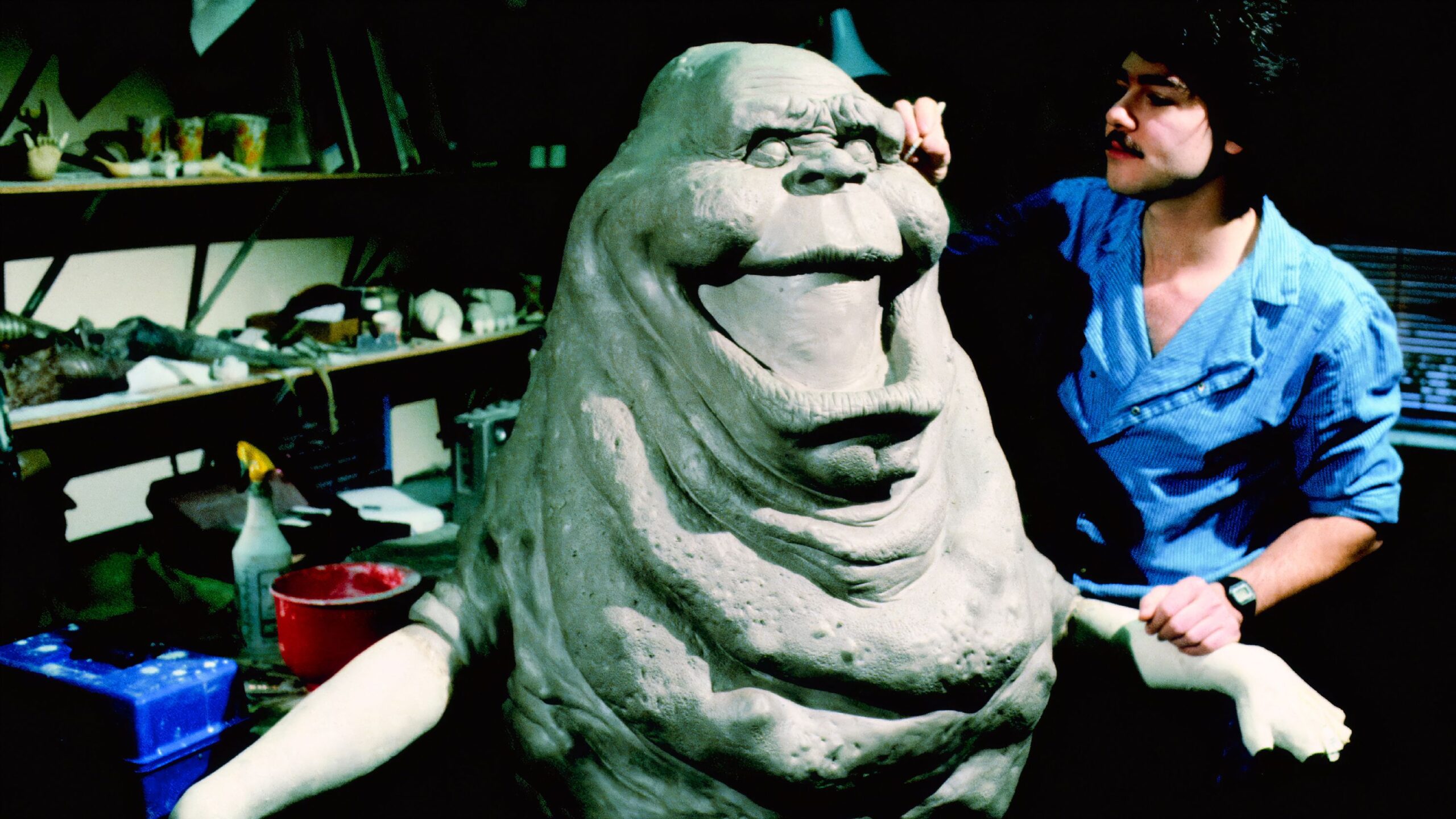
Horror journalist, producer, and podcast host Nick Taylor moves into the director’s seat for his feature debut with illuminating documentary Rubberhead: The Life & Monsters of Steve Johnson.
It chronicles the wild life and career of SFX maverick Steve Johnson, based on the multi-volume book series Rubberhead: Sex, Drugs and Special FX, and those familiar likely already know Rubberhead isn’t your standard horror documentary.
Johnson is responsible for so many memorable movie monsters, having worked on Fright Night, Poltergeist II, An American Werewolf in London, A Nightmare on Elm Street 4: The Dream Master and Night of the Demons, to name a few. He’s also extremely candid in ways that feel atypical in this industry, open about his failures as much as his successes.
“It was a natural progression for sure,” Nick Taylor tells Bloody Disgusting of his transition into filmmaking ahead of Rubberhead‘s world premiere next week at the Fantasia Film Festival on July 23. “I think with my podcast, I got adept at interviewing people and pulling creative lessons out of them, which was the point of my podcast. I wanted this movie to be sort of a creativity pill for artists where if they’re starting a project or feel creatively stuck, they could watch this movie and be inspired and get actual practical creative lessons.”
Taylor’s background in PR and marketing also organically led him down this path.
He charts the course from book promo to documentary director: “But also Bloody Disgusting had a lot to do with this movie because in the very beginning when I first met Steve, I was helping him promote his book and I said, ‘Hey, I got a marketing background and a journalism background. Let me help you promote this book. I’ll just pitch stories from your life to the media, and we’ll see what happens.’ And John Squires wrote an article about Steve making Slimer under the influence of tons and tons of cocaine, and that went fairly viral.”

“For a week, it was story time with Steve,” Taylor continues. “He would tell me a story from his life, and every story was about a major movie, a major director, lots of drugs and alcohol and insanity. I would write them up, and I think John published about three or four of them. So huge shout out to John Squires because that was really great. So yeah, there were definitely a lot of outgrowths of my journalism background that definitely contributed to this movie.”
Rubberhead condenses the multi-book series into a cohesive feature film with a breezy runtime, sparking the obvious question as to how Taylor approached condensing Johnson’s life down to an under 2-hour documentary film.
“That was one of the more difficult parts of all of this, because we had enough for a series or an epically long six-hour fan documentary,” he answers. “But from day one, I did not want to make a fan documentary. I love them. They’re a lot of fun, but I did want the movie to stand on its own two feet as a character-driven portrait of an artist and a time period and a technology, that being practical effects. I did want to be objective. I didn’t want to make this too long. I wanted to make it re-watchable. So I think we just really had to focus on what the narratives were that we wanted to tell. So there were some basically almost cliché archetypical mythic narratives present in Steve’s life. We could have made this way longer, but we wanted to keep it short. But luckily that’s why you have special features.”

Johnson quickly proves to be an engaging subject thanks to his self-effacing wit and frank self-reflections; expect no shortage of stories about how drugs factored into the height of his career or the failures it wrought.
That rare quality was an asset for Rubberhead, Taylor confirms. “He does not shy away from anything about the drugs, the addiction, the bridges burned, the mistakes made, the lessons learned. He just is honest about all of it. He’s had a lot of time for reflection, and he’s done a lot of reflection, so he doesn’t shy away from any of it, which is huge because it’s very refreshing. I don’t think a lot of people are that way, at least in this industry from what I can see. So I think it was hugely beneficial. We wanted to lean into that, and we wanted to make this sort of a gonzo Hunter S. Thompson sort of wild tale through Steve’s overall life.“
Condensing his life into this doc was a slow and steady process for Taylor, too. “It’s been almost seven years. It’s been a labor of love. We’ve been as indie as it gets. We would shoot what we could when we could, and then we would edit when we could. Then after a while it all came together.”
In a way, making Rubberhead brings Taylor’s horror fandom full circle. It turns out that the very film that sparked his interest in the genre and practical effects also comes with an amusing Steve Johnson anecdote.
Taylor explains, “My gateway for sure was Beetlejuice. I saw that at a very young age; I think I was four or five. I felt somebody had shown me, my soul. I get a little emotional thinking about it. There was something about that movie that felt so strange and unusual, but also felt so familiar. It was spooky, but it was fun, and it was lighthearted, and it had humor, but it also had this macabre celebration to it that I just really got into as a kid. I felt somebody had shown me my own soul. And funny story, Steve got fired from Beetlejuice because Tim Burton gave him his hand-drawn designs and Steve’s like, ‘Oh my God, these look like kids did them. This is not what you want. I know what you want. I’m going to redesign these for you.’ And Tim Burton was like, ‘Yeah, no, you’re not.’ So yeah, funny story.”

You must be logged in to post a comment.