Editorials
Beck Thinks He’s Found A New Way To Engage The Listener: He’s Wrong


Beck, the man who brought you “Loser” (a song that makes me want to rip my molars out and shove them into my ears so I can stop listening), thinks that he has found a way to truly combat music pirating. You see, in December, Beck will be releasing Beck Hansen’s Song Reader, an album of 20 unheard, unreleased tracks. Except that’s not actually the case. Instead of releasing an actual album, Beck will instead be releasing the music as sheet music.
Yeah, you read that right. People aren’t buying music, they’re buying the opportunity to play it on their own.
The “album” “…measures 9.5” x 12.5” with 108 pages comprising 20 individual full-color song booklets—18 featuring original lyrics, and 2 instrumentals—with covers from more than a dozen different artists.” More information about the actual product can be found here.
Read on to see why I think this idea will fail miserably.
Will Burns, a contributor to Forbes, wrote an article entitled “Beck ‘Produces’ A Genius Innovation That Appeals To The User-Generated Generation” about this release. I read through it shaking my head, wondering if Burns is actually in tune with this “user-generated generation” and understands how they operate.
He starts by saying that this is an “invitation” for musicians around the world to grab their instruments, load up GarageBand and get to recording their own versions of these songs. However, this assumes that these musicians know how to 1) record music and 2) read music.
Is recording music easier now than it ever has been? Absolutely. That doesn’t mean that each Beck fan has the means to record. You can’t just plug your piano into your computer and expect good sound quality. At the very least you need an A/D converter, like an M-Audio unit or an MBox 3. While not out of the realm of cost for many people, these units can still cost a pretty penny depending on what you get.
As for reading music, there are countless musicians who learned their instrument without delving into musical theory or learning to how sight read notation. Rather, they learned by playing their favorite songs from tab (which uses simple to read numbers and not notation), watching instructional videos on YouTube, or just figuring things out by ear.
So, right away, Beck is alienating a big portion of his listeners who are simply that. Listeners. Not producers of music. They want to get the music and sit back with it, not having to worry about how to reproduce the notes.
Burns then continues saying that the “content will not stand still”. Basically he is stating that people who actually go through the process of recording everything and are happy with the end result will share their product via the various available social networks (Twitter, Facebook, YouTube, etc…).
Uhhh, yeah? Was that even really a question? People are now ready to share pretty much everything via the internet and if they can be part of some bigger product, they’re going to go for it. Everyone wants to feel connected, especially if there is a possibility that they can be a part of something that becomes huge. After all, don’t we all want to go viral?
It’s here that Burns makes a bit of a leap: He states that “this content will be hungrily consumed.” By whom? Huh? Aside from Beck fans and the very few music appreciators out there, this is going to fly over the head of pretty much everyone.
Myself? I’m beyond engrained in the music industry. I try my very best to pay attention to what is going on, to see what the new trends are and how it affects listeners, musicians, and labels. It’s a fascinating industry that is constantly evolving and changing, especially with social media. However, I could kindly give a crap what thirteen different variations of the same album are going to sound like. Scratch that. I don’t even give a single crap.
The next point that Burns makes is that the unique release of this “album” will be the “end-around on the pirating business.” Burns states, “Sure, someone will probably scan the sheet music into pdfs and send them around, but my gut tells me that, since Beck isn’t recording this music himself, the only way for Beck fans to truly experience Beck within this medium is to buy the full-color, beautifully designed package in a store.”
Oh, they want to experience the true Beck experience with a beautifully designed package? Is that anything like how musicians put together amazing liner notes and pictures in their album booklets? Booklets that piraters could kindly care less about? Pirating has shown that people want the product, not the accessories that come with it.
I personally find this tragic as music, being an auditory experience, can be enhanced greatly by the addition of visuals. A simple picture can change the perspective on a song or make things resonate so much deeper, so much more true. Not to mention that having lyrics readily available is incredibly useful.
Burns ends his article by saying that a Beck concert will be an incredible and unique experience. Why? Because Beck can sift through the various YouTube and other social media posted recordings and put together a fan-based immersive show.
Sorry, but if I’m paying to go to a concert, I want to see Beck perform his music in his own way. If I wanted to see these YouTube renditions, I’d simply go to YouTube from the comfort of my own couch. Hell, I’d spend that concert ticket money to order a pizza, a six-pack, and still have money left over to GO OUT AND BUY AN ALBUM!
Sorry Mr. Burns, I couldn’t disagree with you more on this release. Perhaps the only thing I’ll agree with you on is that it’s unique and that it definitely goes outside of the box. But unique and fascinating ideas don’t make them good ones.
Got any thoughts/questions/concerns for Jonathan Barkan? Shoot him a message on Twitter or on Bloody-Disgusting!




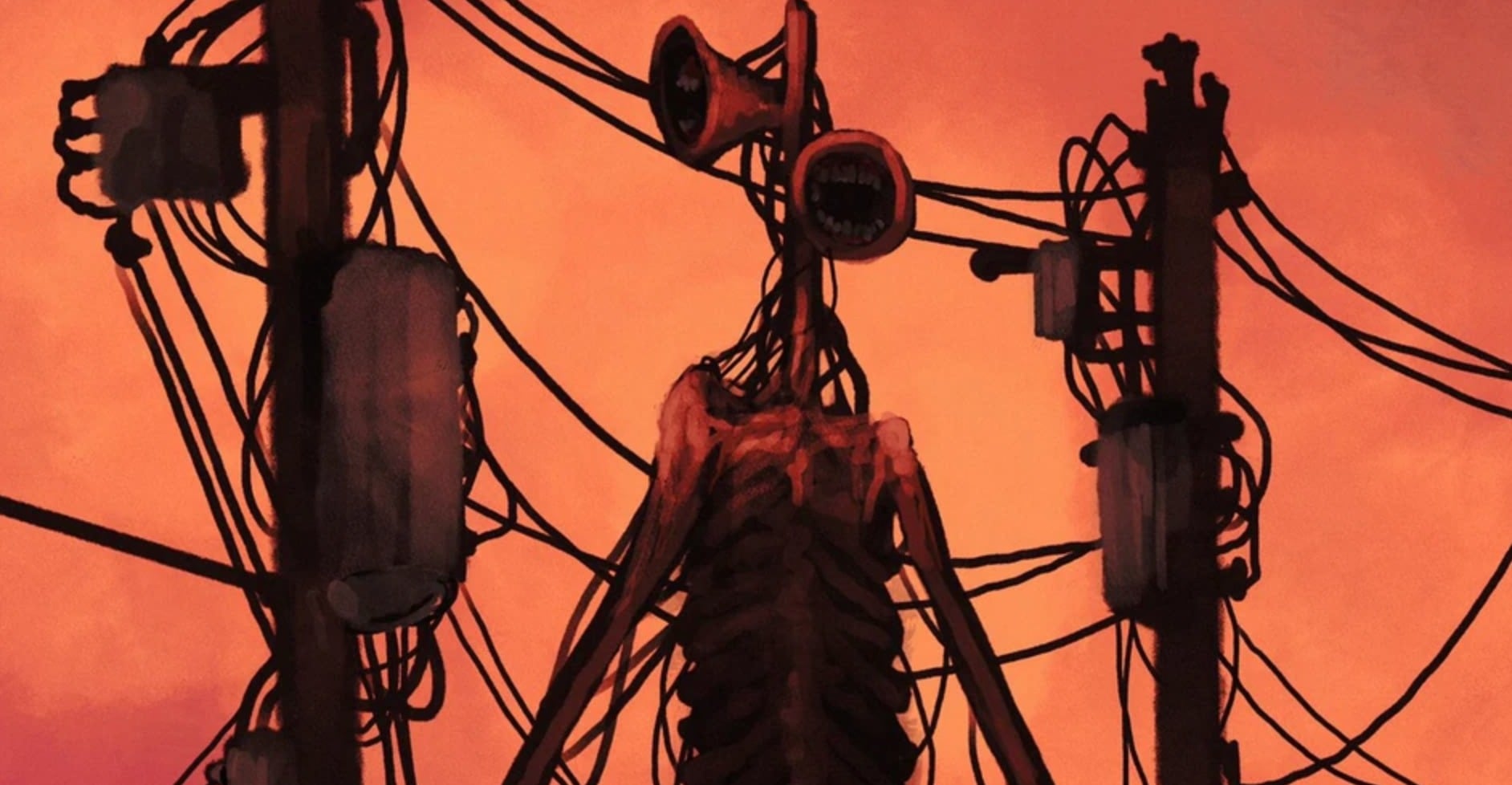
The creators of internet icons that go on to inspire collaborative online fiction tend not to have much control over their creations once they leave the proverbial nest. From Victor Surge’s Slender Man to the anonymous user who first posted that Backrooms image with the accompanying text, once the internet hive mind takes over, artists are usually forced to sit back and watch as their stories take on a life of their own.
One exception to this rule is horror artist and creature designer Trevor Henderson. Back in 2018, Henderson introduced the world to an enigmatic figure named Siren Head and gave the online horror community their last great mascot. However, while the immensely popular creature made several unofficial (and sometimes unwanted) appearances in games, videos, and plenty of fan-art, Henderson miraculously managed to keep creative control over his monster even as it became a worldwide sensation.
With the success of Kane Parsons’ Backrooms film encouraging Hollywood to scour the internet for more online horror properties with an existing fanbase that might be enticed to show up to theaters, it makes sense that both Trevor and his digital offspring would be next in line for a big screen adaptation.
However, while Siren Head became a massive hit among the younger crowd who were in search of an online horror icon to call their own, much like my generation did with Slender Man, there are plenty of genre fans who aren’t familiar with the story behind this peculiar creature. That’s why I’d like to invite readers to join me as I dive into the origins of a beloved internet monster with more cinematic potential than you might initially believe.
Trevor Henderson’s Viral Horror Universe

To understand Siren Head, you first have to understand Trevor Henderson’s spooky body of work. A Canadian artist with a passion for coming up with online cryptids, Trevor went by the moniker of Slimyswampghost and would occasionally post photorealistic artwork on both Twitter and Tumblr as part of the internet tradition of sharing “cursed images” on social media. These found-footage-influenced digital paintings would often be accompanied by brief snippets of text contextualizing them within the artist’s larger universe of bizarre entities.
In August of 2018, Trevor posted several creepy creations that would end up becoming fan-favorites (from the 1930s-animation-inspired Creepy Cat to my personal favorite, Long Horse), though none of these could compete with the popularity of Siren Head. A tall, slender figure that camouflaged itself among telephone poles on isolated roadsides, this humanoid monster was inspired by the mysterious number stations phenomenon (real-life cryptic radio broadcasts that repeat coded numbers ad infinitum).
In his original post, Trevor included the following text alongside the picture:
She was on vacation with her husband, and they were scoping out graveyards on the way, as you do, when she saw it. Rising out of the old cemetery, big as an old (macabre) telephone pole. Was this some kind of bizarre art piece the authorities hadn’t gotten wise to yet? Even as she stepped out of the car, the megaphones on its “head” screeched to life. “NINE. EIGHTEEN. ONE. CHILD. SEVENTEEN. REMOVE. VILE“. A buzzing, doubled voice screamed random words at her. At this point, it jerked into motion, striding down the hill towards her.
And just like that, a new horror icon was born.
However, the creature didn’t become an overnight sensation like some other popular internet legends. It was only about six months later that Modus Interactive contacted Trevor asking for permission to include the monster in his contribution to that year’s Haunted PS1 Halloween Game Jam. The ensuing free-to-play title was a moderate hit, but Siren Head would lay dormant for a while after its release as Trevor continued to focus on other projects.
How Siren Head Went Viral

Then the COVID-19 pandemic hit, and short-form video content took over the internet. In April of 2020, Tiktokker and VFX artist Alex Howard created an eerily believable video of Siren Head towering over a cityscape, with this viral hit catapulting the character to mainstream recognition as genre fans raced to find out more about the enigmatic creature.
Suddenly, Siren Head was everywhere. Memes, toys, short film adaptations and even more videogame appearances led to the character occupying the same place that Slender Man had once held in popular culture. The only difference was that fans continued to refer to Henderson for more “official” lore about the monster, with the artist encouraging fan-made work but continuing to expand the mythology surrounding the character (which has since been revealed to be the physical manifestation of an Eldritch entity that preys on humankind).
Henderson even went so far as to discourage the character’s inclusion in the SCP Archives, as this would give Siren Head a Creative Commons license and allow bad actors to take advantage of the creature’s popularity. Not only that, but giving fans too much creative control over the monster would have inevitably lead to what some genre enthusiasts, such as Kane Parsons, refer to as “lore creep”: the overaccumulation of fictional information regarding a horror property that ultimately makes the story less scary.
While we’re past the peak of Siren Head’s online popularity, the character still holds a special place in genre fans’ hearts as an icon representing a particular moment in internet history. That’s why even horror titans like Junji Ito have expressed their love for the monster, and also why it makes sense for Hollywood to finally get off their butts and get around to adapting the creature to the big screen – especially since the monster’s success has led to Henderson developing a career in the horror genre (with several freaky projects ranging from Young Adult Horror novels to Bloody FM’s own Mayfair Watchers Society Podcast).
With the cinematic dream-team of both Zach Cregger and Brian Duffield joining forces in order to steer Trevor’s ideas towards box office gold, I think it’s safe to say that Siren Head is about to get the big-screen adaptation the fans deserve, and I know I’ll be there on opening night!

You must be logged in to post a comment.