Movies
Blu-ray Review: Takashi Miike’s ‘Sukiyaki Western Django’

In addition to my review of the film, inside you’ll find David Harley’s review of Takashi Miike’s SUKIYAKI WESTERN DJANGO, which arrives on DVD and Blu-ray tomorrow. Set during “The Genpei Wars” at the end of the 1100s, the Minamoto and Taira gangs face off in a town named Yuda, while a deadly gunman (Ito Hideaki) comes to the aid of the townsfolk. Not satisfied with using one style or being influenced by one culture, Takashi Miike’s love letter to the spaghetti western, SUKIYAKI WESTERN DJANGO, is a mess of ideas and imagery that doesn’t work well enough to maintain a steady flow of entertainment. Mixing eastern and western influences isn’t unheard of: A FISTFUL OF DOLLARS was influenced by YOJIMBO (which, in turn, was heavily influenced by Shakespeare). But instead of melding them together into a film that could’ve been an awe-inspiring mix of substance and aesthetics, Miike seemed solely intent on creating a batch of his best eye candy, with a plot coincidentally included to string together the action.
As far as Miike films are concerned, SUKIYAKI is surprisingly coherent, though that’s just because there isn’t much to it. A lone gunman (Hideaki Ito) wanders into a Nevada mining town (complete with pagodas!), where two gangs – the Genji and the Heiki – compete for his allegiance with monetary promises from a buried treasure neither group has yet to find. Blood is spilled, katanas are wielded and a Gatling gun is found in a coffin. Unfortunately, anytime SUKIYAKI stops to focus on anything beyond its basic premise or action sequences, it moves along at a sluggish and uninspired pace.
Visually, SUKIYAKI is incredible, showcasing an interesting array of eastern architecture, western violence, hemispherically-challenged costuming and blossoming fetuses. The 1080p presentation on First Look’s Blu-Ray disc is presented with a VC-1 encode. Flashback sequences contain a considerable amount of grain (which I assume was intentional), yet textures and details are kept sharp looking. The yellowish tint of the film is maintained throughout and the action sequences are crystal clear. You can make out every sparkle and stitch on the costumes and each bullet is majestically showcased during the numerous shoot-outs. Occasionally, the picture tends to look soft, though it’s usually during the film’s “sluggish” moments.
The biggest problem I have with the disc is the audio, which is represented with a Dolby TrueHD 5.1 lossless soundtrack. The sound effects boom as horses gallop, bullets whiz and dynamite is thrown around with little regard. The dialogue, however, is not recorded at a comparable level and during many scenes, the volume had to be adjusted for me to make out what the characters were saying. It doesn’t help matters much that Miike chose to have his Japanese actors speak English in an attempt to pay homage to the dubbing used in spaghetti westerns. But instead of being understandable and unintentionally hilarious, the phonetic pronunciation of the dialogue is terribly hard to understand, making subtitles a must.
Visually spectacular but lacking in every other department, Miike undercooked SUKIYAKI WESTERN DJANGO just enough to keep it from really sizzling. It’s a shame too, because with a little more focus on the story, it could’ve been more than just an enticing looking dish.
Special Features
Deleted Scenes (14:28) – The seven scenes featured here presumably show the differences between the Japanese and American cuts. Presented in work print form, they include character origins, an extended fight and more. None of them are particularly memorable, making this a simple case of trimming the fat off of a bloated film. Rather than incorporating the scenes as a special feature, it would’ve been more interesting to see both cuts of the film included on the disc via seamless branching.
The Making of the Sukiyaki Western Django (52:40) – While I was watching this featurette, there was something really familiar about it that I couldn’t quite put my finger on. After it was over, I realized what it was: it felt like I was watching a PBS wildlife documentary. The narrator has this deep, monotone voice and he manages to point out the most mundane and obvious things that are happening on-screen such as, “A group of mounted soldiers ride down a steep hill. It’s an exciting scene. Even the rehearsal is impressive. Everybody gets excited.” My favorite line is towards the end of the featurette, when the announcer proclaims, “Their effort pays off. This will be the best film in Japanese film history.” Talk about hyperbole! Aside from the actors talking about their hesitance to speak English and a few other topics that aren’t delved into nearly enough, this making-of is nothing more than a fluff piece for Miike’s ego.
Disc two contains a digital copy of the film.
Film Score: 2.5/5
Blu-Ray Score: 3/5


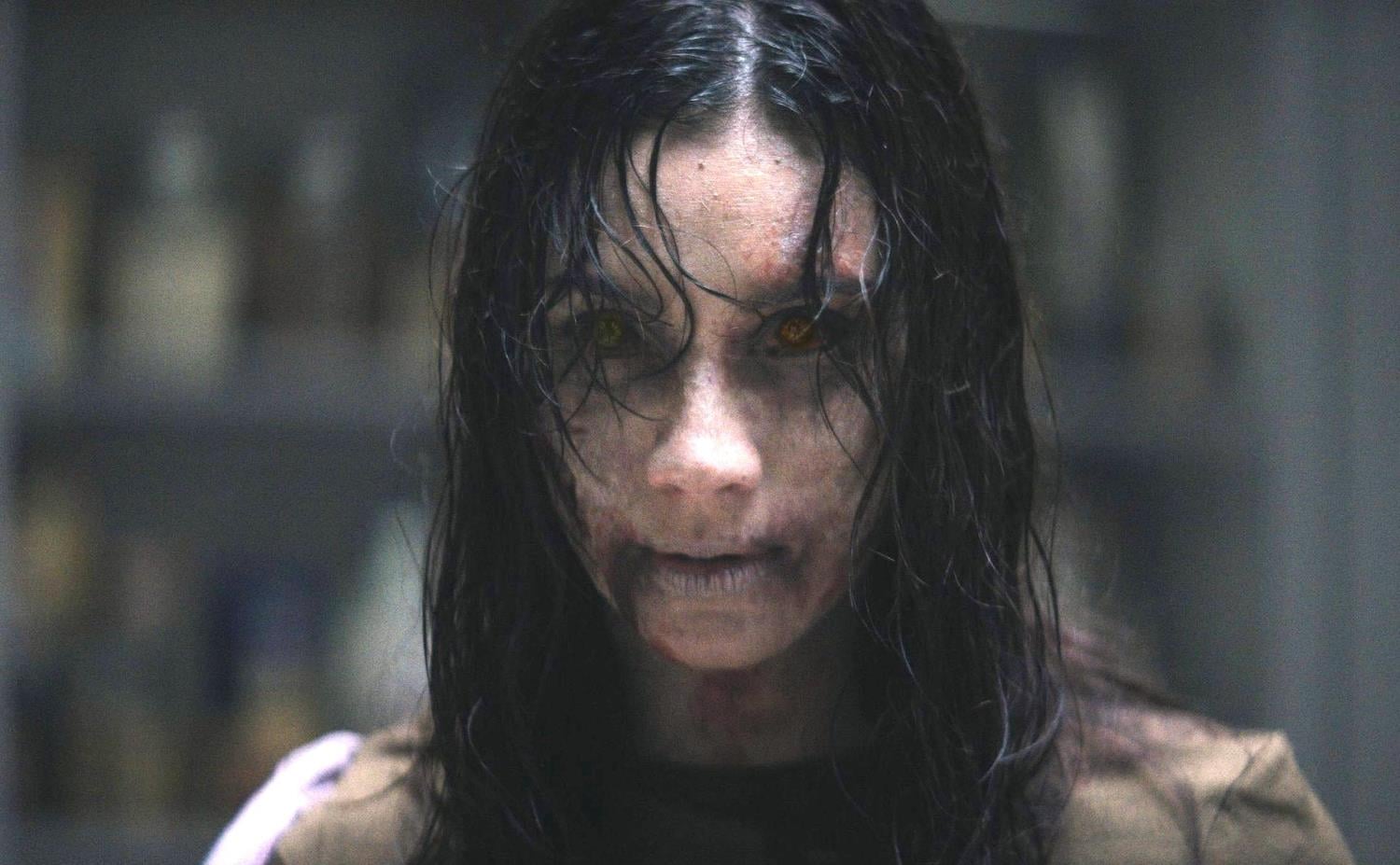
Just three years after Evil Dead Rise set the box office on fire with a $147 million worldwide haul, Evil Dead Burn was unleashed into theaters this past weekend. Unfortunately, the opening weekend for Evil Dead Burn wasn’t quite as strong as the debut for its predecessor.
Evil Dead Burn debuted in 3,004 theaters across North America and scared up $13.7 million in its domestic debut, about $10 million less than Evil Dead Rise‘s $24.5 million opening.
Worldwide, Evil Dead Burn debuted with $27 million. Given the film’s production budget was somewhere in the ballpark of $20 million, all is certainly not lost for Evil Dead Burn. That said, Warner Bros. and New Line no doubt hoped that Burn would top or at least match the domestic opening of Rise, but instead we’re looking at a case of diminishing franchise returns.
The good news for fans? Next installment Evil Dead Wrath has already wrapped production for expected release in 2028, so there’s no danger of the franchise ending with Evil Dead Burn.
Evil Dead Wrath from director Francis Galluppi (The Last Stop in Yuma County) is currently set for theatrical release on April 7, 2028, though that could change in the coming months.
Will the Evil Dead franchise be taking a break after Evil Dead Wrath? That all depends on how Wrath performs at the box office. But for what it’s worth, the post-credits scene at the end of Evil Dead Burn suggests that the franchise’s creators are hopeful for a bright future ahead.
The critical reception for Evil Dead Burn was a bit less positive than the reception to Evil Dead Rise, with Rise hitting 85% on Rotten Tomatoes and Burn currently sitting at 71%. It’s interesting to note, however, that the “Popcornmeter” on Rotten Tomatoes is a bit higher for Burn than it was for Rise, with Burn‘s currently at 80% and Rise‘s sitting a tad lower at 76%.
The site’s “Popcornmeter” scores are decided by users, rather than verified movie critics.
Which do you prefer? Evil Dead Rise or Evil Dead Burn? Sound off below.

You must be logged in to post a comment.