Movies
A Look Back at a Hairy Franchise: The Transformation of ‘The Wolf Man’ Films

Contrary to popular belief, The Wolf Man is not the first Universal werewolf movie. That distinction goes to Werewolf of London, released six years earlier. That being said, the reason The Wolf Man is so much better remembered is because it was the first successful Universal werewolf movie, featuring a now-classic performance by Lon Chaney, Jr. as the title character. Sure, London has its charms, but The Wolf Man is really the movie that started it all.
Check out MySpace Horror for a quick run down of the films.
 Universal had every reason to think The Wolf Man wouldn’t succeed. For starters, it was released only days after the bombing of Pearl Harbor, leaving skittish executives to wonder whether the public would have an appetite for a horror film following such a terrible tragedy. Second, the film wasn’t based on a pre-existing literary property, as their two biggest monster-movie hits from the early ‘30s, Dracula and Frankenstein, had been. And, of course, seeing as Werewolf of London hadn’t been successful, they must have been wondering whether the werewolf mythology was something audiences would ever go for.
They needn’t have worried. The Wolf Man went on to become one of Universal’s top-grossing movies of 1942, reviving the flagging monster-movie sub-genre and making a viable star out of Lon Chaney, Jr. The film spawned four indirect sequels, all of them starring Chaney (a rarity, considering Universal’s other top-tier monsters would go on to be played by different actors throughout their run), and also served as the jumping-off point for a series of “ensemble” monster movies in which Universal would bring their different monster characters together in a single film. Perhaps The Wolf Man’s biggest contribution, though, would be its massive influence on werewolf mythology as we know it today.
As scripted by Curt Siodmak, The Wolf Man was the first film series to introduce two majorly influential folkloric ideas associated with werewolves: their vulnerability to silver and their full-moon triggered transformations (an idea actually not introduced until the first sequel, Frankenstein Meets the Wolf Man). For the record, some historians credit these ideas to be Siodmak originals, but other literature indicates their presence far previous to the release of the film. In any case, Siodmak was the one that introduced these concepts to film-going audiences, and nearly every werewolf film since has utilized them in some capacity. This fact is a testament to the film’s enduring influence.
Not only was The Wolf Man a boon to the werewolf sub-genre (and horror films in general), it was also a major turning point in Lon Chaney, Jr.’s career. While he had previously received good critical notices in his role as Lennie Small in 1939’s Of Mice and Men, The Wolf Man is what made him a star. Chaney was no stranger to horror films – his father, after all, was the top-tier Universal monster-movie star of the 1920’s, giving iconic performances in both 1923’s The Hunchback of Notre Dame and 1925’s The Phantom of the Opera. Indeed, Chaney Jr. himself had acted in horror films before, most notably in 1941’s Man-Made Monster, helmed by Wolf Man director George Waggner. It was his impressive performance in Monster that got him the gig which would not only come to define the rest of his career, but that would allow him to escape (at least temporarily) the long shadow of his famous father.
While much of The Wolf Man’s success has to do with Chaney Jr.’s sympathetic performance, credit must also go makeup effects man Jack Pierce, who created the now-iconic werewolf design used for the film. Interestingly enough, these designs were originally intended for Henry Hull’s lycanthrope character in Werewolf of London, but that actor refused to submit to the hours upon hours in the makeup chair required for the transformation (which resulted in the much subtler makeup used in that film). One can’t help but wonder whether London would have been more successful had its lead actor been willing to undergo the admittedly grueling process, but nevertheless it was Chaney Jr. who originated the look that has even come to be immortalized on a U.S. postage stamp.
All of that said, it was perhaps Curt Siodmak’s psychologically-astute screenplay that was the final deciding factor in The Wolf Man’s huge success, although it must be noted, that Siodmak’s first draft was actually quite a bit different from the finished result. In the early going the writer had envisioned the project as a subtler character study, without even the majority of the werewolf scenes that ended up making it to the screen. Further, the “Larry Talbot” character was originally written as “Larry Gill”, an ordinary American mechanic traveling to a Scottish castle to fix a telescope belonging to nobleman Sir John Talbot (the role eventually played by Claude Rains in the film) before becoming a victim of the werewolf curse. Shockingly, credit must go to Universal executives for recognizing the limited potential of this setup, and favoring the central idea of a strained father-son relationship instead. They also rejected Siodmak’s more subjective original take that would have made the film less a werewolf story than a portrait of insanity, with viewers left to ponder whether the lead character was in fact even transforming into a werewolf at all. Indeed, it was the potent combination of familial pathos and monster-movie theatrics that led to the film working both as a horror film and as a tragic and penetrating character study.
Like most classic films, of course, production on The Wolf Man wasn’t without its problems. For starters, Chaney had become notorious for his alcoholism even before taking on the role. This fact led indirectly to alleged on-set tension between he and his female co-star, Evelyn Ankers (tension that would continue in their numerous subsequent on-screen pairings), which started when Chaney was forced to give up his dressing room to accommodate her (reportedly as punishment for vandalizing studio property during a drinking binge). Chaney’s bitterness over this turn of events led to him constantly harassing the actress on set, which included sneaking up behind her in full makeup between takes and, for lack of a better term, scaring the living shit out of her.
In addition to this contentious on-set relationship, a scene in which the Wolfman was to do battle with a (real-life) bear was cut from the final film when the bear in question (all 600 pounds of it) escaped from its trainer and ran amok during the shoot, even chasing a terrified Ankers up a ladder. As for those famous makeup effects, while Chaney did willingly submit himself to all those hours in the makeup chair, he was also known to have complained bitterly (during and after the shoot) about the discomfort he endured during the process.
Despite all of that, The Wolf Man’s influence on film, and popular culture in general, is truly incalculable. Without it, we may never have had classics like An American Werewolf in London, The Howling, Ginger Snaps, or even Twilight: New Moon (ok, forget about that last one). Indeed, more than a decade following big-budget remakes/re-envisionings of most other pre-1950 top-tier Universal monster movies, the upcoming Wolf Man update, directed by Joe Johnston and starring Benicio del Toro, Anthony Hopkins and Emily Blunt, feels rather belated. Will it live up to its classic inspiration? Audiences will have to wait until February 12th to find out. Let’s just hope all the negative pre-buzz surrounding it turns out to be illusory under the light of the full moon.
THE WOLFMAN remake arrives in theaters February 12.



Movies
‘Boorman and the Devil’ Documentary Trailer Chronicles Complicated Relationship with ‘Exorcist II’

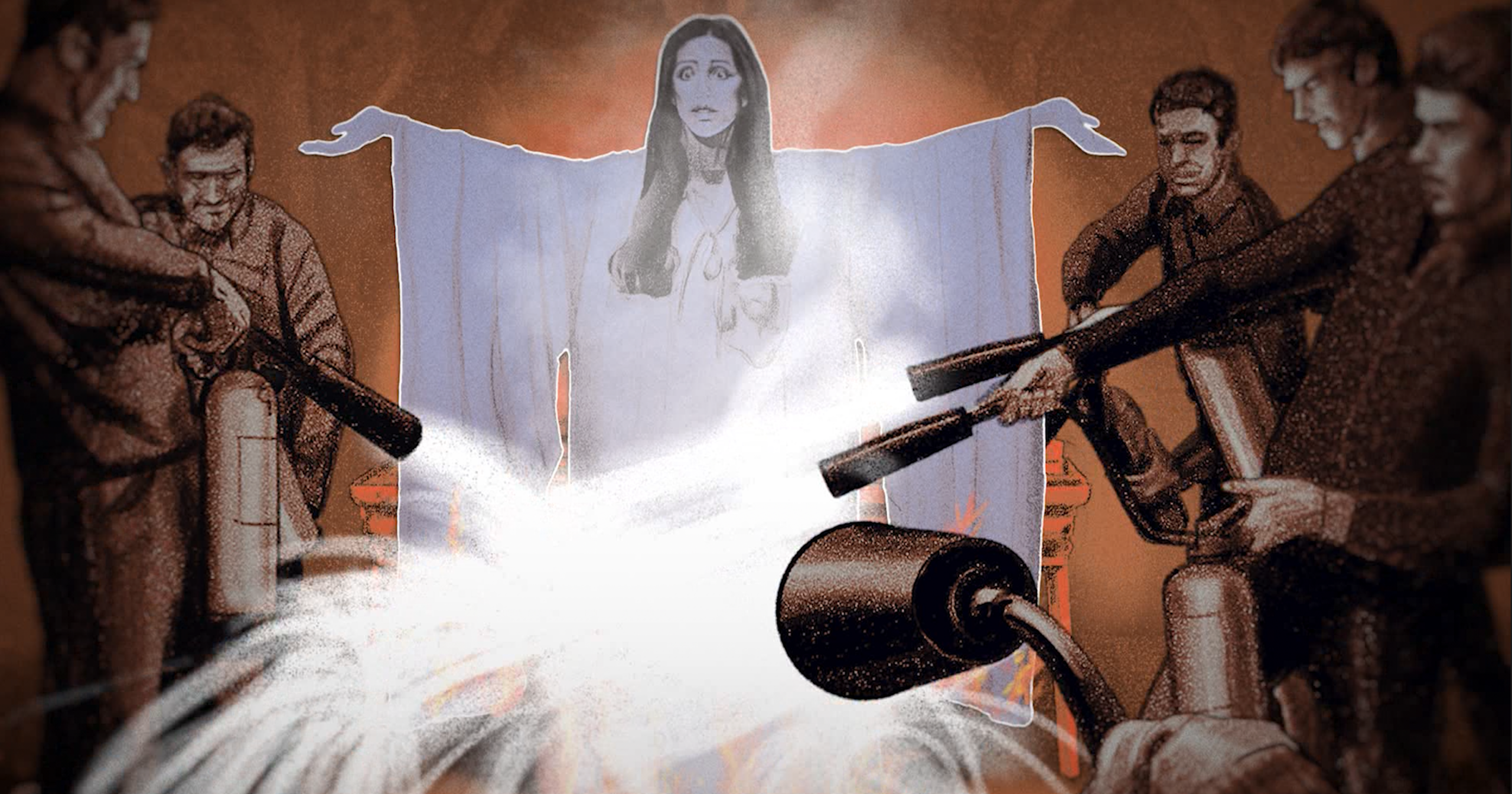
Critically acclaimed documentary Boorman and the Devil chronicles how one of the world’s greatest filmmakers made one of the most hated movies ever: Exorcist II: The Heretic. A new trailer highlighting some of the troubled production woes has arrived.
Boorman and the Devil opens at The Quad in NYC on August 28 before opening wider in various cities on September 4, including: Los Angeles, Columbus, Houston, Pittsburgh, Philadelphia, Seattle and more.
After the success of Point Blank and Deliverance, Warner Brothers offered John Boorman the opportunity of a lifetime: the chance to direct a sequel to their smash hit, The Exorcist. The result was one of the biggest disasters in movie history. A critical and financial failure that not only changed how Hollywood did business, but nearly ended Boorman’s filmmaking career… but to be an artist is to be a risk-taker.
Now, John Boorman, Linda Blair, Louise Fletcher, Karyn Kusama, Joe Dante, Mike Flanagan, and more reflect back on the ambition of the film, the artistry and craft, and the value of big creative swings.
“I am beyond thrilled that Yellow Veil has come on board to help us share this story with a larger audience,” said director David Kittredge. “Like myself and the rest of our team, they’re huge cinema-lovers. It’s so exciting that a film which is not only a love letter to John Boorman, but also to ambitious filmmaking, will be handled by people who share the same passions that our team shares.”
“I first saw the film at an early festival screening and the post-screening buzz was just electric. Everyone was loving Boorman and the Devil,” added Yellow Veil co-founder Justin Timms. “To be able to team up with David and the filmmaking team on this release is incredibly exciting, and we can’t wait to spread that post-screening electricity with audiences across the country.”
Boorman and the Devil is produced by Kittredge’s Triple Fire Productions, Travis Stevens (Jodorowsky’s Dune, Starry Eyes) of Snowfort Pictures, and Jim Fall (The Lizzie McGuire Movie), with Alan Koenigsberg of Milton Ventures Media serving as co-producer.
Daniel Kurland wrote in his review, “Boorman and the Devil goes above and beyond to be the definitive text on Exorcist II. This documentary will delight horror and Exorcist fans alike, but it also provides incredible insight for anyone who is just marginally interested in film production.”