Movies
[Interview] Robert Hall Talks Special Effects And Slashers


Robert Hall is a man of many talents: special effects artist, director, musician, and owner of the effects studio, Almost Human Inc. He’s done special effects and make up work on an insane amount of TV shows and films including Buffy the Vampire Slayer, Angel, Firefly, Vacancy, The Crazies, Paranormal Activity 2, 3, and 4, and many, many more (just look at his IMDb page). Recently, however, Robert has taken to the directors chair with his films Lightning Bug and his cult hit slasher series Laid to Rest.
Robert Hall took some time away from his signing table at Fan Expo Canada to chat with about his work in special effects, the use of CGI in horror, creating memorable kills, and more.
BD: You have an insane resume of TV and movies you’ve worked on and it keeps growing. How are you able to keep things fresh with each new project you take on?
Hall: It’s less about keeping it fresh for me, and more about juggling it all at one time. It’s something I love doing. Switching back in forth between all my work; being an effects designer, and now that we’ve launched our digital department at Always Human, I’m also doing visual effects supervising on shows, plus I’m directing my own movies. So, as you can imagine, it’s a lot of juggling [laughs]. But, I figure, hey, if Rob Zombie can do it I can do it! He can make albums, tours, and does his movies, so I figure I can do it too.

Photo Credit: Anchor Bay Entertainment Canada
BD: In the horror right now, filmmakers are relying on soundtracks, CGI, jump scenes, to scare audiences. Working mostly with makeup design, how do you bring out scares for modern horror fans who are increasingly difficult to scare?
Hall: CGI, especially for horror fans, gets generalized unfairly. The reason is that big movies that have a lot of money, they say “let’s just throw in the monster later,” or “let’s film this and add scares after”. So what I try to do with Almost Human, and that I’ve done in my Laid to Rest movies, that I think has come across both as a filmmaker and with my shop, is I don’t overuse CGI. I don’t just say we’re going to do all kills in CGI later cause it’s easier. I try to do a split.
Everyone agrees on one thing: the best kind of effects are when they’re seamless, a combination of practical and CGI. So, I take that combination and look at where the strengths and weaknesses are, and theb I create a solid, in depth plan. I don’t deviate from my plan, which is really why our stuff gets set apart from the rest. When I’m directing, I have the power to say no we’re not going to change this scene, we’re going to balance CGI with practical as planned. When you’re on other people’s sets, plans are liable to change without your control. So I could do the practical stuff the way I want, but then they send the footage overseas to get post work in CGI, where, hopefully, they can figure out what was in my head. It usually doesn’t work well, and then it looks like shit, and people complain.
The other side of it is that all the kills I get credit for in Laid To Rest, the kills people say look great, are not possible without CGI. So I try to inform people that digital work can be a real tool. I almost trick people into thinking they’re seeing practical effects as much as I can.

Photo Credit: Anchor Bay Entertainment Canada
BD: Some people see CGI as a crutch for filmmakers, it’s less time consuming, they send it away and don’t have to deal with it. You see it as a tool?
Hall: Yeah, that’s absolutely right. People have a knee-jerk reaction, and most of the time people are using CGI by throwing money at it. Studios rush the movie to completion and then break up all the shots and send them to various studios, add extra shots here and there. But none of that matters to the audience. At the end of the day, it either looks real or looks like a cartoon. That’s all they care about. It comes down to them asking themselves “is what I’m watching taking me out of the movie?”
My whole mission, or mantra with Almost Human is to bring back the “how do they do that?” factor from the 80s, which is severely lacking these days. Modern audiences aren’t even amazed anymore by cool kills, they say “oh, it’s computers,” or “that head is so fake”. There’s no real in between anymore. I’m trying to launch what is called seamless integration, bridging the gap between digital and practical, which is how it should be.
BD: A lot of people want to get into make up and special effects but they may not have the means to do so. What advice do you have?
Hall: My advice is you have no excuse anymore. I sound like an old man [laughs] when I was a kid I used to walk barefoot in the snow! But seriously I used to have to mail-order catalogs! It was always trial and error before. These days you can download any tutorial videos, you can go on youtube to learn how to lay down a prosthetic edge, or you can watch an after effects tutorial for replacing someone’s head. You have no excuse. You need the Internet and that’s pretty much it. There’s such an abundance of material in front of you that people in my generation never had. It’s so much easier to sit down and figure it out, gain the knowledge, then just go out and do it. I used to save up on Halloween supplies on November 1st from Wal-Mart, they’d sell it super cheap. All the fake blood and stuff, I’d play with it all year long. I had no money and I figured it out. So just go out there, do it, and figure it out yourself.



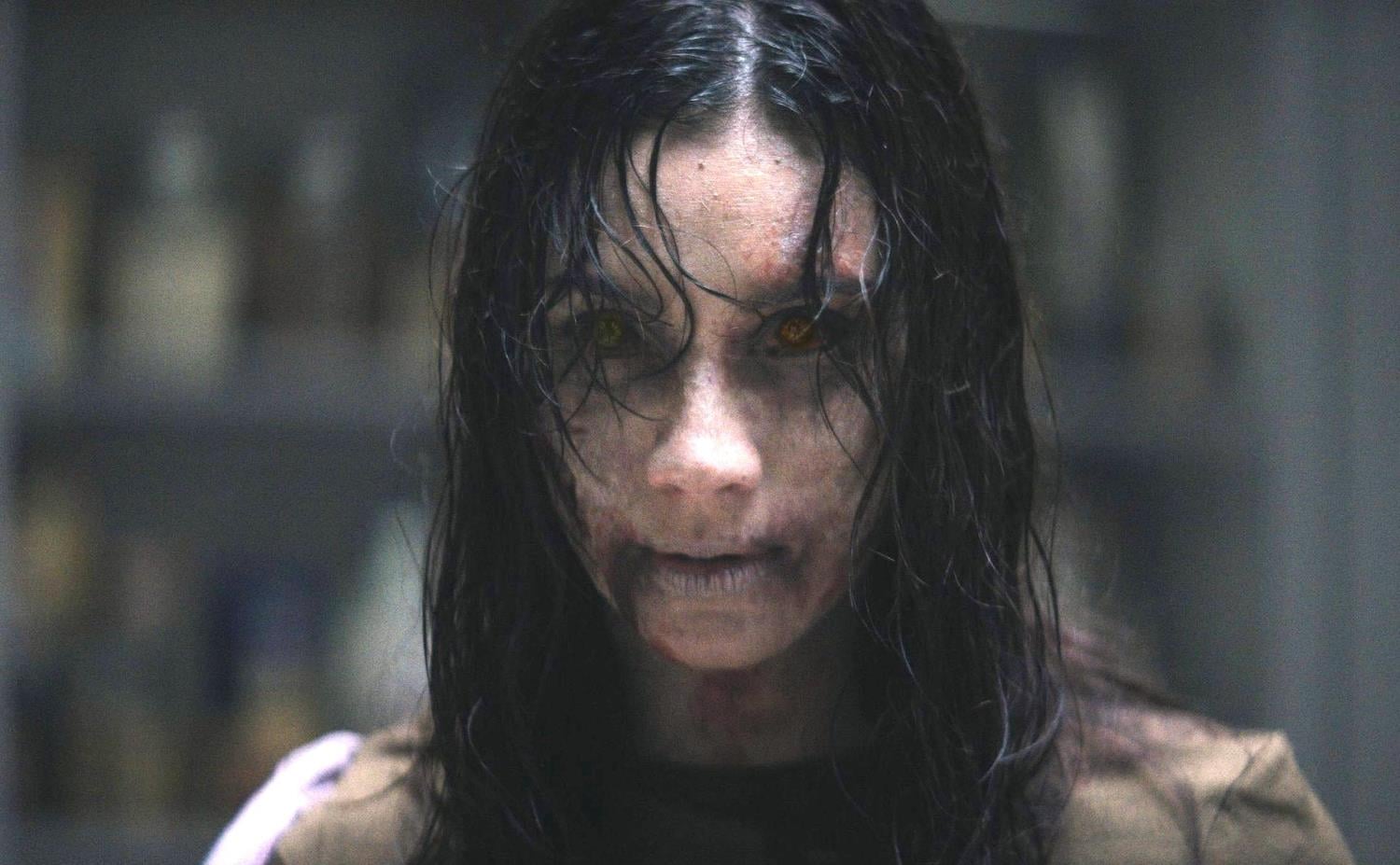
Just three years after Evil Dead Rise set the box office on fire with a $147 million worldwide haul, Evil Dead Burn was unleashed into theaters this past weekend. Unfortunately, the opening weekend for Evil Dead Burn wasn’t quite as strong as the debut for its predecessor.
Evil Dead Burn debuted in 3,004 theaters across North America and scared up $13.7 million in its domestic debut, about $10 million less than Evil Dead Rise‘s $24.5 million opening.
Worldwide, Evil Dead Burn debuted with $27 million. Given the film’s production budget was somewhere in the ballpark of $20 million, all is certainly not lost for Evil Dead Burn. That said, Warner Bros. and New Line no doubt hoped that Burn would top or at least match the domestic opening of Rise, but instead we’re looking at a case of diminishing franchise returns.
The good news for fans? Next installment Evil Dead Wrath has already wrapped production for expected release in 2028, so there’s no danger of the franchise ending with Evil Dead Burn.
Evil Dead Wrath from director Francis Galluppi (The Last Stop in Yuma County) is currently set for theatrical release on April 7, 2028, though that could change in the coming months.
Will the Evil Dead franchise be taking a break after Evil Dead Wrath? That all depends on how Wrath performs at the box office. But for what it’s worth, the post-credits scene at the end of Evil Dead Burn suggests that the franchise’s creators are hopeful for a bright future ahead.
The critical reception for Evil Dead Burn was a bit less positive than the reception to Evil Dead Rise, with Rise hitting 85% on Rotten Tomatoes and Burn currently sitting at 71%. It’s interesting to note, however, that the “Popcornmeter” on Rotten Tomatoes is a bit higher for Burn than it was for Rise, with Burn‘s currently at 80% and Rise‘s sitting a tad lower at 76%.
The site’s “Popcornmeter” scores are decided by users, rather than verified movie critics.
Which do you prefer? Evil Dead Rise or Evil Dead Burn? Sound off below.

You must be logged in to post a comment.